Relic point Vietnam
Việt Nam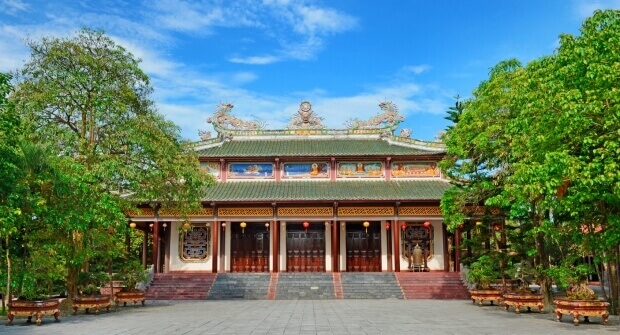
Sac Tu Tinh Quang Pagoda
Sac Tu Pagoda is located on the hills southwest of Ai Tu village in Ai Tu town, Trieu Phong district, Quang Tri province. The pagoda belongs to the Northern Buddhist sect. Sac Tu Tinh Quang Pagoda was originally named Am Tinh Do, built in the early years of the Le Dynasty (1735 - 1739). In the 5th year of Ky Suu, Vinh Huu (1739, reign of King Le Y Tong), Lord Nguyen Phuc Khoat (Vuong Vo) on one occasion went to Quang Tri and was impressed with the scenery of the Buddhist hall and the temple's reputation among the people. So he used his pen to write the five words "Sac Tu Tinh Quang Tu" and then had the plaque made with red lacquer and gilded to give it to the pagoda. From then on, Tinh Do Am was changed to Tinh Quang Pagoda and people from then on became accustomed to calling the pagoda by the name Sac Tu Pagoda (the pagoda ordained by the state), while the Buddhists used to use the combination: Sac Tu Tinh Quang Pagoda. . The pagoda's structure includes a traditional beam house with a match-stacked roof, the main materials used are cement and reinforced steel with a total area of 837m2. The roof is elaborately decorated with stucco art and porcelain pieces. The roof of the pagoda is straight and decorated with dragon patterns. In the temple grounds, there is a Bodhisattva Avalokiteśvara monument (built in 1976) and a number of towers that are the tombs of deceased abbots. The three-entrance gate is built with two roof floors, the upper floor is decorated with a statue of the Dharma Protector facing the pagoda. Behind the three gates, there is a bridge over the lotus pond to enter the front yard of the pagoda and the main hall. The main hall is 31m deep, 27m wide, nearly 15m high, has a match-stacked roof architecture, and the roof is decorated with four sacred animals; On the front, between the two roofs, there are 5 bas-reliefs about the Buddha's life: Birth, renunciation, enlightenment, sermon and nirvana. The main hall of Sac Tu pagoda is in the middle space, the upper class worships the statue of Tam The, next is Shakyamuni meditating with on the left and right are Anan Da and Ca Diep standing. The outermost is Maitreya, the newborn Shakyamuni. The left side worships the statue of Avalokiteśvara Bodhisattva. In front there is a statue of Samantabhadra Bodhisattva sitting on a unicorn. Friends worship the statue of Ksitigarbha Bodhisattva, in front is the statue of Manjushri Bodhisattva riding a dragon horse. The back of the hall worships the statue of Bodhidharma, Patriarch Chi Kha - the founder of Sac Tu Pagoda and two monks, Tuyet Phong and Buu Ngan - who belong to the first generation of abbots at the pagoda. The pagoda has a bronze statue of Shakyamuni Buddha weighing 2,700 kg, cast in 1997, and a large drum made of buffalo leather, with a diameter of 165 cm. In the temple grounds there is a Bodhisattva Avalokiteśvara station. Sac Tu Tinh Quang Pagoda is a famous ancestral temple of Buddhism in Dang Trong, a place where many famous and virtuous monks have been nurtured and trained. The annual death anniversary festival on the 18th day of the second lunar month is held on a large scale with the participation of thousands of monks, nuns, Buddhists in Quang Tri, neighboring provinces and pilgrims everywhere. On November 15, 1991, the pagoda was ranked as a national historical-cultural relic. Source: Quang Tri Newspaper
Quang Tri 4460 view
Dong Khe Victory Historical Relic Area
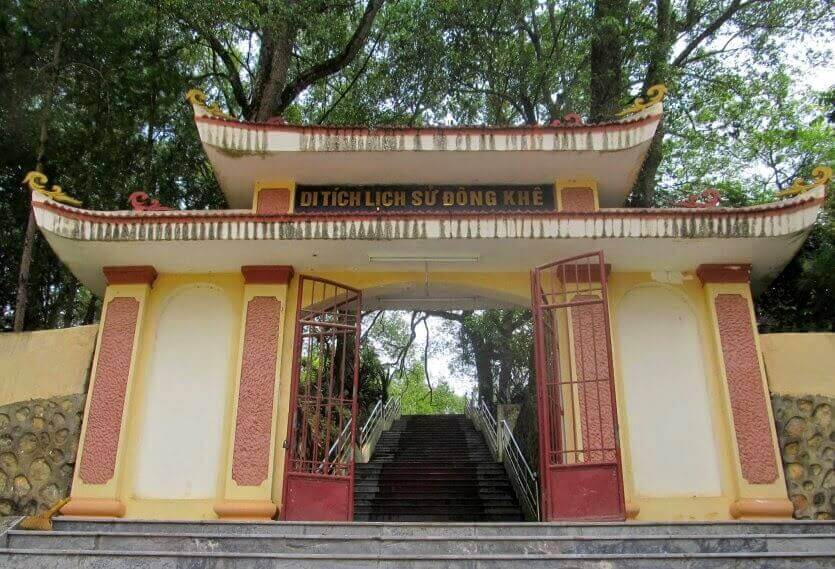
Dong Khe Victory Historical Site (1950 Border Campaign) is located in Na Lan, Duc Long commune, Thach An district, far from Cao Bang city. This is a relic associated with the revolutionary career of President Ho Chi Minh, with the victory of the 1950 Border Campaign, led by the Military Region Command, Military Region 1, Military Region II and Cao Bang province. construction coordination. The relic site was put into use on May 19, 2004, demonstrating the noble morality "When you drink water, remember its source" for the genius leader, the beloved father of the nation, and left a glorious mark. , the heroic victory of a strategically significant victory in the resistance war against the French colonial invasion. The relic site consists of 2 parts: President Ho Chi Minh Memorial House and Uncle Ho's monument cluster observing the Dong Khe battle on Bao Dong Mountain. The memorial house is designed in a modern stilt architectural style, displaying images and artifacts related to the activities of President Ho Chi Minh observing the battle on Bao Dong Mountain. The cluster of Uncle Ho's monuments observing the Dong Khe battle on Bao Dong mountain is made of imitation bronze composite material, 2.8m high, weighs 418kg, reinforced concrete columns, the entire statue is placed on a stone pedestal covered with floral tiles. . To get to Uncle Ho's Monument to observe the battle of Dong Khe on Bao Dong Mountain, go through 846 stone steps, divided into 79 steps, symbolizing Uncle Ho's 79 springs. Today's stone steps are the old road, on September 13, 1950, Uncle Ho left the Campaign Command Post to the Forward Command Post in Na Lan, went to Bao Dong Mountain to observe the battle of Dong Khe. Early in the morning of September 16, 1950, from an observation position on Bao Dong mountain, President Ho Chi Minh attentively observed and closely followed the developments of Dong Khe battle, opening the 1950 Border Campaign, creating money. for the nation's great victorious resistance war. On September 16, 1950, our army units opened fire to open the Campaign with a battle at Dong Khe base. Losing Dong Khe, the enemy army in That Khe fell into a threatening situation, Cao Bang was isolated. Faced with the risk of being destroyed, the French army was forced to withdraw from Cao Bang along Route 4. To support this withdrawal, France mobilized troops from That Khe to retake Dong Khe and welcome troops from Cao Bang to withdraw. ; At the same time, send troops to attack Thai Nguyen to attract our main force. Guessing the enemy's intentions, our army proactively ambushed and blocked the enemy in many places on Route 4, making it impossible for these two armies to meet each other. It was That Khe's turn to be threatened. On October 8, 1950, the French army had to withdraw to Na Sam; On October 13, 1950, France withdrew from Na Sam to Lang Son. Meanwhile, the enemy's march to Thai Nguyen was also blocked by our troops. The French army became panicked and had to retreat. On October 22, 1950, Route 4 was liberated. On October 3, 1950, Cao Bang province was liberated, marking an important milestone in history, becoming a major anniversary day of Cao Bang every year. At the end of the Border Campaign, we eliminated more than 8,300 enemies from combat, liberating the entire Vietnam-China border from Cao Bang to Dinh Lap with 350,000 people, with an area of 4,500 km2; breaching France's "East-West Corridor". The enemy's siege both inside and outside of the Viet Bac base was broken. The victory of the Border Campaign changed the war situation between us and France, creating a new change in attack and counter-attack strategies, contributing to bringing the resistance war to victory, culminating in the campaign. Dien Bien Phu, moving towards the great victory in the spring of 1975, completely liberating the South, unifying the country, moving towards socialism. Source: Cao Bang province electronic information portal
Cao Bang 7587 view
PAC BO MONUMENT AREA
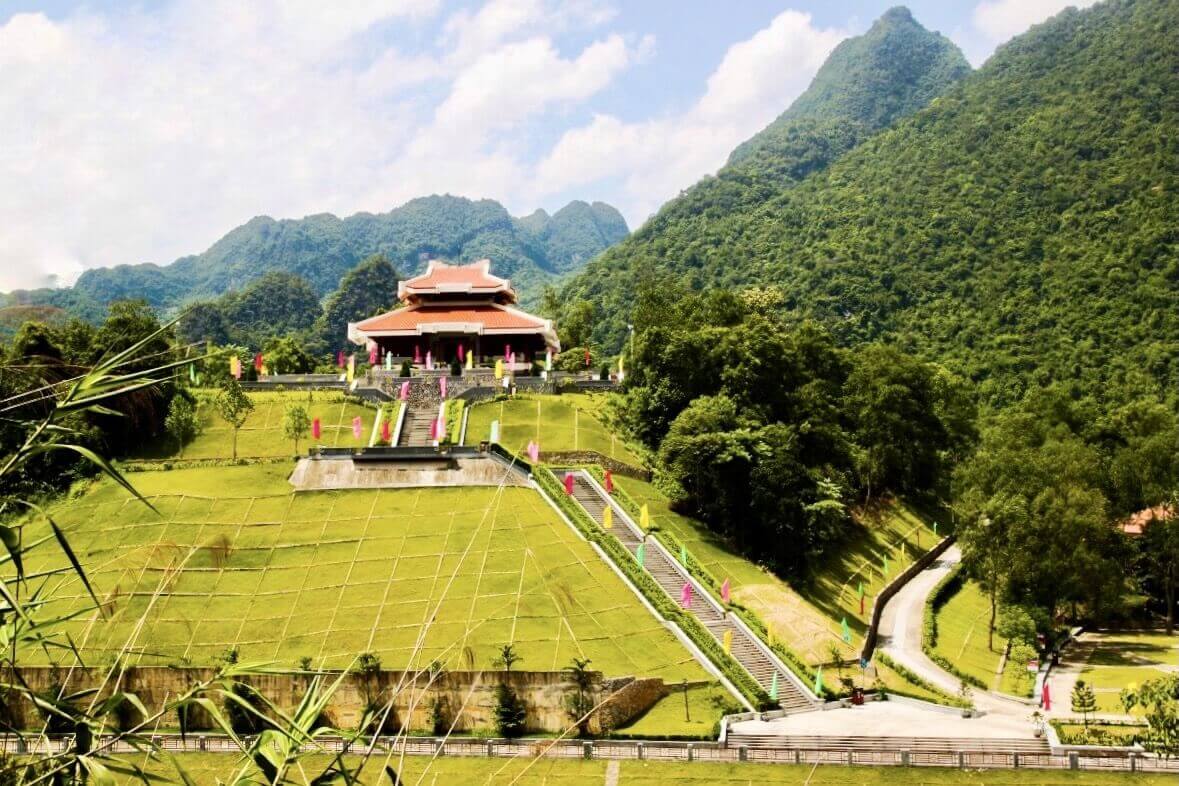
Pac Bo historical site is located in Truong Ha commune, Ha Quang district, Cao Bang province. This is the location that was once associated with Uncle Ho's activities in the early stages of returning to the Fatherland to lead the Revolution (1941 - 1945). In early 1941, Nguyen Ai Quoc and five comrades returned home and stayed at Mr. Ly Quoc Gun's house, then moved to Coc Bo cave, Lung Lan cave and Khuoi Nam shack. Here, from May 10 to May 19, 1941, the 8th Party Central Conference took place. And, also at Khuoi Nam II shack, Uncle Ho established the Independent Vietnam Newspaper, calling on the entire people. unite to fight common enemies, the French colonialists, Japanese fascists and Vietnamese traitors, to gain independence and freedom. According to the "Monuments Master Plan" approved by the Prime Minister, Pac Bo relics include: 1. Cluster of relics in the watershed area - Coc Bo Cave (meaning "watershed" in Nung language) is about 80m2 wide, the cave entrance can only fit one person. This is where Uncle Ho and his fellow revolutionary cadres stayed from February 8, 1941 to mid-March 1941. - The floor of Mr. Ly Quoc Gun's house: is the house where Uncle Ho lived when he first returned to the Fatherland to direct the revolution (from January 28 to February 7, 1941). - Lung Lan Cave: is where Uncle Ho lived and worked around the end of March 1941. - Nguom Vai Cave: here, in 1941, Uncle Ho directly guided and admitted Comrade Nong Thi Trung to the Party. - Lenin Stream: during his time in Pac Bo, Uncle Ho often sat fishing in this stream. - Mr. La Thanh's house: was an important revolutionary base in the pre-uprising period. This is the place to welcome national delegates to the 8th Party Central Committee Conference. - Milestone 108: now milestone number 675, one of 314 Vietnam-China border landmarks. - Gooc Mu field: In 1940, the people of Pac Bo village once came here to cut blood and swear, vowing to follow the revolution all their lives. 2. Souvenir spots in the central area - President Ho Chi Minh Memorial House and square yard: built according to the ethnic stilt house model, located on the Linh Son range, in the Pac Bo relic area. - Na Chang field area: This is the place for the rally to welcome President Ho Chi Minh to visit and talk with the people of Pac Bo on February 20, 1961. - Projects: exhibition house, reception house. 3. Bo Bam relic cluster - Mr. Duong Van Dinh's house: is where President Ho Chi Minh often spoke and propagated about the revolution. - Karl Marx Mountain, Lenin Stream, Tiger Head Cave: is where Cao Bang people held a memorial ceremony for Uncle Ho (September 1969). 4. Khuoi Nam relic cluster - Khuoi Nam Shack: is the place where Uncle Ho stayed the longest. In addition, to ensure Uncle Ho's safety, comrades and officers built two more shacks for him (Khuoi Nam II and III shacks). - Slí Dieng cave and Diem Tieu cave: are places used by Uncle Ho as secret mailboxes, in the period 1941 - 1945. On May 10, 2012, the Prime Minister decided to classify Pac Bo Historical Relic as a special National Monument. Source: Department of Cultural Heritage
Cao Bang 5574 view
Tran Hung Dao Forest Relic
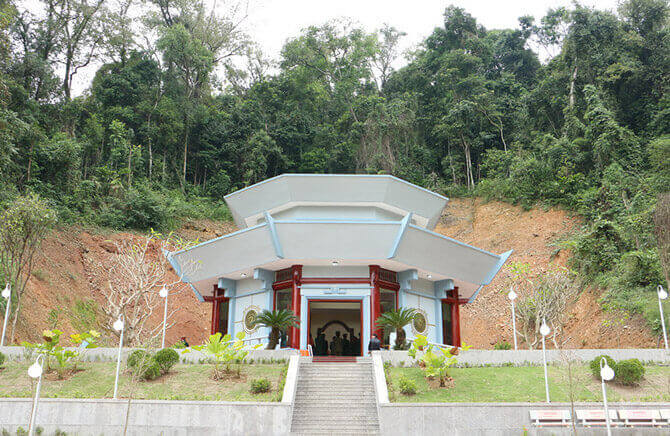
Tran Hung Dao Forest Special National Relic Area is located at the foot of Slam Cao Mountain in Tam Kim and Hoa Tham communes (Nguyen Binh district, Cao Bang province). This is where a system of relics associated with a particularly important historical period of the Vietnamese revolution is kept. Tran Hung Dao Forest Special National Relic Area is the place marking the establishment and activities of the Vietnam Liberation Army Propaganda Team, the predecessor of the Vietnam People's Army. At the same time, this is also the place associated with the life and revolutionary career of General Vo Nguyen Giap - an excellent student of President Ho Chi Minh. The relic area includes 5 important points: Tran Hung Dao forest relic cluster (including the location of the establishment of the Vietnam Liberation Army Propaganda Team, the rest shack and kitchen, the water mine for domestic water, and Slam Cao Peak); Tham Khau Cave (Tam Kim commune) - was once used as a communication station, serving meals to revolutionary comrades; Phai Khat Fort (Tam Kim commune) - where the first battle of the Vietnamese Liberation Propaganda Army team took place (December 25, 1944); Na Ngan Fort (Hoa Tham commune) - the place marking the second victorious battle of the Vietnam Liberation Army Propaganda Team (December 26, 1944); Va Pha relic (Tam Kim commune). With these historical values, in 2013, the Prime Minister decided to classify Tran Hung Dao Forest Historical Relic (Nguyen Binh district, Cao Bang province) as a special national monument. The exhibition house at the relic site, after being completed and put into use, has contributed to honoring and paying tribute to the previous generation, while preserving, embellishing and promoting the value of the relic site. Artifacts here are displayed centrally, ensuring true scientific and historical value according to 3 themes: Cao Bang - Country, people and traditions; The process of formation, birth and operation of the Vietnam Liberation Army Propaganda Team; Glorious traditional heroic army. The special national relic site of Tran Hung Dao forest is not only a red address of glorious historical tradition with many relics but also a primeval forest. With an area of over 201.7 hectares, Tran Hung Dao forest has a wild beauty with fresh air. Deep under the canopy of ancient trees is the stele house of 34 soldiers of the Vietnam Liberation Army Propaganda Team, with tents and kitchens simulating the simple daily life of the soldiers. Following a small slope about 50 meters is a natural water mine, also a water source for soldiers, which has been producing cool and clear water for many years. Also in Tran Hung Dao forest, a 300-year-old ancient crocodile tree that was closely associated with the daily life of the Vietnam Liberation Army Propaganda Team has been recognized as a Vietnamese Heritage Tree. Over the past 75 years, the vestiges from the early establishment of the Vietnam Liberation Army Propaganda Team have always been respected and preserved by ethnic people of Cao Bang province, contributing to educating patriotism and revolutionary traditions. for future younger generations. The vast primeval forest spreads out each canopy, covering the sacred relics of the arduous revolutionary activities of General Vo Nguyen Giap and the Vietnam Liberation Army Propaganda Team. Source: Vietnam National Tourism Administration
Cao Bang 7445 view
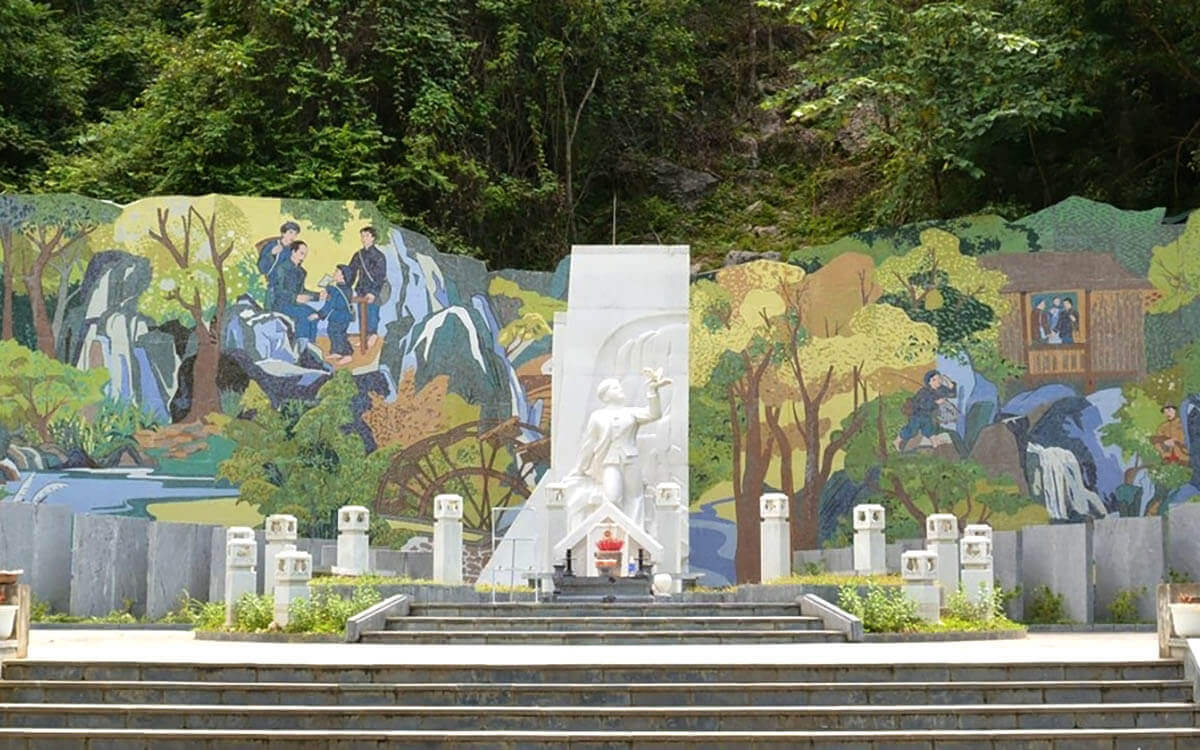
Kim Dong historical relic site
To commemorate the brave Captain of the National Salvation Children's Team who sacrificed his life while on duty to protect the revolution, the Party and State built the Kim Dong Heroic Martyr Monument in Na Ma village, Truong Ha commune (district). Ha Quang) Cao Bang province. May 15, 1941, forever shines brightly in the golden pages of traditional history of the Ho Chi Minh Youth Union. That day, near Coc Bo cave, down Lenin stream, at the foot of Thoong Ma mountain, in Na Ma village, Truong Ha commune, Ha Quang district, Cao Bang province, 5 teenagers including: Nong Van Den (alias Kim Dong ), Nong Van Than (Cao Son), Ly Van Tinh (Thanh Minh), Ly Thi Ni (Thuy Tien) and Ly Thi Xuu (Thanh Thuy), were enlightened and challenged by Duc Thanh and other revolutionary cadres. , gathered to form the National Salvation Children's Team according to the Party's decision; in which Nong Van Den was elected Team Leader. The Children's National Salvation Team has the purpose of participating in fighting the West, expelling the Japanese, and gaining independence for the country, with the tasks of transportation, transportation, protection of officials, and guarding Party meetings... From After May 1941, children's teams for national salvation were established everywhere to participate in the revolution. Many youth teams achieved outstanding achievements, brightening the golden history of the Children's Team, contributing to the victory of the People's Army. August Revolution 1945. In August 1942, Kim Dong had the honor of meeting Uncle Ho at Noc En cave on the mountain behind Na Ma village. He praised Captain Kim Dong for his cleverness, agility, and courage. He advised Kim Dong and his fellow members to help and actively protect the revolution, working while studying culture and politics so that the country can later gain independence and contribute to national construction. At 5 a.m. on February 15, 1943, while on guard duty at a meeting of the Viet Minh committee, when he discovered that the enemy was approaching, Kim Dong quickly created a diversion to protect the revolutionary cadres. The enemy opened fire, Kim Dong was hit and died, just 14 years old at that time. In 1997, Kim Dong was posthumously awarded the title Hero of the Armed Forces by the Party and State. Kim Dong Heroic Martyr Relic was built right in his hometown in Na Ma Village, Truong Ha commune (Ha Quang). The relic area includes Mr. Kim Dong's grave and his spacious statue at the foot of a massive high rocky mountain range, next to a green tree that always gives shade. Statue of Mr. Kim Dong wearing Nung clothes and holding up a homing pigeon. There is a large yard here. Every year, teenagers and children from the province and the whole country often gather here to organize new team members, camp, play, generations of Vietnamese children come to join the team. his first adult, came to the revolutionary homeland of Lenin stream, Cac Mac mountain and Pac Po cave forever engraved in the minds of Vietnamese children. Source: Cao Bang province electronic information portal
Cao Bang 7642 view
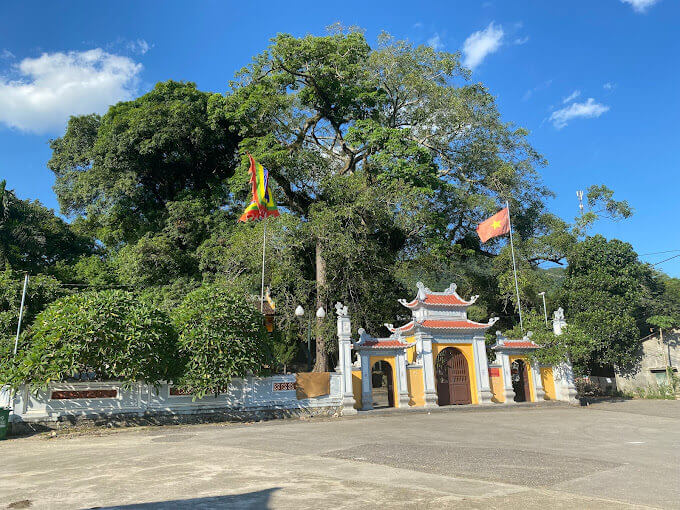
Ky Sam Temple
Ky Sam Temple is located on a low hill, close to the foot of Khau Sam mountain in Ban Ngan village, Vinh Quang commune (City). The temple worships historical figure, famous general Nung Tri Cao (1025 - 1053), during the reign of King Ly Thai Tong. The temple was built on a large campus, with "two" shaped architecture, bearing the architectural style of the Nguyen Dynasty, with a worship hall and a harem. At the worship house there is an altar. Inside the harem there are three altars, in the middle worshiping Nung Tri Cao, on the left worshiping A Nung's mother, and on the right worshiping three wives: Vuong Lan Anh, Doan Hong Ngoc, and Tran Thi Cam. Nung Tri Cao was born in 1025, the son of Nung Ton Phuc, the leader of Thang Do province. Right from his childhood, Nung Tri Cao was a healthy, handsome, hyperactive, exceptionally intelligent boy who was good at learning letters and martial arts like he was born. In 1038, Nung Ton Phuc occupied the two continents of Vu Lac and Quang Nguyen, founded the Truong Sinh country, proclaimed himself Chieu Thanh Emperor, and established A Nung's wife as Minh Duc Queen. vast area in the Northeast of our country. In 1039, King Ly Thai Tong personally led a large army to suppress Truong Sinh country. Nung Ton Phuc and his eldest son Nung Tri Thong were captured and brought to the capital to be executed. A Nung and his second son Nung Tri Cao ran to Loi Hoa cave, located in present-day Guangxi province (China). Here, mother and son urgently gathered soldiers, practiced martial arts day and night, and built a force of soldiers, swords, and war horses. In 1041, when Nung Tri Cao was 16 years old, he and his mother A Nung led troops from Loi Hoa cave to recapture Thang Do province, establishing the Dai Lich kingdom. The Ly Dynasty sent a large army to attack and capture Nung Tri Cao and take him to the capital. After reviewing and assessing the situation, needing to calm the border areas and protect the national territory, the King of the Ly dynasty exonerated Nung Tri Cao and continued to manage Thang Do province; At the same time, he granted the authority to govern a large area, including the caves: Loi Hoa, Binh, Ba and Tu Lang province, and ordained Nung Tri Cao as the governor of Quang Nguyen. In 1043, King Ly Thai Tong sent people to Quang Nguyen province to bestow the title of Thai Bao on Nung Tri Cao, one of the three highest-ranking officials at the court, and hand over the capital. In 1048, Nung Tri Cao started an army in Animal Evil, conquered An Duc province, belonging to the Song Dynasty (China) as a base. Two years later (1050), taking advantage of the powerful army and generals, Nung Tri Cao conquered Vat Duong (Song land), then proclaimed himself king, established Nam Thien Quoc, and took the reign name Canh Thuy. Victory after victory, the frontiers and territories are rapidly expanding. However, Tri Cao still intended to make peace with the Song dynasty. In 1051, he sent people to bring jewels, gold, silver, and ivory to pay tribute, but the Song court refused. Faced with that situation, in 1052, Nung Tri Cao led 5,000 troops to attack Ung Chau and Guangzhou. After mastering Ung Chau, Tri Cao proclaimed himself Emperor Nhan Hue; The reign name was changed to Khai Lich and the national name was Dai Nam. Tri Cao ordered the destruction of prisons, amnesty for prisoners, the opening of logistics warehouses, and the Song army's food distribution to the poor. Therefore, Tri Cao's forces grew strongly. In 1053, the Song Dynasty sent Dich Thanh - a famous general at the court - to lead a mighty army to fight the Nung Tri Cao army. This time, Tri Cao was defeated and had to flee to the land of Dali, in present-day Yunnan province (China). Nung Tri Cao sent Luong Chau to the capital to ask for help from the Ly dynasty but could not save the situation. To commemorate Nung Tri Cao's virtues, people in many places built temples to worship. The Ly dynasty specifically decreed Tri Cao to be Khau Sam Dai Vuong and established a temple in Ban Ngan village, Tuong Lac commune, Thach Lam district (now Ban Ngan village, Vinh Quang commune, Cao Bang city). The temple was conferred the title of Supreme Deity by the Ly dynasty. Nung Tri Cao Temple was ranked a national historical relic by the State in 1993. Source: Cao Bang Electronic Newspaper
Cao Bang 6603 view
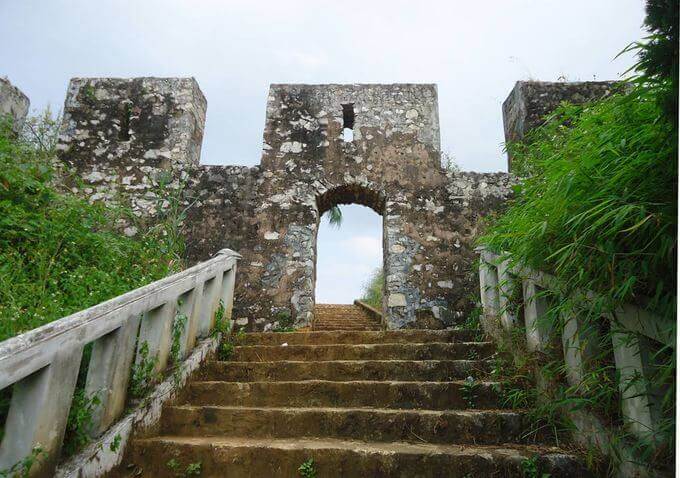
Mac Dynasty Citadel in Cao Bang (Na Lu Citadel, Ban Phu Citadel, Phuc Hoa Citadel)
During the period when the Mac dynasty had its capital in Cao Bang, in order to prevent the Le dynasty from attacking, the Mac dynasty restored and repaired Na Lu citadel (now in Hoang Tung commune, Hoa An) and Ban Phu citadel (now in Hung Dao commune). ), Phuc Hoa citadel, in addition to building many other citadels in Cao Bang, making Cao Bang a political and military center in the far Northeast border region at that time. Na Lu citadel and Phuc Hoa citadel are two citadels built before. According to the records of Be Huu Cung in Cao Bang Thuc Luc, Na Lu citadel and Phuc Hoa citadel began in the reign of Tang Y Tong in the year Giap Than, the 5th Ham Thong era (874). Based on the presence of many ancient tombs with stone inscriptions containing the names, addresses, and hometowns of the citadel builders who died here during the Ham Thong Dynasty, it can be confirmed that these two citadels were built during the Tang Dynasty. Na Lu Citadel was built over many different dynasties. When the Mac dynasty came to Cao Bang, it was rebuilt with bricks. Na Lu citadel has a nearly rectangular shape, has a total area of about 37.5 hectares, a length of about 800 m, a width of about 600 m, the citadel has 4 gates. Ban Phu citadel in the capital of Nam Binh, Nam Cuong country of Thuc Phan in the past in Cao Binh (Cao Bang), the Mac dynasty renovated the royal palace in the inner circle of the old capital of Nam Binh and called it Ban Phu citadel or Royal Palace. In the ancient capital of Nam Binh of the Nam Cuong country and the Mac dynasty, Ban Phu citadel still has clear traces. The capital city of Nam Binh consists of two citadels, to protect the citadel, the outer ring has a circumference of about 5 km, including a low hillock area, around the foot of the hill is covered with vertical canvas like a wall, convenient for navigation. Build defense lines. The western wall of the citadel runs parallel to the bank of the Bang River to the beginning of Bo Ma village, connecting the southeast wall of the citadel, flowing in front of Ban Phu, following the foot of the hill to meet National Highway 4, the northeastern side running along the foot of the hill close to the outside of National Highway 4. , up to the top of the mound is the northwest side, continue running along the foot of the hill, out to the river bank and meet the west wall, forming a closed citadel. When the Mac Dynasty established the capital, it repaired and built a number of additional works, in which Ban Phu Citadel (inner citadel - the king's working place) was built higher on the old citadel walls from the Thuc Phan period. The citadel is located on a flat land. Along with rebuilding the capital, the Mac dynasty also built a system of posts and ramparts quite thick around the capital and a number of important border points, forming a system of protecting the capital and protecting the border. gender. Phuc Hoa citadel (Phuc Hoa district) was built in a square style, about 400 m in each direction, including two citadel rings, the distance between the two rings is 80 m. Currently, the southern wall has been completely destroyed. Phuc Hoa Citadel has 2 main gates: The North Gate is open to the national highway to Ta Lung Border Gate today, people often call it Pac Gate, this gate is built in a rectangular style, 8 m wide, 5 m high. , including two gates made of thick, very sturdy wood; The second gate is in the south, opening to the river bank. Both gates were flattened long ago, and now there are no traces left. Near the citadel, in the northwest suburbs along the riverbank, there are many traces of brick kilns. People said that during the process of labor and exploration, many intact brick kilns were found in this area. Through research and surveys, it has been shown that in Cao Bang, the Mac dynasty renovated, embellished and built many citadels and fortresses, including repairing, embellishing and rebuilding Ban Phu citadel, Na Lu citadel, and Phuc citadel. Hoa. These fortifications have formed a quite solid system of protecting the capital. Up to now, of the ancient citadels built by the Mac Dynasty during the capital period in Cao Bang, some of the citadels built of earth only have traces left, but the citadels built of stone are still very clear. Source: Cao Bang Electronic Newspaper
Cao Bang 11306 view
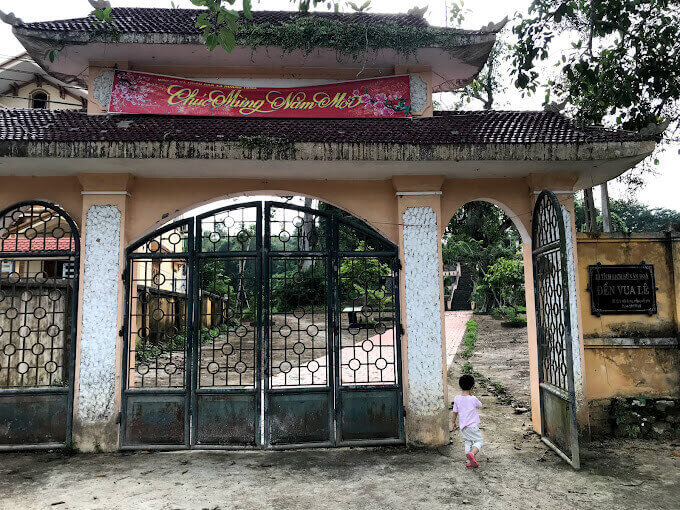
King Le Temple
King Le Temple is located in Den village, Hoang Tung commune, Hoa An district, Cao Bang province, 11km from Cao Bang city center. The temple worships King Le Thai To (also known as Emperor Le Loi Cao). King Le's temple was built on Long mound (ie dragon mound), a high mound north of Na Lu citadel. Inside the citadel, there are 4 raised mounds corresponding to 4 names: Long, Ly, Quy, Phuong. According to legend and historical documents, King Le Temple was originally a palace in Na Lu citadel. The citadel was built by Cao Bien. In the 11th century, Nung Ton Phuc (father of Nung Tri Cao), leader of Quang Nguyen province, continued to build. During the reign of Ly Thai Tong, in the reign of Thong Thuy, in the 6th year, i.e. 1039, Nung Ton Phuc proclaimed himself Chieu Thanh Emperor and changed the name of Quang Nguyen province to Truong Sinh country; Then he built a citadel and a palace at Na Lu. In March 1039, Nung Ton Phuc was destroyed by the Ly dynasty. In 1414, the Ming invaders ruled our country. In Cao Bang, they stationed a Thai governor at Dong Lan mound, Na Lu citadel, forced the people to pay heavy taxes, suppressed and oppressed the people's lives. extremely miserable. Faced with that situation, Be Khac Thieu - a wealthy commander in Cao Bang recruited troops to stand up for an uprising, and at the same time linked up with Nong Dac Thai to organize a fight against the enemy, winning after a fierce battle at Na Khuoi. (September 1426). Be Khac Thieu proclaimed himself Be Dai Vuong, appointed Nong Dac Thai as Marshal of Nong, stationed in Na Lu citadel, and sent troops to rebuild the palace in 1430. In 1592, the Mac dynasty fled to Cao Bang, Mac Kinh Cung took over Na Lu citadel and established a palace. After three generations living in Cao Bang, during the time of Mac Kinh Vu, he was defeated by the Le - Trinh army. The Mac Dynasty abandoned the palace and Na Lu citadel and fled to China. In the 3rd Chinh Hoa year of King Le Hy Tong's reign, in 1682, the governor of Cao Bang, Le Van Hai, asked King Le to repair the old Na Lu citadel as a temple to worship King Le Thai To (King Le Temple today). ; Take the robe and sword to worship at the throne. Before the August Revolution and during the resistance war against the French and the Americans, King Le's temple was a historical relic associated with the Party's activities during the period of national and democratic revolution. Here, in 1936, comrade Hoang Dinh Giong founded the "Anti-Imperial Youth Union". The temple is built in a triangle shape with 3 houses, 7 compartments, walls made of bricks, tiled roofs, trusses, and wooden diaphragms. Around the temple, a 600m long wall was built, in front of the temple there were two courtyards of about 1,000m2. The temple is a place to organize festivals and gather cultural and artistic activities of the people in the region. King Le Temple Festival is held on the 6th day of the first lunar month every year. In addition to the ceremony held early in the morning in the presence of a large number of people in the area, the festival includes cultural and artistic activities, folk games such as Chinese chess, human chess, stick pushing, tug of war... attracts a large number of people to participate. King Le Temple is a valuable historical and educational relic of our people's struggle against invaders, as well as a valuable cultural heritage in terms of architectural and artistic value of the nation. This is also a place to affirm the value of cultural quintessence and pride in the history of the glorious revolutionary struggle tradition of our nation in general and Cao Bang province in particular. On April 20, 1995, King Le Temple was ranked by the State as a National Historical and Cultural Relic. Source: Vietnam National Tourism Administration
Cao Bang 4916 view
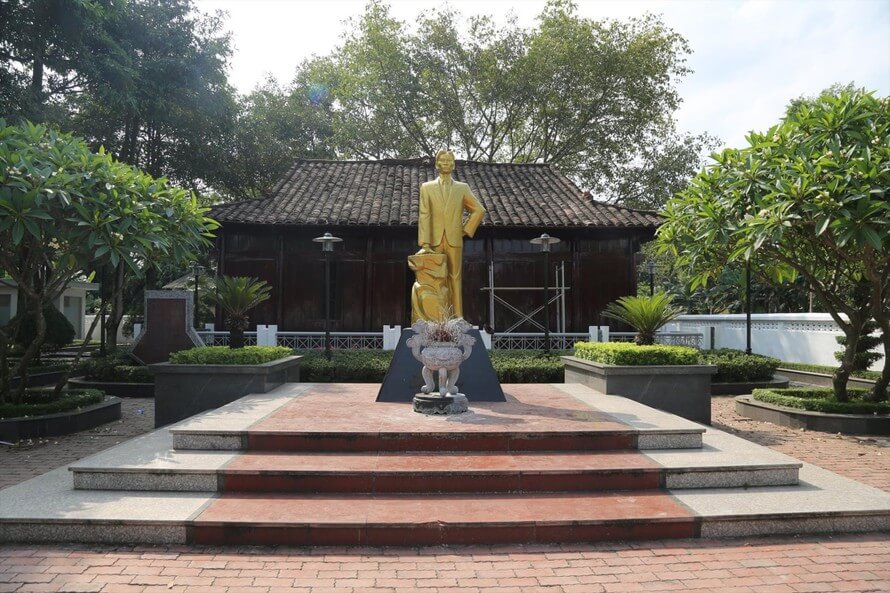
Hoang Dinh Giong relic
Comrade Hoang Dinh Giong's memorial area was built in Na Toan hamlet, De Tham ward, Cao Bang city. The memorial area was recognized as a National Historical Site in 1988. The memorial area is located on a large area of land including the following items: Campus, statue of comrade Hoang Dinh Giong, memorial house. Comrade Hoang Dinh Giong (aka Hoang, Nam Binh, Van Tu, Vo Van Duc, Vu Duc, Le Minh), was born on June 1, 1904, in Na Toan village, Xuan Phach commune, Chau Hoa An (now ward De Tham, Cao Bang City). From a young age, Hoang Dinh Giong was an intelligent student, enthusiastic about studying, deeply influenced by the patriotic and anti-French colonial ideology of his grandfather, Hoang A Ca. In the years 1923 - 1924, he secretly propagated patriotic ideology among students of primary schools in the Town, Hoa An and Ha Quang. In late 1925 and early 1926, he studied at the Polytechnic School, Hanoi, actively participated in the class strike movements of Hanoi students, and participated in organizing the memorial service for patriot Phan Chu Trinh. After a period of activities in Hanoi, he returned to Cao Bang and mobilized a number of young people and students in Hoa An to join the Patriotic Youth Association. In 1927, Hoang Dinh Giong went to China to participate in revolutionary activities, absorbing Marxism-Leninism, the revolutionary ideology of leader Nguyen Ai Quoc, and participating in the organization of the Vietnam Revolutionary Youth Association. In December 1929, he was admitted to the Indochina Communist Party. The Party cell in Long Chau (China) was established, comrade Hoang Dinh Giong was elected Party Secretary, and was directly assigned by the Party to direct the organization, building and development of the revolutionary movement in Cao Bang - Lang Son and Northeast provinces. On April 1, 1930, the first Communist Party cell of Cao Bang province was established, opening a new turning point for the Cao Bang revolutionary movement. Comrade Hoang Dinh Giong built Cao Bang into a bridge between the Party's overseas leadership and the domestic revolutionary movement. Cao Bang Party Committee has successfully completed its tasks during the revolutionary campaign period 1930 - 1935, as well as in later periods. With outstanding achievements, comrade Hoang Dinh Giong was appointed head of the delegation of the Northern Party Committee to attend the First Congress of the Indochina Communist Party in Macau (China) in March 1935; Comrade was elected member of the Party Central Committee's Standing Committee term I. In August 1945, he was the Head of the Provincial Uprising Committee, leading the people's uprising to seize power in Cao Bang. After the success of the August Revolution, he was named Vo Van Duc by Uncle Ho and assigned the task of commanding the Southern army to enter the South to fight against the French colonialists. With his contributions and great contributions to the Party's glorious revolutionary cause, in 1998, the Party and State posthumously awarded comrade Hoang Dinh Giong the noble medal - Ho Chi Minh Medal. . In 2009, the President signed a decision to posthumously award comrade Hoang Dinh Giong the title of Hero of the People's Armed Forces. Source: Cao Bang Newspaper
Cao Bang 5025 view
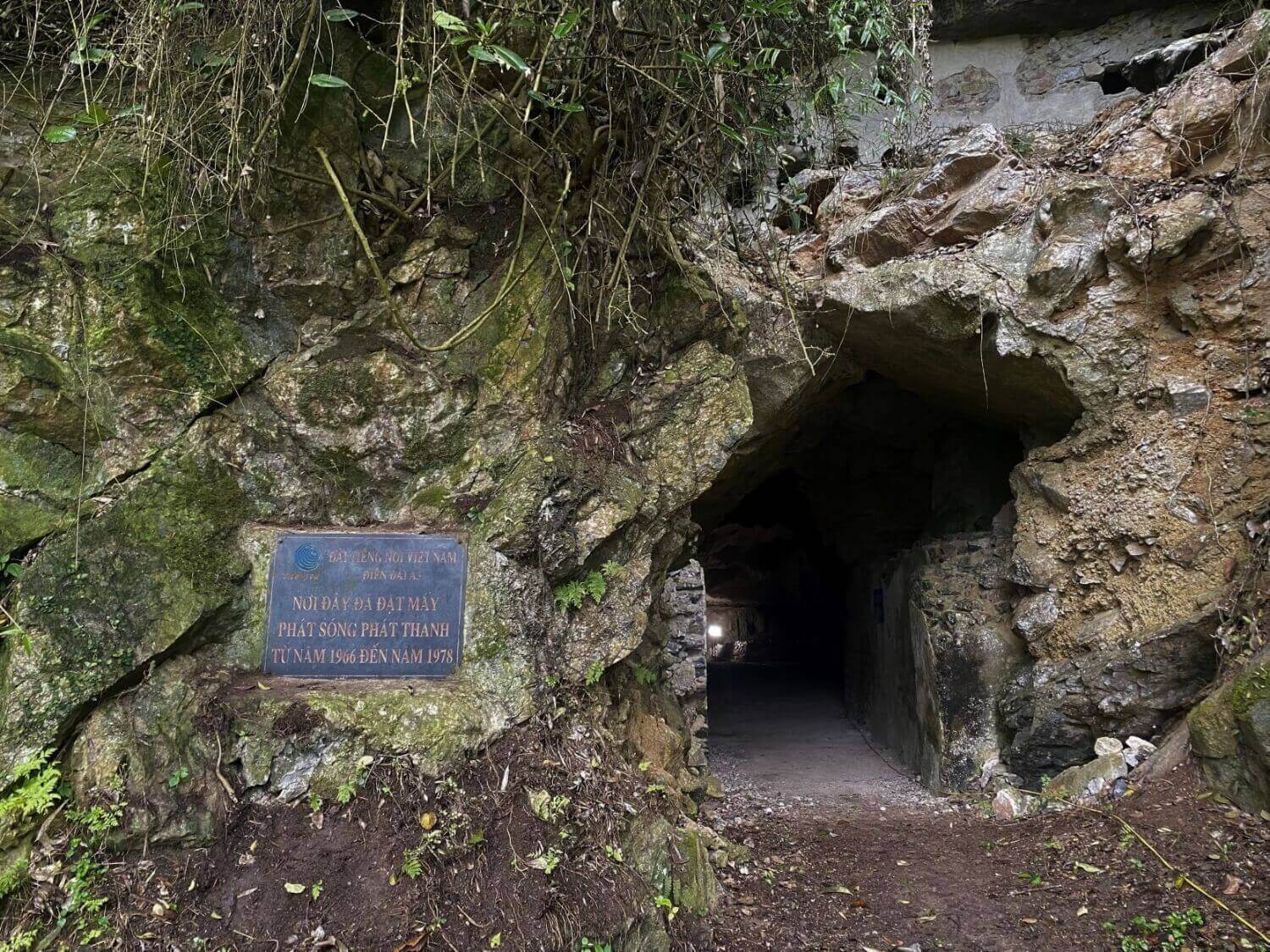
Historical relic site of the Voice of Vietnam at Nguom Chieng cave
Location of the Voice of Vietnam at Nguom Chieng cave (1966 - 1978), in Trung Khanh town, Cao Bang province. Nguom Chieng Cave, with its rugged terrain and solid terrain, was chosen as the place to set up a backup station of the Voice of Vietnam (called Dien Radio A3). The A3 radio broadcasting station was the evacuation site of the Voice of Vietnam during the resistance war against the US invasion from 1966 to 1978. This is one of the important "bases" responsible for relaying and broadcasting. broadcasting to Finland and Northern European countries, contributing to ensuring that the Voice of Vietnam's broadcast is maintained and smoothly, transmitting the voice of the Party and Government, the voice of the Vietnamese people steadfastly. strong and proud on the front line against America, winning independence and freedom for the Fatherland. Over 10 years of operation (from the first day of broadcasting on April 24, 1966 to 1978), Radio A3 has successfully completed its historical mission, marking many memories of the arduous period of resistance against the US to save the country. magnanimity, especially of radio people with their bravery and burning revolutionary enthusiasm. At the beginning of construction, Dien Dai A3 was called Site 50. During the two-year construction period, at one point, up to 300 workers had to be mobilized to pave the way and explore the surrounding area to ensure broadcasting. bar as fast as possible. When chosen as the place to set up a backup station for the Voice of Vietnam, Nguom Chieng was expanded into a very wide and deep cave through the mountain. In front of the cave entrance on the left is a solid stone ventilation house. Inside the cave, 3 houses were built to house generators and warehouses. At the end of the cave is also an empty space and finally the path to the back door is built with 124 steps leading out of the cave behind the mountain and is also where the receiver system is located. Standing here, you can observe National Highway 4A leading to Ban Gioc Waterfall and the surrounding area. In addition to the main cave, there is also a secondary cave with a narrower cave to place the dynamo system. In front of the cave is a row of mechanical buildings on the right, further to the left is the security force's house and the cafeteria. All of these rows of houses are built of very solid and sturdy stone. The more flat and empty space in front of the cave entrance is where the transceiver antenna system is located. Over a long period of time with the impact of nature and humans, currently the houses built in Nguom Chieng cave to place transmitters and radio transmitters have been destroyed, leaving only the tiled and marble floors. The foundation system of the house, at the end of the cave, still has 124 steps leading to the back door where the receiver is located. The small cave on the right to place the dynamo system currently still has a cement and stone pedestal and reinforced steel. In front of the cave entrance, the rows of mechanical houses, the security force's house, the cafeteria and the water tank are still intact, currently only the roof is damaged. All rows of houses are built of solid and sturdy cement and stone. The land area to place the antenna columns is currently the rice fields of people in Bo Da hamlet, Trung Khanh town, Trung Khanh district. Nguom Chieng cave relic has an area of protection zone 1 of 6,616.7m2 and protection zone 2 of 42,016.6m2. With the above typical value, the location of the Voice of Vietnam at Nguom Chieng cave (1966 - 1978), was ranked a National Historical Monument by the Minister of Culture, Sports and Tourism on June 29. /2021. Source: Department of Cultural Heritage
Cao Bang 7307 view