Relic point Vietnam
Việt Nam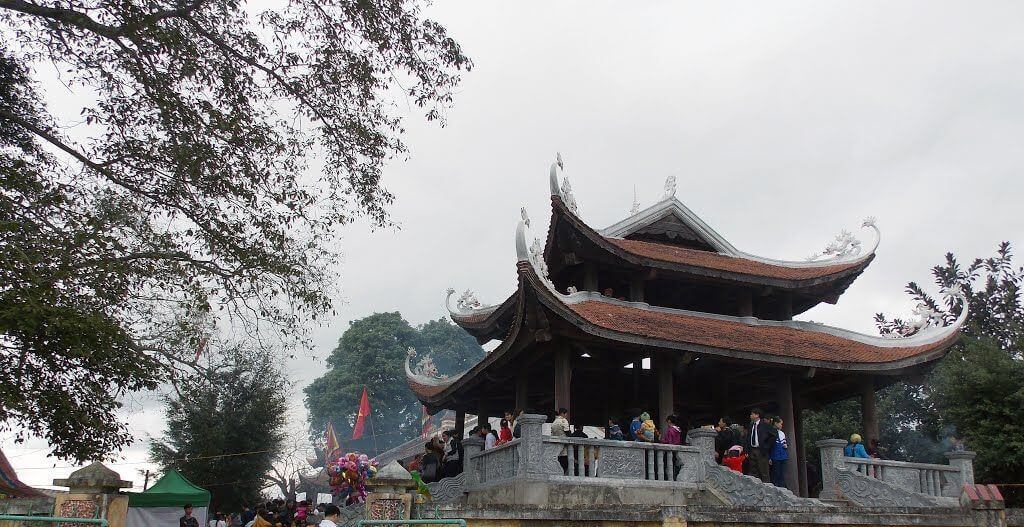
Complex of bell relics at Da District Pagoda, Vien Minh Pagoda, Quan Trieu Temple
Da District relic complex includes 3 ranked tangible cultural heritages, which are Vien Minh pagoda, Quan Trieu temple (both ranked as provincial-level cultural and historical relics in 2008) and the pair of "God" bells. Chung" was recognized as a National Treasure in 2016. Da District Pagoda or Vien Minh Pagoda are both the same. Vien Minh is the literal name of the pagoda, and Da Quan is the name of Duke Mac Ngoc Lien - famous general of the Mac Dynasty, in Da Quan village, Xuan Tinh commune, Thanh Lam district, now Hung Dao commune, Cao Bang city. The pagoda dates back to the Ly dynasty, because in the pagoda there are two parallel sentences as follows: "Vien Minh won the reign of the Ly dynasty, Da Quan worshiped the uncle of Hau Le". Roughly translated: Vien Minh relic was built first, during the Ly dynasty. The Da Quy god bell was cast later, during the Le dynasty. These couplets, as their meaning suggests, also reflect folk legends about the history of the temple. The pagoda is a complete complex with unified architecture, starting with a three-entrance gate and ending with a bell tower. The decorative architecture here takes the idea: "the emptiness of form and emptiness of Buddhism is the root". Opposite the pagoda is Quan Trieu temple. Legend has it that Quan Trieu Temple was built during the Ly Dynasty, during the reign of King Ly Anh Tong (1138 - 1175). Over time and due to historical events, the temple was completely abandoned. When the Mac dynasty moved to Cao Bang to establish its capital, it was restored, now only the old foundation remains. According to the Complete History of Dai Viet, the historical figure of the Quan Trieu Temple Cultural and Historical Relic is Duong Tu Minh, a Tay ethnic person, from Ban Danh land, Quan Trieu commune, Phu Luong district (Thai inheritance). Original). Duong Tu Minh was born and raised in a family whose father was a provincial mandarin, leader of a Tay militia team, fought at the Ung Chau battle, the Nhu Nguyet river battle, and was a military officer of the Ly dynasty in Ban Danh land. , Quan Trieu commune, Phu Luong district, now Son Cam commune, Phu Luong district (Thai Nguyen). As a government official, Duong Tu Minh was respected by all people for his integrity and virtue. But after that, the court was in chaos, mandarins abused their power, and Duong Tu Minh was retaliated against by traitors because of his integrity. Duong Tu Minh was exiled by King Anh Tong to the deep forest and toxic water at the foot of Duom Mountain, Phu Luong district. The heroic general of the past became "the old man of Duom Mountain", but it was that gentle and simple name along with the feats of the past that forever engraved the heroic reputation of Duong Tu Minh in history. Vien Minh Pagoda is one of the three oldest pagodas in the province, its long historical value is engraved in the pair of bells present here. In 1993, this pair of bells had sculptural artistic value. With unique values, in 2016, the pair of bells was recognized by the Prime Minister as a National Treasure. The big bell is 1.75 m high, the mouth is 1.07 m wide; The small bell is 1.55 m high and the mouth is 0.95 m wide. Both are cast from copper alloy, which over time has turned to cast iron color. The bell of Vien Minh Pagoda is one of the few legacies of the Mac Dynasty remaining in this border land. The Da District relic complex, Quan Trieu Temple, where the pair of ancient bells recognized as National Treasures is kept, has great historical and cultural value. Source: Cao Bang Electronic Newspaper
Cao Bang 4961 view
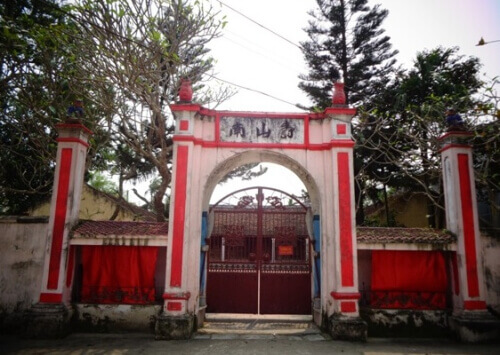
Chu Van Luong Temple
Chu Van Luong Temple (also known as Nam Ngan village communal house), formerly located in Nam Ngan commune, Tho Hac canton, Dong Son district, Thieu Thien district, now Nam Ngan ward, Thanh Hoa city. The temple worships Doc Liet Hau, Chu Van Luong, who was instrumental in teaching literacy, preparing medicine, clearing land, establishing Nam Son hamlet, Nam Ngan camp, and organizing the people here to fight the enemy and defend the village. , had many merits in the war against the Mongol Yuan army in the early 13th century. After his death, King Tran bestowed the title of "Superior Phuc Than" on him and authorized the people of Nam Ngan camp to preserve and worship. The villagers worshiped him as the village's Thanh Hoang. The temple was built during the Tran Dynasty outside the Ma River dyke. In the 4th year of Bao Thai's reign, Le Du Tong (1723) was moved along with Mat Da Pagoda to the current land. Over the dynasties, the temple was repaired by the royal court, bestowing more titles and beautiful titles on the gods. Chu Van Luong Temple was ranked a National Historical and Cultural relic by the Ministry of Culture and Sports on November 6, 1989. Currently, the temple still preserves many unique carvings in the artistic style of the Nguyen Dynasty (19th century), along with many worship objects of the Le and Nguyen dynasties with cultural and historical value such as: Sac altar, throne, tablet, tablet, stone stele... The festival is held on his birthday, the 18th day of the second lunar month and his death anniversary, the 12th day of the 9th lunar month, with many unique folk games and performances. Currently, the temple has the following geographical location: The north borders Duc Tien alley, the south borders Mat Da pagoda and people's houses, the east and west border people's houses. The total land area according to the minutes zoning the protected areas of Chu Van Luong temple relics is 0.140 hectares. The estimated land area for planning research is 0.142 hectares. Source: Thanh Hoa city website
Thanh Hoa 5225 view
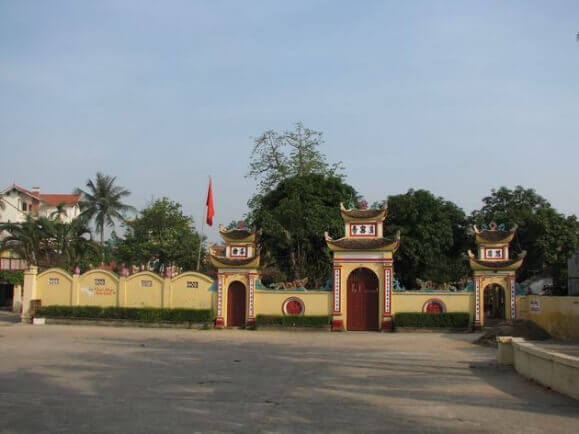
Mat Da Pagoda
Mat Da Pagoda belongs to the Nam Ngan Historical Relics cluster, Nam Ngan ward (Thanh Hoa city), which was recognized as a national historical-cultural relic in 1989. According to the preserved epitaph, Mat Da Pagoda was initially outside the Ma River dyke, in Hoa Binh hamlet, Nam Ngan commune, built in the Later Le dynasty - the fourth year of Bao Thai's reign, the year of Quy Mao 1723. Initially, the pagoda was just a thatched house with mud walls, used to worship Buddha. The Buddha statue is embellished with terracotta and is very beautiful, respectful, and dignified. Mat Da Pagoda is an ancient pagoda of Thanh Hoa that still retains its integrity with the typical architecture of pagodas in the Northern Delta. The word "Mat Da Tu" means a place with fragrant flowers and sweet fruits of Buddha's land, with many blessings, so since ancient times, the pagoda has attracted many visitors from all over to worship, express spirituality, pray for blessings, Do good deeds to help people. The pagoda's landscape and decorative patterns are very unique. The scale of the pagoda has Dinh-shaped architecture, including 5 front halls and 2 back halls. Inside the main hall, there is a large painting painted in gold and carved with three words "Mat Da Tu". In the middle space there are 4 words "Dharma realm Mong Huan". The outermost room hangs a painting with the four words "The three worlds are supreme". The harem is the Three Jewels palace where the Buddha statue is placed. To the southwest of the pagoda are the Monk's house and the Patriarch's house. The structure of the pagoda has a solid wooden frame, ironwood columns, and a curved roof made of terracotta tiles. The pagoda is quite complete with Dharma statues. In particular, the pagoda has two statues of dharma protectors, promoting good and eliminating evil, over 3 meters high. After being built and embellished many times, the pagoda's sculptural architecture has undergone harmonious changes interwoven with the arts of the Tran, Le, Nguyen dynasties... The pagoda has 4 very beautiful statues of merit from the ten directions. At stele number 2 on the left side of the pagoda, it is written that this pagoda was restored during Bao Dai's reign in the 3rd year of Mau Thin, 1928. Mat Da Pagoda is not only a beautiful and sacred pagoda in the hearts of the people, but also bears the mark of a historical relic, instrumental in the war of sabotage of the American imperialist invasion. Officers, soldiers and people of Ham Rong - Nam Ngan never forget the image of the monks in the temple actively participating in the fighting. Mat Da Pagoda became the command post of the battlefield protecting Ham Rong Bridge, a gathering place for food, ammunition, and first aid and nourishment for wounded soldiers. Located only nearly 2km from Ham Rong Bridge as the crow flies, Mat Da Pagoda has become an important place to treat wounded soldiers in the battlefield protecting Ham Rong Bridge. Mat Da Pagoda will live forever with the heroic history of the nation and in the minds of monks, nuns, fellow Buddhists and people of the country as well as of Nam Ngan - Ham Rong, Thanh Hoa. Source: Thanh Hoa Newspaper
Thanh Hoa 5190 view
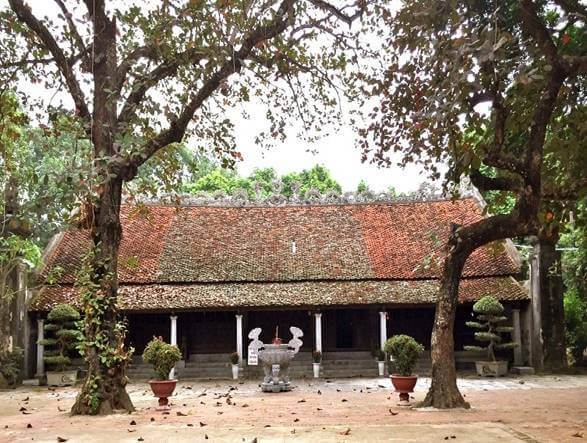
Thai temple of the Later Le Dynasty
Located on Kieu Dai street, Dong Ve ward, Thanh Hoa city, the Later Le Dynasty Thai Temple is quiet and peaceful next to the shadows of ancient trees over 200 years old. A place where posterity pays homage to the Later Le Dynasty - the longest feudal dynasty in Vietnamese history. The Thai Temple of the Later Le Dynasty, also known as Le Temple, Bo Ve Temple, was built in the 4th year of Gia Long (1805) as a common place of worship for kings, queens, Queen Mother, Trieu To, and Hien. Patriarch, Tuyen To and other princes and mandarins of the later Le dynasty. The highlight of the Thai Temple is shown in its unique artistic architecture, in the architectural style of the Late Le and Nguyen dynasties, with works: Nghinh gate, palace yard, front palace, back palace. Through Nghinh Mon is a letter scroll (built in 1805), one of the ancient artifacts still preserved. The Thai temple consists of 2 buildings: the front hall and the back palace, arranged side by side in a overlapping style (Nhi style) with 7 compartments, the roof is covered with funny-nosed tiles, the top is elaborately decorated with the symbol "two dragons". moon adoration". In front of the front hall, there are two 6m high pillars and statues made from jackfruit wood, delicately carved, imbued with ancient sculpture art. In the middle of the Tien Dien hangs a large horizontal panel with 6 words engraved: "Southern country of the mountains and rivers try themselves" (meaning our country of the South comes from here), next to it is a small line of letters recording the year the temple was built, 1805. Despite the changes of time and many restorations, the Le Dynasty Thai Temple still retains many valuable artifacts. This place currently houses the altar tablets of 27 kings, the Queen Mother and the princes of the Later Le Dynasty. Among them are four ancient saints of kings Le Thai To, Le Than Tong, Le Huyen Tong and Le Gia Tong. With its cultural and historical values, in 1995, the Thai Temple of the Later Le Dynasty was recognized as a National Historical Cultural and Architectural Art Monument. More than 200 years have passed, the Imperial Temple of the Later Le Dynasty stands majestically, ancient and sacred, a place for posterity to find, contemplate, and express gratitude to their ancestors, a place to preserve values. History and culture help posterity partly understand a historical development path so that they can be more proud and love the land where they were born and raised. Source: Thanh Hoa Radio and Television
Thanh Hoa 5607 view
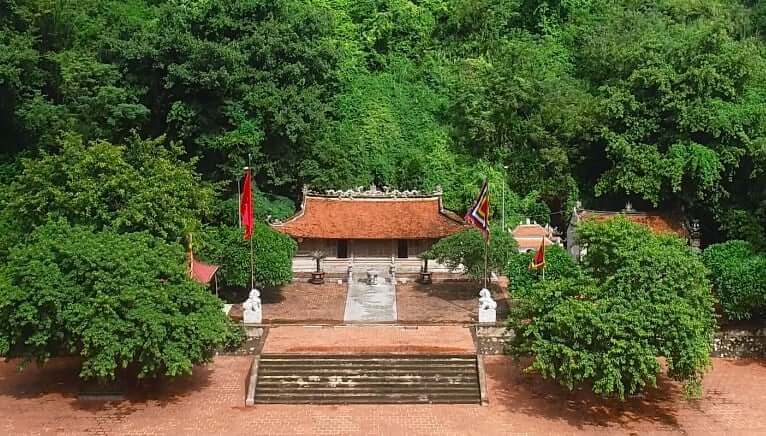
Mai An Tiem Temple
Mai An Tien Temple is located in Nga Phu commune, Nga Son district, 5km northeast of Nga Son district capital. The small, simple temple nestled on the side of the mountain but contains a beautiful legend that has been passed down for generations. The architecture of the temple is quite simple, the temple is structured in the shape of the letter Dinh including 5 Tien Bai compartments and 4 Hau palace compartments modeled after the architecture of Vietnamese communal houses and temples, with a traditional four-pillar gate. The interior of the temple is arranged solemnly and neatly. Visiting the temple of the legendary figure - Mai An Tiem, the creator of the red watermelon, everyone feels moved by the symbol of the spirit of overcoming difficulties, diligence, and creativity in work. Legend has it: During the reign of King Hung Vuong the 6th, Mai Yen - name An Tiem, former Minister of the Ministry of Spring and Autumn, due to his many merits, was loved by the king and gave him his daughter in marriage. Beloved by the king, he was hated and harmed by the feudal lords and generals; once because he displeased the king, he and his family were exiled to a deserted island to live. Thanks to the crows bringing the fruit to eat, Mai Yen tried to chase away the crows and tried it. It was delicious and unusually sweet, so she planted the seeds. The first season gave many fruits and that fruit fed Mai Yen's family. Hey people call it watermelon. One incident followed another, more and more watermelons, Mai Yen's family couldn't use them all, so they thought of a way to carve words into the fruit's skin and throw them into the sea. The tide pushed the melons to shore. The military officer saw this and immediately reported. to the king, everyone ate together and happily praised the deliciousness. The king knew that Mai Yen and his wife and children were not dead but still remembered the king and sought to offer delicious fruits; The king immediately ordered Mai Yen to be brought back to the mainland to restore his title. With profound folk significance, in the first year of Duy Tan, the king ordained Ngoai village, Nga Son district to worship Mai Yen with the title An Tiem Duc Bao Trung Hung Linh Phu chi god. In the 9th year of Khai Dinh, the king conferred the title of Doan Tuc deity and ordered Ngoai village to continue worshiping him. Special standards allow for worship and use during national holidays. In 1989, Mai An Tiem temple in Nga Phu commune, Nga Son district was ranked as a provincial cultural and historical relic. Every year, on the 12th to 15th day of the third lunar month, at Mai An Tiem temple, the local government and people often organize a festival to commemorate and pay tribute to Mai An Tiem, the person who had the merit of discovering and expanding the land. territory, the ancestor of farming for the people in the region. The image of Mai An Tiem and the legend of the watermelon are the strong vitality of our people in the early days of building the country. Source: Thanh Hoa Tourism
Thanh Hoa 5680 view
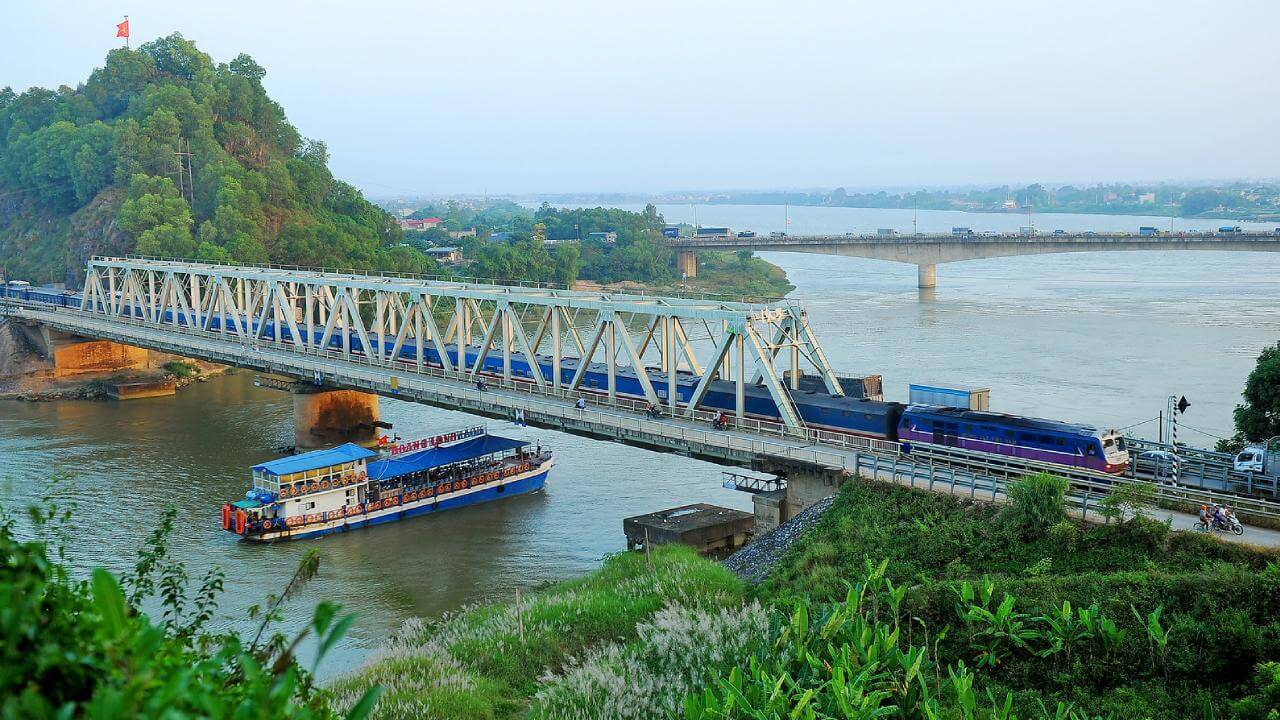
Ham Rong Bridge
The historic Ham Rong Bridge is located on the North - South route of the "masterpiece" land of Thanh Hoa, charming mountains and water crossing the Ma River, with unique architecture, associated with the development history of the land. The heroic land of Thanh Hoa, the strong will of Thanh Hoa people. Ham Rong Bridge is the first bridge to cross the Ma River in Thanh Hoa, nearly 5km north of Thanh Hoa City center... This is also the only railway bridge to cross the Ma River by France. Built in 1904 in the style of a steel arch bridge without pillars, the most modern in Indochina at that time. In 1946, the bridge was destroyed according to the scorched earth resistance policy of the Viet Minh to stop the advance of the invaders. In 1963, the bridge was restored by Soviet and Chinese experts helping to design and construct it, becoming the current pier bridge, with a width of 17 meters, consisting of 2 steel girder spans, with a railway in the middle. , on both sides are car roads and pedestrian roads. During the escalating war against the North of our country, the US Air Force focused on raiding Ham Rong Bridge to cut off important traffic arteries and prevent support from the Northern rear to the major battlefield in the South. The destruction of Ham Rong was chosen by the White House and the Pentagon as the most important goal in the first war of sabotage in the North. With a plot to cut off North-South support, isolate Ham Rong and focus on completely defeating Ham Rong, at 8:45 a.m. on April 3, 1965, the first 16 American planes bombed the area. Thanh Hoa with a series of raiding locations such as Do Len bridge (Ha Trung), Cun bridge (Nong Cong), Van Trai station (Tinh Gia)... In just two days, April 3 and 4, 1965, the US military used 174 groups and 454 aircraft; threw 627 explosive bombs, 58 slow-explosive bombs (including types from 500 to 1,000kg), and hundreds of missiles and rockets into key areas of Thanh Hoa. In the Ham Rong - Nam Ngan - Yen Vuc area alone, the enemy dived 85 times, bombed and bombarded 80 times, threw 350 bombs, and fired 149 rocket shells. To protect Ham Rong Bridge, on our side, in a working session with the Standing Committee of the Thanh Hoa Provincial Party Committee in December 1967, comrade Le Duan affirmed: "If Military Region IV is important, then Thanh Hoa is important." especially because Thanh Hoa is the direct rear of the Binh - Tri - Thien and Laos fronts. Thanh Hoa Provincial Party Committee commented: "The key point of attacking the military zone at this time is Thanh Hoa, the key point of Thanh Hoa is Ham Rong, protecting Ham Rong bridge is to contribute to protecting smooth traffic." Due to the particularly important location of Ham Rong Bridge, at the North and South ends of the bridge there are two mountains, Ngoc Mountain and Dragon Mountain, which can block most falling bombs. After 2 days of stubborn fighting, Thanh Hoa shot down 47 American enemy planes, captured many enemy pilots, and protected the safety of Ham Rong Bridge. This has proven that the Party's people's war policy, the Party's military art and our people's revolutionary heroism have gone down in history as a legend that has stirred up American public opinion and made our friends love us. justice and peace around the world admired. Years passed. Ham Rong Bridge with the two words "Quyet Thang" majestically carved into the mountainside is a shining symbol of patriotism and revolutionary heroism of the Vietnamese people. For every child of Thanh Hoa, Ham Rong - Ma River is also the embodiment of the homeland, both close and familiar, very sacred and proud. Source: Thanh Hoa School of Politics
Thanh Hoa 8755 view
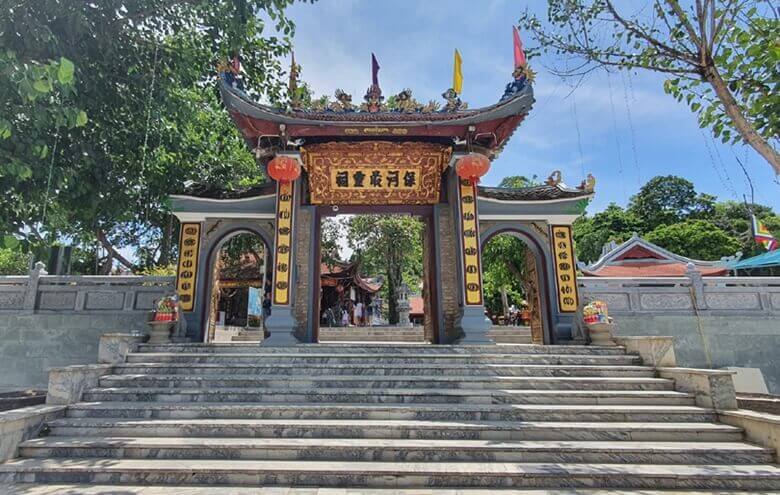
Ong Bay Bao Ha Temple
Located in the "Hoang Bay National Guard relic complex", Bao Ha temple is in Bao Ha commune, Bao Yen district, Lao Cai province. Bao Ha Temple was ranked as a national historical and cultural relic site in 1997. Bao Ha Temple, where the National Guard God Hoang Bay is worshiped, is also known by many people as Ong Hoang Bay Temple. Legend has it that at the end of the Le Dynasty (Canh Hung era 1740 - 1786), the entire land of Quy Hoa district, especially Chau Thuy Vy and Chau Van Ban, were always invaded by invaders from Yunnan (China). In the work "Dai Nam Nhat Thong Tri" of the National History Institute of the Nguyen Dynasty, it clearly states about Thuy Vy continent: "Cam Duong Cave has a gold mine, Trinh Lan Cave and Son Yen Cave in the past had copper mines. Earthly products include cardamom. Ngoc Uyen Cave has zinc and silver mines. On the An River opposite Bac Sat point, there is Tuan Ty station in Nguyen Duong area, collecting salt tax, each year one thousand taels of silver. Language and writing customs are similar to those of Van Ban province. The Nguyen family will forever serve as Tutors. The military name is called Ninh Nhat. After the chaos, the population was devastated and the land was abandoned. The old managers of Huong Son cave and Trinh Lan cave recruited green-shirted Nung people to work on mining fields to pay taxes. The chiefs gathered the Nung and Manh people to live together, but they were difficult to raise and easily followed the enemy. The road from Van Ban district to get there has to go through mountains, which is very difficult. The waterway from Thao River goes uphill, underneath the river there are many jagged and bumpy rocks." At this time, the enemy general, Phu Chan Tin Toong, regularly sent troops to attack Thuy Vy district and capture Van Ban town. Faced with that situation, the Le court sent famous generals of the Nguyen family to defend the border area and advance up the Red River to expel enemy officials to liberate Van Ban province and consolidate and build Bao Ha land into a large base. Here, the famous general Nguyen gathered local lords and chiefs and recruited soldiers to practice day and night. After that, he led the land and sea army to advance to Lao Cai, driving away the enemy troops and forcing them to retreat to the Yunnan - China border area. After liberating the Quy Hoa area, he recruited the local Thoi tycoons to organize a welcome for the Dao, Tho and especially the green-shirted Nung people to set up villages, develop fields, exploit mines and build their homeland. With the plot to take over Lao Cai, the Northern invaders often sent troops to attack the border areas, but those small invasions were fiercely resisted by the army and people in the border areas, driving them back to the country. But their intention to invade still did not stop. They sent a large army led by enemy general Ta Tu Vang Pet to invade the country. Famous general Hoang Bay once again personally sent troops to fight the enemy. However, because the enemy discovered our military secrets, on the other hand, the enemy army was large, the battle was uneven between our army and the invaders, so he and his generals heroically sacrificed their lives, and his body floated down the river. Hong reached Bao Ha commune and washed ashore. People in the area mourned him with sadness, brought his body to bury him and built a temple for people to offer incense all year round to commemorate his and his generals' contributions in fighting the enemy and defending the country. Afterwards, kings Minh Mang, Thieu Tri, and the Nguyen Dynasty bestowed upon him the title "Tran An Hinh Liet". and bestowed the title "Guardian of the Nation". Source: Electronic information portal of Bao Yen district, Lao Cai province
Lao Cai 3730 view
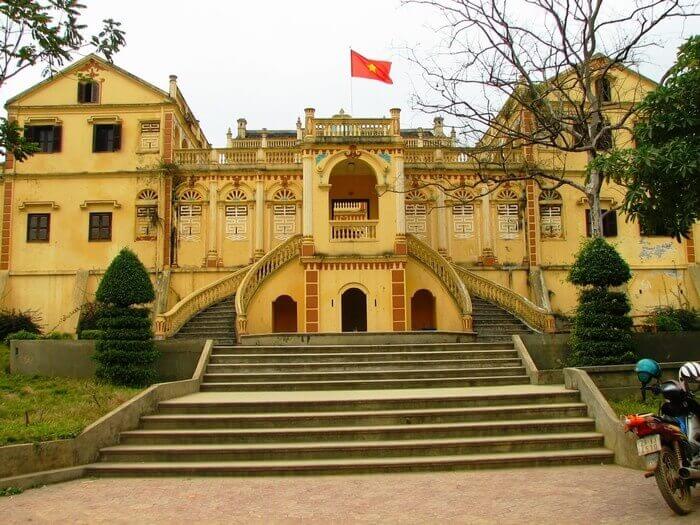
Hoang A Tuong Palace
Cat King Hoang A Tuong's palace is located in the center of Bac Ha district. The architecture is designed in a combination of Asian and European style. Cat King Hoang A Tuong's Palace was built in 1914 and completed in 1921. The owner of this Palace is Hoang Yen Chao of Tay ethnicity, father of Hoang A Tuong. After more than 80 years of existence at the same time, covered with layers of ancient moss, it still stands majestically and prominently in the middle of a densely populated place with bustling streets. The reason this place is also called the Meo King's palace is because before 1945, Bac Ha was under a semi-feudal colonial regime with a ruling and ruled class, exploiters and exploited. Among them, the exploiting class are the local tycoons, typically father and son Hoang Yen Chao and Hoang A Tuong. That's why Hoang A Tuong King Cat Palace was built to partly affirm his authority and wealth. Nearly 100 years have passed, Sa Pa King Cat Palace still stands tall amidst the vast mountains and hills, becoming a famous tourist destination of Bac Ha. Despite nearly 100 years of existence with sun and rain, the Asian - European architecture and beauty of Hoang A Tuong Palace are still the pride of the people here. The entire mansion is built in a closed rectangular shape, 4,000m² wide. To enter the palace, you have to walk up two circular stairs in front of the porch and then reach a large waiting yard. It is said that in the past, this yard was used for dancing for the king. The house consists of two floors with a main room, a common room and a private room for the wives and children. The next smaller rooms housed soldiers and servants. The entire mansion is built of terracotta bricks, bonded with lime and beeswax. Regulations on the tribute of beeswax and opium at that time were also very strict for each family on a monthly basis. The entire roof is covered with ceramic tiles, and the floor is paved with precious wood harvested from the forest. French-style tables and chairs combined with Chinese spiritual architecture. Behind the palace is the Hoang family's underground escape bunker. Hoang A Tuong Palace was ranked as a national historical relic by the Ministry of Culture, Sports and Tourism on June 11, 1999. Source: Vietnam Tourism
Lao Cai 4732 view
Thuong Temple - Lao Cai
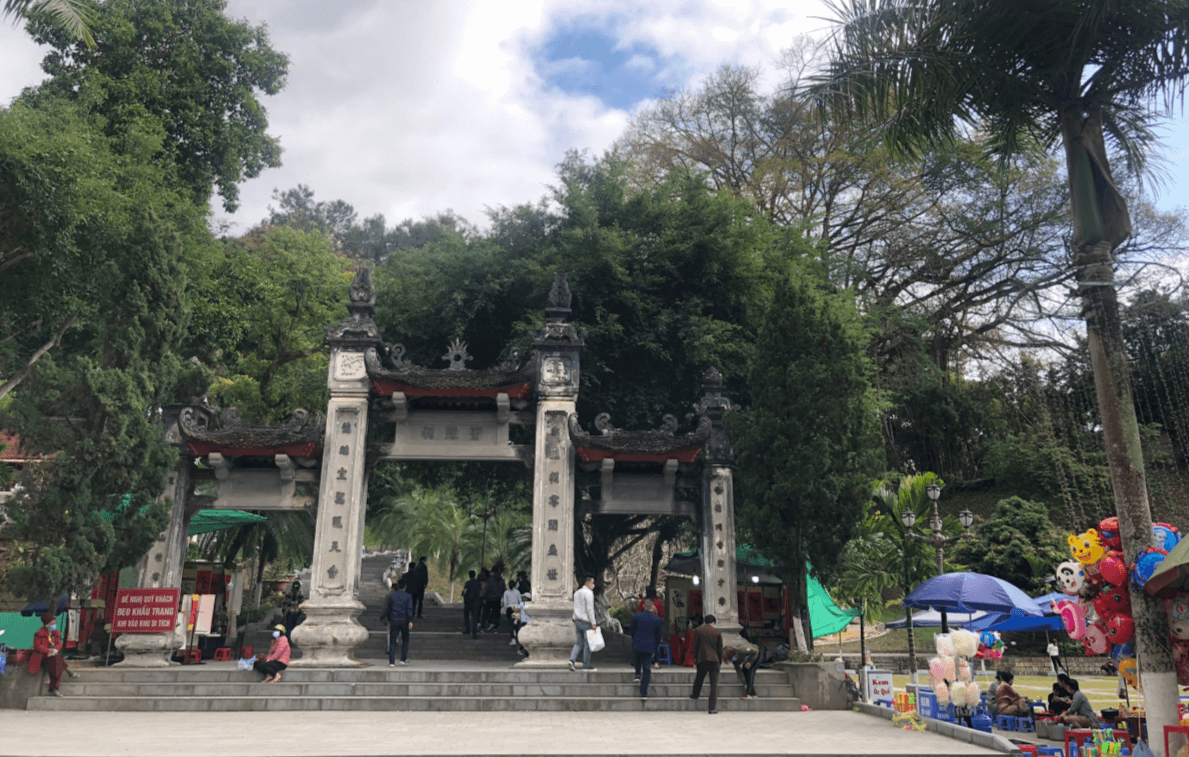
Lao Cai Thuong Temple is also named Saint Tran Tu. Lao Cai Thuong Temple was built on land in Bao Thang street, Chau Thuy Vi, Hung Hoa province, now Lao Cai ward, Lao Cai city, Lao Cai province. Thuong Temple was built during the Le dynasty, Chinh Hoa era (1680 - 1705). It is a place to worship the temperate Duke Hung Dao Vuong - Tran Quoc Tuan, who made great contributions in the career of protecting the country's mountains and rivers. A great historical celebrity, a sacred and noble Saint in the minds of generations of Vietnamese people. Located on Hoa Hieu hill in Mai Linh mountain range with an altitude of 1200m above sea level. Thuong Temple was built in the ancient architectural style of the letter Cong, following feng shui theory which is both majestic and very dignified. The Thuong Temple area has a charming natural landscape and a harmonious combination of traditional architecture and indigenous culture, giving the temple a majestic and splendid appearance. Reflecting on the Nam Thi river, this place once had an extremely important position in the defense strategy against invaders. Today, near the trade gateway between the two provinces of Lao Cai (Vietnam) and Yunnan (China), this sacred land at the tip of the Fatherland welcomes tens of thousands of domestic and foreign tourists every year. commemorate the national hero. Right from the moment they step foot at the temple gate, visitors can admire the beauty of a 300-year-old banyan tree spreading its branches, under the shadow of the ancient tree is a shrine worshiping Ba Chua Thuong Ngan (Queen of the Green Forest). Legend has it that during the resistance war against foreign invaders, she contributed to fighting the enemy to protect the territory of the South. To thank her, the people built a shrine right under the banyan tree with lush branches and leaves. In the main temple area, the horizontal painting "Land of Literature" is hung in front of the Nghi gate, on both sides there are two parallel sentences: "Vietnamese spiritual spirit is not built, Dong A's spirit lasts forever", meaning: " Vietnam's sacred monument stretches across the sky, the Tran Dynasty's pride remains forever. On the back of Nghi Mon's interior, there are the words "Quoc Thai and Dan An" with two parallel sentences: "Heaven and earth are gentle, heaven and earth are old; The golden flower grass is different, the money flower grass" means: "Heaven and earth are still the same, heaven and earth are old; The grass and flowers today are different from the grass and flowers of the past." Thuong Temple was built spaciously with 7 main worship spaces including: The Palace for worshiping Buddha Shakyamuni, The Palace for worshiping the Three Courts of Thanh Mau; Altar of Saint Tran Hung Dao; The palace worships the King and his father Ngoc Hoang... and the altars on the Left Vu - Huu Vu sides worshiping Lady Nhi Son Trang, Twelve Fairies, Attending God and the Temple Boy... are all arranged. placed in order. Next to the Thuong Temple is a square communal house with 4 doors and 8 flanking dragons. In the middle of the communal house is a golden turtle with a stone stele engraved with the name "Holy Tran". This place used to be a resting place for military officers on patrol. Today, it is an ecological forest with all kinds of plants to protect the environment, serving tourists to visit and rest to enjoy the fresh climate. Thuong Temple is located in a cultural relic complex with Tan Bao pagoda, Am temple, Mau temple, Cam temple, Quan temple. In particular, Thuong Temple is one of the most famous sacred temples in the system of temples and pagodas in Lao Cai. Through many restorations and embellishments, in 1996, Thuong Temple was ranked as a National Historical and Cultural Monument. Every year, Thuong Temple holds a festival on the 15th day of the first lunar month, attracting the attention of many domestic and foreign tourists to visit and worship. Source: Vietnam Tourism
Lao Cai 8453 view
Ho Chi Minh Park
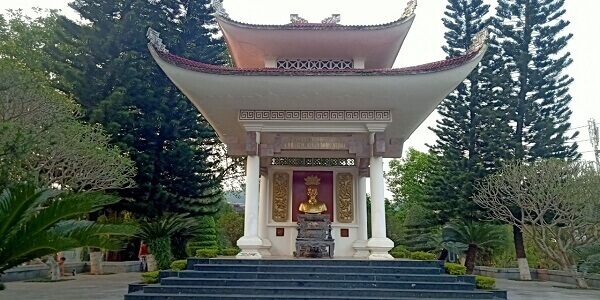
Located right in the center of Lao Cai city, the President Ho Chi Minh memorial site in Lao Cai is often known as "Ho Chi Minh Park", located in Lao Cai ward, Laos city. Cai, Lao Cai province. The relic site is a memorial site, marking the only visit of Uncle Ho and the government delegation to the Party Committee and people of Lao Cai. The relic's location is located on the foundation of the old Lao Cai Power Plant, where Uncle Ho spent time visiting and encouraging workers at the power plant construction project that was about to be completed. In the midst of the country's difficulties, despite being busy with thousands of jobs, President Ho Chi Minh took the time to visit and work with the Party Committee and people of Lao Cai on September 23-24, 1958. Remembering the great contributions of President Ho Chi Minh and appreciating his precious feelings for his homeland Lao Cai, on the occasion of the 40th anniversary of Uncle Ho's visit to Lao Cai (1958-1998), Lao Provincial People's Committee Cai built Uncle Ho's memorial area. In 2022, the Memorial Site of President Ho Chi Minh in Lao Cai was recognized by the Ministry of Culture as a national historical relic. The construction of a memorial to Uncle Ho in Lao Cai is a work of special significance that meets the aspirations of officials, party members and people of all walks of life in Lao Cai, expressing Uncle Ho's affection for the people of Lao Cai. people here, as well as the feelings, love and gratitude of the Party Committee, government and people of all ethnic groups in Lao Cai province towards beloved Uncle Ho. This is a spiritual work for people and tourists from near and far to have the opportunity to express their gratitude, respect, and offer incense to commemorate the great President Ho Chi Minh. Besides, the Memorial Area is also a "red address" to educate young generations today and tomorrow about the nation's history, his background, and his great career. This place is always open to welcome people from all over the country to visit and pay their respects and gratitude to President Ho. Source: Lao Cai City Relics Management Board
Lao Cai 4025 view