Relic point Vietnam
Việt Nam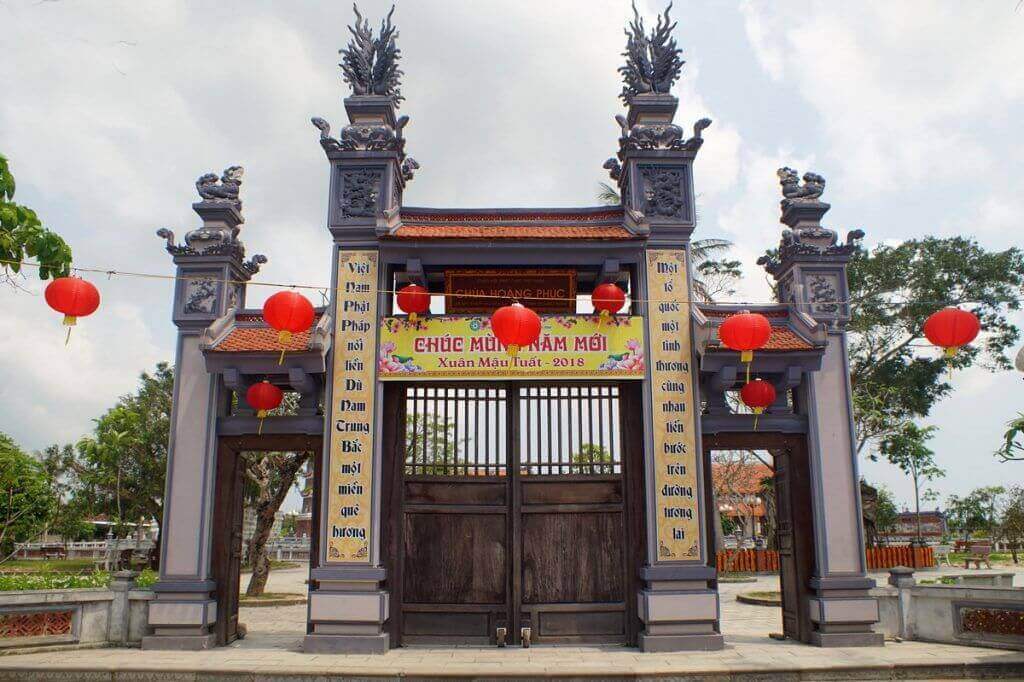
Hoang Phuc Pagoda
Hoang Phuc Pagoda originated as Tri Kien pagoda, Kinh Thien pagoda, commonly known as Tram pagoda or Quan pagoda, in Thuan Trach ward (now My Thuy commune), Le Thuy district, Quang Binh province. After more than 700 years of history, Hoang Phuc Pagoda still exists and develops with many restorations and restorations. In 1609, Lord Nguyen Hoang rebuilt the pagoda on the old foundation and named it Kinh Thien In 1716, Lord Nguyen Phuc Chu visited the pagoda, repaired it, placed two horizontal panels representing "Kinh Thien Tu" and "Unparalleled Blessed Land", and controlled 5 pairs of tureens hanging in the pagoda. In 1821, King Minh Mang visited the pagoda and changed the pagoda's name to "Hoang Phuc Tu". In 1823 and 1826, the king gave 250 taels of silver to repair the pagoda. In 1842, King Thieu Tri, who lived in Bac Tuan province, visited Hoang Phuc pagoda and granted 300 taels of silver to restore the pagoda. Hoang Phuc Pagoda is not only a place to worship Buddha, a place to propagate Buddhism, but also a place associated with typical historical events of the homeland through the ages. During the pre-uprising period, with its location in a semi-mountainous area, surrounded by luxuriant trees and bordering My Tho - Trung Luc, the first Communist Party cell in the south of Quang Binh province was born (1931). ). Hoang Phuc Pagoda has become a revolutionary base, harboring and protecting cadres who come here to operate. Especially in 1943, comrade Bui Trung Lap, an officer of the Central Party Committee, also came here to meet with revolutionary cadres and propagate the Party's policies and fighting spirit to the masses. In early May 1945, according to the instructions of the superiors, the Village Uprising Campaign Committee was established, Hoang Phuc Pagoda was chosen as the meeting place to implement the superiors' uprising instructions and prepare forces. weapons led to an uprising to seize power on August 23, 1945. During those years of fierce struggle, Hoang Phuc Pagoda was a place to hide weapons, a place to recruit and train militia and self-defense forces, and a place where higher-ranking military officers gathered and organized raids. locally, contributing to the overall victory of the resistance war against the French colonialists in Quang Binh. During the resistance war against the US to save the country, My Thuy was one of the communes directly adjacent to the major southern front line. This is the rear base of battlefield B, a gathering place for goods, weapons, and a stopping point before entering the Southern battlefield. Buddhists in Hoang Phuc Pagoda joined local people in fighting and serving in local battles. In 1967, Hoang Phuc Pagoda was destroyed by bombs and bullets after American air strikes. Previously, the system of worship statues at Hoang Phuc Pagoda had quite a large number, designed on 7 worship levels. However, currently the pagoda only has 7 statues of various types with different materials, manufacturing techniques, designs and decorative arts. Among them, there are 5 bronze statues and 2 wooden statues. In particular, the pagoda also preserves a large bell cast in the 20th year of Minh Mang's reign (1839) named Hoang Phuc Linh Chung. In November 2014, the restoration project of Hoang Phuc Pagoda was carried out according to the ancient pagoda style of the Tran Dynasty, including: Three external gates, Three internal gates, Buddha tower, Three jewels, Patriarch church, left and right corridors, gold ammification and other auxiliary works. With the historical values of the pagoda, on December 9, 2015, the Ministry of Culture, Sports and Tourism ranked Hoang Phuc Pagoda as a National Historical Site. Source: Quang Binh Tourism
Quang Tri 4330 view
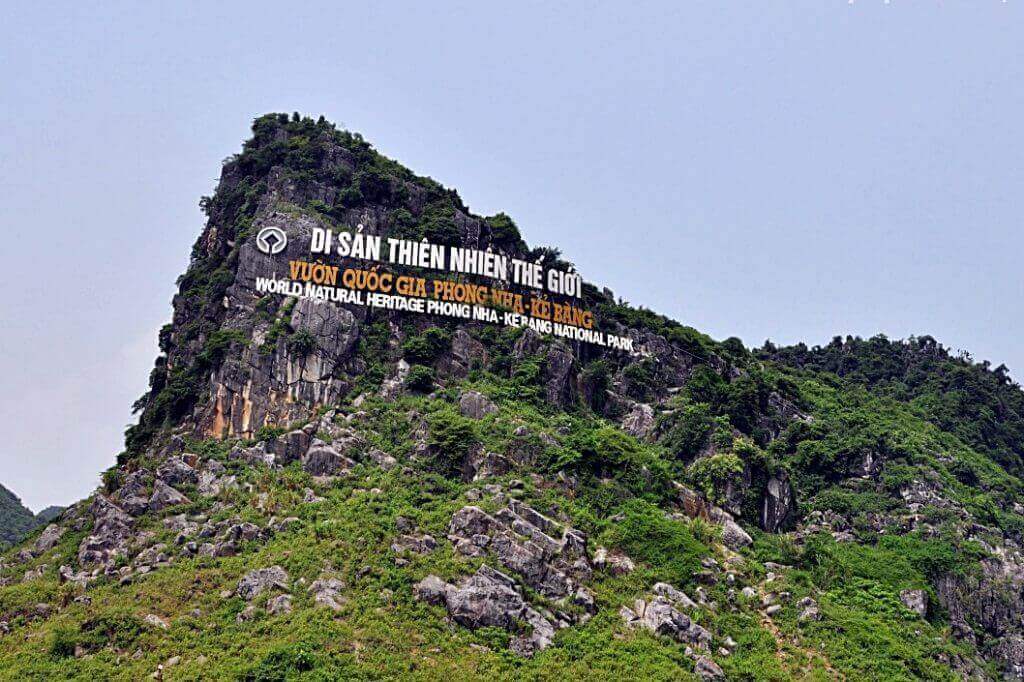
Phong Nha - Ke Bang National Park
Phong Nha Ke Bang National Park Relics is located in the mountains of Central Vietnam, a natural wonder located southwest of the Gianh River. With a unique geographical location, Phong Nha Ke Bang National Park relic borders Laos to the West and Southwest; The north borders Thuong Hoa commune, Minh Hoa district; The Southeast borders Truong Son commune, Quang Ninh District, Quang Binh province. Phong Nha Ke Bang National Monument is not only the largest limestone mountain in the world; This place also possesses magnificent caves, mysterious rivers and beautiful waterfalls. From famous caves known since the 1920s and exploited for tourism since the French colonial period, to recent discoveries from the British Royal Cave Expedition, this monument still fascinates people. fascinated by the beautiful scenes that nature bestowed on this place. The cave system in Phong Nha Ke Bang National Park is the oldest cave in Southeast Asia, with natural impacts from more than 35 million years ago. This is also where diverse ecosystems are formed thanks to the largest limestone block in Southeast Asia, creating favorable conditions for the development of primary forests. With more than 15 habitat types and 10 important vegetation types, Phong Nha Ke Bang covers 83.74% of its area with primary forest. What makes Phong Nha Ke Bang relic stand out is not only its poetic natural landscape, but also its biodiversity. With more than 2,600 species of plants, 735 species of vertebrates and 369 species of insects, including many rare species listed in the red book. This place is also home to many endemic species of primates and bats, contributing to making the ecosystem here rich and diverse. In addition to biological value, Phong Nha Ke Bang National Park relics also preserve many historical relics. From ancient cultural vestiges of the Cham people, ancient Vietnamese, to memorabilia of the resistance war against the French and Americans. All of this has given the Phong Nha Ke Bang relic immense historical and cultural value. Thanks to that, in July 2003, Phong Nha Ke Bang national park relic was recognized by UNESCO as one of the world's natural heritage sites. On August 12, 2009, the Prime Minister of Vietnam recognized Phong Nha Ke Bang National Park relic as one of the Quang Binh historical relics ranked as a special national historical relic. Source: Quang Binh Tourism
Quang Tri 4219 view
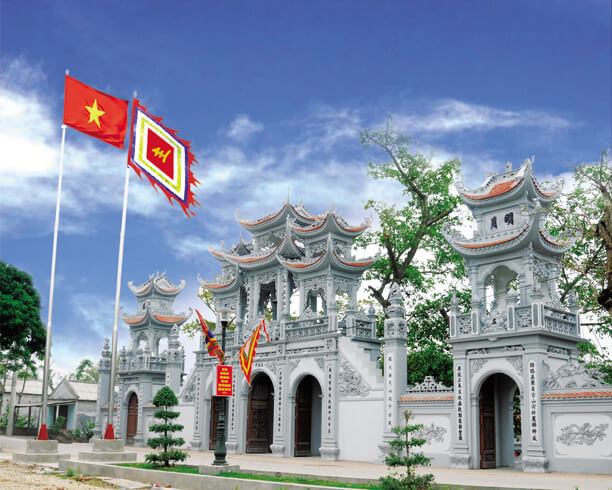
Tien La Temple
Tien La Temple is located on an area of nearly 6000 m2, at Kim Quy mound, Doan Hung commune, Hung Ha district, Thai Binh province. Tien La Temple with ancient architecture "First", "Later" from the rafters to the curved roof with the design of Two Dragons flanking the Moon; The front of the Temple faces the Tien Hung River, near the junction that flows into the Luoc River. Surrounding the Temple are lush, shady green trees. Tien La Temple was recognized as a national historical and cultural relic on November 12, 1986. The temple worships Bat Nan General (General who saved the people from trouble - some places call it Bat Nan or Bat Nao). Vu Thi Thuc was born in 17, died in 43, a famous female general in the Hai Ba Trung uprising who was instrumental in defeating To. Dinh, was given the title: "Dong Nhung Great General" for nearly two thousand years. Princess Bat Nan, general of the Dong Nhung army, was the title Trung Vuong gave to Thuc Nuong (Vu Thi Thuc) when he defeated the Han army. Thuc Nuong was born in her mother's hometown in Huong Da Cuong (now in Tan Tien commune - Hung Ha - Thai Binh), grew up in her father's hometown (Phuong Lau - Vinh Phuc), is a beautiful, dignified and patriotic girl. , loved the people and loved martial arts and martial arts, so she secretly took care of saving the country and helping the people. March of the year Canh Ty (40 AD). The Trung sisters raised the uprising flag, and she followed home to help lead the vanguard. The insurgents won a decisive victory. In 1941, the country was completely liberated. The Trung sisters ascended the throne and established their capital at Me Linh - Vinh Phuc, taking the title Trung Vuong. Tien La Temple has main works such as: Three external gates, Three internal gates, Front altar, Middle gate and Hau palace. Past the three outer gates, the Temple yard is the inner three gates, on both sides there are Lau Cau and Lau Co; Continuing on, you will arrive at the 5-compartment Tien Tien house, built with four-stone wood, the interior is elaborately carved with floral motifs such as: "Dragon - Lan - Quy - Phuong" interwoven with "Pine - Bamboo - Chrysanthemum - Roof ". There are also great inscriptions praising the Trung Vuong dynasty and the virtue and talent of the female general Bat Nan. Next is the Trung Te house, built in the style of a Phuong communal house, with the architecture of "matches piled up". The special thing is that all the house construction materials are made of stone; The entire system of columns and rafters is carved very delicately, in which 4 main columns are carved with four sacred animals; 12 military columns touched dragon clouds; 8 beams carved with pine, bamboo, chrysanthemum, and apricot trees; The column's ribs and 8 stone rafters are carved with garlands and the word Trien; Going deep inside is the harem built with ironwood, consisting of 3 compartments, in which the middle compartment is a throne and a statue worshiping General Vu Thi Thuc, surrounded by her generals. On the roof of the harem hangs the great title "Eternal Heroic Spirit". Legend has it that this is also the place where the tomb of General Vu Thi Thuc's wife, General Vu Thi Thuc, is located. Along with unique architecture, Tien La Temple also preserves many offerings and worship objects dating back to the Tran and Le dynasties; Tien La Temple Festival to commemorate the past merits of General Bat Nan was held on the 15th to 17th of the third lunar month every year. Today, to serve the large number of visitors, the festival's organizing committee has opened the festival since the beginning of March. The main festival is held on the 17th day of the lunar calendar, coinciding with the day of her sacrifice (March 17, Quy Mao year). . Source: Thai Binh Radio and Television
Hung Yen 4384 view
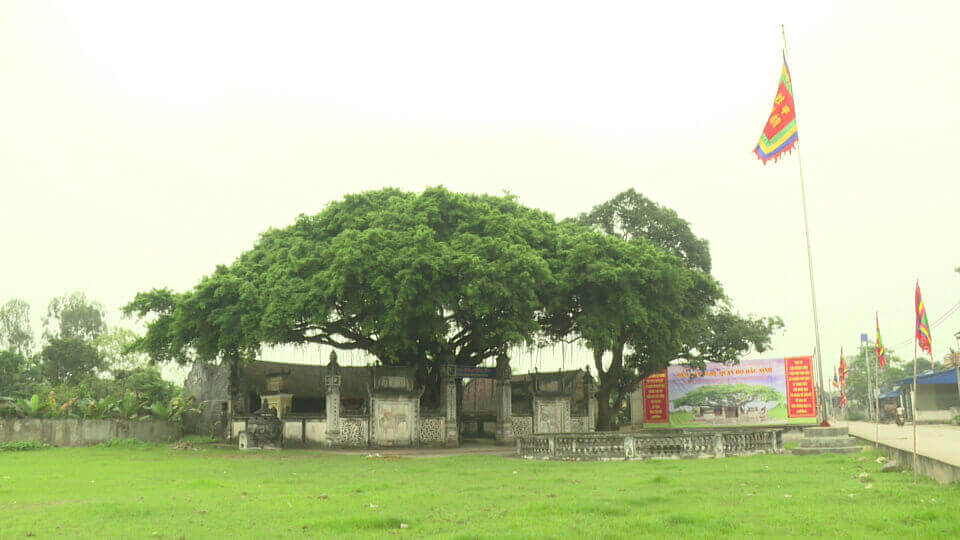
Luu Xa Temple
Luu Xa Temple is a place to worship two famous historical figures of the Ly Dynasty (12th - 13th centuries), Luu Khanh Dam and Luu Ba. Bao Quoc Pagoda was the name given by King Ly to show respect for the mandarins who had many contributions to helping the four Ly dynasties (Thai Tong - Thanh Tong - Nhan Tong - Than Tong) build a prosperous country at that time. . The relics of Luu Xa temple and Bao Quoc pagoda are closely related to each other, forming a cluster of relics because they all share a common historical event. The temple and pagoda are located close to each other at the beginning of Luu Xa village - Canh Tan commune - Hung Ha district - Thai Binh province. Luu Khanh Dam and Luu Ba are two brothers from different mothers, their father is Mr. Luu Ngu - hometown in Cuu Chan district (now Thieu Trung commune - Thieu Hoa - Thanh Hoa). Mr. Luu Ngu was an official in the pre-Le dynasty (Kings Le Hoan and Le Long Dinh) to govern this river junction area. Realizing that the land of Luu Xa at that time was behind the river and in front of the lagoon, the river was winding like "The dragon flanks the tiger", so he set up a palace there and married a local woman. When he first married Ms. Tran Thi Ngoc, she was nearly 40 years old but had no children. He married a woman named Pham. After that, the two women became pregnant and gave birth on the same day, the only difference being that one was born at the Tiger hour, the other was born at the Horse hour, he was Luu Khanh Dam, the younger was Luu Khanh Dieu (Luu Ba). Mr. Luu Ngu brought his relatives from the countryside to live in Luu Xa land. When Ly Cong Uan ascended the throne, opening the Ly dynasty, Luu Ngu's children were soon warmed up and entered the court. Both brothers were mandarins of the same dynasty. As soon as the Ly Dynasty was established, the enemy invaded from the south. Luu Khanh Dam was assigned by King Ly Thai To along with his generals to lead the army to fight the enemy, capturing the king of Champa, Bo Hop, and bringing him back. As soon as the South calmed down, the Song enemy threatened to encroach on the North. He told the king: "I hope your majesty will not worry. Your majesty will personally go to command the four seas, beyond the realms, my servants and loyal brothers and generals will take care of fighting the enemy." During the Ly period, the Song invaders invaded the country three times. We were all defeated by our army and people. Thai To considered Luu Dam to be a man who defeated the south and had a "good plan" (good plan), proposed leaving the capital and appointed him the title of Thai Deputy to open the country, and assigned him to teach and instruct crown prince Phat Ma. Thai To died, Thai Tong ascended the throne, Luu Khanh Dam asked the king to exempt the villagers from service and taxes. When Thai Tong died, Thanh Tong ascended the throne and appointed Luu Khanh Dam as Binh Chuong. At the end of his life, Luu Khanh Dam returned to Luu Xa to repair the village pagoda and practice there. While in the village, together with monks Giac Hai, Duong Khong Lo, Nguyen Minh Khong organized for the people "Opening the Luoc River", "Making the Sinh River", "Digging the Hoa River" in Thai Binh. When he passed away, King Thanh Tong returned to attend the funeral ceremony. Because he was a founding citizen, the king gave the name of the pagoda where he practiced as "Bao Quoc Tu", gave him the title of king, and bestowed the title "Chinh Chieu Cam" ”, and built a 9-foot high, 9-storey tower next to King Luu Dam's mausoleum. The villagers of Luu Xa thanked him for building the temple and honored him as the village's Thanh Hoang. When Ly Nhan Tong ascended the throne, he bestowed upon him the four beautiful words "Showing spiritual understanding", and the following dynasties all granted him the title of deity. His temple (Luu Xa temple) and Bao Quoc pagoda were ranked national historical and cultural relics in 1990. Source: Thai Binh Department of Culture, Sports and Tourism
Hung Yen 7223 view
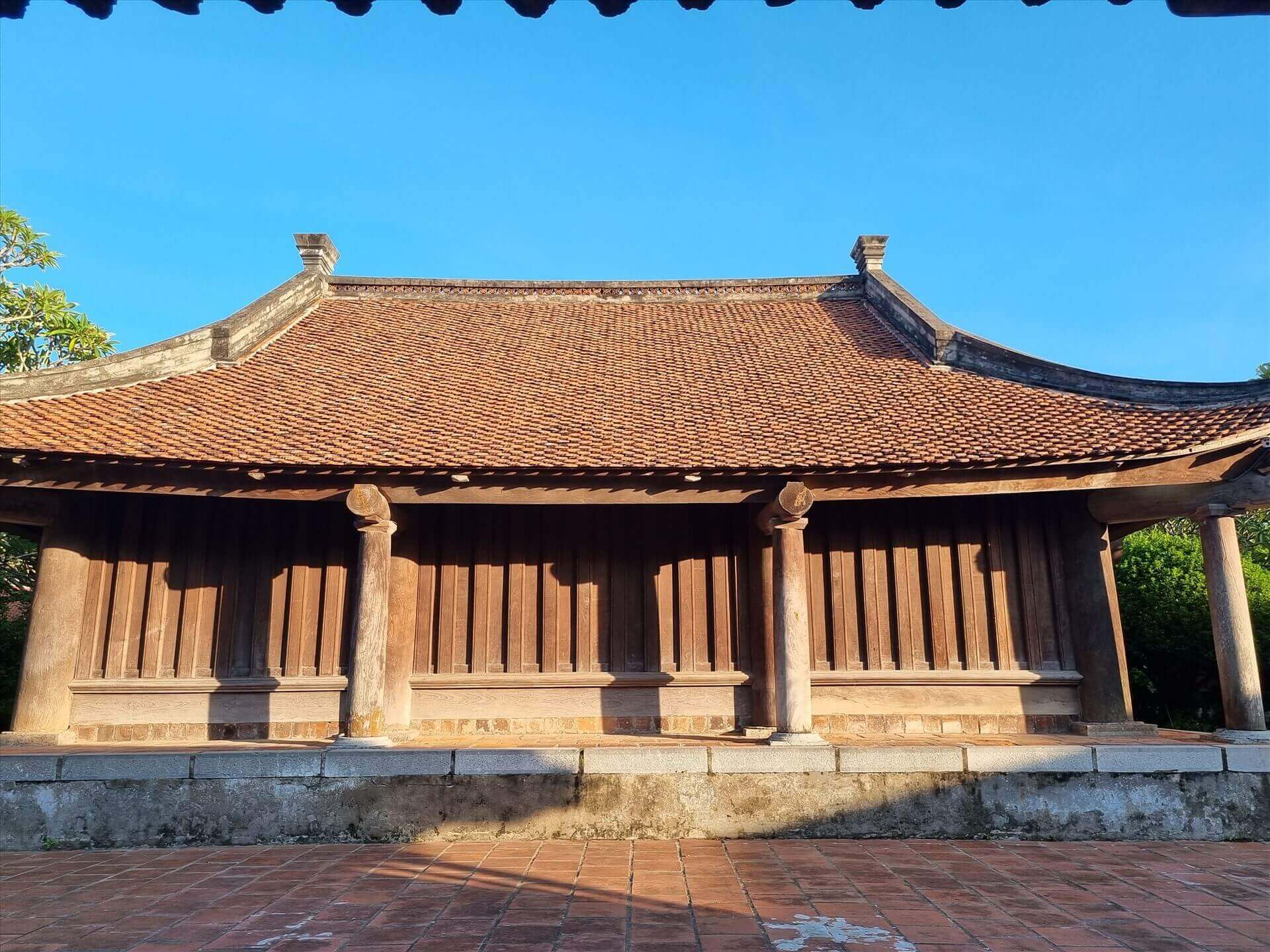
Keo Thai Binh Pagoda
Keo Pagoda (Than Quang Tu), located in Hanh Dung Nghia village, Duy Nhat commune, Vu Thu district, Thai Binh province. According to historical documents, in the year Tan Suu, the 3rd year of Chuong Thanh Gia Khanh (1061), Ly Thanh Tong's reign built Nghiem Quang pagoda on Giao Thuy land (Keo village/Keo hamlet), in present-day Nam Dinh. In the third month of Dinh Hoi year, the 5th year of Chinh Long Bao Ung (1167) under Ly Anh Tong, this pagoda was renamed Than Quang pagoda. In the year of Tan Hoi (1611), a big flood caused the pagoda to be washed away, and the people of Keo hamlet had to relocate to two places: a part settled in the Southeast - right bank of the Red River (now in Hanh Thien village, Xuan commune). Hong, Xuan Truong district, Nam Dinh); A part settled in the Northeast - left bank of the Red River (now in Hanh Dung Nghia village, Duy Nhat commune, Vu Thu district, Thai Binh province). Thus, after 1611, Keo village (originally in Nam Dinh) was divided into two villages. After that, the two villages rebuilt the pagoda, the Nom name was called "Keo pagoda". To distinguish, people often call Keo Pagoda in Thai Binh Keo Thai Binh or Keo on; Keo Pagoda in Nam Dinh is Keo Nam Dinh or Lower Keo. Keo Thai Binh Pagoda was built in 1632, the literal name is Than Quang Tu. In addition to the function of worshiping Buddha, Keo Thai Binh pagoda as well as Keo Nam Dinh pagoda are also places to worship Saint Duong Khong Lo and those who had great contributions in its construction. Keo Pagoda (Thai Binh) usually holds festivals twice a year. The Spring Festival is held on January 4, with the nature of an agricultural festival. Keo Thai Binh Pagoda includes 21 large and small items (154 rooms). Over the past 300 years, the pagoda has been renovated and embellished many times, in 1689, 1707, 1941, 1957, 2004. In terms of scale, layout, features and architectural art, the pagoda can be considered Keo (Thai Binh) is one of the brightest works in the "pre-Buddhist, post-Saint" pagoda system as well as the "hundred-room" pagoda system in Vietnam. The main architectural items of the monument include: The external three-door gate consists of 3 compartments, two wings, wooden frames, 4 pillars, and a tiled roof. The internal three-door gate is behind the lake (square shape), wooden frame, including 3 compartments, two wings, 3 rows of pillars, 4 sets of railings, and a tiled roof. The Buddhist pagoda is built on a Cong-shaped ground, consisting of 3 buildings (Ho pagoda/Ong Ho pagoda, Ong Ho pagoda, Tam Bao pagoda). The Holy Temple was built in the form of the Cong character's plan, including 3 buildings: Incense Burner (5 compartments), Morning Glory Tube (3 compartments), Thuong Dien (5 compartments). In front of the temple is the Gia Roi court (5 rooms). The bell tower is made in the form of an ancient match stack, consisting of 3 floors, 12 roofs, wooden frame, and funny-nosed tiled roof. Two rows of corridors East and West were built around the Buddhist Pagoda - Holy Temple, in the front through the hedge and the internal Tam Quan gate, in the back connected to the Bell Tower, forming the Quoc crossword. The two corridors are built on an L-shaped plan, with wooden frame structure, tiled roof, each row has 33 compartments. With the special cultural, historical, and scientific values of the monument, the Prime Minister has ranked Keo Pagoda as a historical, cultural, and architectural relic - a special national monument. Source: Department of Cultural Heritage
Hung Yen 4083 view
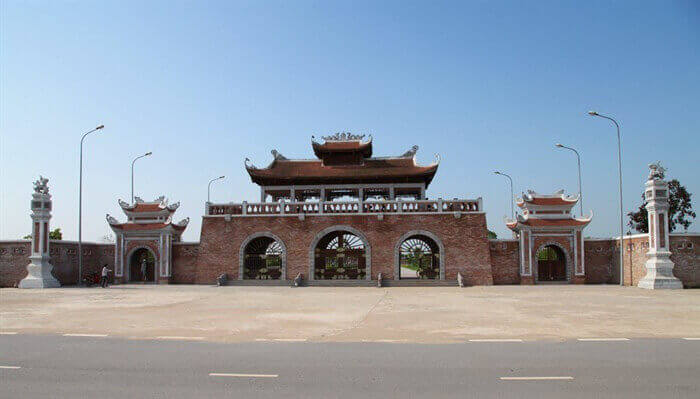
Tombs of 3 Tran Kings (Special National Monument)
The tombs and temples of the Tran dynasty kings belonged to the ancient Long Hung palace, a land with a particularly important geographical - economic - political - cultural position, associated with many historical events of the Tran dynasty and the Vietnamese history. national history, was the rear, a solid foundation, for the Tran Dynasty to replace the political role of the Ly Dynasty. 1. Tomb area The land of Long Hung was originally the place where the Tran dynasty built its business, so it was given special attention by the Tran dynasty and assigned to princes. The place where the Tran family's ancestors' tombs are located in Tinh Cuong village (now in Tam Duong village, Tien Duc commune, Hung Ha district, Thai Binh province) continues to be chosen as the resting place of the early kings and royal family of the Tran dynasty. : Grandfather Tran Thua was buried at Tho Lang; Thai Tong was buried in Chieu Lang, Thanh Tong was buried in Du Lang, Nhan Tong was buried in Duc Lang. After the death of Thai To Tran Thua, Tinh Cuong incense was officially renamed Thai Duong (the mausoleum of the king and royal family). The current tomb area of the Tran kings has a total area of 38,221 square meters, known by the people as Part Da, Part Trung, Part But, corresponding to Chieu Lang, Du Lang, Duc Lang - the resting place of Tran Thai Tong and Tran. Thanh Tong, Tran Nhan Tong and 01 temple worshiping Emperor Tran Thua, Tran Thai Tong, Tran Thanh Tong, Tran Nhan Tong. All three mausoleums were renovated in 2004. 2. Temple area Currently, the temple area includes the following items: the King's Temple (in the middle), the Holy Temple (in the East, to the left of the King's Temple) and the Mother Temple (in the West, to the right of the King's Temple). These three structures all face south, towards the mausoleum area, arranged in horizontal rows, sharing the same festival yard, ceremonial path, and main door (Ngo Mon). King's Temple: built with an area of 6,498m2, the place to worship the three early kings of the Tran Dynasty (Tran Thai Tong, Tran Thanh Tong, Tran Nhan Tong), worshiping Emperor Tran Thua and the ancestors and ancestors of the Tran Dynasty were Tran Kinh, Tran Ham, Tran Ly, and two people who were instrumental in starting the Tran dynasty, Tran Thi Dung and Tran Thu Do. The temple faces south, including items: gate, sacrificial yard, jade well, gate to Thanh temple, Mother temple, rear entrance gate of the temple, front sacrifice, middle sacrifice, harem and two dance halls. Holy Temple: built in the traditional format, area of 6,011m2, including items: gate, sacrificial yard, gong building, drum building, front altar, communal house, middle worship, harem and dance ceremony... The temple is The place to worship Hung Dao King Tran Quoc Tuan, his wife Nguyen Tu Quoc Mau and his two daughters, Princess Quyen Thanh and Princess Dai Hoang. Mother Temple: worships national mothers and princesses at the beginning of the Tran Dynasty, total area of 6,228 m2, with items: jade well, screen, sacrificial yard, dance ceremony, pre-sacrifice, middle sacrificial ceremony and harem... 3. Tran Dynasty archaeological relic site Tam Duong archaeological site (Tran dynasty), Tien Duc commune, Hung Ha district, Thai Binh province, has been archaeologically excavated many times, discovering architectural traces and many artifacts of historical value. , culture, science, dating from the Ly to Nguyen dynasties, especially the group of artifacts from the Tran dynasty,... proving the value and existence of relics through historical periods. The historical - cultural value of the relic is also expressed through traditional festivals, held annually at the temple area of the Tran Kings from January 13 to 16. With special historical, cultural, and scientific values, the historical site of the Tombs and Temples of Tran Dynasty Kings (Hung Ha district, Thai Binh province) has been ranked as a special national monument. . Source: Department of Cultural Heritage
Hung Yen 4701 view
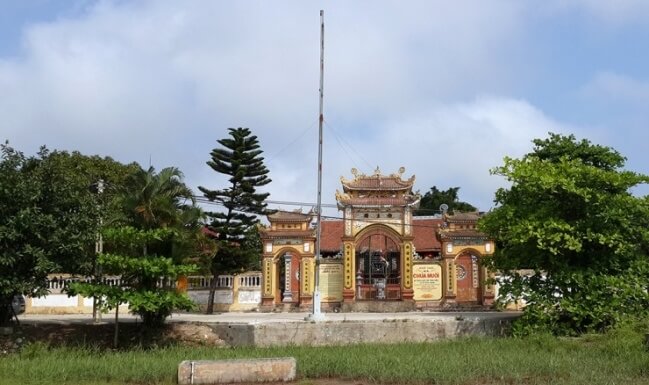
Temple of the Salt Lady
The temple worships Ba Chua Muoi (ie the temple of Concubine Nguyen Thi Nguyet Anh), the third wife of King Tran Anh Tong. The palace and temple of Lady Chua Muoi are located in Thuy Hai commune, Thai Thuy district, Thai Binh province. Ancient books recorded: Lady Muoi's real name is Nguyen Thi Nguyet Anh, born in 1280 at Quang Lang site, Thuy Van district, Thai Binh district (now Thuy Hai commune, Thai Thuy district, Thai Binh province) in a family. work in salt. Since childhood, she had an unusual appearance, read books and was very intelligent. Every time she finishes school, Nguyet Anh often goes to the fields to help her parents work. But every time she helps her parents, wherever she goes, the weather gets shady, while salt making requires sunlight. The stronger the sunlight, the more beautiful the salt. Worried about the traditional profession and livelihood of local residents, the village elders gathered together and discussed a plan to build her a boat to bring salt to trade elsewhere. During a trade, her boat parked at the river wharf near Thang Long citadel, coincidentally right on the occasion of King Tran Anh Tong's business trip across the river. By fate, the king was so captivated by her beauty that he took her to the palace, showered his love on her, and made her his third concubine. But unfortunately, she could not give birth to a child and became sad and sick. After that, King Tran Anh Tong took her back to her maternal hometown in the hope that her illness could improve. Seeing the Queen sitting by the window overlooking the village's salt fields every afternoon, the shepherd children gathered around her to use mannequins to dance around her to relieve her sadness. One afternoon, while watching the children dancing happily, she laughed and escaped (April 14, Year of the Dog). When the king heard the news, he was extremely merciful, ordained her as a Blessed Deity and allowed the people to build a temple called the Temple of the Salt Lady. Over time, the temple was damaged and demolished. In 1988, people in the area temporarily rebuilt a small palace to worship her. In 2012, the Ministry of Culture, Sports and Tourism restored this monument. The current palace has 3 rooms, with a harem and altars and statues; In the palace, there are a number of specific items related to the salt making profession such as wheelbarrows, ladles to scoop water for salt and water, rakes for salt on the drying yard... Ba Chua Muoi temple still preserves a banner of conferral of conferments from the Tran and Tran dynasties. two sets of ancient couplets. The temple is a special architectural work combining temple and pagoda, located on Trang Quang Lang land. The pagoda facing North is the place to worship Shakyamuni Buddha. The temple facing south is the place to worship Saint Mother Tam Phi Nguyen Thi Nguyet Anh (ie Lady of Salt). This is the most beautiful temple - pagoda, in the stone stele in 1596, there is the following passage: "Thai Binh's fairy tale is famous for its national pagoda, the traditional version is only famous, and the Nam Bang is famous for its scenic beauty..." Meaning: "The area Thai Binh Hung Quoc Pagoda is a traditional scenic place, the most precious scenic spot in the South..." Source: Vietnamese Rural Newspaper
Hung Yen 7676 view
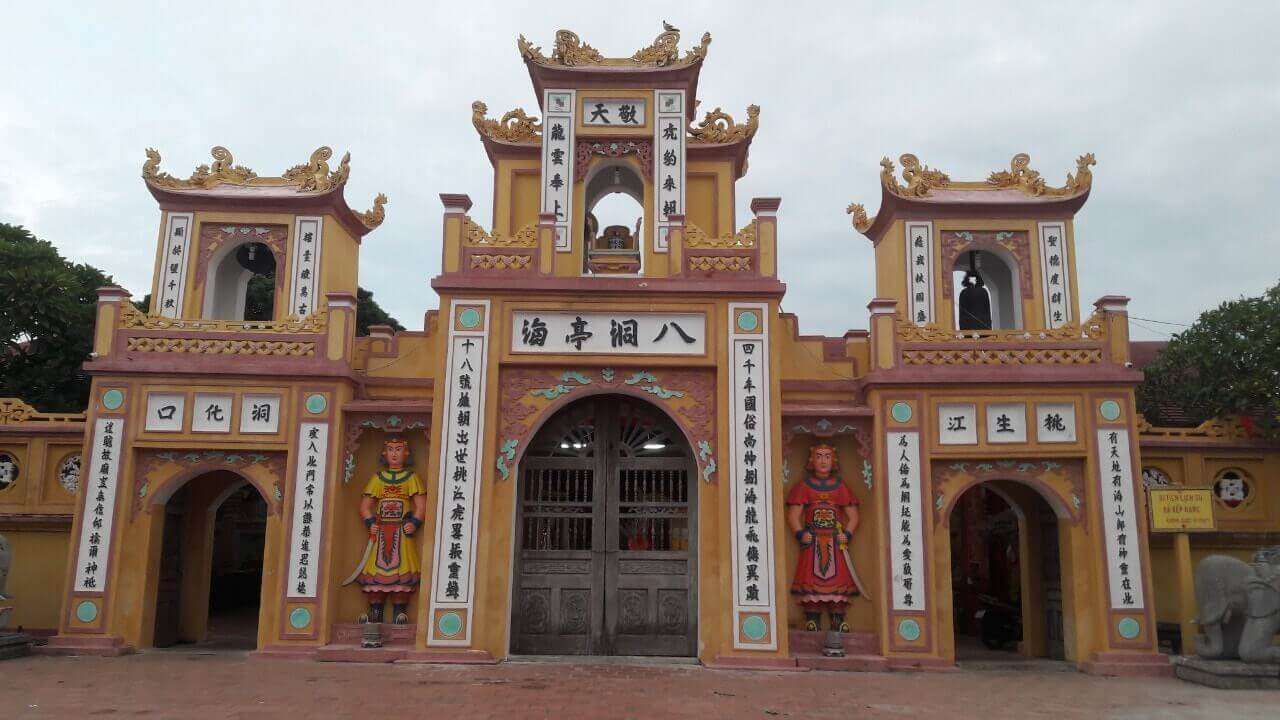
Dong Bang Temple
Dong Bang Temple is located on the Diem river in Dao Dong site, Vong Lo district, Phu Phuong district, now Dong Bang village, An Le commune, Quynh Phu district, Thai Binh province. The temple's self-name is Bac Hai Linh Tu, a place to worship Father Bat Hai Dong Dinh - a person who made great contributions to pacifying Thuc to defend the country and recruit people to establish hamlets and build the country and society in the early days. Dong Bang Temple is known to the people as a sacred temple dating back to the reign of the 18th Hung King. The temple has the title "Tam Ky Linh Ung - Vinh Cong Great Vuong, Supreme Spirit". Legend has it that, during the reign of King Hung Vuong 18, our country was invaded by foreign invaders, the court had to set up an altar to summon Linh Son Tu Qi to help the country defeat the invaders. At that time, the water god of Dao Dong village appeared to assist the king in defeating the enemy and had the first contribution in guarding the eight western estuaries. He was ordained as "Tran Tay An Tam Ky Linh Ung - Vinh Cong Great King, Supreme Spiritual God". Since then, this place has been a spiritual place admired by people from all over and built temples. In the 13th century, Dao Dong village was also one of the important military defense lines of the Tran Dynasty, where soldiers were stationed and practiced naval warfare. Before going into battle, Hung Dao Dai Vuong and his generals all came to offer incense and pray at the temple. After his death, he was worshiped here by the people. Since then, Dong Bang Temple has also been a place to commemorate Hung Dao Vuong and the generals of the Tran Dynasty during the three great defeats of the Mongol Yuan army and the establishment of eight ancient Dao Dong sites. Not only does it have respectable historical values, Dong Bang Temple is also a valuable architectural and artistic relic such as a museum of bronze, stone and wooden art with an internal area of 6,000 square meters, including 13 buildings and 66 compartments are closely linked together to form a temple complex with a closed, imposing "first, second, second" style structure. The architectural pieces are in harmony with sophisticated carvings, hundreds of horizontal panels, couplets, great characters, lacquered and gilded scrolls on the themes of four sacred animals, four precious animals, sets of incense burners, altars, and dragons. The thrones and exquisite, beautiful wooden sculptures from the Khai Dinh and Bao Dai dynasties are still preserved intact. Because of the legends, historical and artistic values, Dong Bang Temple is known as the temple of inspiration and four seasons of incense and smoke. In particular, in 1986, Dong Bang Temple was recognized by the Ministry of Culture, Sports and Tourism as a national historical and cultural relic. According to annual custom, the Dong Bang Temple Festival is held for about a week from August 20 to the 26th of the eighth lunar month. The festival attracts a large number of disciples, people and tourists from near and far. . Dong Bang Temple Festival preserves traditional cultural beauties and noble human values, and is an opportunity to express gratitude, the tradition of "drinking water, remember its source" and the people's admiration and respect for the people. with His Majesty Father Bat Hai Dong Dinh and commemorate the death anniversary of National Cong Tiet Hung Dao Dai Vuong. Source: Department of Culture, Sports and Tourism of Thai Binh province
Hung Yen 7411 view
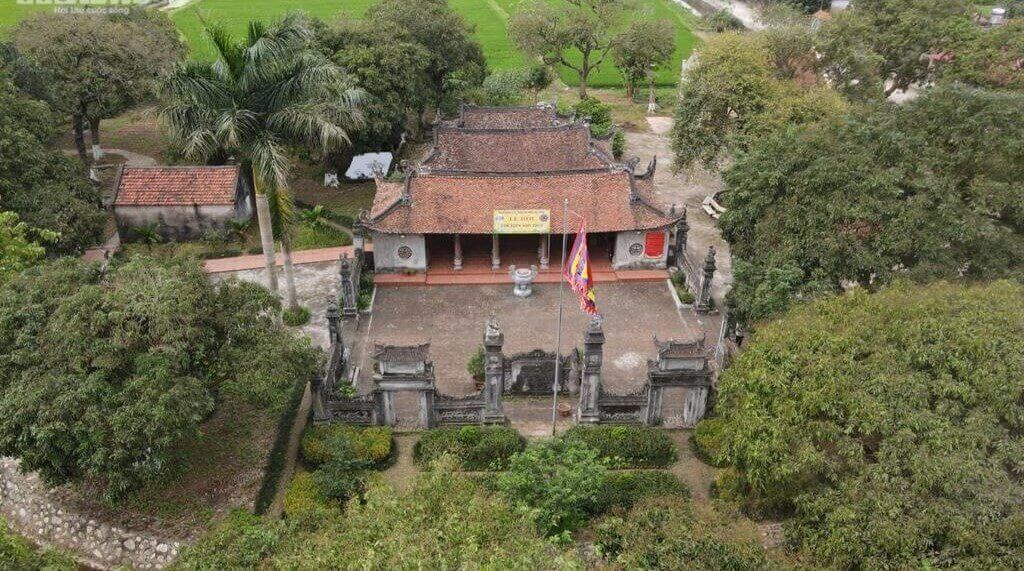
Hai Thon Temple
Hai Thon Temple, formerly belonging to Cu Lam canton, now Phuong Tao village, Xuan Hoa commune, Vu Thu district, Thai Binh province, is a historical relic worshiping King Ly Nam De and Queen Do Thi Khuong Nuong, and has been recognized by the State. Recognized as a national historical and cultural relic on December 12, 1986. This temple still preserves many historical and cultural values of our nation during the process of building and defending the country. Ly Bi was a local chief from Long Hung district (Son Tay) along the Red River, above Son Tay town. Since childhood, he was talented in martial arts and intelligent, and at the same time he was also a person who loved the people very much. The feudal army of the North dominated, the Liang Dynasty (Northern and Southern dynasties) oppressed our people extremely hard, he quit his position as an official in Chau Doc - Ha Tinh and returned to his hometown to plan big things. Hating the Liang army, he summoned soldiers and horses, gathered patriotic heroes and received support from heroes everywhere such as: Trieu Tuc - Chief of Chu Dien (son of Trieu Quang Phuc), Tinh Thieu, Pham Tu... Among them, veteran general Pham Tu, even though he is over 60 years old, is still very enthusiastic about practicing. In the spring of 542, Ly Bi raised the flag of rebellion, marched and continued to recruit soldiers. When passing through Thai Binh, he stopped at An De Trang (in Phuong Tao 2 village - Xuan Hoa - Vu Thu - Thai Binh now). Because he saw the charming scenery and favorable terrain for training troops, he immediately ordered his soldiers to build a palace here. That was the 10th day of the second lunar month in the year 542. The insurgents built the citadel to practice and recruit more and more troops. Legend has it that one fine day he went for a walk, admiring the beautiful scenery, the green rice fields, suddenly he saw a halo of light and heard the sound of a girl cutting grass singing. That is Mrs. Do Thi Khuong Nuong, "with a flowery face, phoenix eyes, clear eyebrows, and good manners" is the daughter of Mr. Do Cong Can, who works as a teacher and medicine man for the people. His heart grew fond of him, so after a period of building forts and training soldiers, he continued to defeat the Luong invaders elsewhere and entrusted Mrs. Do Thi Khuong Nuong to manage them. After only 3 months of defeating the Luong invaders, the Luong dynasty's generals trembled in fear and left Long Bien citadel and fled back to China. With complete victory, he ordered to welcome Do Thi Khuong Nuong to the court as queen. He founded the country named Van Xuan in 544, proclaimed himself Tien Ly Nam De, the capital was located on the bank of the To Lich River - Hanoi, and built Van Tho Palace as a place where the king met to discuss state affairs with his ministers. When Ly Bi and Do Thi Khuong Nuong passed away, the people of the villages in the area commemorated their contributions and contributed to building Huu Loc temple, the main temple, the surrounding points are the echo, the architectural work is Tam Tam. . In front there is Tao Mon as a screen and a surrounding flower wall system. The second and third was built at the end of the Le Dynasty like Keo Pagoda. The temple was overhauled in 1680, consisting of 3 buildings and 11 rooms. In front of the yard is an ancient scroll and a horizontal gate. Currently, the front of the two buildings have double towers, double thresholds, high and low winds, the wings of the porch touching 3 floors of fire dragons; The back wall, left and right walls are covered with silk and ironwood. The offerings of the Le Dynasty, the large coffins, the massive five-story carved thrones, all with themes like bamboo, dragon, scroll, dragon nest... all painted and plated with gold. In particular, the temple still preserves a painting painted in the second half of the 17th century, depicting King Ly Nam De and the Queen very vividly and is considered unique. According to legend, Hai Thon temple was formerly the palace and palace of the queen. Subsequent dynasties all restored it and the temple is now one of the few architectural works of the Le Dynasty still preserved quite intact with many rare worship objects. Every year, Hai Thon Temple holds a festival from the 10th to the 13th of the second lunar month, gathering people from neighboring areas, so it is a regional festival. The Hai Thon temple festival includes activities: procession of grandmothers, offerings, incense offerings, love songs between men and women and games: martial arts wrestling, shrimp nests, cheo singing, and cockfighting. In recent years, the Hai Thon Temple Festival has added modern cultural and sports activities organized by the people themselves to revive the atmosphere of the old days of military training and to pray for good health and good health for the people. abundant crops. Source: Department of Culture, Sports and Tourism of Thai Binh province
Hung Yen 4410 view
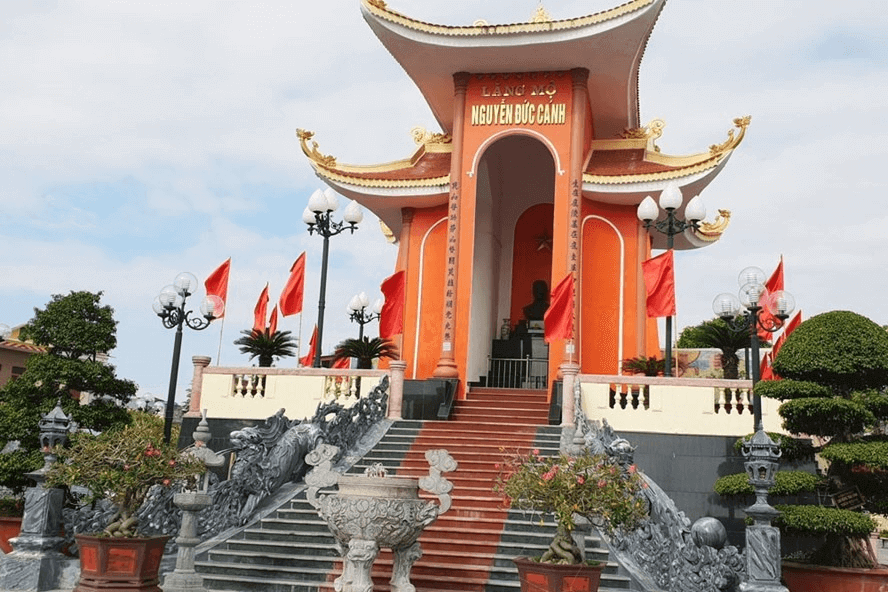
Comrade Nguyen Duc Canh memorial area
Comrade Nguyen Duc Canh's memorial area is located in Diem Dien town, Thai Thuy district, Thai Binh province, this place records a deep impression on Nguyen Duc Canh, one of the first 7 party members who founded the Communist Party. , a first leader of the Vietnam Trade Union. The memorial area was built on the incense burner land of 8 relatives living together, with an area of 1,600m². The scene of the old house of Comrade Nguyen Duc Canh's family during his lifetime includes: The Ancestral Church (which was the teaching school of Comrade Nguyen Duc Canh's father), the house, and the kitchen were completely reconstructed. on old ground. The space is simple and humble, recalling the image of the order and family style of an ancient Confucian family. To pay tribute and commemorate Nguyen Duc Canh's great contributions to the Vietnamese revolutionary cause, Nguyen Duc Canh's memorial area was invested in repairing, upgrading, and expanding spaciously, worthy of a cultural and historical relic. National level. This is also the first cradle that molded and gave wings to the personality, soul, will and actions of loyal communist soldier Nguyen Duc Canh. Behind the house there is still a well preserved, this place more than 100 years ago marked a special moment. On the morning of the first day of Tet Mau Than (1908) (February 2, 1908), Mrs. Tran Thi Thuy went out to celebrate the well's birthday according to the custom of sprinkling coins into the well so that when the well is washed at the end of the year, the person who picks up the money will be the one who picks up the money. Lucky person, little boy Nguyen Duc Canh, was born here. People in the area call it Ngoc well, although in the coastal area, most well water is salty and cloudy, but this well has been full for hundreds of years, the water is still full, sweet and clear, visible to the bottom. Every day, visitors to the memorial area still come out to drink water and wash their faces to cool down. On the bank of the well is a stone stele about 3 meters wide, with the poem "Farewell" engraved on it - a letter from comrade Nguyen Duc Canh to his mother, written during the days of being detained by the enemy in a cell to be beheaded. Nguyen Duc Canh was beheaded by the French colonialists at dawn on July 31, 1932 at Hai Phong Prison. That year, he was only 24 years old, an age full of vitality. Before dying, he shouted: "Down with French imperialism and feudalism!", "Long live the Indochina Communist Party!". Every page of history here records profound impressions of Nguyen Duc Canh, a One of the first 7 members of the Party, he is one of the founders and an outstanding leader of the Vietnamese workers' movement. To pay tribute and engrave the great contributions of Nguyen Duc Canh to the Vietnamese revolutionary cause and to his hometown of Thai Binh, in Thai Binh city and Thai Thuy district, there are 2 roads named after Nguyen Duc Canh, 2 schools named after Nguyen Duc Canh. name Nguyen Duc Canh; The statue of comrade Nguyen Duc Canh is majestically placed at October 14 Square. The memorial was built on the land where he was born and raised, and is associated with the tradition of a family of studious, virtuous, patriotic, and people-loving people. This is also the first place that molded and gave wings to the personality, soul, will and actions of loyal communist soldier Nguyen Duc Canh. Source: Vietnam News Agency
Hung Yen 7257 view