Relic point Vietnam
Việt Nam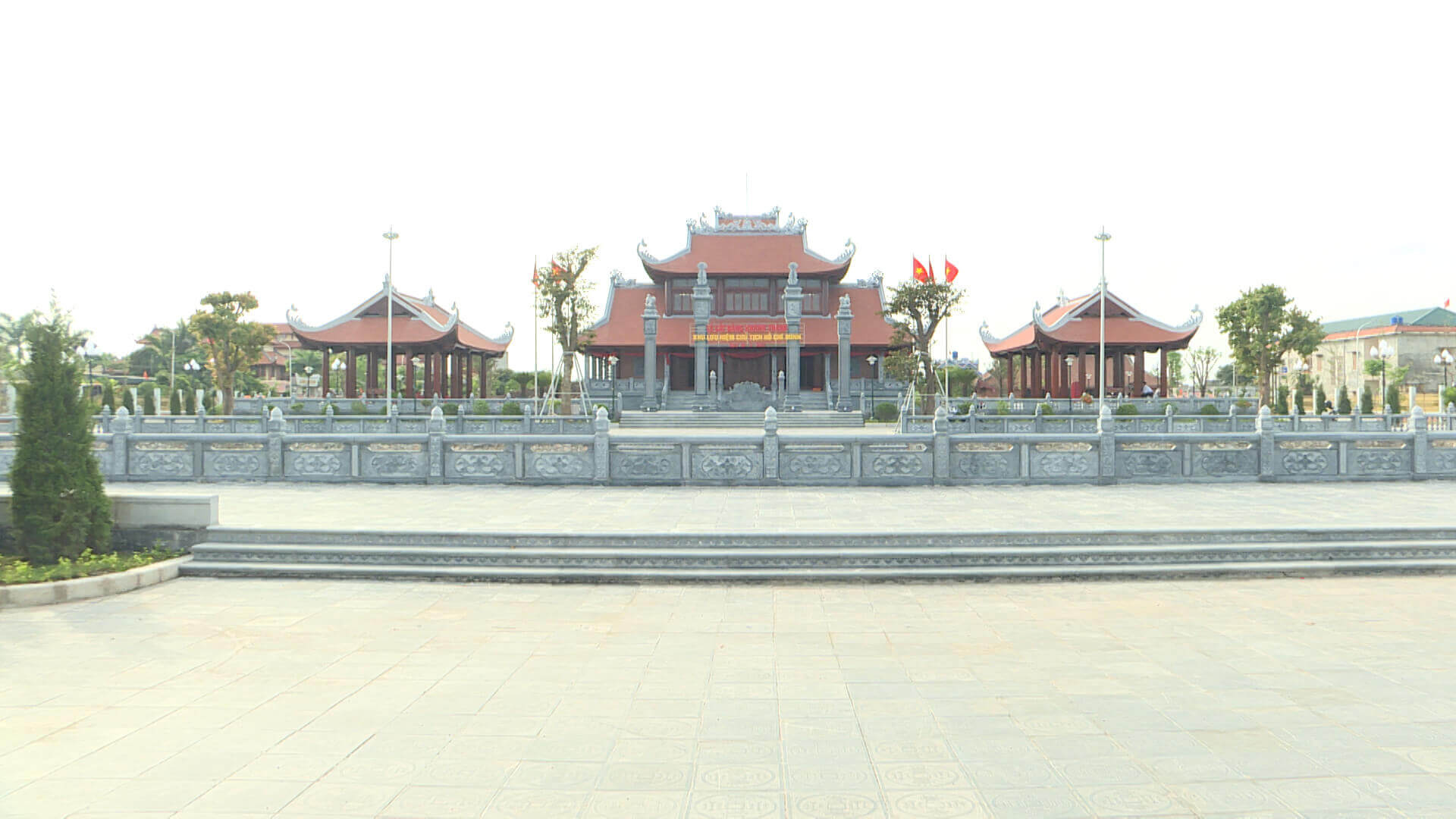
Uncle Ho Memorial House
During his lifetime, despite being busy with thousands of jobs, Uncle Ho still cared about Thai Binh. The Party Committee and people of Thai Binh were honored to welcome Uncle Ho five times: the first time on January 10, 1946, the second time on January 10, 1946. 2 on April 28, 1946, the 3rd time on October 26, 1958, the 4th time on March 26, 1962 and the last time on December 31, 1966 and January 1, 1967, Uncle Ho. Ho returned to reward 5 tons of rice for the Party Committee and people of Thai Binh - the first province in the North to achieve 5 tons of rice/1 hectare. Relics and places marking Uncle Ho's visit to Thai Binh include: 1. Provincial Administrative Committee, Le Hong Phong ward, Thai Binh town. 2. Dia dike section, Hung Nhan district. 3. Town Fitness Tri House, Le Hong Phong Ward, Thai Binh Town. 4. Provincial Administrative Committee headquarters, Le Hong Phong ward, Thai Binh town. 5. Mill factory construction site, Le Hong Phong ward, Thai Binh town. 6. Town Stadium, Le Hong Phong Ward, Thai Binh Town. 7. Nam Cuong commune, Tien Hai district. 8. Ms. Luu's house, Nam Cuong Commune, Tien Hai District. 9. Nho Lam communal house, Dong Lam commune, Tien Hai district. 10. Mr. Du's house, Dong Lam commune, Tien Hai district. 11. A military unit, Dong Lam commune, Tien Hai district. 12. Phuong Cap communal house, Hiep Hoa commune, Thu Tri district. 13. The office of the Provincial Party Committee at the evacuation site, Dai Dong village, Tan Hoa commune, Vu Thu district. On the night of December 31, 1966, and the morning of January 1, 1967, Uncle Ho visited and worked with the Provincial Party Committee. People stay at a thatched house in Dai Dong village, Tan Hoa commune, Vu Thu district. After Uncle Ho's death, the Standing Committee of the Thai Binh Provincial Party Committee retained the house as Uncle Ho's memorial area in the province. The memorial house was recognized as a historical relic by the Ministry of Culture, Sports and Tourism on December 12, 1986. Source: Electronic Information Portal of Department of Culture, Sports and Tourism of Thai Binh province
Hung Yen 7296 view
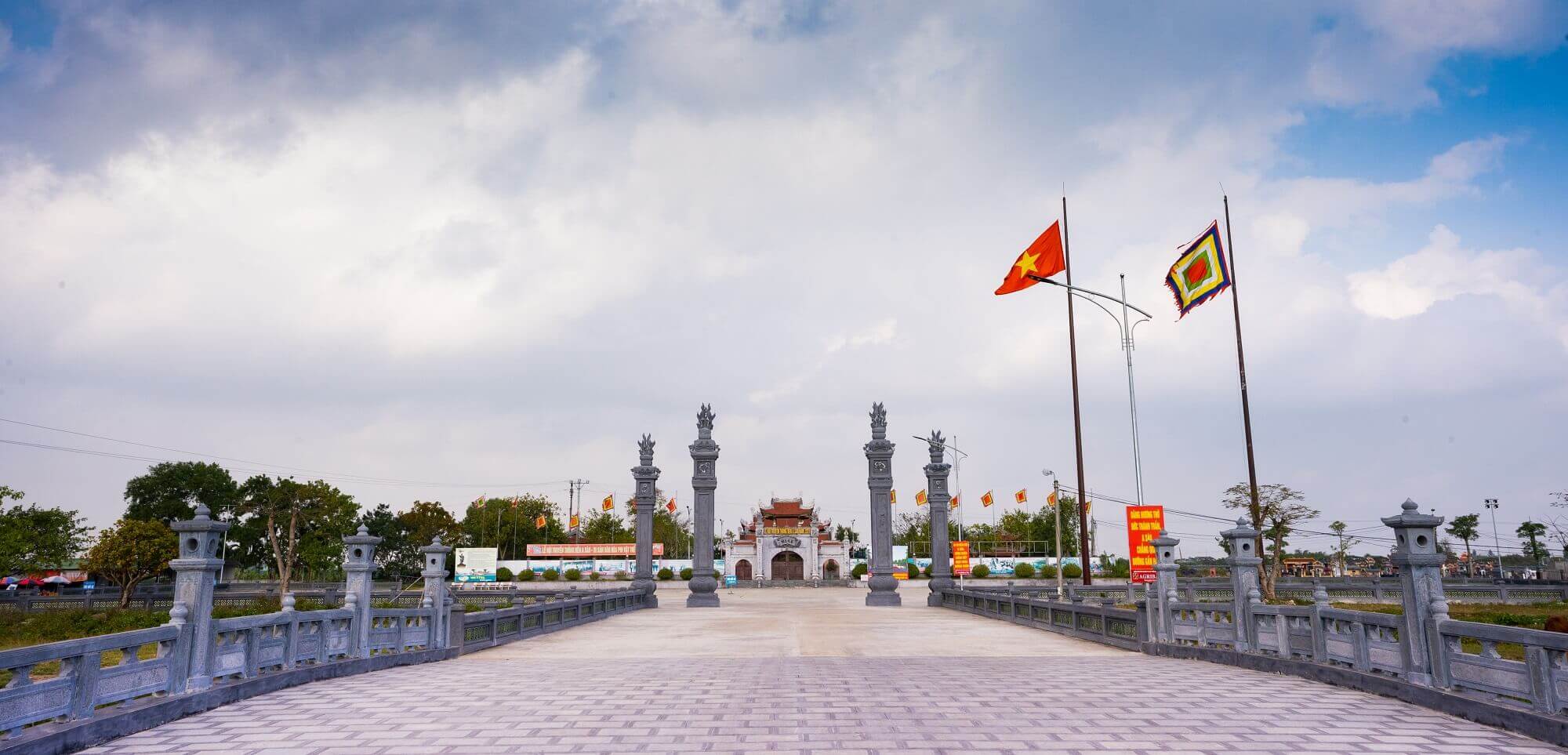
A Sao Temple
Located in An Thai commune, Quynh Phu district, Thai Binh province, A Sao Temple is a place of worship and incense of the King of the Republic of Hung Dao Vuong Tran Quoc Tuan, along with ancient festivals and rituals that are still maintained. maintained until today. “A Sao” has the original name of A Cao, an area of land located along the Hoa River, a place that is said to converge the sacred energy of rivers and seas, and has a military-critical terrain, so it was chosen by the Tran court as a place to be. The fiefdom of Phung Can Vuong Tran Lieu, father of Tran Hung Dao. Tran Hung Dao was born and grew up in this land. In 1258, when the Tran court launched the first resistance war against the Yuan-Mongol, Tran Quoc Tuan, who had just turned 18 years old, was given the title of Marquis and was assigned by the court to defend A Sao land. Before the second resistance war, the Tran kings personally and Tran Quoc Tuan directed the construction of the Hoa River area (now including parts of Thai Binh and Hai Phong) into a defensive line to deploy the naval posture. war. In the land of A Sao, Tran Quoc Tuan was assigned by the royal court to build a military force and a food storage center with many places whose names are still associated with the resistance war such as: village Me Thuong, An Thai commune (rice warehouse); Am Qua village (sword warehouse); Dai Nam, Quynh Tho commune (large granary); A Me, An Thai commune (rice storage place of the Tran Dynasty)... In particular, A Sao is a place that means the nest, the nest of the Tran Dynasty. In particular, at the current A Sao relic site, there is also A Sao Statue Wharf, where Tran Hung Dao's war elephants got bogged down on their march across the Hoa River to attack O Ma Nhi's army on the Bach Dang River. The people brought wood, bamboo, straw, straw, and some heroes even had ironwood houses dismantled to try to save the war elephant, but they could not pull the elephant up. The elephant looked at his owner with tears in his eyes. The general had to swallow his tears and get on the boat to cross the river, leaving the elephant behind because the battle was too urgent and urgent. Hung Dao Vuong drew his sword and pointed at the Hoa river and swore: "If we do not win the That battle in this battle, I swear I will not return to this riverbank!". After the victory, the people built a temple to worship Tran Hung Dao called De Nhi Sinh Tu or A Sao Linh Mieu (A Sao Temple). A temple worshiping an elephant statue carved from stone was also built along the riverbank. In the temple grounds, there is Tam Tuong Lake (a lake for elephants to bathe in), Dong Yen mound (a place to saddle soldiers' horses), Barracks (a place for soldiers to live) and many other sacred objects. Every year, on the 10th day of the second lunar month, which is said to be the birthday of Hung Dao Vuong, to remember the merits of Hung Dao Vuong, A Sao villagers hold a festival to worship Saint Tran at the Second Sinh Tu and ceremony. A Sao village festival is one of the largest festivals in the region. According to ancient rules, all rituals in this festival follow national rituals. The court often sends mandarins to perform the sacrifices and there are often cakes and rice cakes to offer. In 1951, the French invaders stationed at A Sao temple. They destroyed many worship objects, used carts to drag stone elephants from the river wharf to the station to make gun emplacements, and shot off the trunks of stone elephant statues. Through many ups and downs, the Second Sinh Tu was demolished, leaving only a wasteland and a stone elephant statue lying on the old temple foundation in the middle of A Sao field. Through many seminars and research, in 2005, a new temple was restored at the old foundation of "Second Born From". On April 14, 2011, the relic site was granted a Certificate of National Historical Relic recognition by the Ministry of Culture, Sports and Tourism. Also in 2011, temple ruins and stone elephant statues at Ben Tuong were restored along with landmarks such as Tam Tuong Lake, Dong Yen Mound... Also from 2012, A Sao Temple Festival will be held annually on the 10th day of the second lunar month with many cultural and artistic activities associated with traditional cultural rituals and unique folk games. such as clay cannon competition, wrestling, Chinese chess, swimming, word drawing dance... Local people and tourists from all over come to the festival excitedly and happily participate because they want to preserve and build traditional cultural beauty. Participating in the festival, visitors from all over can live with national pride, recreating a heroic period in the history of the Vietnamese people's struggle to build and defend the country. Source: Thai Binh Radio and Television
Hung Yen 6122 view
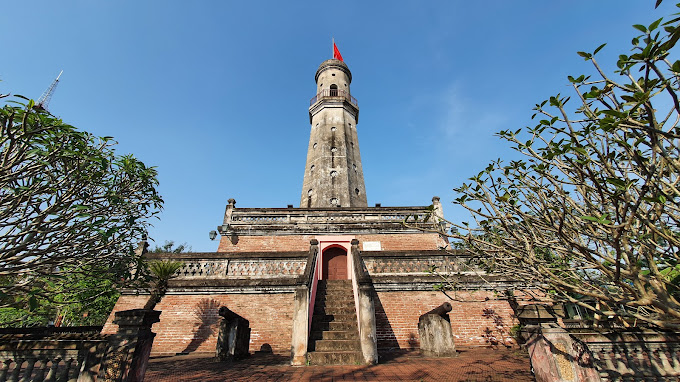
Nam Dinh flagpole
Nam Dinh flagpole is located on To Hieu street, Ngo Quyen ward - Nam Dinh city. In ancient times, Nam Dinh flagpole was also called flagpole. This is one of four flagpoles built in the early Nguyen Dynasty. Nam Dinh flagpole was ranked as a national historical relic on April 28, 1962. The Nam Dinh flagpole today consists of three main parts: the base (pedestal), the body (long body) and the lookout (gazebo). Nam Dinh flagpole is 23.84m high; Located south of the Citadel, about 100m from Vong Cung communal house (now Vong Cung pagoda). The old flagpole yard was built into a ceremony yard, square in shape, with railings on four sides. To the south are placed two cannons. In the east, there is an incense burner commemorating the martyrs who sacrificed their lives in two resistance wars against the French to protect the Flagpole - the Citadel in 1873 and 1883. The base of the flagpole consists of two square bases. The upper platform is smaller than the lower platform. Around the outside of both sides of the pedestal, railings are built. From the lower platform to the upper platform, there are steps up and down. The four sides of the pedestal have railings and four doors. On the second pedestal, there is a door leading into the body of the flagpole (stand body). On the east door are the two words Nghenh Huc (welcoming the morning light); The southern door has two words: Huong Quang (directing according to the virtue of light). Below the pedestal is the Temple of the Flagpole Princess - Princess Nguyen Thi Trinh - the first martyr, who died in the battle of the French invaders to capture Nam Dinh citadel on December 11, 1873 (archaeological discovery in 2002). – Vietnam Institute of Archeology – Le Ba Ngoc). The flagpole's body is 12.65m high and gradually shrinks towards the top with two parts: The lower part is built in an octagonal cylinder, the upper part is built in a circle with a base diameter of 3.25m. In the flagpole's body, there is a spiral staircase, including 54 steps going up to the lookout, illuminated by 32 rosette-shaped windows on the eight sides of the flagpole's body. The lookout part is built in a cylindrical shape with a railing, 4 arched doors and 8 small windows. From the lookout side, there is a small iron ladder to the top of the flagpole. The flagpole is built of old burnt bricks, dark red in color. The square corners of the two pedestal floors are built of a type of brick that specializes in a 450 beveled end, while the 1200 corners of the octagonal pillar body are a separate type of brick. Thanh Nam flagpole is associated with many important historical markers. On March 27, 1883, French warships from the Dao River bombarded the Citadel. At the flagpole, at a height of 11m, to the south, there is a bullet hole 4cm deep and 6cm in diameter. During the period of secret activities, many officials and Party members still used the Flagpole as a place of communication and activities to discuss plans to direct the movement. In 1967, Nam Dinh was fiercely attacked by American aircraft. The top of the flagpole is where the aircraft observation team led by comrade La Vinh Hao - self-defense of the Textile factory is on remote mission. On June 11, 1972, American planes rushed to attack the city of Textile. At 10:10 a.m., they fired rockets and bombs, hitting the Flagpole area, causing the entire ancient structure to collapse. In 1997, commemorating the 43rd anniversary of the liberation of Nam Dinh city, the flagpole was restored to its original form. For nearly two centuries, Thanh Nam flagpole has witnessed many historical events and changes in the country and homeland. This is an ancient architectural work with historical and cultural value and is also a symbol that arouses love for one's homeland, a sense of pride, and an iron determination to protect sovereignty, independence, and freedom. due to the Vietnamese Fatherland. Every year, this place welcomes hundreds of domestic and international delegations to visit and burn incense to commemorate the Flagpole Queen. In 1962, Nam Dinh Flagpole was recognized by the Ministry of Culture and Information as a national historical-cultural relic. Source: Cultural and historical relics
Ninh Binh 5764 view
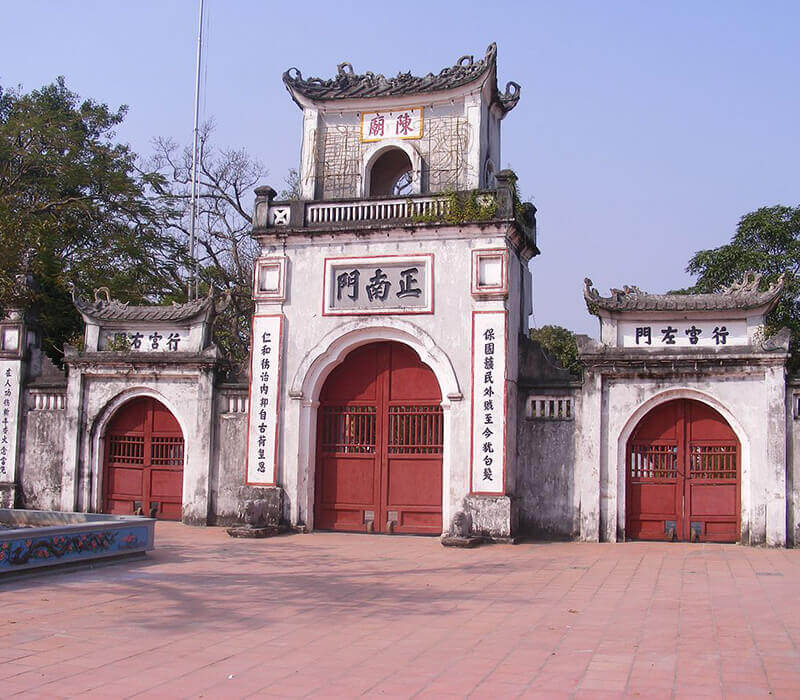
Tran Nam Dinh Temple
Nam Dinh Tran Temple relic area is a temple worshiping 14 Tran Dynasty kings, their families and mandarins with meritorious service. This place is also famous for the incense offering ceremony to open the Tran Temple seal in early spring and the Tran Temple Festival in the eighth lunar month every year. The Tran Temple - Nam Dinh relic area includes 3 main architectural works: Thien Truong Temple, Co Trach Temple and Trung Hoa Temple, with a common design and equal scale. In front there is a five-door gate. Through the gate is a rectangular lake. In the middle behind the lake is Thien Truong Temple. Thien Truong Temple, often called Thuong Temple, is located in the center of the Tran Nam Dinh Temple relic area. The temple was built on the foundation of Thai Mieu and Trung Quang Palace of the Tran Dynasty, which was formerly the family temple of the Tran family. Trung Quang Palace is where the Tran Dynasty emperors lived and worked. The current architecture of Thien Truong Temple includes the front hall, middle hall, main altar, incense burner, 2 rows on the left and right, 2 rows on the left and right of the morning glory tube, 2 rows on the left and right of the bamboo tube, 2 rows of the East and West. There are a total of 9 buildings and 31 rooms. The temple frame is built of ironwood, the roof is tiled, and the floor is tiled. The front hall is the place for worshiping and altars of mandarins who had great meritorious service in the Tran Dynasty. In the middle of the hall are the tablets of the 14 Tran Dynasty emperors. The main temple worships the four ancestors of the Tran family, and their wives and royal concubines. The incense burning court (sutra altar) houses the altar and tablets of the Tran Dynasty's officials. Co Trach Temple, often called Ha Temple, is located on the east side of the Tran Nam Dinh Temple relic site. In the front of the hall are tablets of three trusted generals of Tran Hung Dao, Pham Ngo, Pham Ngu Lao and Nguyen Che Nghia. The middle hall worships tablets and statues of Tran Hung Dao, his four sons, Pham Ngu Lao and other generals. The main altar placed the tablets of his parents, Tran Hung Dao and his wife (Princess Thien Thanh), 4 sons and 4 daughters-in-law, daughter and son-in-law. Burn incense (sutras) and place the dragon's temple, inside there is a statue of Tran Hung Dao and 9 Buddha statues. The space left the tablets of Truong Han Sieu, Pham Thien Nhan and Tran Dynasty officials. Thieves placed the tablets of the Tran dynasty's martial gods, Tran Cong and relatives of the Tran family. Trung Hoa Temple is located on the west side of the Tran Temple relic area. The temple was newly built in 2000, on the foundation of the ancient Trung Hoa Palace - where the Tran Dynasty emperors came to consult with the emperors. In Trung Hoa Temple, there are 14 bronze statues of 14 Tran Dynasty emperors placed in the middle hall and main palace. The incense burning court places thrones and tablets to worship the council of mandarins. Fraudulently worshiping civil servants. Fraudsters worship military mandarins. Every year, at the Tran Temple relic site in Nam Dinh, two major festivals will take place, which are the Tran Temple Opening Ceremony in early spring and the Tran Temple Festival in August, attracting a large number of local people and tourists from all over to attend. , grateful for the merits of the 14 Tran kings and praying for good things. Tran Temple is a special and important historical and cultural relic site of Nam Dinh province, ranked by the state as a national historical relic in 2012. Source: Nam Dinh City Electronic Information Portal
Ninh Binh 7869 view
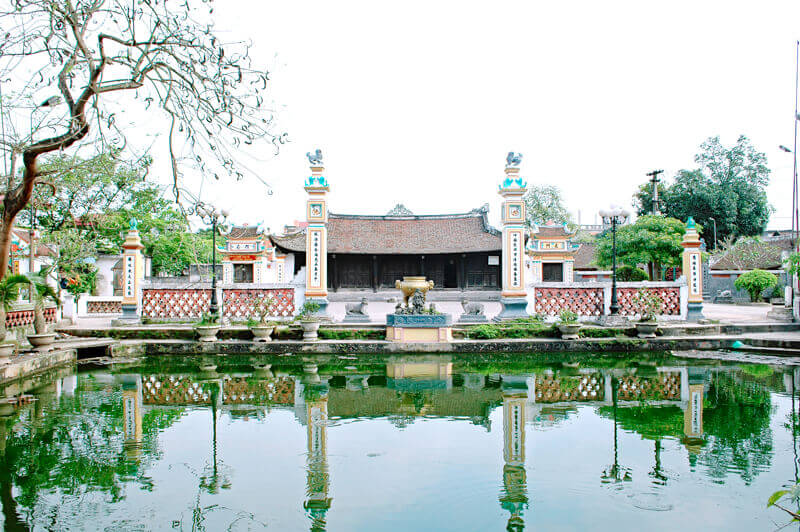
Giap Ba Temple
Giap Ba Temple, also known as Cam Nang Temple, is located in Nam Giang town, Nam Dinh city. The project includes the main temple worshiping King Trieu Viet and two temples worshiping two generals of the Doan family. Since the Later Le Dynasty, this place was called Cam Nang village, Chau Nguyen commune, now Ba village, Nam Giang town, people still call it Giap Ba. The origin of the name Cam Nang temple or Giap Ba temple today is like that. Giap Ba Temple was ranked as a national historical-cultural relic in 1994. According to historical sources and legends, in Phat Noi commune, Chu Dien district, Tam Doi district, Son Tay religion, there was Mr. Trieu Tuc whose wife was Han Thi Sieu. One night, Mrs. Sieu dreamed of a flying dragon, and then she became pregnant. In the spring of the year Mau Thin, she gave birth to a handsome boy named Quang Phuc. As a child, Quang Phuc studied very hard and was proficient in literature and martial arts. At the age of seventeen, his parents passed away. He followed famous general Ly Bon to defeat the invaders of the Luong Dynasty and win independence for the country. In 544, Ly Bon ascended the throne, proclaimed himself Ly Nam De, and settled the capital in Long Bien. Not long after, the Luong Dynasty sent Tran Ba Tien and Duong San to invade our country; Ly Nam De lost the battle and fled to Khuat Lieu cave, handing over military power to Trieu Quang Phuc. In 547, Trieu Quang Phuc retreated to Da Trach swamp (now Khoai Chau region, Hung Yen), a large swamp area with luxuriant reeds; He ordered his army to set up a barracks on a mound in the middle of the lagoon, and used dugout boats to snipe every day, causing the Luong army to lose a lot of troops and become extremely confused. Gradually, our army won a great victory and wiped out the Liang army from the territory. After defeating the enemy in 548, Trieu Quang Phuc ascended the throne, calling himself Trieu Viet Vuong, with the capital in Long Bien. In 570, he was ambushed by Ly Phat Tu - who had the same surname as Ly Nam De - and had to retreat, then drowned at Dai Nha estuary on August 14. Legend has it that when fleeing, Trieu Viet Vuong stopped at Cam Nang village to set up a barracks but was still pursued and had to flee to Dai Nha seaport (now in Doc Bo village, Yen Nhan commune, Y Yen district). Currently, in Ba village, Nam Giang town, there are still vestiges of the time when Trieu Viet Vuong stopped, such as: An Ma Chien land - where the soldiers let their horses eat grass and drink water; The place where horses run is called Ma Khoi, in the southeast of the village there is Ma Run street, the old military barracks is Cua Cua area... After Trieu Viet Vuong passed away, to commemorate his great contributions, the people of Cam village Nang built a temple right on the land where he stopped. His temple is on a large scale, with many solemn and splendid sacrificial offerings. Through many feudal dynasties, Ba village temples were all ordained to serve. Right next to the temple of King Trieu Viet Vuong, there are two temples worshiping mandarins Doan Tuong Cong and Doan Cong Thuong. These are two people who lived in the 18th century, belonging to the Doan family in Cam Nang. During their lifetime, the two of them took on many important responsibilities at the Royal Court. Among them, Doan Cong Thuong, also known as Doan Cong Thuong, was promoted to the position of General Eunuch, in charge of the admiral of the Cong District under the reign of King Le Du Tong (1740-1786). To their homeland, the two men left behind many contributions. Therefore, the mausoleum as well as the temple of the two men are preserved, incense, and revered by the village people as the village's blessings. Source: Nam Truc District People's Committee
Ninh Binh 5812 view
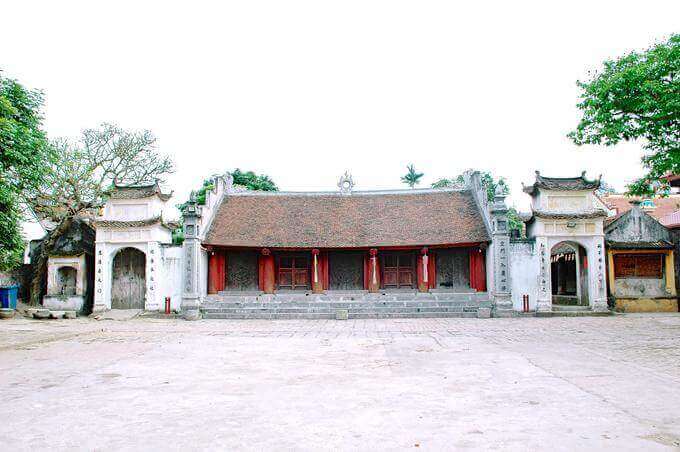
Dai Bi Pagoda
Dai Bi Pagoda is located in Nam Giang town, Nam Truc district, Nam Dinh province. In addition to worshiping Buddha, the pagoda also worships Saint Tu Dao Hanh. Through Han Nom documents, it is said. Saint Zen Master Tu Dao Hanh's family name is Tu, his family name is Lo; His father was Tu, Huy Vinh... from Lang village, held the position of Tang Quan Do Sat. At a young age, there are many unusual things, he has an immortal spirit, is generous and generous, has great ambition, and no one can predict his actions or words. He became close friends with Confucian scholar Phi Sinh, Taoist Le Toan Nghia and the singer Vi At (some documents say Phi At). At night he diligently read books, during the day he played shuttlecock, played the flute, and gambled for fun. His father was killed by Dien Thanh's servant who asked Dai Dien to use magic. The Saint failed to take revenge. He found a way to Tay Truc to study magic. The road to Kim Xi country was difficult, so he returned to Phat Tich mountain to practice, read the Da La Ni mantra eighteen thousand times, and completed the Dharma. Find Dai Dien to take revenge. From then on, washing away the hatred, the monk went everywhere in the forest to find a teacher to confirm. Thanh met Zen Master Tri Huyen and Zen Master Sung Pham to learn and expand his knowledge. After that, the monk was reincarnated as the son of Sung Hien Marquis, later King Ly Than Tong. Dai Bi Pagoda is located on a large flat area of land with unique architecture. According to legend, the pagoda's land has the shape of a dragon's head. On both sides of the pagoda's door are two round wells that people here often call two dragon eyes. The architectural system of the pagoda has many unique features. Tam Quan (temple gate) is not located in the middle but was built slightly to the east. Although it has undergone many restorations, the Tam Quan gate still retains many carvings from the Later Le period (17th - 18th centuries). The temple is decorated with Buddha statues like any other Vietnamese temple. The difference in Dai Bi Pagoda is that on the right side of the Three Jewels, there is an altar to worship Patriarch Tu Dao Hanh and Zen Master Giac Hai, who have made many contributions to the country's Buddhism. In the field of Buddhism, Zen masters are considered holy monks; In the social field, they are considered village tutelary gods, people who have the merit of teaching vocational skills to the people... The statues at Dai Bi Pagoda are carved quite perfectly. In addition, there are many altar objects and couplets with historical and artistic value. Behind the pagoda there is a bell tower with match bell style architecture, 8 roofs with high, soft and elegant blades. This is the most valuable work of Dai Bi Pagoda. Behind the bell tower is the ancestral temple, which worships Bodhidharma, the 28th patriarch and master of the Zen sect. Dai Bi Pagoda also has a space to worship Mother Goddesses, a national belief that Vietnamese people have practiced for many generations. Dai Bi Pagoda also preserves many valuable relics, antiques, and ancient books, most notably 10 steles, of which the oldest stele was engraved in the year of the Goat (1679) during the reign of Le Hy Tong; 10 ordinations; The large bell is 2m high and was cast in the 18th year of Minh Mang's reign (1838). The belief of worshiping Saint Tu Dao Hanh on the land of Nam Truong, along with the unique architecture of Dai Bi Pagoda, hundred-room pagoda, purely Vietnamese, flourished in the 17th century and exists to this day, demonstrating the eternal vitality of the Vietnamese. With typical values of history, culture and artistic architecture, Dai Bi Pagoda was ranked as a National Monument in 1964. Source: Nam Truc District People's Committee
Ninh Binh 5844 view
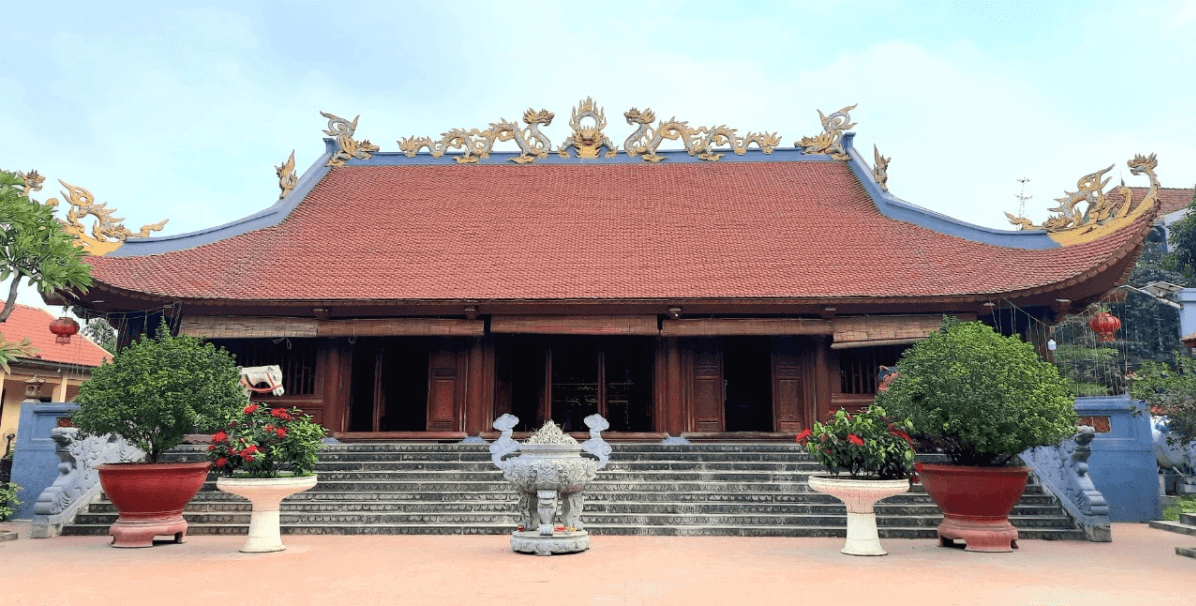
Gin Temple
Gin Temple, Nam Duong commune, Nam Truc district, Nam Dinh province is a relic with typical historical and architectural and artistic value, and has been ranked at the National level by the Ministry of Culture since 1962. The temple is a place to worship and express gratitude to the local people for the holy Long Kieu - Kieu Cong Han, who helped Ngo Quyen defeat the Nam Han invaders on the Bach Dang River in 938. period of national autonomy. Later, when the Ngo dynasty collapsed, probably due to historical conditions at that time, General Kieu Cong Han became one of the 12 warlords in the context of the country's chaos and division. He soon died in the chaotic war between local sand forces. After General Kieu Cong Han passed away, to commemorate his contributions, local people built temples to worship him; Currently there are 72 temples worshiping generals, extending from Phong Chau, Bach Hac, Phu Tho province to Nam Dinh province, of which in Nam Truc district there are 2 temples worshiping generals: Gin temple, Chien village, Nam Duong commune and Tay Lac temple, Dong Son commune. During the period of fighting against the invading Song invaders, King Le Dai Hanh led his army through here. Staying overnight, the king dreamed that Kieu Cong Han promised to help the king fight the Song invaders. After defeating the invading Tong invaders, King Le Dai Hanh returned to grant him fields and was appointed Thanh Hoang. Later feudal dynasties provided sacrificial fields and repaired temples to engrave stone stele to record the work, as well as promulgate the title "Holy Long Kieu". Gin Temple's large-scale architectural work is arranged symmetrically and harmoniously, including items: temple wells, shrines, screens, ritual gates, external temples, front doors, internal temples and buildings. Central architecture (front street, forbidden palace), located on a campus of 3,290 m2. Gin Temple is a relic that still preserves almost all of the architectural and artistic style of the Later Le period, 17th-18th centuries, demonstrating the talented working hands and creative minds of folk artists. Artifacts preserved at the relic are extremely rich and diverse, especially antiquities of the Later Le and Nguyen dynasties such as: miracles, ordinations, incense tables, thrones and tablets, worship statues, stone sculptures, etc. .. The decorative art at Gin Temple is very rich and lively with sharp carved lines and diverse decorative themes, combined with carved styles such as: pine wind, bong canal, contributing to the theme. making the decorative themes at the monument more vivid and imbued with traditional national style. Shown through architectural items such as Tien Cac, Tien Duong, and Forbidden Palace. Themes (Dragon, Ly, Quy, Phuong), turning leaves, patterns of seals and leaves, phoenix flanking; Dragons rolling water, two dragons flanking the moon and dragon-shaped apricot patterns... are decorated on the architectural components of Gin temple, crafted by ancient artisans with a tight layout and rich themes. , vividly contribute to honoring and affirming the architectural and artistic value of the monument. Gin Temple Traditional Festival is one of 10 typical festivals of the entire Nam Dinh province. The festival takes place on the 8th, 9th, and 10th days of the December month (lunar calendar) every year with unique rituals and folk cultural activities such as palanquin procession, water procession, cheo singing, tom whore nest, cockfighting ... Source: Nam Truc District People's Committee
Ninh Binh 5371 view
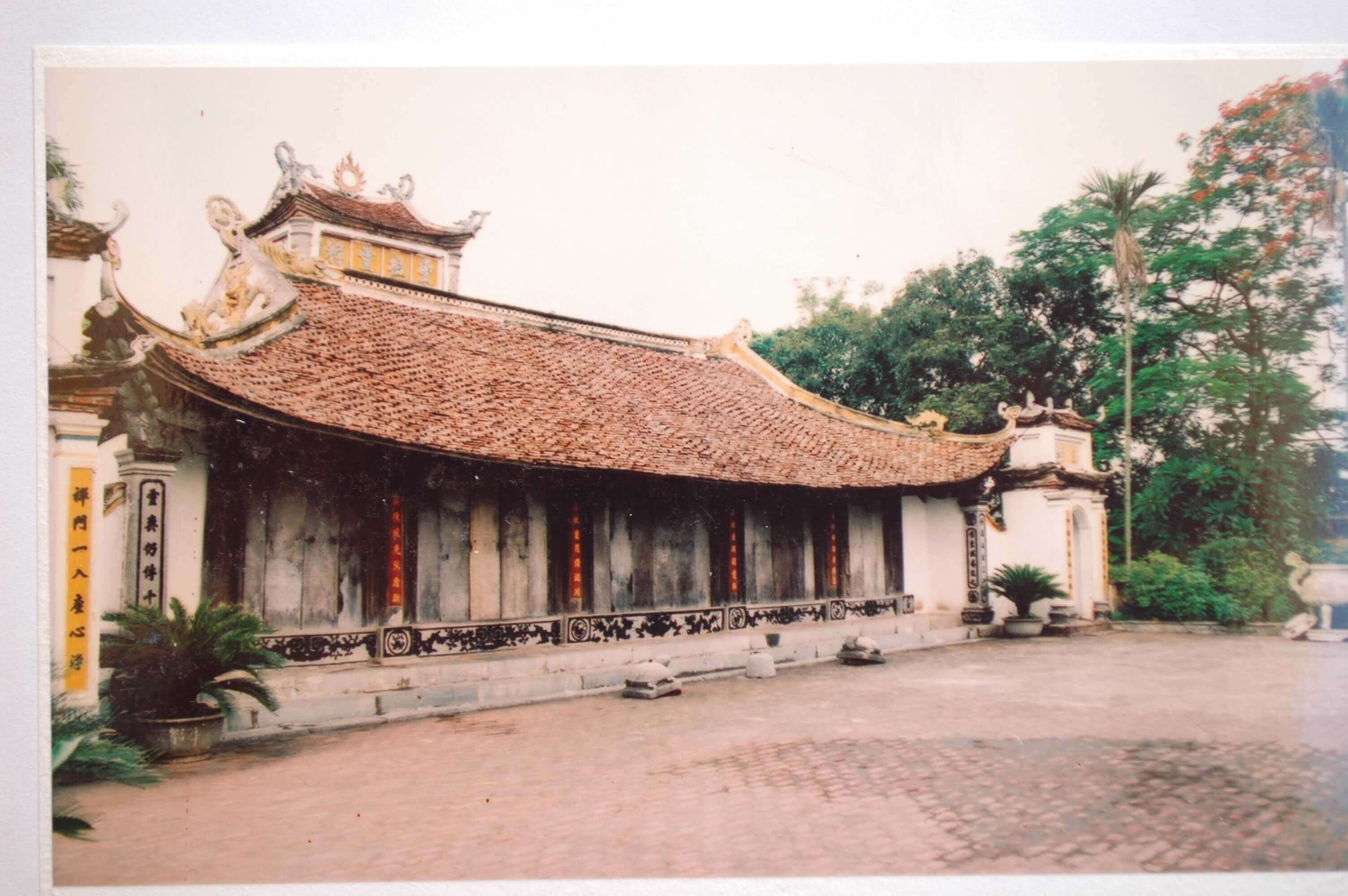
Am Temple
Am Temple is located in Nhat village, Nam Giang town, Nam Truc district, Nam Dinh province. Am Temple is where local people worship and pay tribute to the merits of the Holy Patriarch, Zen Master Bui Hue To (1566 - 1641). The belief in worshiping the Holy Patriarch Bui Hue To at Am Temple, in addition to the meaning of worshiping a true monk and a blessed god, also has another meaning, because this is his hometown. After the Holy Patriarch "transformed Buddha into fire", to remember his merits, local people built a temple to worship. The temple was built right on the hermitage ground that the Holy Patriarch had previously created. Although many centuries have passed, the worship of the people in Nam Truc countryside in general, and Nhat village in particular, towards the Holy Patriarch has remained unchanged. That demonstrated the gratitude and deep respect of the people for his merits, a lifelong true practitioner for the sake of the nation's Dharma, for the peaceful and prosperous life of the people. With typical values of history, architecture and art, on December 14, 2012, the Ministry of Culture, Sports and Tourism recognized Am Temple as a national historical architectural monument. Am Temple is located on a land area of 2,685 square meters, facing southwest. Around the temple there are many perennial trees creating cool, fresh air. Looking at the overall plan, Am Temple includes the following main architectural items: Lake, gate, ritual gate, yard, guest house, main temple building and two rows of internal dance halls. All construction items are spread along the north-south axis. The main temple has a "cong" style architecture including the front hall, middle hall and forbidden palace. The front hall has 3 rooms and 2 wings. The two porches in front of the front door are built with two bronze pillars made of stone, three sides are engraved with parallel Chinese characters praising the merits of the Zen Master. The roof of the front hall is a flat curved roof, consisting of the following components: diaphragm, rafters made of ironwood, and male tile roofing. The roof is decorated with dragon motifs, and the two gables are also decorated with tiger face motifs. The middle building has arched architecture, stacked brick columns, 2 floors and 8 roofs, renovated in the year of the Snake (1989). On the ancient part of the house, the front is embossed with 4 great characters: Holy Ancestor Linh Tu, the two sides are decorated with motifs of dragon scrolling water, phoenix jaw letter, dragon horse... The middle of the hall is where the communal altar and the altar are placed. decorated with many valuable worship objects, especially a throne in the artistic style of the Later Le period, 17th - 18th centuries. Connecting behind the middle road is the forbidden palace with 3 rooms. The most notable artistic decoration here is in the first sentence of the room on the right, which has motifs of fire leaves, suns, and clouds in the art style of the Later Le period, 17th - 18th centuries. The forbidden palace is the most important worship space of the temple: In the middle, there is a tablet and a statue worshiping Zen Master Bui Hue To, in the right space there is a tablet worshiping the Holy Mother, and in the left space there is a tablet worshiping the Holy Father. The inner courtyard is divided into 2 rows, each row consists of 4 compartments, built symmetrically with each other in the style of reclaiming the dome, the rafters are designed in the style of a bridge truss, wooden hitch, and is a meeting place for villagers. . In addition to its architectural and artistic value, Am Temple also preserves many valuable relics and antiques, typically: The throne and tablet worshiping Zen Master Bui Hue To; statue of Zen Master Bui Hue To; stone stele "Spirit of Compassion" and "Hundreds of Worlds, Hundreds of Thousands"; visiting the temple of compassion; ordained; Book of Holy Patriarch Thuc Luc; conical hat. Every year, on the 10th day of the first lunar month (lunar calendar), which is the birthday and also the transformation day of the Holy Patriarch, Zen Master Bui Hue To, local people hold a big festival. In addition, April 27 is the holy day of the Holy Mother, November 16 is the holy father's holy day, villagers organize incense offerings and offerings at the temple. Source: National Tourism Administration
Ninh Binh 4568 view
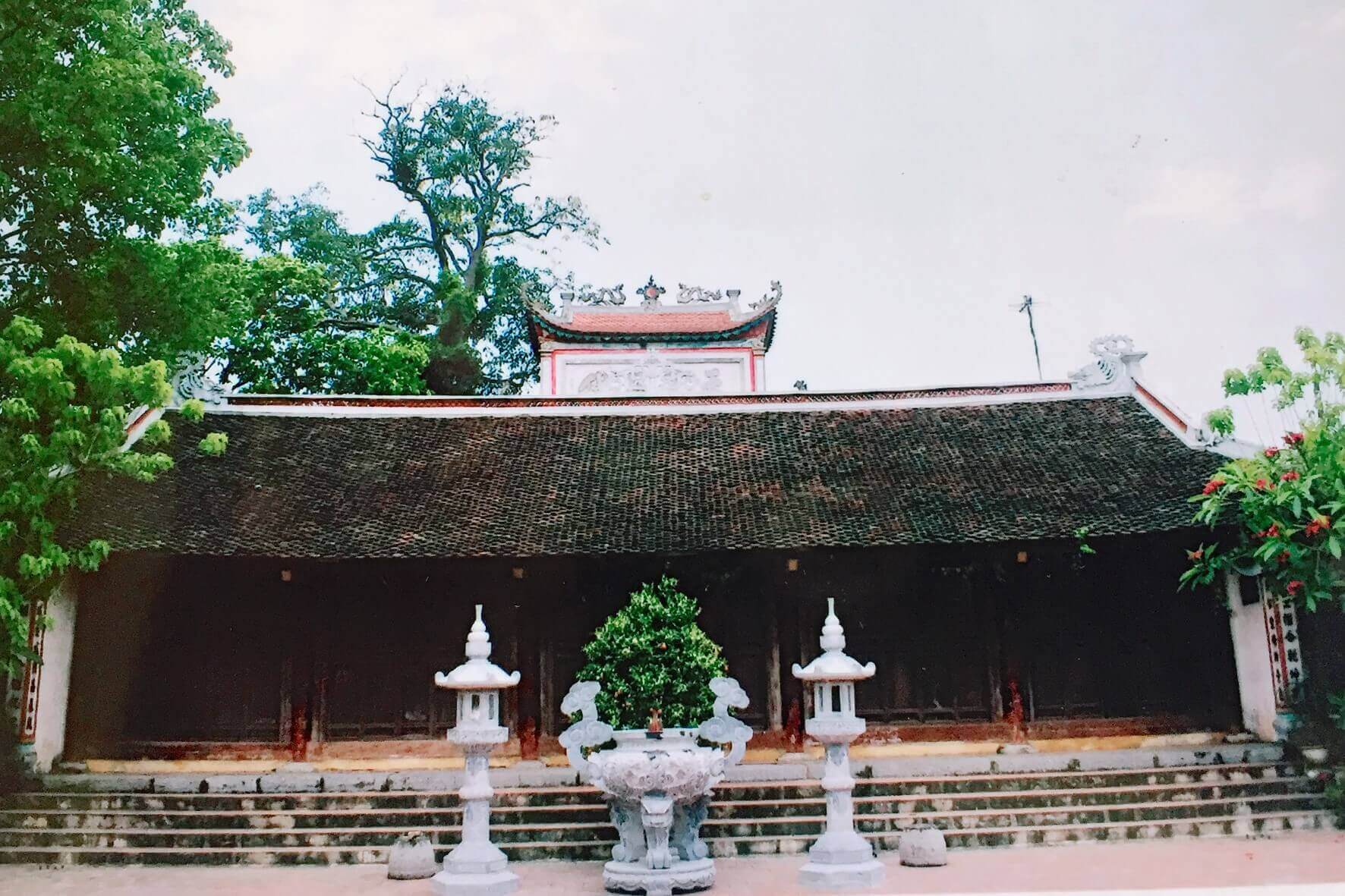
Van Chang communal house is a historical and architectural relic, traditional art and blacksmithing
Van Chang communal house is located on the territory of residential group number 16, Van Chang village, Nam Giang town. Van Chang village communal house is a place of worship and gratitude to the local people for the Six Patriarchs of blacksmithing. The genealogy of Van Chang village communal house said that the six craft ancestors together with 15 ancestors from the following families: Doan, Tran, Vu, Nguyen, Do, Ngo... recruited people to explore the fields and develop production. and career expansion. In the Year of the Ox (1373), during the reign of King Tran Due Tong, the reign of Long Khanh 2, after teaching the profession to the people here, the six ancestors returned to their old hometown of Hoa Chang village (Ha Tinh) to continue teaching the profession. forging. To pay tribute to the merits of the ancestors of the profession, local people named the village Hoa Chang - the original hometown of the Patriarchs (during the Nguyen Dynasty, it was changed to Van Chang village); set up a temple to honor: Phuc Than - Six Patriarchs - Tutelary God and take the 15th day of the 11th lunar month, the day the six Patriarchs from Van Chang village returned to their old hometown, as a taboo day. Currently, Van Chang village communal house still retains 6 decrees conferred with the title Khai Dinh 9 (1924) affirming the merits of "Protecting the country", "Ty people" and conferring on the Six Patriarchs: Duc Bao Trung Hung Linh Phu Van Son Saint Ancestor. In addition to the ordinations, Van Chang communal house also preserves many parallel sentences praising the merits and careers of the Six Patriarchs. Currently, along with Van Chang village communal house, Nam Giang town, Nam Truc district, Nam Dinh province worshiping the Six Patriarchs, other localities such as Ha Tinh and Ho Chi Minh City all have places to worship the Patriarchs. forging. Blacksmithing in Van Chang village, Nam Giang town was formed at the end of the 14th century, nearly 7 centuries ago. Initially, blacksmithing was just a side job alongside agricultural production. Through many historical periods, blacksmithing has gradually developed, separating from agriculture to go deeper into specialized production, becoming a traditional handicraft. In 1426, when the Lam Son insurgent army advanced to the North, a young man from the Doan family gathered villagers to stand up to kill the enemy and was awarded the title of Brave General. Knowing that there was a blacksmithing profession here, King Le Loi of Binh Dinh assigned the villagers the task of forging weapons for the insurgent army. Since then, Van Chang forging profession has continuously existed and developed. Also during the period of fighting against the Ming invaders, a group of Van Chang workers came to the Lam Son insurgent army to use the method of forging iron cannon tubes. This type of artillery was a signal for the insurgents to rise up and destroy the enemy. Currently, at Van Chang communal house, two cannons cast in iron are still preserved. During the Nguyen Dynasty, Van Chang blacksmith joined the army, many people were given the title "Tuong Muc", some were given the title "Water Ministry of Water Affairs" as the leader of the soldiers repairing weapons for military barracks, including both the navy and the land army. When the French invaded the North, many Van Chang workers stood in the army and people's ranks against the French. More than 2,000 Can Vuong troops commanded by Dr. Vu Huu Loi (1836 - 1886) were stationed in Giao Cu village (Dong Son, Nam Truc, Nam Dinh), all weapons were produced by blacksmith Van Chang. Up to now, after nearly 7 centuries, the traditional craft of blacksmithing has developed and spread strongly, forming the Nam Giang mechanical industrial cluster. Van Chang blacksmithing and Nam Giang mechanical engineering have become a key local economy, contributing to creating jobs, improving living standards, and building the local economy - culture - society today. a development. With typical values of history and artistic architecture, Van Chang Communal House has been ranked as a National Historical and Architectural Monument in 2018. Source: Nam Truc District People's Committee
Ninh Binh 7695 view
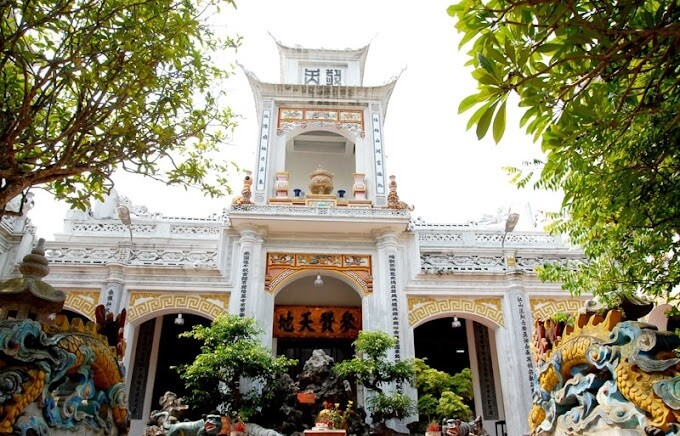
Bao Loc Temple
Bao Loc Temple, My Phuc commune (My Loc) was built on the "wooden ladder" land of An Sinh Vuong Tran Lieu, father of Hung Dao Vuong Tran Quoc Tuan and brother of Tran Thai Tong - the first king of Tran dynasty. During the Tran Dynasty, with the appearance of the Emperor's regime, in 1262, Tuc Mac village was changed to Thien Truong palace and was built on a scale like the second capital after Thang Long. Besides building palaces and magnificent houses for the emperors, the Tran Dynasty also conferred a series of fiefdoms on nobles, surrounding them like a protective belt of Thien Truong. At that time, An Lac hamlet was 2km north of Thien Truong center (as the crow flies). Legend has it that An Lac hamlet is the place where Tran Quoc Tuan was born and raised. With his great contributions in three resistance wars against foreign invaders, in April 1288 he was given the title "National Duke of Hung Dao Great King". When he died, the court re-titled him: "Grand Master, Supreme Patriarch Thuong Quoc Cong Nhan Vu, Hung Dao Great King". Bao Loc Temple was originally built along the Chau River, consisting of three ironwood rooms with tiled roofs. After the river bank eroded, the temple was moved to its current position. Existing on a small scale for a long time, in the early 20th century, Bao Loc temple was raised by people to upgrade it into a solid structure, quite large in size and height. The temple was built according to the design of Dong Phuong Bac Co, but was repaired to suit the traditional architecture of the nation. Construction began in 1928, it took 5 years for the project to be completed. The temple is located in the middle, facing east, on the left is the temple worshiping Buddha, on the right is the palace worshiping the Mother Goddess, behind the temple is Khai Thanh worshiping the king's father, mother, and wife. The entire relic is designed to be symmetrical and harmonious, with airy space creating a feeling of serenity during the holy ceremony. Bao Loc Temple is located in the middle, built in the style of a zigzag letter, including a front hall with 7 wide compartments, a long middle hall with 5 compartments, and a harem with 3 compartments. The architecture of the temple is simple, the columns are made of bricks, many beams are filled with durable and imposing reinforced cement. Although there are not many carvings, scattered in each part there are still themes: four sacred animals, water-rolling dragons, flowers and leaves, pine trees, chrysanthemums, bamboo, apricot trees... In particular, six sets of doors in the harem with plaques. Exquisite carvings bearing the artistic style of the Nguyen Dynasty. In the temple, in addition to the tablets, there are also two statues worshiping Tran Hung Dao (one made of bronze, one made of wood). The bronze statue in a sitting position weighs 4.8 tons, placed in the middle of the street. On both sides there are statues of Hung Vu Vuong Nhien and Pham Ngu Lao, his son and son-in-law. The agarwood statue is placed in the harem, on both sides are statues of literature teachers and martial arts teachers. Khai Thanh Temple is located in the back, the architecture is similar to the main temple but the foundation is 3 meters higher, worshiping Tran Hung Dao's father, mother, wife and two daughters. The worship arrangement here shows the spirit of respect for the teacher, integrity and filial piety of the Great King Hung Dao. Among the relics worshiping Tran Hung Dao, Bao Loc temple has special significance because this land is associated with his childhood. That's why people have the saying "Sinh Kiep Bac, Tran Thuong waterfall, Bao Loc's hometown". Every year, on his death day (August 20 of the lunar calendar), many visitors from all over have the opportunity to attend the traditional Tran Hung Dao festival. Source: Nam Dinh historical and cultural relics
Ninh Binh 7770 view