Relic point Vietnam
Việt Nam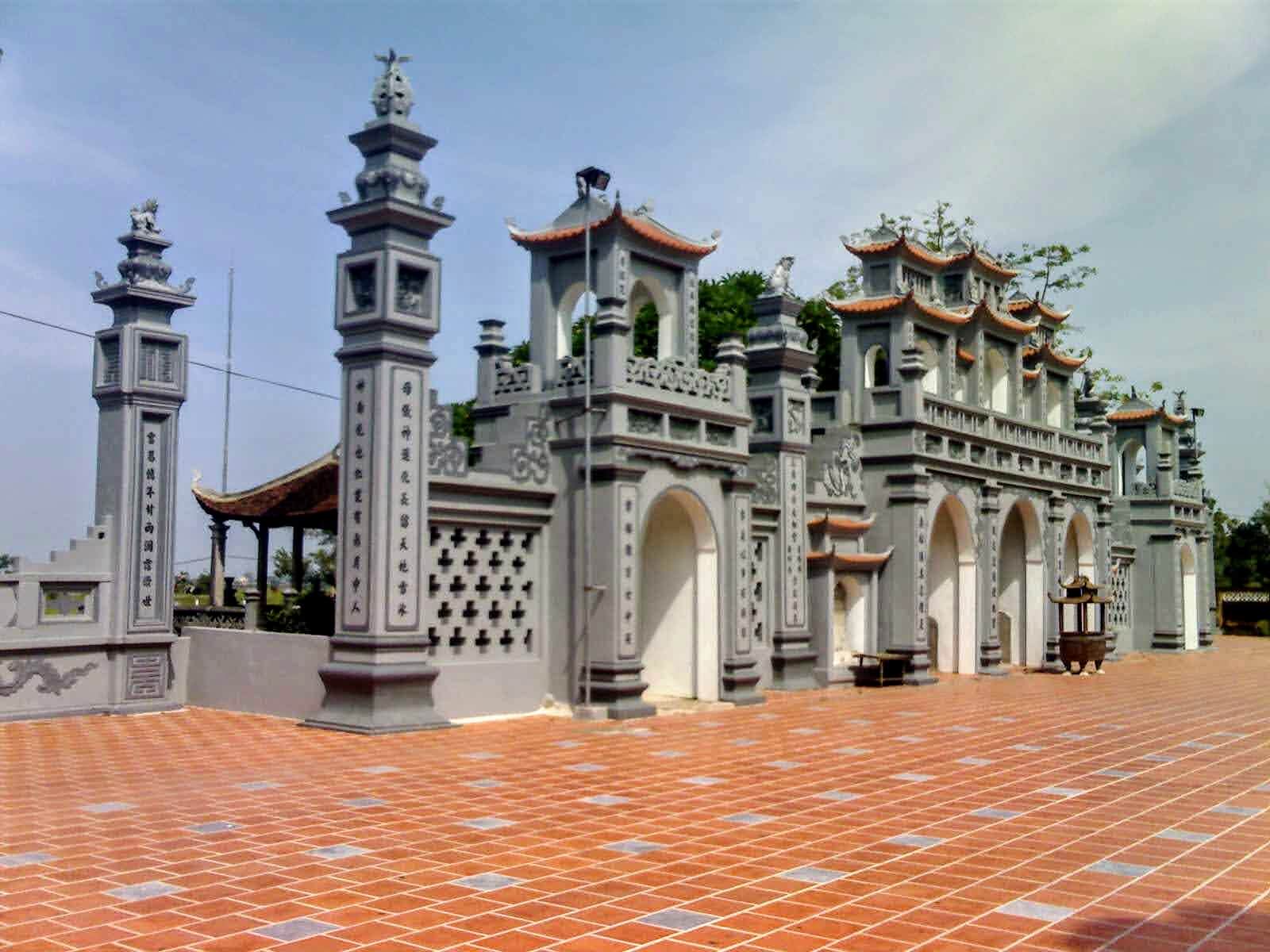
Temple of the Great Saint (Vinh Lai Temple)
Vinh Lai temple and pagoda are located in Vinh Hao commune, Vu Ban district, Nam Dinh province. Vinh Lai Temple worships Mr. Bach Dang and Cao Loc who helped Hai Ba Trung fight the invading Han army. Legend has it that at that time in Phong Chau district, there were Mr. Bach Bang and Ms. Hoang Thi Dang who lived well and lived well. On February 10, the year Giap Ngo, she gave birth to a handsome boy named Bach Dang. When Bach Dang was 16 years old, both of his parents died. He followed the Trung Sisters in the uprising and was adopted by Trung Trac. Cao Loi was originally the son of Mr. Cao Dien and Mrs. Han Thi, from Dong Ngan, Tu Son district, Kinh Bac religion (born on the 15th day of the twelfth month, year of the Monkey). Legend has it that he had a voice like thunder, so he was called Cao Loi. His parents died early, so he lived with his uncle Han Cong Chieu to study and practice martial arts. After he was killed by To Dinh, he supported Hai Ba Trung and became brothers with Bach Dang. The two men returned to Vinh Phuc village, Thien Ban district, recruited troops and set up a station with Hai Ba Trung to successfully fight the enemy. The two men stayed in the ancient land, advising the people to do honest business. Not long after, Emperor Han Wu sent Ma Vien over. In the spring of the year of Quy Mao (43), Hai Ba Trung and their generals were in a weak position and had to flee. The two men and a number of generals jumped into the river to die. The people of Vinh Phuc mourned and built a temple to worship the two men on the land of the old military post. King Dinh conferred the title "Honorable Tutelary God Bach Dang" and "Honorable Lord Loi Vuong". In addition to worshiping the two men, Vinh Lai temple also worships the ancestors who founded the village and opened the land. During the resistance war, the Vinh Lai temple area was a protection point for officials and guerrillas. Vinh Lai Pagoda is located on high ground, facing south, consisting of 7 buildings with 21 compartments. In front is a system of three gates, a guest house and a large yard. The front hall of Vinh Lai temple was built in the year of the Snake, the 8th year of Gia Long (1809), and restored in the 3rd year of Duy Tan (1909). This was a project made during the Nguyen Dynasty, so the structure and seven figures are all gentle and elegant. In particular, the Vinh Lai pagoda area is the most artistically processed project: the armpit beams, the ends, and the beams all touch the channel of leafy leaves, jade leaves, chrysanthemums, and lemon flowers. On the pillars are carved images of hidden lyres, fire leaves, and images of a mother dragon and her children in the Nguyen style. The dragon throne worshiping Bach Dang and Cao Loi is a valuable carved work with stylized flower and leaf bands and dragons flanking many shapes. Here there is also a bronze bell cast in the 23rd year of King Tu Duc's reign (1870) with a strange ringing sound. Vinh Lai Pagoda, in addition to the Buddha statues worshiped at other pagodas, at the ancestral house there is a statue of an old man, wearing a robe, with deeply wrinkled forehead and eyes looking down... This is a statue. Beautiful and valuable statue at Vinh Lai Pagoda. Festivals at Vinh Lai temples are held on the saint's birth day or the beginning of spring to express gratitude to the ancestors who opened the land and gathered people. Source: Historical and cultural relics of Nam Dinh province
Ninh Binh 4919 view
Nam Ha Stone Temple
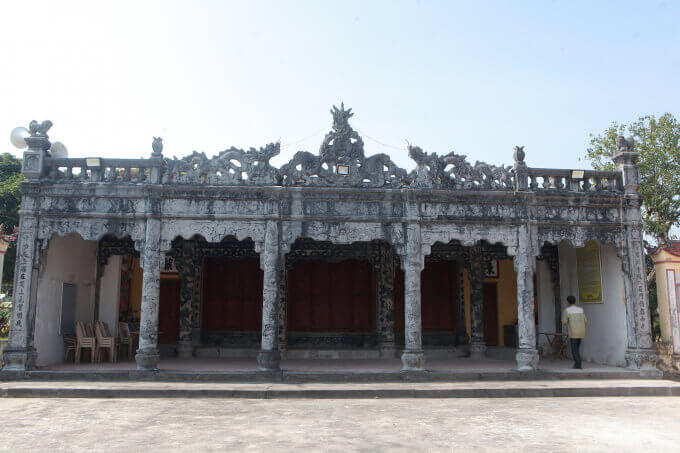
Stone Temple, also known as Stone Communal House, is located in Nam Ha village, Tan Thinh commune, Nam Truc district, Nam Dinh province. Stone Temple in Nam Ha village is a relic worshiping the three Vu brothers, who were generals during the Hung King period, of which the youngest brother, Vu Uy, was honored as the village's tutelary god. There are also tablets worshiping his two brothers, Chinh Ngo and Gia Suu. According to the book Kim Au Ngoc Pedigree written in the first year of Hong Phuc (1572), still kept at the temple, the ancient land of Kim Au, now the hamlets of Nam Ha, Vo Lao Thuong, Vo Lao Ha, belongs to Tan Thinh commune. During the reign of the 18th Hung King in the Ai Chau region (Hoang Hoa, Thanh Hoa), there was Mr. Vu Cong who left his hometown to find a new land to make a living. From Thanh Hoa, he went to the land of Kim Au. Being enthusiastically welcomed by the people, he happily stayed to build a house and open a school to teach. Some time later, Vu Cong was groomed by the villagers to marry a girl named Hoang named Loan. Not long after, Mrs. Loan gave birth to two sons. The older brother named him Gia Suu, the younger named Chinh Ngo. The following year, Mrs. Loan suddenly passed away, and Vu Cong had to marry Mrs. Tran Thi Thinh to raise her two children. A few years later, Mrs. Thinh gave birth to a handsome baby boy, but strangely the boy had the word Vu Uy on his forehead and a row of fish scales on his back. Vu Cong immediately named his child Vu Uy. Growing up, Vu Uy and his two brothers followed the teacher to study religion. The three men were all very intelligent, knowledgeable about astronomy, geography and good at martial arts. When his parents passed away, all three of them returned to the capital Van Lang to help King Hung rule the land for nearly 20 years. His father contributed a lot in the fight against the Shu army. When Hung Vuong ceded the throne to Thuc Phan, because he could not tame the new owner, all three of them returned to Kim Au land and divided the commune into three villages and each person governed one village, then helped the people develop agriculture, professions and continue to open schools for children of people in the area. Remembering that merit, after their death, the villagers built a memorial temple. In addition to worshiping the three generals of the Hung King period, Da Temple also worships 12 ancestors (twelve ancestors) of 12 families who came here early to establish the village. The temple also worships two great scholars named Hoang and Luu so that local people can remember their tradition of studiousness and encourage their children and grandchildren to promote that pride. Stone Temple in Tan Thinh commune is a large architectural work located on high ground, with an area of 2 acres (northern) in the middle of a field far from villages. There are many perennial trees surrounding it that integrate with the building's architecture into a complete whole. After many times of repair and embellishment, the current building still has 4 main buildings and a row of ceilings to the north. The 5-compartment hall was renovated more than 60 years ago, its architecture is completely made of stone, but still retains the traditional style of the nation. Inside the worship hall are the second and third buildings. The third court has 5 compartments, renovated in 1877. The second court also has 5 compartments, restored in the 4th year of King Thanh Thai's reign (1892). Currently, the second building still retains many traditional architectural looks, notably the set of ironwood doors embossed with motifs of two dragons on the two middle doors and dragons on the two sides. The Stone Temple Festival is held on the 3rd day of the third lunar month every year. Stone Temple is recognized by the Ministry of Culture and Information as a historical and architectural and artistic relic. Source: Nam Dinh Electronic Newspaper
Ninh Binh 4911 view
Khe Lau Victory Relics
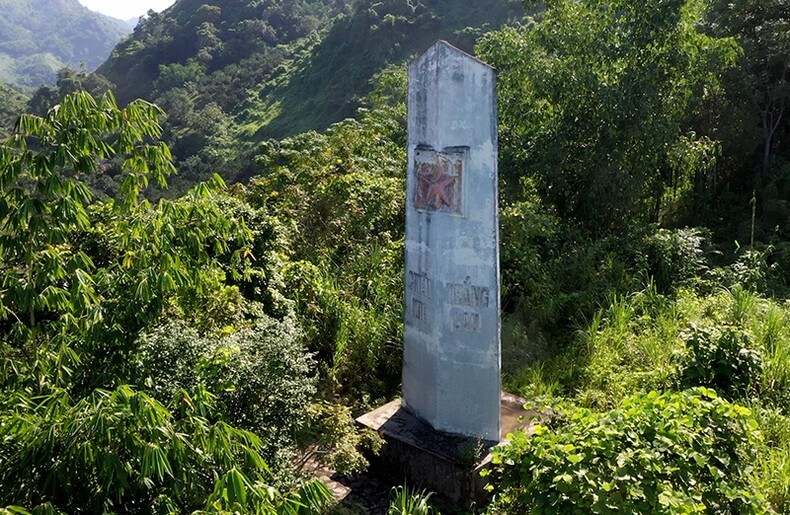
Khe Lau is the intersection of Gam River and Lo River in Thang Quan commune, Yen Son district, Tuyen Quang province. This place also has many other names such as Luong junction, Cua Song or Hon Lau. With the rugged terrain, both banks of the river have dense reed hills and being near the foot of the mountain created favorable conditions for our troops to ambush and attack the enemy. From November 3, 1947, French troops began to withdraw from Champa to Tuyen Quang town by both waterway and road. The soldiers of Regiment 112 cut through the forest and crossed back to Yen Nguyen to coordinate with local militia and guerrillas to set up an ambush from the foot of Ga Pass to Ca bridge. Artillery was urgently dispatched from Yen Binh to ambush enemy ships at Hon Lau. At 2:00 p.m. on November 10, 1947, the enemy's train consisting of 2 L C T and 1 canoe carrying 200 European and African soldiers from Chiem Hoa headed to Hon Lau. Our artillery continuously opened fire. Both enemy L C Ts were hit and caught fire. The enemy's canoe fled but was also hit. French soldiers ran ashore and were immediately shot and destroyed by militia and guerrillas. The battle of Khe Lau took place for more than 1 hour, our troops destroyed more than 200 enemy soldiers, sank 2 warships, and 1 canoe. The Khe Lau victory is considered one of the 10 major battles in the Viet Bac Autumn-Winter campaign in 1947. The late Lieutenant General Pham Hong Cu, former Deputy Director of the General Political Department of the Vietnam People's Army, former Political Commissar of the Binh Ca Battalion once affirmed that during the Viet Bac Fall-Winter campaign in 1947, Tuyen Quang contributed to Victory on the Lo River front in 2 battles. The first battle was the Battle of Binh Ca and the last battle was the Battle of Khe Lau. Uncle Ho said, "The enemy is strong in two pincers. If we break them, the umbrella they hold over Viet Bac will collapse into a torn umbrella." The army and people of Tuyen Quang contributed to breaking the French waterway army, contributing greatly to the Viet Bac Fall-Winter victory in 1947. Destroying the strategic intention of fighting quickly, winning quickly, forcing them to switch to fighting for a long time. to deal with us, contributing to bringing our nation's resistance to a new era. With this victory, our armed forces have grown more and more, and the Viet Bac base has become a symbol of trust and victory. Unable to carry out their plot, the French colonialists were forced to withdraw from Viet Bac. In the process of fleeing, they were blocked and attacked by our troops, consuming much of their energy. In mid-December 1947, Tuyen Quang was clear of invaders. During the Viet Bac Fall-Winter campaign of 1947, the army and people of Tuyen Quang fought 48 battles, including 30 independent battles, 18 battles in coordination with the main army, destroying 1,300 enemies, shooting and missing 10. canoes, warships, destroyed an airplane, confiscated many weapons, military equipment, and military supplies. The army and people of Tuyen Quang have successfully completed the task of draining enemy forces, contributing to protecting the safety and secrecy of Uncle Ho's residence and the headquarters of the resistance. On December 23, 1947, in Tuyen Quang town, a ceremony to celebrate the victory of Viet Bac Fall-Winter 1947 took place and was honored to be replaced by Comrade Vo Nguyen Giap - General Commander of the People's Army and Vietnam Militia and Self-Defense Force. The Government commends the merits of the soldiers and people of Viet Bac. Source: People's Newspaper
Tuyen Quang 6746 view
Da Ban historical site
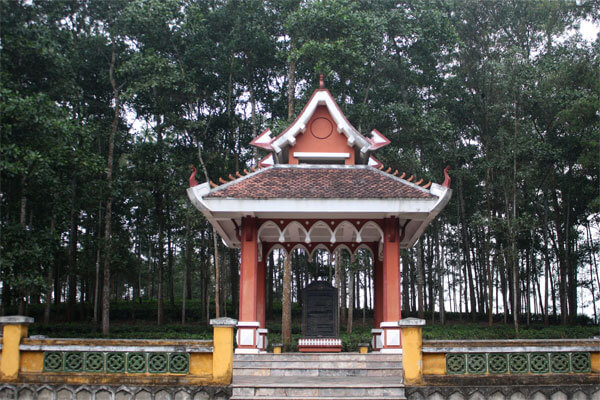
Lang Ngoi - Da Ban historical relic site is a historical place known for the love of solidarity and sharing between Vietnam and Laos. The Lao revolutionary relic is located in Lang Ngoi - Da Ban village, My Bang commune, Yen Son district, Tuyen Quang province. The relics are distributed in two areas: Lang Ngoi area and Da Ban area. The Lang Ngoi area includes relics: Neo Lao Itxala Congress Hall; Comrade Kaysone Phomvihan's residence and work place; Prince Souphanuvong's residence and work; where the Lao army unit lives and works. The entire relic site is located on Go Tre hill and To hill in Lang Ngoi village, My Bang commune, Yen Son district, Tuyen Quang province. The area that has been zoned for protection is: 1,500m2. Here, on August 13, 1950, the National Congress of the Lao Resistance Front took place. More than 100 delegates attended the Congress on behalf of the people of Lao tribes. The Congress elected the Lao Resistance Government led by Prince Souphanu-vong as Prime Minister; Comrade Kaysone Phomvihan, became Minister of Defense (later General Secretary of the Lao People's Revolutionary Party) and elected the Central Executive Committee of the Free Lao Front (Neo Lao Issala) to push Strengthen the resistance against the French colonialists, gain independence and unification for Laos, and build a prosperous and happy life for the people. Through historical changes, the vestiges have been gradually eroded. In order to preserve the historical values, Tuyen Quang Department of Culture, Sports and Tourism has implemented a project to restore and embellish the relic area. Lao revolutionary national history. The project has restored the houses and offices of comrade Kaysone Phomvihane and Prince Souphanuvong; Hall house; restore and embellish the tunnel and trench system; renovate Da Ban cave entrance; renovate the overall beer house; Build a solid bridge across the stream leading to the relic site; Build a house for the Monument Management Board... To further promote the special cultural and historical values of the Lao Revolution national relic site, the Party Committee, government and people of all ethnic groups in Tuyen Quang province have well performed the task of managing and preserving preserve, conserve, embellish and effectively promote the historical values of the relic site; making the Lao revolutionary national historical relic site in Tuyen Quang truly become a symbol of special solidarity and friendship between the two Parties, States and people of Vietnam and Laos. At the same time, do a good job of educating revolutionary traditions, especially for the young generation of the two countries to continue to nurture, nurture and make the relationship between Vietnam and Laos forever close and vibrant. Source: Department of Foreign Information
Tuyen Quang 5262 view
Kim Binh relic site
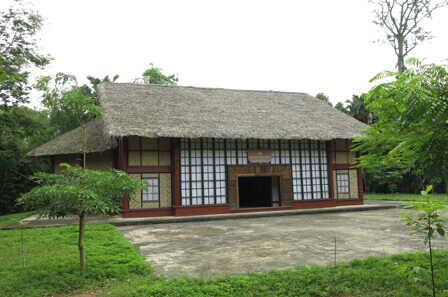
The Second National Congress Relic of the Party (Kim Binh Relic Area), includes 52 points, distributed in 4 communes: Kien Dai, Kim Binh, Vinh Quang, Linh Phu, Chiem Hoa district , Tuyen Quang province. The relic site of the Second National Congress of the Party is a place that marks many important historical events of the nation, such as: The National Congress unifying the Viet Minh Front and the Lien Viet Front into the Inter-Vietnamese Front. Vietnam, People's Alliance Conference of the three countries Vietnam - Cambodia - Laos, Nguyen Ai Quoc School (predecessor of the Ho Chi Minh National Academy of Politics) opens course III, Congress of Emulating Heroes, Soldiers and Cadres the first national model. 1. Relic site of the Party Central Committee and Government's working location, Kien Dai commune. Kien Dai commune is surrounded by a system of high hills and mountains (accounting for 3/4 of the area), the terrain is extremely dangerous, mobile, "convenient to advance, convenient to retreat", is the border area between Tuyen Quang and Bac Kan provinces. . Transportation is mainly by trails and railways (dating back to the French colonial period). Kien Dai base area is covered with a rich and diverse layer of vegetation, convenient for exploitation and construction of camps, houses, warehouses, trenches, and fortifications. Many high mountains surround villages and hamlets, forming a solid wall. There are many caves and caves in the mountain, very convenient for taking shelter when there is an alarm. The people here are mostly Tay and Dao ethnic people, with a spirit of patriotism and early revolutionary enlightenment. With a location that ensures safety, secrecy, and convenient transportation and communication, Kien Dai was the residence and working place of leaders and many central agencies during the period from 1948 - 1952. 2. Relic area of the Second National Congress of the Party, Kim Binh commune. At the end of 1950, after carefully studying the terrain of Kim Binh commune, the Party Central Committee decided to choose the Na Loang hill area, in Bo Cung village, as the place to hold the Party's Second National Congress. Na Loang Hill is located in the center of Bo Cung village, surrounded by many high mountain ranges, such as Pu Choong, Pu Mi, Pu Meo, Trai Face, Kham Khuat, forming a solid and convenient wall. to place observatories and air defense battlefields. The hill is bowl-shaped, the top is quite wide and flat, convenient for building houses and traveling. At the foot of the hill there is Co Linh stream flowing through, which is a source of water for the delegates' daily activities. From Na Loang hill, there are many convenient paths to areas in the Safety Zone. 3. Guard station to protect central agencies, Chinh street, Vinh Quang commune The guard station is a three-room dirt house built with wooden pillars, a roof thatched with palm leaves and double-woven bamboo walls, with one door and two windows. The house is about 3m long, about 2m wide, inside there is a set of tables and chairs to serve the security guard. Currently, only the site remains. 4. Location Na Ma, Pac Hop village, Linh Phu commune The small shack about 20m from the stilt house of Mr. Ha Van Hop's family, where President Ho Chi Minh and comrade Truong Chinh rest, is about 7m long and about 3m wide. The shack is made of bamboo, the roof is thatched with palm leaves, and the walls are double-woven bamboo. The stilt house of Mr. Ha Van Hop's family, where Comrade Pham Van Dong stayed overnight, is a stilt house with 3 rooms and 2 wings, made of wooden pillars, roofed with palm leaves, surrounded by double woven bamboo walls. , there are 2 stairs up and down. Currently, only the site remains. Artifacts of the Second National Congress of the Party relic site are kept at Tuyen Quang Provincial Museum (20 artifacts) such as: tables, chairs in the hall, storage boxes for construction, rice boxes serving the Congress, lunch boxes, and document boxes for delegates. At the Kien Dai Relic Area, there are artifacts: the desk and chair sets of comrade Truong Chinh and comrade Pham Van Dong... Ho Chi Minh National Academy of Politics still retains a number of artifacts such as: desks and chairs. , President Ho Chi Minh's working chair during the Congress... The Second National Congress of the Party took place from February 11 to 19, 1951, which was also the occasion for people of all ethnic groups in Kim Binh commune to organize the Long Tong festival. Therefore, the monument has a close connection with the festival. The relic site of the Second National Congress of the Party has great significance in the work of educating patriotic traditions and revolutionary heroism. With typical special values, the historical relic site of the Party's 2nd National Congress (Chiem Hoa district, Tuyen Quang province) was ranked by the Prime Minister as a Special National Monument. farewell on December 22, 2016). Source: Tuyen Quang province electronic information portal
Tuyen Quang 7796 view
Cultural and historical tourist destination of the Police Department
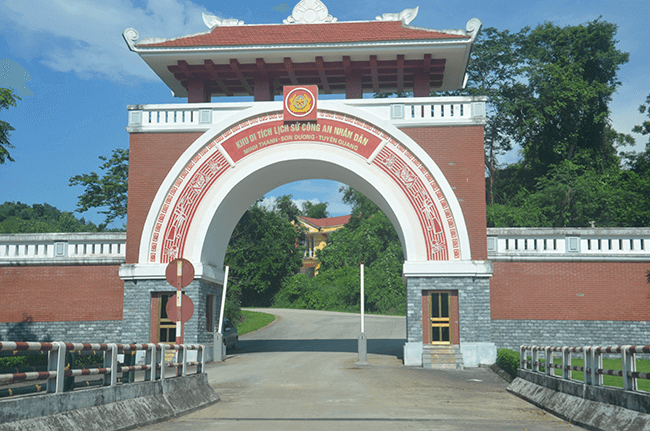
The Vietnam People's Police Historical Relic Area (Central Public Security Relics) in Dong Don village, Minh Thanh commune (Son Duong) is part of the Tan Trao Special National Historical Site, where residences and worked for the Central Police Department from April 1947 to September 1950. Previously, all the housing and work of the departments in the Central Police Department were distributed on two large hills, often called hills A and B. These two hills are located next to each other and close to Lung field. Stork. From here you can observe a large area of mountains and villages, convenient for traveling and meetings. Behind the two hills is surrounded by Temple Mountain. The hidden and dangerous terrain is very convenient for protection. This place has witnessed the growth steps of the entire force, where the Central Police Department issued important directives and resolutions, and where historical events of great significance to the People's Public Security took place. August 19 Square is named after the traditional CAND day. Prominent in front of the Square are the Fatherland flag and the Party flag built of natural stone with a strong position leaning against the mountain, representing the desire for the country and the Party to live forever. To show gratitude and traditional education for generations of People's Public Security officers and the Central Public Security Party Committee, leaders of the Ministry of Public Security had the names of 13,689 martyrs engraved on the memorial stele behind the two flags. The monument "Protecting national security", located on top of hill B, in the center of the relic site, has a complete weight of 420 tons. This is a unique cultural work that is not only valuable in terms of history and content but also has value in art, architecture, sculpture... The monument complex is nearly 3,000 m2 wide, made entirely of natural stone with the center being the Monument "Protecting Homeland Security" made of monolithic granite, with a height of 21.6 m, largest diameter of 4.5 m, facing the capital Hanoi. The monument includes 5 characters representing the forces participating in protecting national security. On the top is the National flag, the Party flag and a sword pointing towards the sky. Behind the Monument is a red granite relief depicting 39 events with selected images to most generally represent outstanding activities in fighting, building, and growing up. The People's Public Security force along with the entire people in the cause of protecting national security under the leadership of the Party. The bas-relief is a typical and unique cultural work honoring the process of formation and development of the Vietnamese People's Police. Looking from a distance, the relief can be seen like a cloud radiating a brilliant aura. With the purpose of educating the glorious traditions of the industry for every officer and soldier in the People's Public Security force, in 2010, along with the construction of the relief, the leaders of the Ministry of Public Security decided to engrave the name of the officer. 630 collectives and 336 individuals were awarded the title of Hero of the People's Armed Forces of the People's Public Security force on the gold panel on the back of the relief. Source: Tuyen Quang province electronic information portal
Tuyen Quang 4886 view
Relics of Comrade Ton Duc Thang's Housing and Safe Tunnel
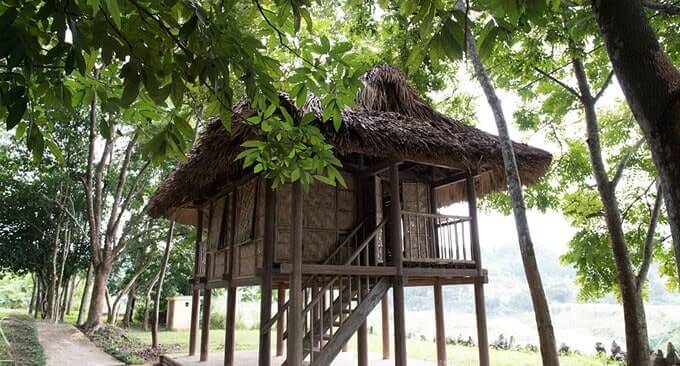
The relic of Comrade Ton Duc Thang's House and Safe Bunker is located in Chi Lien village, (now Dong Ma village), Trung Yen commune, Son Duong district. Where comrade Ton Duc Thang, Acting Head of the Standing Committee of the National Assembly and Chairman of the Lien Viet Front, lived and worked from the end of 1952 to 1954. The house is located next to the Pho Day River, surrounded by lush greenery. good, helping to facilitate secret communication between places in the region. This is a wooden stilt house with 2 vertical compartments and a palm leaf roof. The outside of the house is the place to work and receive guests; The inner space is where Uncle Ho rests. Close to Uncle Ton's house is a safety tunnel dug about 10m deep into the Chi Lien mountainside, 10m horizontally, with 2 two-way doors. These are two typical relics among the revolutionary historical relics that were once associated with the revolutionary life of comrade Ton Duc Thang in Tuyen Quang during the arduous period of the resistance war against the French colonialists. Kim Quan relic site is more than 40 km east of Tuyen Quang town, spreading in the Na Loi and Vuc Nhu forests, Khuon Dien village, Kim Quan commune, Yen Son district. The Pho Day River surrounds the forest, making it convenient for transportation and living while also ensuring confidentiality. The Party Central Committee office area is 200m northeast of the Government Office. Here, there is a hall, the house of General Secretary Truong Chinh, the house of comrades Hoang Quoc Viet, Le Van Luong and parts of the Central Office: radio station, archives, library, and security guards. Vuc Nhu location where Uncle Ho lived and worked. Uncle Ho's house is a stilt house built on a mountainside. Not far from the stilt house is a shelter. The house is connected to the tunnel by a zigzag trench. The entire office, house, and hall are made of wood, bamboo, leaves... the shelters are dug deep into the mountain, covered with wood on all four sides. Particularly, the basement of the Party Central Committee office area has an exposed section on the outside, this part has a high mound, creating a zigzag-shaped entrance to the tunnel. Kim Quan is also the place where Uncle Ho, the Party Central Committee, and the Government receive international guests. From here, Deputy Prime Minister and Minister of Foreign Affairs Pham Van Dong went to attend the Geneva conference. The relic site has been ranked as a national monument by the Ministry of Culture and Information. Source: Vietnam Travel Association
Tuyen Quang 5023 view
Bong Cave
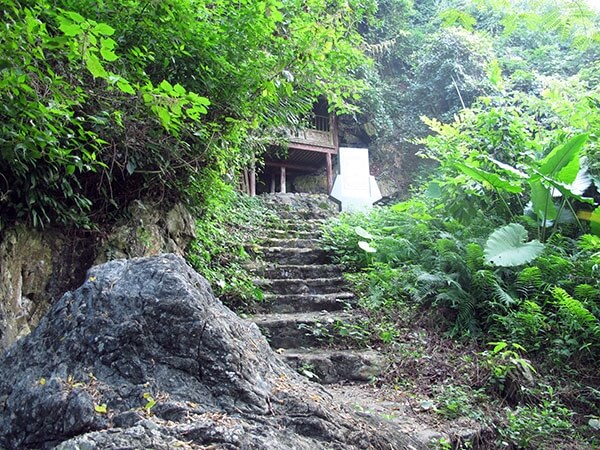
According to the book Historical relics - souvenirs of President Ho Chi Minh on Tuyen Quang land published by Tuyen Quang Department of Culture, Sports and Tourism in 2010, Bong cave, Bong village, Tan Trao commune (Son Duong) This is where President Ho Chi Minh stayed the longest during the resistance war. From a small, simple shack in front of Bong cave, Uncle Ho signed many important decrees, chaired many important meetings of the Government, wrote newspapers, and wrote poetry. During his days here, Uncle lived a simple and pure life, always giving care and love to everyone. At Bong Cave, Uncle Ho lived and worked 3 times: The first time from May 1951 to December 1951, the second time from January to April 1952, the third time from June to the end of 1952. . At Bong cave shack, despite being busy with thousands of jobs, Uncle Ho still spent time playing with the children, increasing production, and practicing sports. Every day, Uncle Ho still went to Pho Day river to bathe. When he returned, he did not forget to bring a few small stones to line the steps to make it less slippery on rainy days. Many touching stories about Uncle Ho's brilliant revolutionary qualities and love for officers, soldiers and people here are still told. From Bong Cave, President Ho Chi Minh set out to the location of the expanded Politburo meeting scheduled to take place on May 25, 1951. It was raining heavily, the stream water rose, he swam across the stream and soaked in the rain to get there. attend the meeting. Also here, Uncle Ho gave blankets and covers to protect the officers from the cold in the middle of a cold winter night, gave rice to the officers to eat to avoid hunger, and told the officers to sleep in the shacks to avoid fatigue. It was Uncle Ho's immense love that urged the cadres who lived near Uncle Ho to overcome all difficulties and hardships to complete the assigned tasks during the resistance war and forever after. Bong Cave Shack is also where Uncle Ho wrote many articles and articles on self-criticism and criticism, preventing bureaucracy, embezzlement, and waste. Three times President Ho Chi Minh lived and worked in Bong cave shack. He worked passionately, enthusiastically, without rest. Many orders and directives were issued and transmitted nationwide, leading the revolution to move forward steadily. Important decisions have changed the battlefield situation, diplomatic relations have been built and strengthened, bringing Vietnam's political position to new heights, financial and monetary work has been focused on creating strength for the resistance economy. From here, he set out on a business trip abroad, going to the front to direct the campaign. Source: Tuyen Quang Newspaper online
Tuyen Quang 4613 view
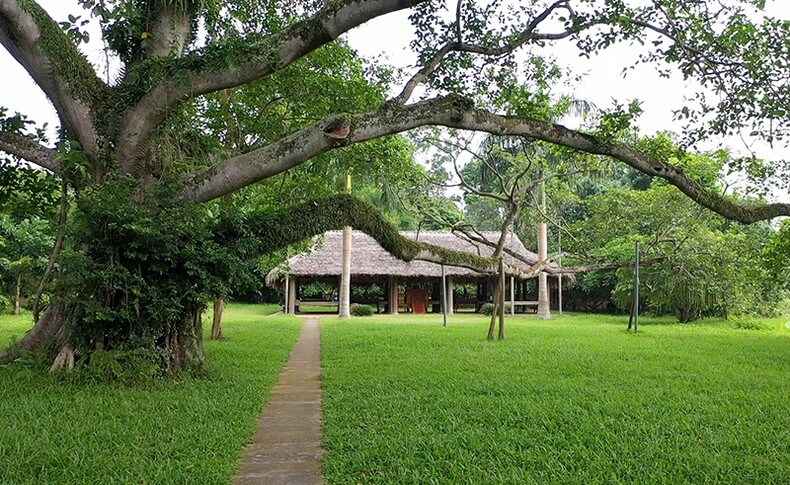
Hong Thai Communal House (Kim Trien Communal House)
Before 1945, Hong Thai communal house was also called Kim Chien communal house in Hong Thai village, Tan Trao commune. The communal house was built to meet the needs of cultural and religious activities of the community and was a place to meet and discuss important matters. common work of the village. In March 1945, under the leadership of the Party, directly comrade Chu Quy Luong, the people of Kim Chien rose up in an armed uprising to seize power. After gaining power, the people met and decided to change the name of the village. The people took the name of martyr Pham Hong Thai as the name of their commune and Kim Chien communal house has also been named Hong Thai communal house since then. Hong Thai communal house was built according to feng shui techniques passed down from ancient times, that is: "earth gathers water, water gathers". In fact, the communal house is placed in the south direction with Thia mountain as the communal house, in front is the Pho Day river, in front of the communal house is a large yard with many old trees such as banyan trees, rice trees... The communal house was built in the 4th year of Khai Dinh's reign, in 1919. The communal house has pure wooden architecture and a palm leaf roof. Overall, the communal house has the appearance of a mountain house on stilts, consisting of three rooms and two wings. The two sides on both sides are used as meeting and dining places, and the three middle rooms are used as places of worship. Above the middle space there is a mezzanine floor, divided into two parts: the upper part is used for offerings, the inside is the palace where offerings are stored. Unlike communal houses in the lowlands, Hong Thai communal house has a very simple architecture. What stands out are the letters painted in black ink at the ends. In addition, in the middle space we also see the image of 6 geckos clinging to 6 columns. In addition to its architectural and decorative value, this is also one of the agricultural beliefs of the people, because they believe that geckos are animals that can predict whether the weather will be rainy or sunny, and from there one can calculate the growing time of the crop. Hong Thai Communal House worships mountain gods around the region. In addition, the communal house also worships a human deity, Princess Ngoc Dung. Every year, the villagers here organize many worshiping ceremonies at the communal house, and the holidays are based on the seasons of the year. On May 4, 1945, Uncle Ho returned from Pac Bo, Cao Bang to Tan Trao. Hong Thai Communal House was the first stop when he arrived at Tan Trao. In August 1945, the revolutionary movement developed strongly, the spirit of seizing power was burning everywhere. Uncle Ho and the Party Central Committee decided to convene the Party's national cadre conference at Tan Trao communal house. Hong Thai Communal House was chosen as the place to welcome delegates to the Congress. All delegates must present documents at Hong Thai communal house before entering Tan Trao. After the success of the August Revolution, Uncle Ho and the Party Central Committee moved to Hanoi. Not long after our country was at peace, the French colonialists broke their promise and returned to invade our country again. The nationwide resistance broke out, the revolutionary homeland of Tan Trao once again welcomed Uncle Ho, the Central Committee, and the Government here to direct the resistance war against the French colonialists. During the resistance period, Hong Thai communal house became the headquarters of the Zone Safety Protection Board. Everyone who wants to enter a central agency to work must go to Hong Thai communal house, present documents, and have the signature of the person in charge to be able to safely enter the area. In addition, Hong Thai communal house was the workplace of the ATK Supply department during the resistance war. After this department moved, many army units were stationed at Hong Thai communal house to train army units. Source: Tuyen Quang Tourism Promotion Center
Tuyen Quang 5066 view
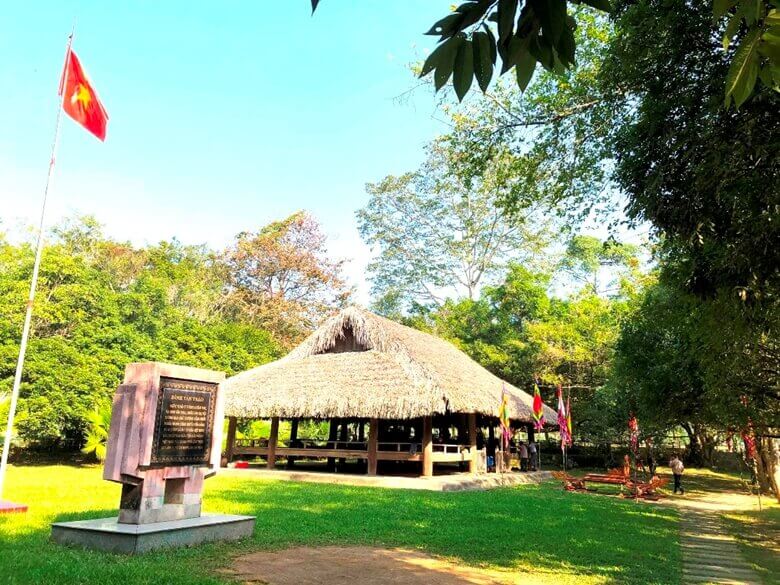
Tan Trao Communal House
Tan Trao communal house is located in Tan Lap village, Tan Trao commune, Son Duong district, Tuyen Quang province. Previously, the communal house was called Kim Long, built in the 6th year of Tu Duc (1853). Tan Trao Communal House was chosen by Uncle Ho and the Party Central Committee as the place to hold the National People's Congress on August 16 and 17, 1945, an important historical event that created the premise for the successful August Revolution. Tan Trao Communal House is a communal house worshiping Thanh Hoang and the river and mountain gods of Tan Lap village. The communal house was built in the year of the Pig (1923) in the style of a stilt house, with wooden columns, 3 compartments and 2 wings, and a roof thatched with palm leaves. Under this communal house, on August 16, 1945, Delegates from all over the country came to meet the National Congress. Here, the Delegates approved the Party's policy of conducting a general uprising, passed the Uprising Order and 10 major policies of the Viet Minh, stipulating that the national flag was the red flag with a yellow star, and the national anthem was Tien Quan. ca and appoint the Vietnam National Liberation Committee, the Provisional Government, chaired by comrade Ho Chi Minh. On the morning of August 17, 1945, on behalf of the National Committee for the Liberation of Vietnam, Uncle Ho read the sacred oath at the National Launch Ceremony here. Implementing the General Uprising order, with the tenacious spirit of the Tan Trao National Congress, the whole country successfully conducted a general uprising to seize power, establishing the Democratic Republic of Vietnam. The Tan Trao National Congress is an important event in the history of the Vietnamese revolution, the second "Dien Hong Conference" in our nation's history. The Tan Trao National Congress was the forerunner of the National Assembly of the Democratic Republic of Vietnam, later the National Assembly of the Socialist Republic of Vietnam. The 10 policies of the Viet Minh are also the premise of our country's first Constitution. Tan Trao Communal House is a red address on the journey back to the origin, a place to educate patriotic traditions and national pride. Source: Tuyen Quang Radio and Television Station
Tuyen Quang 4520 view