
 vn
vn en
en ja
ja ko
ko zh
zh



















List of relic sites (1478)

Ngoi Bo Temple
Ngoi Bo Temple now belongs to Thong Nhat commune, Lao Cai city, Lao Cai province. Overlooking the river confluence - the intersection of Ngoi Bo stream and the Red River, the temple is a place to worship Tan Vien Son Thanh - one of the Four Immortals of Vietnamese folk beliefs, "the most sacred deity of Vietnam". Southern Heaven". According to the elders, when the people from the lowlands in the village came here and were attached to this land, they built shrines and temples to worship Saint Tan Vien - a Saint who is worshiped throughout the midland and Northern Delta with devout belief in His blessing and protection. That trust is the pedestal and spiritual fulcrum of those far away from home on the path to creating a life in a new land, and at the same time is a reminder and maintenance of memories of their homeland. about his ancestors' origins. Ngoi Bo Temple Festival takes place on January 11 every year. Ngoi Bo Temple was ranked as a Provincial historical-cultural relic in 2016 Source Lao Cai province electronic information portal.
Lao Cai
3775 view
Rating : Provincial level relics

Pho Rang Fort Historical Relic
Pho Rang Fort National Historical Site in Pho Rang town, Bao Yen district (Lao Cai) is a special testament, where the heroic and glorious historical victory of our ancestors' generation 73 years ago is engraved ( June 26, 1949 – June 26, 2022). According to the History of Bao Yen District Party Committee (Lao Cai), Pho Rang station was built on peak 442, with an area of nearly 1 hectare; This is a strategic location, able to control the entire basin area of Pho Rang town and surrounding areas. The station has almost three sides of the river, so the station can cover and monitor all activities on the river and both sides of the river. The French built a solid fortification system with many bunkers, trenches, dense sharpened bamboo fences around the base, mines, obstacles and gun emplacements were arranged around the station. The enemy also arranged 2 platoons of European and African soldiers, 1 team of red soldiers, 1 platoon of paratroopers, 1 platoon of soldiers, all kinds of weapons ready to fight back and block the progress of our military branches to liberate the region. Northwest. On June 11, 1999, Pho Rang Fort relic was recognized by the Ministry of Culture and Information (now the Ministry of Culture, Sports and Tourism) as a National Historical Relic, according to Decision No. 38/QD-BVHTT . Source: Ministry of Culture, Sports and Tourism.
Lao Cai
3905 view
Rating : National monument

Historical relic of Pho Lu Fort Victory
Historical Relics The Victory Site of Fort Pho Lu is surrounded by high mountains, dense forests, steep cliffs, and deep rivers and streams. There are 2 clusters of blockhouses: the near cluster and the far cluster. The nearby cluster has 3 blockhouses: Number 1 was swept away by a flood in 1971 due to landslides. Number 2 is made of 4.5m long, 4.5m long and 3.7m wide concrete. Number 3 is 900m from Pho Lu station. The remote cluster has 2 bunkers built on top of a hill about 50 - 70m high. The center of the station is the Command Post, now house number 244 Le Hong Phong Street. There are also barracks and many solid concrete underground bunkers, currently only 5 remain. Source Lao Cai province electronic information portal.
Lao Cai
4265 view
Rating : National monument

Soi Co and Soi Gia relic sites
Bao Thang is a district with a long history of revolutionary tradition, a rich system of historical relics and a rich national cultural identity. On July 24, 2007, Soi Co - Soi Gia revolutionary base area in Gia Phu commune was ranked by Lao Cai Provincial People's Committee as a provincial relic. This is a relic that has existed for nearly a century, one of the important revolutionary bases located in the large operating area of Cam Duong - Gia Phu - Xuan Giao. Especially in the period 1947 - 1950, Soi Co - Soi Gia built a quite solid revolutionary base, received enthusiastic response from the people, so the national revolutionary movement was strongly promoted, tour groups The raid caused many losses to the enemy army. Therefore, they organized brutal repression and killed many of our revolutionary bases in order to intimidate the struggle movement here... Soi Co - Soi Gia revolutionary base area marked the revolutionary struggle. "It is one of the important and valuable relics of Bao Thang district." Source Lao Cai province electronic information portal.
Lao Cai
4148 view
Rating : Provincial level relics

Pu Gia Lan historical relic site
Arriving at Van Ban, entering the town center, you will see the majestic Gia Lan mountain appearing before your eyes. At the foot of the mountain is a long valley, a dense and crowded land. Gia Lan Mountain not only has majestic and poetic beauty but is also famous because it was the secret base of Van Ban's army and people during the resistance war against the French. Today, this base has become a revolutionary historical relic area that people know as the Pu Gia Lan Guerrilla Area. Pu Gia Lan guerrilla area was formed in 1947 in the Gia Lan mountain area, Khanh Yen Thuong commune. This is a secret base in the enemy area directed by the Van Ban District Party Committee to build, contributing significantly to the liberation of Van Ban district in particular and Lao Cai province in general. When the French colonialists occupied Van Ban, the people of Lang Giang, Khanh Yen Thuong, Khanh Yen Ha communes evacuated to this mountainous area. Along the mountainside from Lang Giang to Khanh Yen Ha commune, there are displaced people everywhere. Gia Lan guerrilla zone includes the entire land of Lang Giang commune, the southern part of the communes: Khanh Yen Thuong, Khanh Yen Ha, Chieng Ken. The North borders Nam Rang commune, the South borders Nam Tha commune, the Northwest borders Duong Quy commune, the Southwest borders Nam Xe - Van Ban commune and part of Than Uyen (Lai Chau). Gia Lan guerrilla area is a place to meet officials, soldiers, and guerrillas to discuss plans to carry out short training sessions, a place to facilitate communication from Lao Cai (in the past) to other countries. outside the province. Pu Gia Lan relic site is an important revolutionary relic site that contributes to educating revolutionary consciousness for future generations, while preserving the relic site is protecting the ecological environment. On November 16, 2006, the relic was recognized by the Provincial People's Committee as a provincial relic. Gia Lan Mountain with its natural wall has witnessed the maturity of the revolution in the countryside imbued with folk culture, witnessed the achievements of the Party leading the people of all ethnic groups to fight the French, liberating the homeland of Van Ban. ./. Source: Lao Cai province electronic newspaper.
Lao Cai
3725 view
Rating : Provincial level relics

Ken Temple cultural and historical relic
Ken Temple located in Chieng Ken commune, Van Ban district has long been an address attracting many people to visit and worship. In 2006, Ken Temple was ranked as a provincial cultural and historical relic by the Lao Cai Provincial People's Committee. Since then, Van Ban district has been implementing plans to restore and upgrade the temple to attract tourists from all over to visit and worship. Trinh Tuong Mau Temple Festival - Spiritual tourism destination Ken Temple is located on top of Pu Dinh hill, in the heart of Ken village with a land area of over 10,000 m2. The temple worships Mr. Nguyen Hoang Long and the generals of the Tay Son insurgent army who had the merit of repelling invaders in Van Ban's homeland, helping people of all ethnic groups here clear their fields and protect their villages. Every year, on January 7, people hold an incense offering ceremony to commemorate his contributions. In 2006, Ken Temple was officially renovated, rebuilt spaciously and ranked as a provincial-level historical and cultural relic by the Lao Cai Provincial People's Committee. At the end of 2012, the Provincial People's Committee approved the Ken Temple Relics Restoration Project to make the main temple more spacious and create favorable conditions for people and tourists from all over to make pilgrimages and worship. To preserve and promote the nation's sacred cultural values, the People's Committee of Van Ban district is preparing a dossier to propose upgrading Ken Temple into a national historical and cultural relic. Ken Temple currently preserves many historical relics of cultural value in the Vietnamese ethnic community. In addition, the local government also focuses on propagandizing and mobilizing people to preserve the environmental landscape, preserve and develop traditional craft villages and regional cultural identities, creating highlights for tourists when visiting the area. Come visit, experience and worship. "In the coming time, the commune hopes to receive attention from all levels and branches, especially the District Culture and Information Department to arouse and preserve the unique cultural features of the ethnic groups, thereby helping to develop Developing local spiritual tourism culture better," said Mr. Van Gia Lam, Chairman of the People's Committee of Chieng Ken commune, Van Ban district. Thanks to the strict management of departments, branches and local authorities, security, order and environmental hygiene in the temple area are guaranteed and dignity maintained. Mr. La Quoc Luu, Ken Temple Incense Master, added: "All activities in the temple must be permitted by the Temple Management Board to be carried out, to ensure organization and management as well as to avoid the situation of spirit trafficking." sacrilege in the spiritual area of the temple". Not only is it a sacred place for tourists to offer incense and pray for peace, Ken Temple is also an attractive destination in the spiritual travel itinerary of many tourists. Source: Culture and tourism of Lao Cai province.
Lao Cai
4360 view
Rating : Provincial level relics

Kien Bai communal house
Kien Bai communal house is located in Kien Bai commune, Thuy Nguyen district, Hai Phong. In the past, Kien Bai was also called Ho Bai Trang, located in Thuy Duong district, Kinh Mon district, Hai Duong town. Trang Ho Bai is located right in Dong hamlet. The gods worshiped at the communal house are: - Chinese Induction Superior God. - Loi Cong Uy Dieu is a supreme god. According to "The Magical District of Thuy Nguyen" currently archived at the Han Nom Research Institute - Hanoi, Kien Bai communal house worships the two tutelary gods Ngoc and Bich, who are twin brothers. Legend has it that when they were born, both of them were handsome and handsome, but they both died early. They were very sacred and had many times blessed the people of Kien village to have a peaceful life and prosperous business. When the Yuan army invaded our country (1287 - 1288), the two kings of Tran fought the enemy. The king built a temple and conferred the gods' names: Chinese Touch Superior God and Loi Cong Uy Dieu Superior God. Kien Bai Communal House was built in the second half of the 17th century. The communal house has a nail-style structure including 5 front rooms and 2 back rooms. The front hall, except for the middle compartment (boat compartment), all 4 compartments have wood and floorboards. On the main pillar and main beam, the year of creation (1681) and the names of those who contributed meritorious deeds are written. This is a typical sculptural architectural work of the architectural art of the Le Dynasty currently remaining in Hai Phong. The highlight of the decoration theme on this artistic architectural work is that besides the images of dragons, phoenixes, stylized flowers, sparks, spears... there are also many very natural scenes of folk activities. , lively. It is a picture of dragons following one another, in front of the dragon are many four-legged animals climbing among the dragon's fins; There are dragon-shaped patches interwoven with four-legged animals such as lizards, elephants, horses, and pigs that eat the leaves; There is an animated scene of a baby herding a buffalo sitting on top of a buffalo... Kien village festival is held from the 10th to the 13th of the first lunar month every year. On these days, villagers go to the communal house to celebrate and participate in festivals: Dum singing festival, banh chung cooking festival... Among them, the highlight is the folk game: robbing cotton trees. To have the cotton tree robbery festival, the whole village must choose the two tallest bamboo trees. Any family that chooses bamboo must bring a cake to the altar. He strongly chose 10 young men from 18 years old or older who were unmarried or were firstborn sons to cut branches from 2 bamboo trees, then each person chose 2 bamboo eyes to make 2 sticks (sticks) 5 meters long and worshiped in the communal house. . Those same two bamboo trees are cut into two pieces into two cotton trees. Out of 10 young men, choose 2 people to sharpen cotton plants. The person who sharpens the cotton tree must first scrape off all the green bark from the bamboo, then along the bamboo, shape it into a flower shape at both ends. To make the cotton tree beautiful, people use glitter paper to wrap each bamboo tassel, then tie five-colored thread... Two cotton trees are brought into the communal house. The cotton tree robbery takes place in 2 phases: first is the altar robbery ceremony (no prize), then the prize robbery ceremony. At the altar robbery ceremony, when he vigorously worshiped and threw up the cotton tree, 10 young men with red pants, scarlet scarves, and green belts rushed in to rob him under the cheers of the villagers. Next was the award winning ceremony, everyone participated. The robbery of cotton plants was very fun, sometimes lasting until morning. Whoever wins the prize for robbing the cotton tree gets to eat the cake of the first prize winner of the banh chung contest. Usually, those who win first prize in cotton tree robbing contests or banh chung cooking contests, if they are unmarried or unmarried, are groomed by villagers to become husbands and wives. The person who wins the prize for robbing the cotton tree is often respected by the villagers because they have been blessed by the gods. Because stealing cotton plants is the most fun in the village festival, people also made a song to remind each other: Ken village (Kien) has a cotton tree ceremony Procession to the Vertical Morning Glory meeting Eleven played cards to exchange officials After twelve feasts, he must go to... During singing, young men and women often delicately express their feelings for each other: - Twelve women competed Why are you still in the courtyard? Looking sideways and vertically at love If I lose here, I'll blame myself - Hey, don't blame me This mortar makes pounding the cake more delicious. - If anyone wins the spring prize I would like to have a picture of the cotton tree. Kien Bai Communal House is a historical and cultural relic with high artistic value, ranked at national level by the State in 1986.
Hai Phong
4770 view
Rating : National monument

Nghe Temple relic site
Located in the center of Hai Phong city, Me Linh ward (now An Bien ward, Le Chan district), Nghe temple is a cultural and historical relic worshiping female general Le Chan. She was from An Bien village (Dong Trieu, Quang Ninh) and came to the land where the Tam Bac River confluence flows into the Cam River, established the hamlet of Ven, later changed to An Bien Trang, in response to the uprising of Hai Ba Trung ( 40 - 43) against the invading Eastern Han army. She was a talented and heroic female general who accomplished many resounding victories during the uprising of the Trung Sisters and was appointed by Trung Vuong to the position of internal military authority, assigned the responsibility of guarding the Hai Tan region. To commemorate the merits of the female general, who founded the ancient An Bien village and laid the foundation for today's Hai Phong city, the people built An Bien temple to worship her. At first, it was just a small thatched temple. By 1919, it was built spaciously. Nghe Temple is currently an architectural style project of the Nguyen Dynasty, early 20th century including: three gates, worship hall, incense burner, harem, dance ceremony, stele house, where stone elephant and stone horse statues are placed. . Later, we built a four palace building. The hall consists of 5 compartments supported by 16 iron columns, resting on 16 elaborately and meticulously carved boulders. In the middle of the roof of the worshiping hall is embossed with large Chinese characters An Bien ancient temple. The harem consists of 3 rooms, built higher than the worship house with a 2-storey roof design, increasing the grandeur and majesty of the building. The unique feature of Nghe Temple architecture is the art of carving on wood and stone. With themes of dragon - ly - turtle - phoenix; pine - chrysanthemum - bamboo - apricot... Demonstrating the technique of carving bubbles, embossing, and sinking to a sophisticated level. Currently, Nghe Temple still preserves many valuable stone sculptures. A typical example is the large stone stele carved in the Nguyen Dynasty, recording the biography of female general Le Chan. The stone altar is embossed with the dragon and cloud dance theme, with delicate, soft, and flexible lines. At the incense burner, there is a massive stone trap, made of solid blocks of stone, elaborately embossed with images of birds, animals, flowers, and leaves. At the harem, the Nu Tuong sat on an altar throne, placed in a large red-painted, gilded coffin with a majestic, kind, and beautiful appearance. Nghe Temple Festival is held from the 8th to the 10th day of the second lunar month, attracting a large number of tourists to visit the monument and commemorate female general Le Chan. It is a national historical relic classified by the State. ranked in 1975. Source: Hai Phong city electronic information portal.
Hai Phong
4673 view
Rating : National monument

Mo Temple historical site
Mo Temple, Ngu Phuc Commune, Kien Thuy District, Hai Phong City - Place to worship Princess Quynh Tran of the Tran Dynasty - Recognized by the State as a national historical and cultural relic in 1992. (Recognized as a Historical - Cultural Relic National level in 1992) Tran Dynasty genealogy notes that Princess Quynh Tran was the daughter of King Tran Thanh Tong - a king who was filial, benevolent, respected gentle people, devoted to and understood Buddhism. When the Princess was born, she heard the sound of sweet music in the air, the scent of incense spreading... When she grew up, the Princess was born as beautiful as a crane, her face like a precious mirror, her body like a flower blooming in the moonlight. Being rich in the virtues of compassion and noble kindness, not wanting to be stained with the dust of the world, the Princess asked her father to become a monk to worship Buddha. In the Year of the Goat - 1283, while passing through Nghi Duong commune, Nghi Duong district, Kinh Mon prefecture, I saw this terrain like a bird in flight, vast mountains and rivers, peaceful and blissful landscape... This place She has a strange attraction that makes her leave the royal family, jade leaves, and golden branches to "Devot compassion and practice wisely to achieve blessed results." The princess established a manor estate, provided food and money, taught the people to clear fields, sow seeds, nurse seedlings, and grow mulberries to use silk to weave cloth. Everyone was happy as if living in spring. To run the daily work of the community, the Princess devised a way to use the Mo language as a signal to run the work. Originating from the above incident, the names "Tong Mo, Mo Market, Mo Temple and Mo Pagoda" originated from there and have entered the legend associated with the land and people here. During the years when the country was in danger when the Yuan and Mongol invaders invaded, the Princess proved to be a perfect strategist. With love for her homeland and country, she recruited soldiers to train military equipment, accumulated food and provisions to provide for her father King to expel the invaders, contributing to adding to the nation's golden history. After the Princess passed away, grateful to her, local people built a temple and passed down incense and smoke. The temple is a lively complex, still preserving 11 decrees of feudal dynasties recognizing the Princess' virtues (from the reign of King Tran Anh Tong in 1314 to Khai Dinh in 1924). In particular, the Temple also has a giant Rice tree planted by the Princess herself in 1284, with bright red flowers and luxuriant branches, which is one of the sacred symbols of the Princess still preserved today. (The giant rice tree planted by the Princess in 1284 - Recognized by the Vietnam Record Book Center as the oldest Rice Tree in Vietnam) Promoting that good communication, in the resistance wars against the French colonialists, the American imperialist invasion, the war to protect the border... This place is also the red address of generations of Ngu Phuc people before leaving. maintain the belief in defeating the enemy with the oath: "Stand by Mo temple and swear - If you don't defeat the enemy, you won't return to your homeland." Every year on the day of the traditional festival, good men and women dress up in festive clothes, along with men, women, and guests from all over, reviewing an extremely precious tradition, which is the tradition When drinking water, remember the source, and together burn incense to commemorate the talented and beautiful Princess. Source Hai Phong Youth Union.
Hai Phong
4213 view
Rating : National monument
Ba De Temple
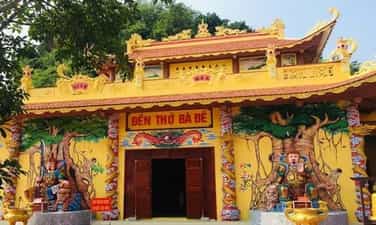
Hai Phong is a land associated with many famous and sacred historical relics. Among them, it is impossible not to mention Ba De Temple - a spiritual tourist destination that attracts many tourists from all over the country to visit and worship every year. Ba De Temple not only possesses a charming mountain and water landscape but also tells the story of the tragic life of the beautiful and unfortunate girl who is worshiped here, that is Mrs. Dao Thi Huong (also known as Mrs. De) - his wife. Lord Trinh Giang, Ba Temple was once visited by King Tu Duc and bestowed the title "Dong Nhac De Ba - Lady Trinh". Legend has it that in 1718 in the southeast of Ngoc Do Son region, a couple named Dao gave birth to a daughter named Dao Thi Huong. But strangely, from the moment she was born until she grew up, that girl always exuded a fragrant scent, radiated aura, and wherever she went, clouds covered her. One day, Lord Trinh Giang went on a tour of Do Son. While walking around the beautiful landscape, he was moved by her inspiring singing and the beauty of the city. He loved and was inseparably attached to her. Some time later, she became pregnant, Hang Tong found out and forced her parents to pay a fine. But because the family was poor and had no money to pay the fine, Hang Tong took her and drowned her in the sea. Before dying, she cried and mourned her parents as well as her own fate. She raised her face to the sky and cried: "As a woman and an aunt, when I see God's love, I don't dare to resist. Looking at my parents and neighbors, I don't dare to forget. May God bless my heart. When I am submerged in water, if I am wronged, God will let me float up three times." Sure enough, she appeared three times, everyone was scared. Later, people in the area still heard her wailing in the sea breeze: "When the ropes rot and the mortars melt, this hatred will be removed." After a month, the lord's flower boat came to take her back to the capital. Knowing the story, Lord Trinh was extremely sad and sorry for her. Lord Trinh Giang built a temple and established an altar to exonerate her. The temple's sanctity protects the village from pirates and bad people. Ba De Temple has a simple but elegant structure, built at the foot of Doc Mountain, facing the vast sea, creating a unique construction. The main hall of the Temple is the place to worship Ba De and her parents. To the left of the main hall is the altar of the Sea King. Next to it is the place to worship the Earth King, the Mountain King and sentient beings. On the right side of the main room is the altar of the Three Holy Mothers - three goddesses who govern heaven, earth, rivers and mountains. Opposite the altar of the Three Holy Mother Goddesses is the altar of Buddha and the Great King (Tran Quoc Tuan) - a famous general of the Tran Dynasty. Right in front of the Temple yard is an image of a boat with a Bodhisattva statue on it, surrounded by dragon images, adding to the solemnity of this place. Every afternoon, when the sun has disappeared behind Doc Mountain, visitors can stand under the temple's bell tower and look at the rolling sea. Admiring the moment of sunset will feel strangely peaceful. From the temple yard, turning to the right, visitors will come to a beautiful and long rocky beach. On the right side of the road leading to the rocky beach is a cliff with rows of green trees. Source haiphongnew.gov.vn
Hai Phong
4434 view
Rating : National monument
Thac Gian village communal house
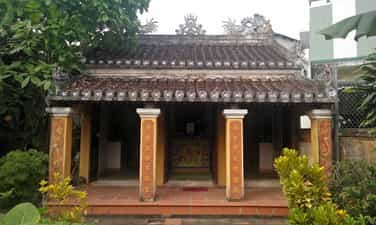
Thac Gian village communal house was built a long time ago. In the beginning, the village communal house was built with bamboo thatch. During Minh Mang's reign, the village communal house was rebuilt with wood and thatched roof. According to many recorded documents, Thac Gian Village was originally named Thach Gian and many other names such as Thach Gian, Thach Gian, a land that was explored early, around half of the 15th century. In the seventh year of Tu Duc (1854), the communal house was built with bricks, the roof was covered with yin and yang tiles and continued to be renovated in the third year of Duy Tan (1909), the first year of Khai Dinh (i.e. 1916) from contributions. of villagers and in 2009 was restored again from the city budget with a cost of more than 4 billion VND. The first person who was recognized by the people for leading a group of people from the North here to start farming was Mr. Huynh Van Phuoc. After that, the ancestors of the Nguyen, Le, Ngo, Pham, Truong, and Tran clans continued to cultivate and settle to build Thac Gian Village, which became increasingly prosperous and crowded. In the past, Thac Gian was a large village. Until the early 19th century, the boundary: East bordered Hai Chau village and went straight to Vung Rong; The West borders Xuan Dan village, Da Nang Bay and the South borders Binh Thuan and Lien Tri villages (now Hoa Thuan Dong and Hoa Thuan Tay wards, Hai Chau district). The communal house's roof is covered with yin and yang tiles, the edge of the roof is decorated with the image of "two dragons and moons" made of porcelain, and the corners are decorated with images of turtles and phoenixes. The eaves border is mounted with a Hue blue enamel plate. The communal house has two main architectural parts: the main hall and the rear hall connected behind. + The main hall has a wide floor plan, with four sets of trusses in the style of a three-compartment, two-wing house, with five rows of pillars, each row of six columns, supported by two layers of stone: the upper layer is octagonal, the lower layer is fruit-shaped. squash. The temple's rear is built with bricks and lime mortar in a rolling arch style to create a high fake castle. Hau Tam is the place to worship the village Tutelary God and Phi Van General Nguyen Phuc. Notably, in front of the communal house's yard, on both sides of the screen, there are a pair of elephants built with bricks and mortar flanking the main hall. To the northeast of the communal house is the Am Linh temple, behind the communal house there is a repatriation house built of bricks, wooden rafters, wooden beams, yin-yang tiled roof, tiled floor... This place, in the past, was a meeting place for elders, relatives, and dignitaries. In the left and right spaces, everyone attending the meeting, depending on rank and age, sits in the front or back. This is the place for the celebrants, priests, ritual students, deacons... to prepare their vestments before entering the ceremony. After the sacrifice, the homecoming house is also used as a place for villagers to eat. – Tru house: is the house used as the kitchen of the village communal house. The cooking house is built next to the left of the repatriation house. The tru house is built with brick walls and tile roof. Water well: the water well is dug next to the chef's house. In the past, this was the first and only well built, very deep, and the water was clear, so in addition to serving the village communal house, people in the village also came to take water for use during holidays, Tet or family worship days. family. According to the elders in the village, this is one of three ancient wells in Binh Thoi Ha district. These are Bong wells (in Binh Thuan village - now in Binh Hien ward, Hai Chau District); Tu Van pagoda well (now in Vinh Trung ward, Thanh Khe District). Having gone through many historical events, Thac Gian communal house is one of the few communal houses in Da Nang that still preserves extremely valuable artifacts: 18 ordinations and 38 decrees and decrees of the Later Le and Late dynasties. Nguyen Dynasty, was formed with specific architectural features. Among them, the earliest was conferred in the 7th year of Minh Mang (1826) and the latest was conferred in the 10th year of Bao Dai (1935). In the past, Thac Gian communal house was the place to organize and maintain many traditional festivals of the villagers, such as the Second Autumn Festival, the Thanh Minh Festival, the death anniversary of ancestors, the Lunar New Year Festival, and competitions. Reading wishes, performing operas... and many other folk activities. Thac Gian Communal House was recognized as a National Monument by the Ministry of Culture and Sports on August 27, 2007. On April 17, 2011 (the 10th day of the third lunar month), at Thac Gian village communal house, for the first time the village communal house festival was restored and held on a grand scale. Thac Gian communal house currently lives in group 7, Chinh Gian ward, Thanh Khe District, Da Nang city. Source: Tuoi Tre Chinh Gian Ward
Da Nang
5641 view
Rating : National monument
I-pha-nho cemetery
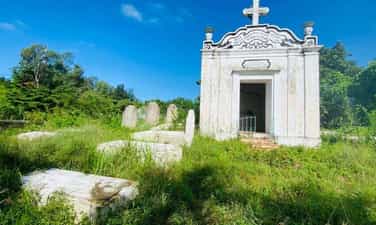
Da Nang has a relic that has existed for nearly 160 years, marking the unjust war of the expeditionary force and the resistance of our people and people against the invaders. This relic is a testament to the history of Da Nang. That is the I-pha-nho cemetery, where 32 French and Spanish soldiers who died when invading Vietnam from 1858 to 1860 are buried. At the end of Yet Kieu Street (Son Tra District) near Tien Sa tourist area, it is not difficult to find a cemetery on a fairly flat hillside, previously called Skeleton Hill by the French. People here often call it Ma Tay area. The grave area was grassed, neat, and the stone walls were firmly built. Outside the fence are green porcelain and areca trees. The chapel has been newly painted and bright. This house is 3.5m wide, 12m long, 4m high, including one main door and two windows. On the altar according to Catholic rites, place a Spanish relief. There is a small incense pot with many thick incense sticks. There are currently 18 small tombs and 14 large tombs remaining. Among them are graves whose stone steles still have clear words to read, such as the grave of Casoon Cabandon, of the 14th company, who died on August 8, 1859; Don Juan Romani died in battle in September 1858; Labra Anton, engineer captain born in Lille 1820 died in Da Nang 1858... According to documents, when the first cannon shots of the French-Spanish coalition were fired at the defensive fortresses of the Vietnamese army in Da Nang on the morning of September 1, 1858, opening the invasion of our country, the invaders The invasion was met with fierce resistance from our army and people. Until the end of 1858, they were still unable to achieve their goal of expanding the occupied area, breaking our defense, and creating a turning point in the war. The coalition commander at that time, Admiral Rigault de Genouilly, decided to change direction to attack Gia Dinh. In early February 1859, they left only a company of soldiers and a few warships in Da Nang. The remaining troops were transferred to attack Gia Dinh. On May 8, 1859, Rigault de Genouilly sent his army back to Da Nang, launched a large-scale attack, aiming to reverse the situation and consider attacking Hue. But this plan ultimately failed. In February 1860, General Page was forced to send people to pray for peace with us to carry out the plan to delay troops. After that, the French army here was ordered to withdraw to support the Chinese battlefield. Thus, after nearly 19 months of war, the French army failed in their dark plot on this battlefield, had to wrap up and leave behind "a tower of bones containing thousands of crosses". There are no complete statistics on the enemy's losses, but the graves of the expeditionary soldiers scattered throughout the foothills of Son Tra peninsula are still there. In 1895, Governor General of Indochina Paul Doumer moved more than 40 officers' graves to a high mound and built a chapel here, surrounded by walls. Under the chapel floor is a deep dug tunnel to arrange iron boxes containing the remains of soldiers brought from different places. On the stone stele standing in front, there is also a clear inscription: "À la mémoire des Combattants Francais et Espagnols de l'Expédition Rigault de Genouilly mort en 1858, 1859, 1860, et ensevelis en ces lieux" (In memory of the French and Spanish soldiers in Rigault de Genouilly's expeditionary army died in 1858, 1859, 1860 and were buried here). Source: Da Nang police newspaper
Da Nang
5359 view
Rating : City-level relics
National Temple of Tam Thai
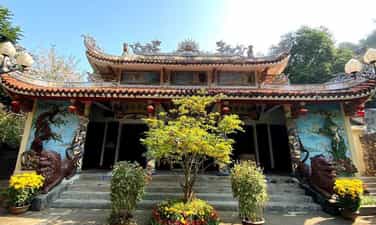
Located in the Ngu Hanh Son scenic complex, on Thuy Son mountain, Tam Thai Pagoda is the oldest pagoda in Da Nang city. Tam Thai Pagoda was first built in 1630 with the literal name Tam Thai Tu. By the Tay Son period, the pagoda was completely damaged. In 1825, during the reign of King Minh Mang, the pagoda was rebuilt and under the Nguyen Dynasty, the pagoda was decreed to be a National Tu. The appearance of the pagoda today has changed compared to the original because it has undergone many restorations between 1907 and 1995. Currently, the pagoda still retains the Tam Thai Tu sign and the The heart-shaped golden tablet is engraved according to the pen of King Minh Mang with the content praising the Buddha Dharma for its immeasurable compassion and universal compassion for all sentient beings... Because of its beautiful and ancient architecture and located in the Ngu Hanh Son scenic complex, Tam Thai Pagoda attracts many tourists every day to worship and offer incense. From the foot of Thuy Son mountain, visitors follow the time-printed stairs to reach Tam Thai. The pagoda has 3 floors: The first floor in the north is called Thuong Thai. The second floor to the south is called Trung Thai. The third floor to the east is called Ha Thai. The architecture of Tam Thai Pagoda has Tam Quan gate, main pagoda, ancestral temple corridor area and other works of art. In front of Tam Thai Pagoda is a large yard with tall trees spreading shade throughout the yard. The Tam Quan gate is made in the style of a roofed bell tower and looks very ancient. When passing through the Tam Quan gate and reaching the inner courtyard, the Maitreya Buddha statue will be the first image visitors see. The statue is carved from sandstone and is quite large in size. On both sides of the yard are palaces, which King Minh Mang built as a place to rest when visiting the pagoda. The main pagoda is located behind this courtyard. The pagoda is built of bricks, facing south. The roof is tiled with glass, the roof is decorated with two dragons flanking the moon, and the columns are decorated with dragons and phoenixes. On both sides of the front wall are reliefs of Ta Phu and Huu Bat - two deities guarding the pagoda. The main hall of the pagoda worships Amitabha Buddha, Bodhisattva Avalokiteshvara and Mahasthamaprapta. In general, the overall architectural landscape of the pagoda is built in the shape of the letter Vuong with many highly aesthetic lines. According to historians and architects, Tam Thai pagoda is typical of pagoda architecture during the Nguyen Dynasty. Besides the main works, Tam Thai pagoda also has Vong Giang tower, also known as Vong Giang Dai. This is the highest point on Thuy Son mountain. If you stand from here, visitors can see a vast area, covering the majestic scenery of Ngu Hanh Son, in the distance are the surrounding Han and Cam Le rivers. co. Although the current pagoda architecture has the typical architectural style of the Nguyen Dynasty because it has been repaired many times, Tam Thai Tu is still considered an ancient pagoda in Da Nang because this spiritual project has been constructed. Built in 1630. With great historical value, Tam Thai Pagoda has been recognized as a national historical-cultural relic. Source: To Quoc Electronic Newspaper
Da Nang
5603 view
Rating : National monument

Ben Thanh market
The history of Ben Thanh Market is associated with the ups and downs of Saigon - Cho Lon urban area. The market was built in 1912 and has undergone many restorations and relocations to get its current appearance and position. Initially, the market was located on the bank of Ben Nghe River, where there was a river wharf for soldiers and people to enter and exit Gia Dinh citadel (Quy Thanh, Bat Quai citadel), so it was called Ben Thanh Market. After the uprising of Le Van Khoi (1833-1835), Gia Dinh citadel was demolished, Ben Thanh Market was also deserted. After the French attacked Saigon (February 1859), the market was completely burned down. In 1860, the French rebuilt Ben Thanh Market at the old location. After many restorations, the market gradually became more spacious with a system of brick columns, iron ribs, tiled roofs, etc. At the beginning of the twentieth century, the French rebuilt the new Ben Thanh Market at today's location between 1912 and 1914, with the iconic clock attached to the south door. In front of the main door (south door) is Ben Thanh Market Roundabout, also known as Dien Hong Square, Quach Thi Trang Square... In 1952, when renovating the market, 12 bas-reliefs of the Bien Hoa fine arts workshop were installed at the four market doors. Since then, the image of Ben Thanh Market has become familiar and close, becoming an urban cultural memory of the city. Source: Ho Chi Minh City Law Electronic Newspaper
Ho Chi Minh City
4990 view
Rating : City-level relics

turtle Lake
Turtle Lake in the center of Ho Chi Minh City is officially called International Construction Site, which is the intersection of Pham Ngoc Thach, Tran Cao Van and Vo Van Tan streets. There are many restaurants, bars, and cafes around the lake, so this area is always bustling from morning to night. The original location of Turtle Lake in 1790 was the Kham Khuyet citadel gate of Bat Quai citadel (also known as Quy citadel) built by order of King Gia Long. However, after the rebellion of Le Van Khoi (1833-1835), King Minh Mang destroyed Bat Quai citadel and built a smaller citadel named Phung citadel (Gia Dinh citadel). The location of Kham Khuyet gate became a point outside the citadel and directly connected the road outside the west side of the citadel to the river wharf (Road No. 16 - Catinat and now Dong Khoi). After capturing Saigon in 1859, the French destroyed the entire Gia Dinh citadel. In 1878, a water tower was built at the location of Turtle Lake today to serve the needs of providing drinking water for residents in the area. By 1921, the water tower was demolished and the road was expanded to Mayer Street (now Vo Thi Sau Street). From then on, this location became the intersection of routes as it is today. Also at this location, the French built a bronze monument of three soldiers with a small lake, to mark the invasion and symbolize the French mastery of Indochina. Therefore, people often call it Ba Hinh Construction Site. These monuments existed until 1956 when they were demolished by the Government of the Republic of Vietnam, leaving only a small lake. The intersection was also renamed Soldier Field. After the French withdrew from Vietnam, the Soldiers' Construction site became a traffic circle of Duy Tan (now Pham Ngoc Thach) and Tran Quy Cap (now Vo Van Tan - Tran Cao Van) streets. The time when Turtle Lake was built has not been determined exactly, but some documents say it was built in 1965-1967. The designer is architect Nguyen Ky. In the years 1970 to 1974, Turtle Lake was restored and embellished by the government of the Republic of Vietnam. This includes the addition and adjustment of 5 tall concrete columns shaped like five hands spreading out like flower petals supporting a pistil. This new project also includes a traffic circle with a diameter of nearly 100 meters, decorated with green trees and a large octagonal fountain with 4 spiral walkways leading to the central area and the shape of the lake. alloy turtle statue on the back of a large stone stele. Therefore, the folk name is Turtle Lake. Initially, this intersection was named Freedom Fighters Construction Site, and in 1972 it was renamed International Construction Site. However, in early 1976, the stele and the turtle were destroyed in an explosion. Although the turtle was no longer there, people were still familiar with the old name instead of the official name. Due to its rather strange architecture, Turtle Lake is associated with the legend of protecting the dragon's veins of President of the Republic of Vietnam Nguyen Van Thieu. According to author Huynh Ba Thanh's account in the book The Turtle Lake Case (Tuoi Tre Publishing House 1982), there is an oral anecdote that in 1967 when General Nguyen Van Thieu became president of the Republic of Vietnam, invited a famous Chinese feng shui master to examine the situation at the Independence Palace. This feng shui master praised the palace for being built on a dragon vein. This dragon has its head located right at the Independence Palace (so the Independence Palace is also called the Dragon Head Palace) and its tail is located at the Soldiers' Square. Although prosperous, the dragon's tail often struggled, so his career was not sustainable. It was necessary to cast a large turtle to restrain the dragon's tail from struggling, in order to maintain the presidential position for a long time. Therefore, Mr. Nguyen Van Thieu listened and built an octagonal lake, modeled after the eight trigram formation, a feng shui symbol often used to ward off ancient people, and placed a large turtle. cast in bronze right in the middle of the lake. For that reason, many people believe that the tall tower architecture resembles the shape of a sword or a giant nail hammered into the lake to hold the dragon's tail, and the lake grounds are shaped like a bagua, with a yin and yang shape in the middle. . Source: Vietnamese newspaper
Ho Chi Minh City
4922 view
Rating : City-level relics

Chi Hoa detention camp
Chi Hoa Prison, also known as Chi Hoa Prison, located in District 10, Ho Chi Minh City, is a prison built by the French in 1943 to replace the Saigon Prison at the corner of Ly Tu Trong - Nam Ky Khoi Nghia streets. The project is said to have been initiated by the Japanese after the French coup to detain prisoners, but when construction was not completed, they withdrew from Vietnam. After that, the French continued the unfinished work. Almost all materials such as cement, iron, and steel were shipped from France. On March 8, 1953, when the Chi Hoa Prison was completely built, the Saigon Grand Prison was demolished. In addition to some released prisoners, the remaining about 1,600 people and the guillotine were transferred to Chi Hoa Prison. With an area of 7 hectares, Chi Hoa Clinic has 3 floors and 238 rooms. There are two rows of houses for female prisoners. This place used to hold political prisoners against the French colonialists and the Republic of Vietnam regime. Today, this place is reserved by Ho Chi Minh City Police for defendants in cases in the area. Chi Hoa Temple was designed and built by a Japanese architect according to the five elements and eight trigrams theory and is considered a special architectural work. It harmonizes the basic characteristics of French architecture: solid, discreet, cool, while also carrying the mysterious yin and yang of the five elements of the East. The examination has an octagonal shape with 8 equal sides and 8 corners representing the 8 hexagrams: Can, Khon, Chan, Ton, Can, Kham, Doai, Ly in the I Ching. The prison has 8 prison cells, built in a square octagon. Some research documents say that Ho Chi Hoa was built based on the eight trigrams of Confucius Zhuge Liang during the Three Kingdoms period. The 8 hexagrams correspond to the 8 battle gates: Retirement - Birth - Thuong - Do - Canh - Death - Kinh - Khai. Each side of the trigram formation is a zone, the back is sealed on the outside while the inside is full of iron bars and each zone has 4 prison cells. Chi Hoa has only one entrance, so people call it "death's door". Through this door is a tunnel system designed according to the palace. If not guided, the person entering will be disoriented, like falling into a maze, unable to find their way out. In the middle of Kham Chi Hoa is a large octagonal yard divided into 8 small triangles, with many trees and a clean and airy lawn. In the middle is a guard tower more than 20 meters high, on top is a water tank bulging like a sword stuck straight down. Standing here, the guards can easily observe all the cells. With the architecture of Chi Hoa's eight trigram formation, once prisoners enter here, it will be difficult for them to escape. History so far has only had 3 successful prison escapes. The first case is the revolutionary soldiers at the time of the Japanese coup against France in 1945, the second is the bandit general Dien Khac Kim in 1972 and the third is the notorious death row prisoner Phuoc "Eight Fingers" in 1995. For a long time, Chi Hoa Examination has been associated with mysterious anecdotes. It is rumored that the guard post in the middle of the cemetery is the sword guard. No matter how cunning the criminals are, all their tricks here will be neutralized by this "spiritual" sword. This sword is the "heart" of the building. If it is pulled up, the entire "arrangement" will break. Another thrilling story that is still passed down by word of mouth is that because many people died in Chi Hoa Prison, the negative atmosphere here was very heavy. Therefore, heaven often sends thunder and lightning to break a corner to open a door of birth, allowing resentment to escape and the dead to escape. There was information that the government of the Republic of Vietnam had brought back a very skilled geography teacher to partially solve this "battle". In fact, one of the eight roofs of the octagon has been leveled, breaking the perfection of the "eight trigrams", according to heaven's will, opening a door of Birth for souls to fly away. Meanwhile, some scientists believe that underneath the building there may be an ore mine that causes lightning to often hit Kham Chi Hoa. On the grounds of Chi Hoa Prison, there is also a church (today used as the Camp Hall) built by the French as a place to "baptize" prisoners before being executed. In addition, to free the "negative energy", in 1954, the prison warden of Chi Hoa Prison built a temple outside the "eight trigrams" (but still within the prison grounds) to place a Buddha statue. Later, the temple no longer existed, the Buddha statue now lies on a small lake. Source: Vietnamese newspaper
Ho Chi Minh City
6007 view
Rating : National monument
Cho Quan Hospital Detention Center
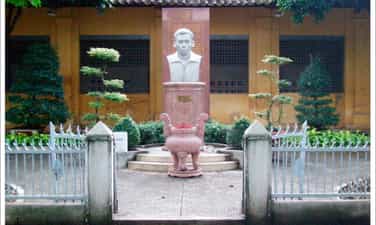
Cho Quan Hospital (now Tropical Diseases Hospital) is the oldest hospital in Saigon, completed in 1864. The hospital specializes in treating infectious diseases and mental illnesses. Due to the need to treat mental illness, a separate area was built in the hospital to house mentally ill patients. That patient confinement area has now become a cultural and historical relic. During the invasion of our country, the French colonialists arrested and brutally tortured many revolutionary soldiers and patriots. Because they needed to exploit information, they took the prisoner to the mental patient ward of Cho Quan hospital for both moderate treatment and continued questioning. Since then, the prison for mentally ill patients has become a place to detain sick prisoners. In 1931, comrade Tran Phu - the first General Secretary of the Indochina Communist Party, now the Communist Party of Vietnam, was detained by the French colonialists and breathed his last breath here. On April 18, 1931, comrade Tran Phu was arrested at 66 Champagne Street (now Ly Chinh Thang Street) - the Party's printing agency. After detaining and brutally torturing comrade Tran Phu in many different detention camps, they transferred him to Saigon Large Prison to prepare for trial. At this time, comrade Tran Phu's health was increasingly deteriorating. The French colonialists wanted to maintain his life to exploit the Party's secrets, so on August 26, 1931, they took him to the detention center at Cho Quan hospital for treatment. On September 6, 1931, comrade Tran Phu breathed his last breath here. The comrade's body was placed in his personal room. Comrades in the prison held a memorial service for their comrades in this room. All political prisoners in the prison stood along the hallway to see off comrade Tran Phu - the first General Secretary of the Party. In addition to comrade Tran Phu, during the two resistance wars against the French and the Americans, many other revolutionary soldiers such as Tran Nao, Ha Huy Tap, Tran Bach Dang, and Nguyen Van Troi were also detained in this prison area. . Today, the prison area in Cho Quan hospital is open to welcome visitors. The relics still bear traces of shackles and shackles under the colonial regime; as well as the imprints of the indomitable and indomitable fight of revolutionary soldiers with bloody fighting slogans still clearly visible on the walls. From the hospital gate, entering the prison area, on the right side, the architectural plan of the prison area is U-shaped. The horizontal row of the U-shape is 32m long and 12m wide. Two equal vertical rows, each 14m long and 7.5m wide. Outside, in front of the prison door, there is a small guard room with a tiled roof. Surrounded by a 2.5m high brick wall. Entering from the prison door, first is a large cell, holding about 20 people. Next are 2 large cells and 2 small cells. In the middle of the walkway, an additional wall was built from the door to the end of the block, separating the cells on the left and right. To the left of the prison door, 10.5 meters away, are two equal cells, each room 10.75 meters wide. Near the end of the row there are 2 small individual cells, with an iron net on the roof. At the end of the row there are 3 small bathrooms. In general, the prison area in Cho Quan hospital is a fairly intact historical relic. In recent years, District 5 has invested nearly 700 million VND to restore the first phase of the monument, making it one of the places for political activities and traditional education for the young generation. After inauguration, the Ho Chi Minh Communist Youth Union of District 5 is responsible for managing, introducing and guiding visitors to visit the monument. The relic has a great educational effect on the young generation, from comrade Tran Phu's shining example of courage, steadfast revolutionary spirit and compassion for comrades and comrades. This relic will forever remind the next generation of the advice of the first General Secretary of the Party: "Keep the will to fight". The prison area in Cho Quan hospital was recognized as a historical relic by the Ministry of Culture on November 16, 1988. Source: People's Committee of District 5, Ho Chi Minh City
Ho Chi Minh City
4726 view
Rating : National monument

Hanoi flagpole
The flag tower, "Hanoi Flagpole" is located on Dien Bien Phu Street, Ba Dinh District, Hanoi, built in 1812, under the reign of King Gia Long of the Nguyen Dynasty on the southern part of Thang Long Imperial Citadel, where the building was built. Tam Mon citadel of Thang Long Imperial Citadel during the Le Dynasty. This is the reference point, marking the origin at the southern end of the main central axis of the citadel, from here follow the "fishing path", through Doan Mon and then to the most important point, the central point of the Imperial Citadel is Kinh Thien Palace. . Hanoi flagpole is now the most intact and majestic structure in the Thang Long Imperial Citadel complex. The Flag Pole is built with three base floors and a column body. The base floors are shaped like a truncated square pyramid, gradually getting smaller, overlapping each other, and surrounded by bricks. The first floor is each 42.5m long; 3.1m high with two brick stairs leading up. Second floor, each length is 27m; 3.7m high with 4 doors, the East door has two words "Nghanh Huc" (welcoming the morning light), the West door has the words "Hoi Quang" (reflected light), the South door has the words "Reflected light". “Huong Minh” (toward the light), the North door has no inscription. Third floor, each length is 12.8m; 5.1m high with a door to the stairs facing North. On this floor is the body of the Flag Pole, 18.2m high; Eight-sided cylindrical shape, tapering upward, each bottom side is about 2m. Inside the body is a staircase of 54 steps that spirals up to the top. The whole is illuminated (and ventilated) by 39 fan-shaped holes. The top of the Flag Pole is made up of an octagonal building, 3.3m high, with 8 windows corresponding to the eight sides. In the middle of the floor is a circular cylinder, 40cm in diameter, reaching the top of the floor, where the flagpole is placed (the flagpole is 8m high). The entire Flagpole is 33.4m high, if including the flagpole, it is 41.4m. "Hanoi Flagpole" is one of the few architectural works in the Hanoi citadel area that was lucky enough to escape destruction by the French colonial government in three years 1894-1897. On October 10, 1954, for the first time, the red flag with yellow star - the national flag - flew atop the "Hanoi Flagpole" and was recognized as a historical relic in 1989. On October 10, 1954, the whole of Hanoi was jubilantly excited to welcome the big festival, Victory Day, the capital Hanoi was completely liberated. The whole of Hanoi gathered at the "Hanoi Flagpole" waiting for the historic moment: The National Flag Hoisting Ceremony at the top of the "Hanoi Flagpole". At exactly 3:00 p.m., October 10, 1954, the City Theater's horn blew for a long time. The military band performed the National Anthem under the direction of comrade Dinh Ngoc Lien. The national flag was raised slowly to the rhythm of the military march. For the first time, the red flag with yellow star - the national flag - flew atop the "Hanoi Flagpole". From the date of construction until now, "Hanoi Flagpole" has been nearly two hundred years old. When the Democratic Republic of Vietnam was born, the image of the "Hanoi Flagpole" was solemnly printed on the currency of the State Bank of Vietnam issued for the first time. For more than half a century, mounted on the top of the "Hanoi Flagpole" is a red flag with a five-pointed yellow star flying majestically in the sky of the thousand-year-old capital of Thang Long - Hanoi, forever a symbol of glory. , is the pride of the nation, the independent and free country of Vietnam. According to research documents, since 1986, a red flag with a yellow star measuring 24 square meters has always flown on the Hanoi Flagpole. Today's Hanoi flagpole is located on Dien Bien Phu street, with ancient mother-of-pearl trees growing around it and at its foot is a luxuriant longan garden. According to some research documents, in a photo taken in 1890 by Louis Sadoul, a French military medical officer, the Lenin Monument flower garden area at the foot of the flagpole today is also Elephant Lake because it is a place to bathe elephants. of the Nguyen Dynasty. The ancient tree ranges of today were not yet planted at that time. In the photo, it can be seen that the French army has set up semi-permanent barracks on the ramparts of the Flagpole to station their troops. Also during this period, the Hanoi Flagpole was also used by the French army as an observation tower. During the US war of sabotage, the Flagpole was also an observation tower for Hanoi's air defense troops. At that time, from the top of the flagpole you can see both Hanoi and its suburbs. What's special is that during Hanoi's hottest days, the inside temperature of the Flagpole is always cool like it has air conditioning. The structure of the up and down doors of the Flagpole is also so scientific that no matter how heavy the rain, water does not flow into the tower. Source: Thang Long - Hanoi Heritage Conservation Center
Hanoi
4441 view
Rating : National monument
Outstanding monuments
See all
Lang Le Bau Co relic site
Lang Le Bau Co relic site is located in Tan Nhut commune, Binh Chanh district, Ho Chi Minh City. Lang Le Bau Co is associated with the resistance war against the French invasion in 1948 with major battles that went down in history. Lang Le Bau Co relic was recognized as a city-level historical relic in 2003. The reason it is called Lang Le Bau Co relic area is because the name of Lang Le Bau Co relic area was given by local people. The hamlet was established next to the interlaced canals and rivers. Lang Le Bau Co is located inside a large field with many shrimp, crabs, and fish. Along with many species of birds such as mallards, storks, teal, nuthatches, gongs, partridges, herons, and red armpits come to feed here. Therefore, Tan Nhut people call it by the familiar and rustic name Lang Le Bau Co. Lang Le Bau Co relic is considered the gateway to move to the center of Vuon Thom base and attack the enemy headquarters in Saigon. Previously, Lang Le Bau Co relic area was originally a field of overgrown reeds. On April 15, 1948, the French colonialists sent 3 thousand soldiers and many modern weapons to simultaneously attack the Lang Le Bau Co area to destroy the Vuon Thom base. At that time, the revolutionary armed forces in Lang Le - Bau, because of their small force and rudimentary weapons, had the help of local people along with the advantage of terrain. After just over half a day of fighting, it turned to attack, causing the French army to suffer a large number of casualties. The victory at Lang Le Bau Co killed 300 enemies, captured 30 mercenaries, and destroyed many machines, military vehicles, and guns of all kinds of the enemy. However, on our side, there are many officers and soldiers who heroically sacrificed their lives at a very young age. On October 14, 1966, in Lang Le, the Republic of Vietnam Army Ranger Battalion was destroyed by tourist militia. Lang Le Bau Co relic site has great historical significance for the people of Saigon in particular and the whole country in general. Faced with hatred for the French colonialists, Lang Le Bau Co's army and people fought a war of great historical significance that opened the door for our side and the enemy. For our side, the battle opened the door to heroism in a strong resistance position. As for the enemy, they had to retreat into a strategic position and were destroyed. The French colonialists could no longer form a strategy to defeat the Viet Minh. Moreover, at Vuon Thom base, Lang Le Bau Co also took place a determined battle to protect our base and destroy all sabotage plans of the enemy. Lang Le Bau Co relic area, after the Dong Khoi movement in 1960, was also a logistics and springboard for the armed forces to liberate Long An - Saigon - Gia Dinh. To commemorate the sacrifices of our compatriots and soldiers, in 1988 Binh Chanh district built a historical building in Lang Le Bau Co land with an area of 1000m2. Source: Ho Chi Minh City Electronic Information Newspaper
Ho Chi Minh City
18226 view
Rating : City-level relics

Tan Hiep Prison Historical Relic
Tan Hiep Prison, also known as "Tan Hiep Correctional Center", is located in Quarter 6, Tan Tien Ward, Bien Hoa City. Tan Hiep Prison Relic was ranked as a national relic by the Ministry of Culture and Sports on January 15, 1994. Tan Hiep Prison is one of the six largest prisons in South Vietnam and the largest prison in the Southeast region, built in an important military position, northeast of Bien Hoa town. Ahead is National Highway 1; Behind is the North - South railway line. This is an isolated location, convenient for transportation, easy for protecting, guarding, receiving prisoners from other places and transferring prisoners to Con Dao, Phu Quoc... Tan Hiep Prison has an area of 46,520 square meters with 8 prisons, including 5 prisons for communist prisoners and patriots. The prison is surrounded by 4 layers of barbed wire with 9 bunkers, 3 watchtowers with a team of guards and a modern alarm system. It's called "Correctional Center" but inside is actually a gun warehouse, an interrogation and torture room with the most modern tools. Each prison only has an area of nearly 200 square meters but holds 300-400 people, sometimes up to a thousand people. In particular, there are "repentance" rooms and "tiger cages" that are very small and narrow and living conditions are extremely harsh, prisoners live like in a crematorium. The diet was extremely unhygienic. The prison guards bought rotten rice and rotten fish to fertilize the fields, and fried them in oil to feed the prisoners, leading to many people being poisoned. With the determination to escape the imperial prison, return to the Party and the people to continue fighting and liberating the nation, on December 2, 1956, with the agreement of the Eastern Inter-Provincial Party Committee, the soldiers Communists were "detained" in Tan Hiep prison under the direct direction of comrade Nguyen Trong Tam (Bat Tam) - in charge of the prison Party Committee and a number of other comrades who suddenly broke the shackles. was able to free nearly 500 comrades and patriots. This event caused a stir in the Pentagon. America - Diem hastily mobilized both main forces and security forces, civil guards defending the three provinces of Bien Hoa, Ba Ria, Thu Dau Mot and two special forces to encircle and capture the prisoners, but all were defeated. failure. Our comrades and compatriots who escaped from Tan Hiep prison received help and protection from local facilities and returned safely to base. Among the escaped prisoners were comrades: Bay Tam, Hai Thong, Ly Van Sam... who became the core nucleus of the Dong Khoi movement later. In 2001, to partly recreate the crimes of the US - Diem against our comrades and compatriots imprisoned at Tan Hiep prison and describe the entire Tan Hiep uprising on December 2, 1956. , Dong Nai Museum has collected images, documents, and artifacts displayed at the relic and made a model to serve the research and sightseeing needs of all classes of people. Every day, the monument is open to visitors. Source: Dong Nai Electronic Newspaper
Dong Nai
16682 view
Rating : National monument

Nguyen Huu Canh Temple
Nguyen Huu Canh temple, also known as Binh Kinh communal house, is located on the left bank of Dong Nai river, formerly belonging to Binh Kinh hamlet, Binh Hoanh village, Tran Bien canton, now Nhi Hoa hamlet, Hiep Hoa commune, Bien Hoa city. It was ranked as a national historical relic by the Ministry of Culture, Information, Sports and Tourism on March 25, 1991. Nguyen Huu Canh Temple was built around the end of the 18th century. Initially, the temple was small in scale, with walls made of boards and a yin-yang tile roof, about 400m south of the current temple. Documents say: the temple was first rebuilt in the fourth year of Tu Duc (1851); By 1923, the temple was rebuilt at its current location. Nguyen Huu Canh was born in 1650 in Gia Mieu, Tong Son district, Thanh Hoa province in a family with many famous generals in the dynasty. He was a man of both literature and martial arts, accomplished many great victories and was trusted, loved and respected by Lord Nguyen. In the spring of the year Mau Dan (1698), he obeyed Lord Nguyen's order to invade Dang Trong while it was still very desolate. Arriving in Dong Nai, he set up his headquarters at Cu Lao Pho (now Hiep Hoa commune); took Dong Nai land as Phuoc Long district, built Tran Bien palace, took Saigon land as Tan Binh district, built Phien Tran palace, the land expanded thousands of miles. He recruited immigrants to settle down, organized the administrative apparatus gradually and systematically, encouraged land reclamation, and promoted Cu Lao Pho to develop into one of the busiest and most dynamic port towns throughout the century. 18 and officially annexed the new land of the South into the Dai Viet map. After returning from the invasion of the South, the following year he again served Lord Nguyen Phuc Chu's command to lead an army to suppress King Chan Lap and maintain the southern border region. In April of the year Canh Thin (1700), after completing his mission, on the way back to Rach Gam (Tien Giang), he fell ill and passed away on the 16th day of the 5th lunar month, at the age of 51 years old. On the way to his hometown for burial, his coffin was stopped at the land where he once had his headquarters on Cu Lao Pho so that local people could have the opportunity to say goodbye to him one last time. At the mandarin's communal house, local people built a tomb to remember this event. When hearing the news of Nguyen Huu Canh's death, Lord Nguyen was extremely sorry and conferred on him the title of High-ranking official of the Town Chancellor with the title: Thanh Marquis Ceremony and had his tablet enshrined at the Thai temple. Source: Dong Nai Electronic Newspaper
Dong Nai
15307 view
Rating : National monument

La Nga victory relic
La Nga Victory Relic (at km 104-112 on Highway 20 to Da Lat, in Phu Ngoc commune, Dinh Quan district) was ranked a national historical relic by the Ministry of Culture on December 12, 1986. To cheer for the Viet Bac victory in the fall-winter of 1947 and also to deal a fatal blow to the enemy, the command board of squad 10 decided to organize a big battle, to show the enemy that the Vietnamese people were , Vietnamese people do not easily submit to any enemy; With a spirit of courage and ingenuity after nearly half a year of preparation, studying the terrain, and choosing a location: at 15:12 on March 1, 1948, the La Nga ambush battle began and ended at 15:12 on March 1, 1948. 15:57 on the same day, in just 45 minutes. The victory of La Nga delighted the people of Dinh Quan in particular and the people of Dong Nai in general. This is a victory that demonstrates the cunning and courage of our army and people, causing the enemy to be stunned and defeated. From this victory, our force grew stronger and stronger, contributing to defeating the enemy's plan to attack quickly and win quickly, forcing them into a passive position. The scenic complex of Chong Rock, Mai Waterfall, La Nga River and La Nga Victory Monument is an interesting tourist complex of Dinh Quan. The amazing beauty of Hon Ba Chong, Da Voi Mountain, Hon Dia, along with the natural pagoda at the foot of the rocky mountain are typical clusters that create a harmonious beauty for the Da Chong scenic area. Dinh Quan Da Chong Complex is also a place that retains traces of prehistoric life. Here, under the stone roofs, along the streams and on the slopes along the valley, many production and daily life tools of the ancients made of stone, bronze and terracotta were discovered. During the 30-year resistance war. Dinh Quan is an important part of War Zone D. Da Chong witnessed the formation, development, stationing, and combat deployment of revolutionary forces. Today, a part of the land of Da Chong Dinh Quan scenic area has been used and built into the Dinh Quan District Cultural and Sports Center. In the near future, Da Chong Dinh Quan scenic area will be invested in and renovated, contributing to making the natural landscape more beautiful and becoming an attractive eco-tourism destination. Source: Dinh Quan District People's Committee
Dong Nai
15133 view
Rating : National monument

Chot Mat ancient tower
Chot Mat Tower Historical-Cultural Relic, located in Xom Thap hamlet, Tan Phong commune, Tan Bien district, Tay Ninh province, was recognized by the Ministry of Culture and Information (now the Ministry of Culture, Sports and Tourism) as historical - cultural relic on July 23, 1993. Also one of the last three ancient towers remaining in the South of our country. Having undergone many restorations in 1938, 2003 and most recently in 2013. Despite undergoing restorations, the Chot Mat ancient tower relic site has given itself a new look but still remains retains the spirit of ancient architecture. The entire Tower is built of brick and slate with the top of the tower tapering upward, from the ground to the highest point of the tower is estimated to be 10m. In addition, this ancient tower is located on a high mound in the middle of the field, so from a distance it looks like a pen rising gradually. In 2003, the People's Committee of Tay Ninh province decided to approve the investment project to restore, embellish and preserve Chot Mat tower relics and carried out the restoration, restoration, display and opening of the excavation pit in 2003. into use. On November 27, 2019, the Provincial People's Committee issued a Decision regulating the decentralization of management, protection and promotion of the value of historical and cultural relics and scenic spots in Tay Ninh province. Decision to assign the People's Committee of Tan Bien district to directly manage 4 relics, including the National Historical-Cultural relic Thap Chot Mat. In particular, the Chot Mat Tower Historical-Cultural Relic in Tan Phong commune, Tan Bien district was chosen to be part of the tourism development link of Tay Ninh Province. This is a tourist destination worth exploring, contributing to tourism development in Tan Phong commune in particular and Tan Bien district in general. Source: Tay Ninh province electronic information portal
Tay Ninh
14987 view
Rating : National monument

Hoc Mon District Palace
Hoc Mon District Palace is located at No. 1, Ly Nam De Street, Hoc Mon Town, (next to the District People's Committee headquarters) and is the place where many outstanding fighting events have been recorded throughout the long history from 1885 to the Southern days. Complete liberation of the People of 18 Betel Garden Villages. After defeating Chi Hoa Fort, the French colonialists built a 3-storey wooden house here to use as a military post. When Tran Tu Ca took office as Governor of the Palace, he used the Station as the Palace of Binh Long district. Originally a cunning drunkard of the French colonialists, Tran Tu Ca was led by a group led by Mr. Phan Van Hon (Quan Hon) and Nguyen Van Qua (Chanh Lanh Binh) of nearly 1,000 insurgents who came to burn the District Palace, captured and head cut off in the middle of the market. That was February 8, 1885, At Dau Tet. Afterwards, Hoc Mon District Palace was rebuilt with a blue stone foundation, brick walls, and a defense system from the upper floors to the fence. The architecture is similar to the Military Fort, so the locals call it Hoc Mon Fort. Tran took over from Tran Tu Ca as Governor of Ngon district, moving to Tra District and then Tho District. This was a long period of time when the people of the Hoc Mon region suffered from many cruel and despicable scenes from the French colonialists and their oligarchic henchmen mentioned above. With the indomitable tradition of Hoc Mon people. On June 4, 1930, around 6 a.m. in front of the District Palace, hundreds of Hoc Mon people protested demanding "abolition of poll tax, reduction of license and market taxes, and granting land to poor farmers." Tra District invited the leaders into the Palace to negotiate, but they cunningly arrested them, including Mr. Le Van Uoi (Secretary of Tan Thoi Nhi Commune), who was the leader of the protest. People were undaunted and fiercely demanded that Tea District release those detained. The protest group became more and more crowded, the fighting spirit spread somewhat, causing Tra District to give in. On the one hand, they released the detained people, on the other hand, they called the officials in Saigon for help. 2 hours later, the struggle was led by two men, Blachole and Nobbot, who opened fire on the protest group, causing many casualties. But the most impressive historical event at Hoc Mon District Palace was the Southern Uprising on November 23, 1940. Hoc Mon Fort is very solid, built of green stone like a fortress, about 15 meters high, has a gun emplacement and a defense system with battlements guarded by a platoon of green soldiers. On November 22, 1940, France reinforced one more platoon to deal with the situation. On the afternoon of November 22, 1940, Mr. Do Van Coi's army broke into the town, disguised as civilians, ambushed behind the Station waiting for orders to rob the Station. Another army wing has the task of destroying bridges, cutting down trees blocking roads, and occupying offices and houses... The army wing from Phuoc Vinh An, Tan Thong, Tan An Hoi, Tan Phu Trung is led by Mr. Pham Van Sang and Dang Cong Binh commanded, started from Ben Do hamlet, attacked the house, killed 1 person, collected 4 guns, and took control of the situation here (Tan Phu Trung). Immediately this army was ordered to pull back to Hoc Mon. The Long Tuy Thuong army was commanded by Mr. Bui Van Hoat. The army of General Long Tuy Trung was commanded by Mr. Do Van Day and Le Binh Dang. At around 24:00 on the night of November 22, 1940, the sound of artillery fire had not yet been heard in Saigon. After consulting, the army commanders united to attack the enemy's post. Immediately the troops headed straight to Fort Hoc Mon, where District Chief Bui Ngoc Tho resided. Two insurgents named Nghe and Kinh volunteered to enter the front gate and sacrificed their lives. Insurgents from all directions rushed into the Fort like water bursting its banks. Faced with the power of the insurgents and the masses, the soldiers in the Station no longer had the spirit to resist and fled in disarray. The insurgents completely occupied the inside of the station, but upstairs, the enemy still stubbornly used guns to shoot sporadically, at the same time calling Saigon and Thu Dau Mot for emergency help. Because he was eager to capture the name of Tho District, comrade Do Van Day climbed up to the upper floor of the Station by clinging to the gutter. Halfway up, he was hit by bullets, the comrade fell and died later. The battle was at a standstill when enemy reinforcements arrived. Unable to hold out, the insurgents withdrew from the town, dispersed to the villages, the armed forces withdrew to Ben Do hamlet (Tan Phu Trung) and then moved to My Hanh hamlet (Duc Hoa). Although the attack on Hoc Mon Fort (later called Hoc Mon District Palace) failed, it left a deep impression in the hearts of all civilians admiring the courage of revolutionary soldiers in the fight against colonialism. steal the country. During the historic Ho Chi Minh campaign, at 7:00 a.m. on April 30, 1975, Hoc Mon town was completely liberated, the National flag fluttered above the District Palace, where District Chief Nguyen Nhu Sang and his gang sai has been running away since last night. Today, Hoc Mon District Palace is chosen as the District Museum, where many documents are displayed, illustrating the ups and downs of historical periods as well as the revolutionary fighting spirit of the army and people in Hoc Mon district over the past two years. resistance war against French colonialism and American imperialism. A monument placed in front of the Hoc Mon District Palace relic represents the indomitable sacrifice of the army and people of 18 Betel Garden Villages, recognized as a national historical and cultural relic. Source: Hoc Mon District People's Committee
Ho Chi Minh City
14298 view
Rating : National monument

US Embassy building
The US Embassy relics, also known as the "White House of the East", are the origin of sinister military and political plots aimed at long-term annexation of Vietnam. The relic site is a 5-storey building built Built in modern architecture, located at the corner of Mac Dinh Chi - Le Duan Street, Ben Nghe Ward, District 1, Ho Chi Minh City, on a plot of land nearly 5,000 square meters. Previously, the US embassy was located at 39 Ham Nghi Street. At around 10:00 a.m. on March 30, 1963, the US embassy on Ham Nghi Street was hit with explosives by the F21 Commando team, collapsing three floors: 1, 2, 3, so the US decided to rebuild it. Construction began on the building in 1965, most of the materials and construction machinery were transported from the US, under the control of American engineers. According to the design, the building is surrounded by 7,800 Taredo stones that can withstand mines and artillery shells. The main door is equipped with thick steel, the other doors are blocked by a special thick bulletproof layer. All doors use automatic systems, including iron doors blocking the way to the upper floors. Inside the building there are 140 rooms with 200 staff serving day and night. In addition, next to the building is also built an additional row of houses called the "Norodom" area exclusively for C.I.A. employees. When inaugurated, the building had only 3 floors. At the end of 1966, two more floors and a terrace were built to serve as a landing place for helicopters. Surrounding the building is a 3m high wall, at both ends of the wall close to Le Duan Street, 2 high blockhouses are built, guarded day and night. The Embassy was completed in September 1967 with a defense system such as a fortress with 60 guards, a bomb shelter, and a radar screen system to control the facade. Immediately after the building was completed, on September 24, 1967, thousands of students flocked to the gate of the US Embassy to fight for "America to stop bombing the North", "America to go home" and issued a notice denouncing the US for "trampling and seriously violating the right to self-determination of the Southern people". But the outstanding event that happened at the US Embassy was the battle of the City Rangers during the General Offensive and Uprising in the Spring of 1968. The target of attacking the US Embassy was added on January 24, 1968 by Ngo Thanh. Van is in charge of general affairs. Ranger Team 11 took on this important mission, including captain Ut Nho (military region reconnaissance captain) and soldiers: Bay Truyen, Tuoc, Thanh, Chuc, Tran The Ninh, Chinh, Tai, Van, Duc, Cao Hoai Vinh, Mang, Sau and 2 drivers: Tran Si Hung and Ngo Van Thuan. Another equally humiliating event for the US Embassy was the chaotic escape that occurred on April 29 and 30, 1975 by the US and its accomplices. Faced with the rapid attack of the Vietnamese army and people in the historic Ho Chi Minh campaign, over 1,000 Americans and more than 5,000 pro-American Vietnamese jostled, pushed, and kicked each other to compete for a place on the terrace of the building. building to be rescued by helicopter. This relic was granted a certificate of recognition by the Ministry of Culture on June 25, 1976. Currently, the US Embassy building has been demolished and a new consulate in Ho Chi Minh City has been built, but next to it is a memorial stele forever remembering the achievements of the special forces soldiers who died in the battle. . Source: Ho Chi Minh City Youth Union
Ho Chi Minh City
14205 view
Rating : National monument

Tomb of Mai Xuan Thuong
Mai Xuan Thuong was the leader of the Can Vuong movement against the French at the end of the 19th century in Binh Dinh. Mai Xuan Thuong was born in the year of Canh Than, 1860, died in the year of the Pig, 1887, from Phu Lac village, Phu Phong district, Tuy Vien district, Binh Dinh province (now Phu Lac village, Binh Thanh commune, Tay Son district, Binh Dinh province). His father, Mai Xuan Tin, was the chief father in Cao Bang. His mother, Huynh Thi Nguyet, was the daughter of a noble family in the village. Mai Xuan Thuong is inherently intelligent and eager to learn. At the age of 18 (1878), he passed the Baccalaureate at Binh Dinh Examination School. At the age of 25 (1885), he passed the bachelor's exam. Responding to King Ham Nghi's Can Vuong edict, Mai Xuan Thuong returned to his hometown of Phu Lac, recruited insurgents, set up a base on Sung island to raise the Can Vuong flag against the French, then Mai Xuan Thuong brought his forces to join the army. The insurgent army was led by Dao Doan Dich and was appointed by Dao Doan Dich to the position of Military Salary Officer (in charge of food for the insurgent army). From then until 1887, the Can Vuong movement in Binh Dinh developed strongly and spread to Quang Ngai, Phu Yen... attracting tens of thousands of people from all walks of life to participate. On September 20, 1885, Dao Doan Dich died and assigned all his forces to Mai Xuan Thuong. He chose the Loc Dong mountain area (now in Binh Tuong commune, Tay Son district) as his headquarters and organized a flag worshiping ceremony, calling on scholars, literati, and people to join the movement to fight against the French. During that ceremony, insurgents from many regions in Binh Dinh province agreed to honor him as the Marshal leading the uprising and raised the slogan: "First to kill the left, later to attack the West". In early 1887, the French army under the command of Lieutenant Colonel Cherrean and the royal army led by Tran Ba Loc along with Minister Trira launched a major attack on the headquarters of the Can Vuong movement in Binh Dinh, the battle The fighting between the insurgent forces and the French enemy was extremely fierce, the fight was unequal, and in the end the insurgent force was pushed back. In March 1887, after a fierce battle in Bau Sau (An Nhon town, Binh Dinh province), Mai Xuan Thuong was seriously injured, the insurgents withdrew to Linh Dong secret area. On April 21, 1887, Tran Ba Loc surrounded and captured the Linh Dong secret base and captured a number of insurgents, including Mai Nguyen Soai's mother. On the night of April 30, 1887, Mai Xuan Thuong sent a suicide squad to break into Tran Ba Loc barracks, relieve the captured people, and he and a group of 50 subordinates crossed the mountain into Phu Yen and continued to resist. battle, but when she reached Phu Quy Pass (boundary between Binh Dinh and Phu Yen), she was captured by Tran Ba Loc's ambush and taken to be beheaded at Go Cham (East of Binh Dinh Citadel). The mausoleum of patriot Mai Xuan Thuong is located on a high hill of the Ngang mountain range (in Hoa Son village, Binh Tuong commune, Tay Son district, Binh Dinh province) about 50km northwest of Quy Nhon city; The mausoleum was built on a land area of 1988m2, inaugurated on January 22, 1961. Overall, the mausoleum is designed in the style of an ancient mausoleum, surrounded by low walls. The Lang gate (three gates) is made up of 4 square pillars, the top is tied in the style of a gourd and a vase, bearing the architectural appearance of a communal house or temple gate of the late 19th century. In the middle of the Mausoleum is Mai Xuan Thuong's tomb, rectangular in shape in the East - West direction; At the head of the grave is a stone stele engraved with an inscription recording the biography and career of Mai Xuan Thuong: The relic was ranked at the National level by the Ministry of Culture and Information on April 20, 1995. Source: People's Committee of Tay Son District, Binh Dinh Province
Gia Lai
13931 view
Rating : National monument

Mac Dynasty Citadel in Cao Bang (Na Lu Citadel, Ban Phu Citadel, Phuc Hoa Citadel)
During the period when the Mac dynasty had its capital in Cao Bang, in order to prevent the Le dynasty from attacking, the Mac dynasty restored and repaired Na Lu citadel (now in Hoang Tung commune, Hoa An) and Ban Phu citadel (now in Hung Dao commune). ), Phuc Hoa citadel, in addition to building many other citadels in Cao Bang, making Cao Bang a political and military center in the far Northeast border region at that time. Na Lu citadel and Phuc Hoa citadel are two citadels built before. According to the records of Be Huu Cung in Cao Bang Thuc Luc, Na Lu citadel and Phuc Hoa citadel began in the reign of Tang Y Tong in the year Giap Than, the 5th Ham Thong era (874). Based on the presence of many ancient tombs with stone inscriptions containing the names, addresses, and hometowns of the citadel builders who died here during the Ham Thong Dynasty, it can be confirmed that these two citadels were built during the Tang Dynasty. Na Lu Citadel was built over many different dynasties. When the Mac dynasty came to Cao Bang, it was rebuilt with bricks. Na Lu citadel has a nearly rectangular shape, has a total area of about 37.5 hectares, a length of about 800 m, a width of about 600 m, the citadel has 4 gates. Ban Phu citadel in the capital of Nam Binh, Nam Cuong country of Thuc Phan in the past in Cao Binh (Cao Bang), the Mac dynasty renovated the royal palace in the inner circle of the old capital of Nam Binh and called it Ban Phu citadel or Royal Palace. In the ancient capital of Nam Binh of the Nam Cuong country and the Mac dynasty, Ban Phu citadel still has clear traces. The capital city of Nam Binh consists of two citadels, to protect the citadel, the outer ring has a circumference of about 5 km, including a low hillock area, around the foot of the hill is covered with vertical canvas like a wall, convenient for navigation. Build defense lines. The western wall of the citadel runs parallel to the bank of the Bang River to the beginning of Bo Ma village, connecting the southeast wall of the citadel, flowing in front of Ban Phu, following the foot of the hill to meet National Highway 4, the northeastern side running along the foot of the hill close to the outside of National Highway 4. , up to the top of the mound is the northwest side, continue running along the foot of the hill, out to the river bank and meet the west wall, forming a closed citadel. When the Mac Dynasty established the capital, it repaired and built a number of additional works, in which Ban Phu Citadel (inner citadel - the king's working place) was built higher on the old citadel walls from the Thuc Phan period. The citadel is located on a flat land. Along with rebuilding the capital, the Mac dynasty also built a system of posts and ramparts quite thick around the capital and a number of important border points, forming a system of protecting the capital and protecting the border. gender. Phuc Hoa citadel (Phuc Hoa district) was built in a square style, about 400 m in each direction, including two citadel rings, the distance between the two rings is 80 m. Currently, the southern wall has been completely destroyed. Phuc Hoa Citadel has 2 main gates: The North Gate is open to the national highway to Ta Lung Border Gate today, people often call it Pac Gate, this gate is built in a rectangular style, 8 m wide, 5 m high. , including two gates made of thick, very sturdy wood; The second gate is in the south, opening to the river bank. Both gates were flattened long ago, and now there are no traces left. Near the citadel, in the northwest suburbs along the riverbank, there are many traces of brick kilns. People said that during the process of labor and exploration, many intact brick kilns were found in this area. Through research and surveys, it has been shown that in Cao Bang, the Mac dynasty renovated, embellished and built many citadels and fortresses, including repairing, embellishing and rebuilding Ban Phu citadel, Na Lu citadel, and Phuc citadel. Hoa. These fortifications have formed a quite solid system of protecting the capital. Up to now, of the ancient citadels built by the Mac Dynasty during the capital period in Cao Bang, some of the citadels built of earth only have traces left, but the citadels built of stone are still very clear. Source: Cao Bang Electronic Newspaper
Cao Bang
13529 view
Rating : National monument

WARRIORS' MEMORIAL AREA AT THREE GIONG FORCES, NATIONAL HISTORICAL MONITOR
Nga Ba Giong relic is a revolutionary historical relic located in Hamlet 5, Xuan Thoi Thuong commune, Hoc Mon district. Surrounded by three roads: Phan Van Hon, Nguyen Van Bua and Provincial Road 19. Nga Ba Giong relic site is a memorial site for historical events in two wars against foreign invaders. Recognized as a national historical site in 2002. Giong Junction (also fully known as Giong Bang Lang Junction) is located in Xuan Thoi Tay village, part of 18 old betel garden villages formed from 1698 to 1731. For a long time, Giong Junction is a place with a folk name that has entered the history of the hometown of 18 betel garden villages of Hoc Mon - Ba Diem. Legend has it that in the past, this place was a relatively high land and a place where many linden trees grew, so this place got its name from there. After the Southern Uprising (November 23, 1940) failed, the French colonialists increased their repression and fierce terror against the revolutionary movement in the Hoc Mon - Ba Diem region. They set up three shooting ranges in Hoc Mon to kill Party leaders and patriotic comrades from their hometown of Hoc Mon and surrounding areas. Giong intersection is the third shooting range to record the heinous crimes of the French enemy and his henchmen against the people of Hoc Mon. Learning from the experience of 2 previous shooting ranges (1 at the old theater in the center of Hoc Mon District, 1 next to the well behind Hoc Mon Hospital today), they executed public shootings, forcing people to come and watch for the purpose of intimidation. revolutionary spirit of Hoc Mon people. But that firing squad backfired. The Hoc Mon people witnessed with their own eyes the cruelty of the French colonialists and the noble sacrifices of the communist soldiers, so their patriotic fire flared up even more fiercely. . For this third shooting range, they did not dare to build it near the center of the District anymore, but moved it to the Giong Junction area as a desolate, sparsely populated area to avoid people's resistance. Here, they built a shooting range with a solid mound of land 12m long, 2.2m high, in front of which were planted 6 shooting posts, each 1.7m high, the shooting direction facing the field (Ba Tram Lac). In 1941, here they secretly executed many times without letting the people see, hundreds of communist soldiers and patriots were killed by them. With the extremely sacred historical significance of Giong Junction, the place that marked the barbaric crimes of the French invaders, the place that demonstrated the indomitable fighting will and noble sacrifices of our comrades and compatriots later on. the Southern Uprising (November 23, 1940); After the complete liberation of the South (April 30, 1975), Hoc Mon district quickly restored and embellished the Nga Giong Junction revolutionary historical relic site to educate traditional generations of youth. This place has become a tourist attraction and a place to organize traditional festivals during major annual holidays of Hoc Mon district and the city, especially the anniversary of Southern Uprising Day (November 23). Currently, with the consent of the city, the district is renovating and building Giong Junction into "Giong Junction Martyrs' Memorial Area". Source: Hoc Mon electronic information portal
Ho Chi Minh City
13399 view
Rating : National monument