
 vn
vn en
en ja
ja ko
ko zh
zh















List of relic sites (61)

Bao Ngan Pagoda
Bao Ngan Pagoda is located in Song Lo commune, Viet Tri city, Phu Tho province. Bao Ngan Pagoda is an ancient pagoda. Legend has it that it was originally a manor house of King Hung's daughter, and was built by the Patriarchs into a Buddhist temple, a place of spiritual warmth for the Buddhist population of the entire region. vast. Through the ups and downs of time, the temple has become a ruin. From the ancestral home of Huong Pagoda - Ha Tay, and being assigned by Buddha to Bao Ngan Pagoda, Venerable Thich Minh Thuan, step by step, persistently created both the material and spiritual foundations of the pagoda, while also developing a mind of indifference. hesitate to make efforts to contribute to the Dharma propagation industry in Phu Tho. Initially, the Master built temporary shacks, then step by step built a lecture hall, guest house, monk's house, Patriarch's house,... solid and majestic. Truong An retreats, retreats and festivals are still held here. Like bees returning to the hive, Buddhists continue to practice and study in increasing numbers. This place has become a famous Gia Lam place in the region. Bao Ngan Pagoda has architecture and interior design following Chan Tinh style combined with Mat Tinh initiates. In particular, it has a palace worshiping Patriarch Padmasambhava - an important patriarch in Tibetan Tantra. Venerable Minh Thuan, one of the outstanding Dharma disciples of Patriarch Vien Thanh, is known as the person who brought Esoteric Buddhism back to Vietnam in 1992. The architecture of Bao Ngan Pagoda follows the shape of the word "Cong", with offerings overlapping each other to form eight roofs. The harem also has twelve roofs, with a floor area larger than 500 square meters and a height of up to 16.5 meters. The pagoda now stands majestically on the banks of the Lo River, near the historic Viet Tri bridge. SOURCE: PHU THO NEWSPAPER
Phu Tho
3990 view
Rating : National monument

Thuong Temple
Thuong Temple's literal name is Kinh Thien Lanh Dien (Heaven Temple on Nghia Linh Mountain). The Temple is an architectural work of the Hung Temple complex relic site located in Co Tich village, Hy Cuong commune, Viet Tri city, Phu Tho province. Thuong Temple was built on the old foundation of the temple worshiping the mountain god, rice god, Thanh Giong..., where Hung kings often conducted rituals to pray to heaven and earth, hoping for good weather and good crops. for all people to be prosperous and happy. There are documents that suggest that Thuong Temple was built in the 15th century. The temple currently has three compartments and a curved tiled roof. The temple door has a horizontal painting: Nam Viet Trieu To (Eternal Patriarch of Vietnam), inside the temple there is a great painting: Tu Ton Bao Chi (Descendants must preserve it). There are also many couplets praising the merits of the Holy Patriarchs. The altar in the temple has tablets of 18 generations of Hung kings (Eighteenth Hung Tu Thanh Vuong Thanh Thanh) and three mountain gods: Tuot Cao Son (Nghia Linh mountain), Ap Son (Troc mountain), Vien Son (Toc mountain). On both sides in front of the temple door are two stone pillars, said to have been erected by King An Duong, swearing to forever preserve the Hung family's country and brocade. Currently, the temple has a Vuong-style architecture, built on 4 levels: Drum bell house, Great altar, Pre-worship and Harem. In the Thuong Temple, there is a great painting titled "Nam Viet Trieu To", meaning the Founder of Vietnam. The temple is made in the style of Vuong lettering, with 3 levels. In front is the ritual gate, then the grand altar (level 1), the front altar (level 2) and the harem (level 3). In the book "Hung Temple, a special national historical and cultural relic", it is written: The Ritual Gate architecture is in the style of the Nguyen Dynasty, with 4 large pillars forming 3 domed gates. The pillars above are covered in the style of lanterns, the four sides are decorated with four sacred animals, and the top of the pillar is covered with 4 lions. Above the roof of the middle gate is decorated with "two dragons flanking the sun", images of two winding dragons. On both sides there are statues of boxers, above is an image of a phoenix and a briefcase. In the grand pavilion, the front altar and the harem structure are built into 3 interconnected levels. The premises have a structure of 3 compartments and 2 rows of columns. Especially the harem is a solemn place, inside there are 4 altars. At the three front altars, there are dragon thrones and tablets placed in the altar. All are elaborately carved, painted and gilded splendidly. On the left hand side of Thuong Temple, there is a stone oath pillar, which is said to have been erected by Thuc Phan when he was enthroned by the 18th Hung King to swear to protect the country that Hung King handed over. Over time, traces of stone columns were buried. In 1968, researchers found ancient stone pillars deep underground in the Thuong Temple area. Since then, the oath stone pillar was rebuilt on the right side in front of the temple yard. In 2003, the stone column was restored to its original design; In 2009, it was renovated and embellished with semi-precious stones with the current design. SOURCE: PHU THO NEWSPAPER
Phu Tho
4010 view
Rating : National monument

Ha Temple
Ha Temple is an architectural work of the Hung Temple complex relic site located in Co Tich village, Hy Cuong commune, Viet Tri city, Phu Tho province. Legend has it that the place where Au Co's mother went into labor gave birth to a sac of a hundred eggs, which hatched into a hundred children. The origin of the Vietnamese community, the meaning "compatriot" (same bundle) originated from here.. When the children were wise Father Lac Long Quan brought 50 children to the sea to build dikes and expand the territory. Au Co's mother brought her 50 children up to the mountains to plant mulberries, raise silkworms, weave cloth, and build a life. The eldest son stayed to be the King, passed down from father to son for 18 generations, all called Hung Vuong, creating a lineage of Dragons and Fairies. The temple was built around the 17th - 18th centuries and is made of two layers in the style of Nhi; This is the place to worship the Hung Kings. Thien Quang Thien Tu Pagoda: Located to the right of Ha Temple, built in the mid-15th century. The remaining architecture today is the altar, eight-roof bell tower, beams, traps, and beautiful carvings bearing the mark of the Le Dynasty. . Next to it is a cycad tree about 700 years old. Legend has it that when Au Co's mother gave birth to a bundle of hundreds of eggs, a bright cloud shone down from the sky. Later, people built a pagoda there called Thien Quang Thien Tu (where the light from the sky shines down), in addition, the pagoda also has another name: Son Canh Thua Long Tu. The Second-style architecture includes the front hall and the back palace, each building has three compartments, 1.5 m apart. The architecture of the Ha Temple is simple, with a bridge truss throughout, with pillows attached to the end of the truss making the back roof longer than the front roof, hitched with pillars, the roof is covered with nose tiles, locally called pig nose tiles. Doc built a wall adjacent to the harem, with reliefs on both sides, one big side, one horse side. The roof is flat and has no artistic decorations. The small, level 4 temple includes 3 small rooms for worship. In front of the temple is a large stone incense burner for visitors to worship. SOURCE: PHU THO NEWSPAPER
Phu Tho
3866 view
Rating : National monument

Thien Quang Pagoda
Thien Quang Pagoda, also known as Thien Quang Thien Tu, is located in the Hung Temple cultural and historical relic site, northwest of Viet Tri city, in Hy Cuong commune, Lam Thao district, Phu Tho province. . In the Hung Temple Cultural and Historical Relic Area, this place stands near the Ha Temple, along with the Trung Temple (Hung Vuong ancestral temple), the Upper Temple (Kinh Thien Linh Dien, Cuu Trung Tien Dien), and the Well Temple, as well as the mausoleum. King Hung's tomb. The original name of the pagoda was Vien Son Co Tu, but later it was changed to Thien Quang Thien Tu. This pagoda is one of the works of the Northern sect. The construction history of Thien Quang Pagoda is closely associated with the Le Trung Hung period. The pagoda's three entrance gates are designed in the style of three compartments and two wings, simulating a stack of beds, clearly demonstrating the fine art of the Later Le period. In particular, the pagoda has an ancient bell, and in front of the pagoda yard is a three-branched cycad tree, which has existed for more than 700 years. In the pagoda, the Buddha Hall is solemn with the presence of statues of Tam The Buddha, Amitabha Tam Ton, Sakyamuni Tam Ton, Avalokiteśvara, Dharma Protector and many other Buddhas. SOURCE: PHU THO NEWSPAPER
Phu Tho
4198 view
Rating : National monument

San Bao Pagoda
San Bao Pagoda is called San Bao Tu (called by the bell), the name among the people is: Phuong Lau Pagoda (called by the relic site). The pagoda looking towards the East - South direction has an architectural layout in Cong style including 03 buildings: Tien Duong, Thieu Huong (waterpipe) and Thuong Dien with a total area of 167.4m2. The pagoda was built in the Later Le Dynasty - 18th century and was renovated and embellished in 2014 to meet the spiritual needs and Buddhist ceremonies for good deeds of people from all walks of life in the Commune as well as Buddhists everywhere. Every region has a good mind. San Bao Pagoda is the meeting place and establishment of the Chien Thang Commune Cell, which is where the soldiers in the commune are stationed. San Bao pagoda's ceremonies include: Daily chanting of Buddhist sutras, worshiping of Buddha on full moon days and first days of every month, requiem ceremonies for the souls of the dead, and other religious holidays such as: Thuong Thuong ceremony. Nguyen (full moon day in January), Trung Nguyen festival (full moon day in July). The ceremony to pray for peace in the lower fourth month of the lunar calendar, late spring and early summer is also a ceremony to eliminate pests from destroying crops. Buddha's birthday (April 15) is called the festival of Vietnamese Buddhism, with The ritual of changing Buddha's clothes. San Bao Pagoda is the only religious building in Phuong Lau commune that still preserves a system of ancient statues (37 statues) arranged in the prescribed order of statues. Research on science and history of San Bao Pagoda relics is a valuable relic of religious spirituality and has profound spiritual significance in every person. This is a relic that still preserves the inherent values in a land rich in cultural traditions, all expressed through the system of Buddha statues and the architecture of the Temple. In addition to the number of Buddha statues, the pagoda also preserves 3 stone steles (one side is a Buddha statue, the other is a stele) with typical values during the post-Le period. A bronze bell is 0.95 m high and 0.49 m in diameter. SOURCE: PHU THO NEWSPAPER
Phu Tho
3855 view
Rating : National monument

Du Yen Temple
Du Yen Temple is located in Chi Tien commune, Thanh Ba district. Here the trees are green and the rivers and mountains are charming. In front of the temple is the Thao River singing day and night, accumulating alluvium. Behind the land is like a saddle connected to Son Ngoc mound, surrounded by a lotus pond. According to records, in the early years AD in the Thao Giang area, Thanh Ba district, a good farmer family gave birth to a daughter and named her Hanh Nuong. This little girl was well educated, growing up to study both literature and martial arts. She is a smart girl who studies well, has great beauty, and has a gentle personality. When she grew up, many talented men in the village who approached her refused, not wanting to get dusty in order to keep themselves pure. In the year Hai Ba Trung rose uprising, she invited Hanh Nuong to meet her. Seeing that she was perfect in martial arts, Hai Ba Trung appointed her as the leader of the advance army. After defeating To Dinh's army, female general Hanh Nuong returned to her hometown to hold a banquet to welcome the army, reward the villagers, and hold a festival on a mound by the river in the shape of a white tiger drinking water. Later, people built a temple here and named it Du Yen (meaning a place to play and party), the day of the military year falls on the full moon day of the first lunar month. Since then, every January, the villagers hold a prayer festival to remember her merits and pray for good weather and good things for the family. Over time, Du Yen temple has degraded. People in the area have repeatedly restored and preserved the ancient temple and considered it a spiritual cultural activity spot of the whole region. Since 2003, the temple has been restored and renovated, including more than 12 items with an investment of more than 6 billion VND. In 1993, the temple was recognized by the State as a national historical relic site. SOURCE: PHU THO NEWSPAPER
Phu Tho
3829 view
Rating : National monument

Dao Xa communal house
Dao Xa communal house is located in Dao Xa commune, Thanh Thuy district, Phu Tho province. Dao Xa is an ancient land, with a long-standing culture about 1,800 years ago in Khuat Dong Lieu land, originally called Dau Village, Leather Village, later renamed Dao Xa village. The communal house's origin was built very early in the reign of Le Trung Hung (17th century). In 1924, the communal house caught fire and partially damaged its architecture. In 1930, the temple was restored and embellished. Therefore, the current architecture of Dao Xa communal house bears the mark of the Later Le and Nguyen dynasties. This place worships Hung Hai Cong (the 19th brother of King Hung), who was instrumental in opening up land, teaching people how to manage water, cultivate, raise livestock, and build prosperous villages. This place also worships three water gods, the three sons of Hung Hai Cong. Dao Xa Communal House is made in a triangular style with 3 buildings: Front altar, middle altar and rear palace. The temple's foundation is made in the style of gradually increasing towards the apse, the foundations are 0.40m higher than each other and are separated by an open-air courtyard. The architectural frame is made in the style of four pillars inside a boat; The set is structured in the style of stacking beams, gong stands, and lower sevens. With its cultural and historical values and sophisticated sculpture art, Dao Xa Communal House was recognized as a National Historical Site in 1974 and is one of the oldest communal houses in the province still preserved to this day. now. SOURCE: PHU THO NEWSPAPER
Phu Tho
3898 view
Rating : National monument
Memorial area of President Ho Chi Minh
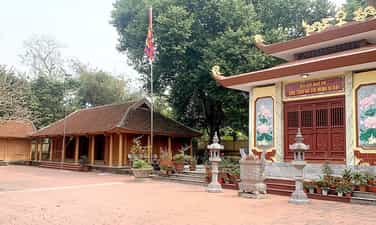
The memorial area of President Ho Chi Minh is located on a flat land, shaded by green trees, in the middle of a charming midland countryside, in area 12, Van Xuan commune (formerly Co Tiet commune), Tam Nong district, province Phu Tho. The 2,780m2 memorial area includes works such as: welcome gate, memorial house, Mr. Hoang Van Nguyen's house - where Uncle Ho stayed from March 4 to March 17, 1947, on the way to the base. Viet Bac resistance war. The memorial house was started construction in 1994, and in 1995, it was recognized as a National Historical and Cultural Monument. The memorial area of President Ho Chi Minh in Van Xuan commune is a historical and cultural relic marking the image of Uncle Ho in the hearts of the people of the Ancestral Land of Phu Tho, and is a "red address" to educate patriotic traditions and hearts. national pride and sacred feelings of compatriots, comrades, and soldiers towards beloved Uncle Ho./. SOURCE: Central Agency of the Communist Party of Vietnam
Phu Tho
4285 view
Rating : National monument

Temple of King Ly Nam De
Temple of King Ly Nam De Located on spacious land with high terrain at Co Bong mound, Van Xuan commune, Tam Nong district, Phu Tho province, the relics of King Ly Nam De's temple includes many architectural items. such as: Ritual gate, temple, garden,... With a location not far from Hung Temple, this promises to be a unique spiritual tourist destination in Phu Tho. According to history, King Ly Nam De's real name was Ly Bi, and he was talented in literature and martial arts. From a young age, he proved to be an intelligent boy with unusual qualities. He was adopted by a Dharma Zen master and allowed him to study. Thanks to his excellent martial arts skills, Ly Bi was soon promoted to be the leader of a region. At one time, he was an official for the Luong Dynasty, but was very dissatisfied with the cruel colonial officials who exploited and oppressed the people, so he left the official position to recruit soldiers, and associated with many other talented heroes and chiefs to start a military campaign. rebellion against the Luong Dynasty's colonial rulers in Giao Chau. At the end of 541, Ly Bi officially started an army against the Liang dynasty. With the support of many people, Ly Bi's force grew stronger. In January 544, Ly Bi proclaimed himself Ly Nam De, ascended the throne, named the reign Thien Duc, established a hundred mandarins, named the country Van Xuan, and established the capital in O Dien (now Ha Mo commune, Dan Phuong, Hanoi), built Van Tho Palace as a meeting place. Relics worshiping Ly Nam De are currently scattered across the provinces: Thai Binh, Thai Nguyen, Hanoi, Vinh Phuc, Phu Tho... but only in Phu Tho is there a temple at the place where he died and a mausoleum of his family. king. SOURCE: People's Army Newspaper
Phu Tho
4251 view
Rating : National monument

Do Nghia communal house
Do Nghia communal house is located on a high mound of Do Nghia village (Son Vi commune, Lam Thao district, Phu Tho province), built around the late 17th and early 18th centuries, with typical architecture of Doai land. The communal house worships Dai Hai Long Vuong at the same time as Tan Vien Son Thanh serving the Hung Vuong dynasty. The communal house has a total area of 4,636m2, the architecture is in Dinh style. The communal house gate consists of one main door and two side doors. The main gate is arched, decorated with decorative motifs, frills, and artistic patterns. In the communal house, there are many very valuable artifacts such as: bowl-shaped palanquin (artistic decoration of the Le Dynasty in the 18th century), literary palanquin (artistic decoration of the Nguyen Dynasty), a set of halberds, 3 trays, and an embossed literary stand. A dragon flanks a moon face, a base carved with the image of a Dragon saddle, a bench decorated with holes in the shape of a dragon, a turtle, a phoenix, a jade genealogy of 16 ordinations from the Le Canh Hung to the Nguyen dynasties... As a unique artistic architectural work, an exemplary image of traditional national architectural style, Do Nghia communal house has been recognized as a national historical and cultural relic according to Decision No. 1539 dated January 27. December 1990 SOURCE: Electronic Information Portal of Ministry of Culture, Sports and Tourism
Phu Tho
4143 view
Rating : National monument
Phuc Thanh Pagoda
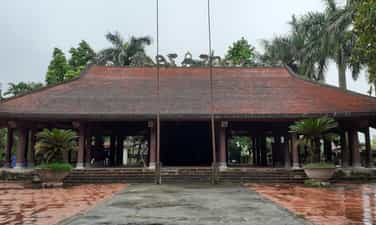
Phuc Thanh Pagoda is located on Ngoc Phac Mountain, on the right bank of the Red River. The pagoda currently has two buildings: Thieu Huong and Thuong Dien. According to the stele erected at Thieu Huong Court, Phuc Thanh Pagoda was built in 1145, during the reign of King Ly Anh Tong, in the reign of Dai Dinh. The pagoda was built by Mrs. Phung Thanh, Mrs. Le Thi Xuan Lan, a descendant of King Le Dai Hanh and the fourth wife of King Ly Than Tong. The pagoda is associated with heroic historical events, an example of resilient, indomitable fighting and the noble sacrifice of the daughter of the homeland of King Hung in the fight against the Southern Han invaders. That was the female general Princess Xuan Nuong, a talented general during the uprising of Hai Ba Trung. In the pagoda, there are still many precious artifacts such as the statue of the Monsignor, the statue of Guan Yin Buddha, the statue of the Earth Mother, the statue of the Holy Mother Le Thi Xuan Lan... and some stone relics dating back to the Ly Dynasty. High sculptural value is the stone stele of the 9th year of Chinh Long Bao Ung (1171), the stone for the base of the column, and the stone incense bowl. These relics are rare carvings remaining today. They bear the mark of stone carving art of the Ly Dynasty, expressing the concept of belief and the desire for a peaceful and happy life. SOURCE: Phu Tho NEWSPAPER
Phu Tho
3835 view
Rating : National monument
Notre Dame Temple
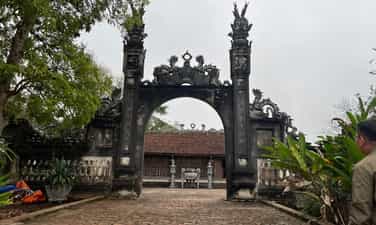
Notre Dame Temple (Huong Non, Tam Nong, Phu Tho, Vietnam) is a place to worship Princess Xuan Nuong - who had great contributions in the uprising at the beginning of the common era. She was appointed by Trung Vuong to the position of General of the Left General and Counselor when the Han Dynasty sent Ma Vien to invade our country again. She and her husband, Mr. Thi Bang, fought bravely against the invaders and both heroically sacrificed their lives. Legend has it that the place where the Lady's temple is now is the place where insurgents gathered and was also the place where she died. Admired by her merits, the local people built a temple and she was awarded the title of Duc Ban Canh Dong Cung First Eight Vicious Princess Xuan Nuong. SOURCE: Central Agency of the Communist Party of Vietnam
Phu Tho
3914 view
Rating : National monument
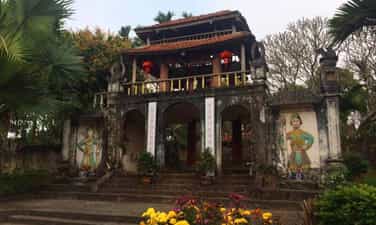
Bong Lai Pagoda
Bong Lai Pagoda (Xa, Ha Thach, Phu Tho, Vietnam) was built on a hill shaped like an elephant. From here you can see all four directions. Bong Lai Pagoda faces southwest, overlooking the Red River. Approaching Bong Lai Pagoda, right from the Red River dyke, we can admire a "Bong Lai fairyland" island in the middle of green rice fields, nearby is a church and ancient houses looming behind the leaves of ancient trees. , floating in the blue sky. The pagoda has beautiful architecture, in the middle of the highest beautiful hill in the area, like a link between heaven and earth, between yin and yang. From the dike to the pagoda, we have to climb a long slope to reach the Buddha's door. A cool, soothing atmosphere of frangipani flowers and ancient foliage creates a feeling of relaxation and calm. According to the epitaph, Bong Lai Pagoda during the Le Dynasty had a foreign interior-style architecture, including 36 compartments, symbolizing 36 hamlets of Ha Thach village. Experiencing the events of social history, the massive Bong Lai Pagoda gradually faded into oblivion. Up to now, the architectural layout of the pagoda is arranged as follows: Outside the pagoda is a redone three-entrance gate (the old three-entrance gate was demolished in 1953) from the gate follows a straight path to the 200m2 red-tiled pagoda yard, on the left. The yard is a newly built 3-room house, with a row of stone steles on the right side. The main architecture of the pagoda consists of two nail-shaped buildings, built on the highest ground. The 5-compartment frontage is 14m long, 3.1m wide, newly built over 20 years ago, the architectural structure is in the style of hitchhiking with walls and pillars. The second building has a 5-compartment upper palace structure, 13.5m long, 8.7m wide. The truss structure of this building includes the first beam and the roof supporting pillars. The upper palace of Bong Lai Pagoda remains relatively intact with its old architectural components. There are 20 large and small wooden columns in total, each one is 3.6 m high and 1.25 m in circumference; The sub-column is 2.5 m high, 1.0 m in circumference; The column body is painted red and painted with a scrolling dragon image. Notably, there are still two rafters from the 17th century, a major restoration during the Chinh Hoa period. In particular, in the pagoda there are many pillar footrests, made of fine-grained green stone, square with each side 0.4 m, on the surface is carved a two-layer lotus flower, each layer has 18 petals, the innermost circle is the place for contact with the base of the column. These are millstones from a major restoration in the 17th century. SOURCE: ENGLISH ONLINE
Phu Tho
4115 view
Rating : National monument
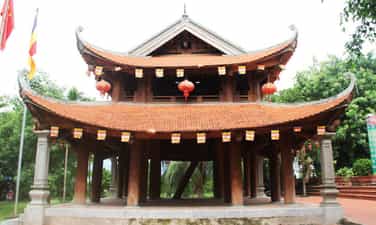
Pho Quang Pagoda
Pho Quang Tu complex includes basic architectural works: Three gates - Bell tower, writer's house, Pho Quang pagoda, stele house, Patriarch's house. The three-entrance gate - the bell tower at the pagoda still preserves the ancient architecture in Phu Tho province, with a 2-storey, 8-roof roof system, elegant curved blades, and a roof shaped like a rolling water dragon. Thuong Luong is engraved with Chinese characters: "Hoang Trieu Minh Mang for two decades" (i.e. Minh Mang's 12th year - 1839), the ends are carved in the shape of a lotus flower. On the bell tower hangs the bronze bell "Pho Quang Tu Chung" and the bronze bell are both dated to the 20th year of Minh Mang - 1839. The book Vietnamese Sino-Nom Inscriptions (Hanoi, 1993) summarizes the content of the engraving. on two stone steles at the temple. A stele created in 1628 said that the pagoda was a famous ancient temple that was damaged, so in 1626, the Tin mandarins, Phu Xuyen marquis Nguyen Hieu Dung, Nguyen Van Vi and about 70 guild masters revived the founder. Organizing the restoration of the upper palaces, burning incense, front hall, rear hall, three gates... A stele created in 1634, engraved with the poem Tang Luat 8 lines by Pham Su Manh in 1377 talks about going on tours in this area. Pho Quang Pagoda was built in the style of the letter "Cong", tiled, and has two levels. The upper level pagoda is 10m high, 7m long, has three compartments, and has an entrance door from the Patriarch's house to the pagoda. The lower level pagoda is 16m wide and 13.5m long, including 5 compartments. Pillar stones come in square and octagonal types with decorations similar to that of a leaf. In the middle of the pagoda there is a great painting and two parallel sentences. Pho Quang Tu has architecture in the style of early planting and simple sculpture. The Three Jewels Court includes: Worshiping Hall, Incense Burning and Main Hall. The wooden structural frame with the roof rafters is made in the style of "Gongs are high, gongs are stacked - beams are lowered". Xuan Lung Pagoda currently holds more than 30 statues made of wood and earth, arranged on pedestals. SOURCE: Department of Tourism of Lao Cai province
Phu Tho
3889 view
Rating : National monument
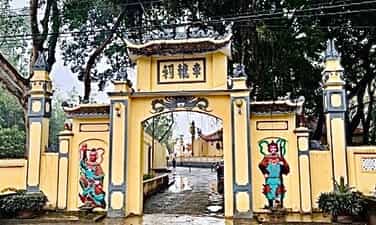
Xa Loc Temple
After more than 700 years of ups and downs, Xa Loc temple (Tu Xa, Lam Thao, Phu Tho, Vietnam) still retains its inherent value, a place for people near and far to express gratitude for their sacrifices and kindness. The benevolence and patriotism of the brave general Lan Ho Hau - Governor of the Great King. In 1991, Xa Loc Temple was ranked a National Historical Monument by the Ministry of Culture, Sports and Tourism. Today, along with preserving and preserving artifacts in the temple, the local government has actively mobilized social capital to continue repairing and embellishing the temple, promoting its great spiritual significance. not only to the people of Tu Xa commune but also demonstrates the nation's moral principle of "when drinking water, remember its source". Xa Loc Temple's architecture is considered typical of the architectural art of worship in the province. The temple was built in the style of Nhi, including Dai Bai and Thuong Cung. The back of the Temple is based on the position of King Hung's Ancestor Temple on Nghia Linh Mountain, the Temple faces South, surrounded by daffodils. Dai Bai house has 3 rooms, for gongs, drums, worshiping horses, and worshiping chambers with swords, knives, and spears painted in red and gold. This is also a place to worship the souls of martyrs who died in battles to protect their homeland. Inside Dai Bai is the Upper Palace worshiping the god Lan Ho and worshiping Phung Sao Stone and Phung Sao Den - two talented subordinates of the god Lan Ho. On the left and right sides are houses built with simple architecture, three rooms for relatives, villagers, and tourists from all over to prepare for the ceremony to enter the temple to burn incense. What impresses everyone when coming to Xa Loc Temple is that the grounds inside the temple are covered with ancient trees, creating shade and fresh air. In 2017, the Temple was expanded to a campus of more than 1 hectare, with a lotus pond and three-entrance gate, creating a majestic and beautiful look for the temple. SOURCE: PHU THO NEWSPAPER
Phu Tho
3954 view
Rating : National monument
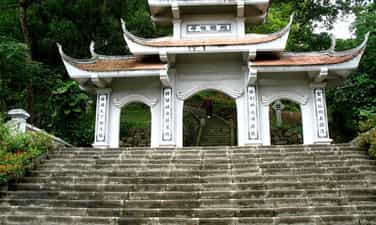
Au Co Mother Goddess Temple
Mother Goddess Au Co Temple, Hien Luong commune, Ha Hoa district, Phu Tho province is a place to worship Mother Goddess Au Co. For a long time, in the minds of all Vietnamese people, Au Co Mother Temple associated with the belief of worshiping Mother Au Co has become a beauty in the cultural essence of the Vietnamese people, a sacred symbol of the origin of Lac children and grandchildren. Hong of all Vietnamese people. During the integration period, researching the value of Au Co Mau Temple associated with developing spiritual tourism about national roots is the direction to preserve and promote the multifaceted value of the heritage. From the center of Viet Tri city, following the Noi Bai - Lao Cai highway for just over an hour, visitors will arrive at Au Co Temple Relic Area, Hien Luong commune, Ha Hoa district. Coming here, every Vietnamese person will not only have peaceful moments, but also be immersed in the legendary space of the image of mother Au Co giving birth to Lac and Hong of Vietnam in a bag of hundreds of eggs. This image has become an immortal image that lives forever in the thoughts, emotions and minds of generations of Vietnamese people. Legend has it that Au Co is a "fairy who descended to earth", not only is she very beautiful, "can speak more than flowers, and is more fragrant than jade", but she also reads carefully, is good at playing the flute, and is fluent in pronunciation. Therefore, she is often called "The First Princess". After marrying Lac Long Quan - son of Kinh Duong Vuong, Au Co gave birth to a sac of a hundred eggs, which hatched into a hundred children. One day, seeing that his children had grown up, Lac Long Quan said to Au Co: "I am a Dragon, you are a Fairy. Although yin and yang come together to form a hundred children, union is difficult because of different lineages. ”. Having said that, he divided 50 people to follow their mother up the mountain and 50 people to follow their father down to the sea, dividing the country to rule for a long time. SOURCE: PHU THO NEWSPAPER
Phu Tho
3922 view
Rating : National monument
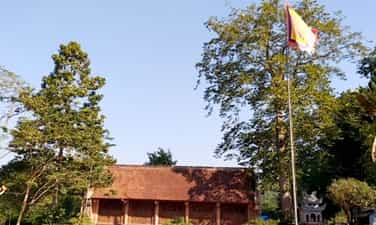
Chu Hung Temple
Chu Hung Temple Festival in Am Ha commune, Ha Hoa district is closely associated with the formation and development of the Chu Hung Temple national historical site. This is the place to worship Con Nhac Dai Vuong - the person who had the merit of fighting the enemy to protect the country and region of Chu Hung during the period of the 18th Hung King - Hung Due Vuong. The people of Chu Hung expressed their respect for Con Nhac Dai Vuong, so they submitted a request to King Gia Long to build a temple to worship him with incense smoke forever. In July 1806, King Gia Long officially approved the people of Chu Hung to start construction of the temple, located in the terrain of a sacred land, on the top of Quy Son mountain, far away from the temple gate is Kim mountain peak. Turtle - Golden Turtle. Since then, every Tet holiday, Am Ha people in particular and Ha Hoa people in general organize incense burning ceremonies to pay homage to the deity and open the village festival on January 7 every year. . SOURCE: PHU THO NEWSPAPER
Phu Tho
3831 view
Rating : National monument
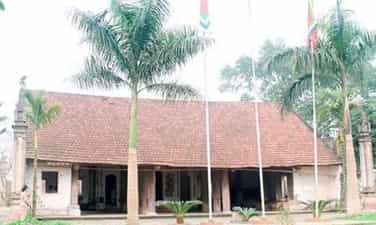
Mao Pho temple
Mao Pho village communal house still preserves many precious and valuable artifacts such as 6 ordinations, altars, palanquins, wooden dragon and phoenix carvings dating from the late Le and early Nguyen... Every year, on 4 occasions During the festival, the villagers organize the festival with sacrifices, palanquin processions and special folk games. Mao Pho Temple was recognized as a national historical, cultural and architectural relic in 1993. Mao Pho communal house relic area was built in the Later Le period with an architectural scale divided into 2 parts: communal house and temple. The communal house and temple are located on a large, flat area of land with beautiful natural landscape, facing east overlooking the beach on the banks of Thao River. Currently, the old communal house has been repaired by the people of Mao Pho village, raising the entire communal house architecture to make it more dignified, spacious, and more worthy of the stature of the gods. here. Lady Mao Pho Temple is a place to worship Saint Mother Duyen Hoa, previously established in a separate place. During the construction of the dike road passing through the village, the old temple was moved to a new place in the same campus as the communal house and village temple. In the temple, there is still a statue of the sacred and majestic Holy Mother. Not only were the temples and shrines rebuilt by Mao Pho people to make them more dignified, but on this occasion, thanks to a rare fate, the content of the previously lost Mao Pho village genealogy was brought back to the correct place of worship. its. With the omen of the Phoenix bird holding a jade pen, it flew to the sound of thunder when the Great Kings of Pen Loi Mao were born, allowing contact with the Phoenix family to follow Tien Au Co's mother up the mountain, creating bronze drums that echoed like the sound of the sound. Thunder, on which is engraved the image of a person wearing fur, is the name of the nation that has existed since the time of Hung King. SOURCE: Bach Viet overlaps nine
Phu Tho
3984 view
Rating : National monument
Outstanding monuments
See all
Bac Cung Temple
Bac Cung Temple (literally known as Thinh Temple) in Tam Hong commune, Yen Lac district is one of four large temples around the Ba Vi mountain region and the Red River Delta worshiping Saint Tan Vien. The temples: Tay Cung, Nam Cung, and Dong Cung are on the other side of the Red River in Son Tay territory. These are four temples that were built and preserved relatively carefully by the people. The temple is located in the middle of fertile fields on a 10,000 square meter plot of land next to winding canals, surrounded by rich and densely populated villages. On both sides, the left desert and the right desert stand majestically and silently, covering a large brick yard, looking up to a unique architectural work. Thinh Temple was built 20 centuries ago on the foundation of a small temple worshiping Saint Tan, where he had previously let his troops stay during a mission to help people clear land and manage water. The divine genealogy passes down that: Saint Tan (still called Son Tinh), whose name is Nguyen Tuan, was born on January 15, Dinh Hoi year in Lang Xuong cave, Trung Nghia commune, Thanh Thuy district, Phu Tho province. He lost his father at a young age and lived with his mother and two cousins, Nhuy Hien and Nguyen Sung. Every day, the three brothers crossed the Da River and went to the Ba Vi mountains to clear fields and farm, looking for a living. Here, Nguyen Tuan met Princess Thuong Ngan, was adopted by her, and gave her a walking stick and many magic spells to save humanity. After defeating Thuy Tinh and marrying Princess Ngoc Hoa, he refused the throne that King Hung wanted to give him, and with his two younger siblings traveled everywhere, helping people clear land and water, and was respected by people everywhere. When passing through the Tam Hong area, he let the troops rest and taught the people to grow rice and fish... After he left, the villagers came to the place where the Holy One rested and saw that there were still some packets of hearing left there, so after This temple is called Thinh temple. There is also a story that: when letting the army stay here, Saint Tan taught the people to butcher Thinh, so the people called the temple that name. From a small temple, during the reign of King Ly Than Tong (1072-1128), the temple was rebuilt into a large temple. This is where the king came to pray for longevity. During the reign of King Minh Mang (1820-1840), the temple was repaired many times. During the reign of King Thanh Thai, the Tri of Yen Lac district appointed monk Thanh At to restore the temple. The project lasted until the 6th reign of Khai Dinh (1900-1921). Through many ups and downs, the temple continues to be preserved and preserved by local people. On January 21, 1992, the temple was recognized by the Ministry of Culture and Information as a cultural and historical relic. Every year, the Thinh Temple festival is held from the 6th of the first lunar month to the 20th of the first lunar month. The festival includes sacrifices, palanquin processions from villages inside and outside the commune and many folk games will be held. Source: Vinh Phuc province electronic information portal
Phu Tho
11489 view
Rating : National monument

Bao An Pagoda
Bao An Pagoda, the full name in ancient documents is Bao An Thien Tu or Tu Gia Bao An, the popular name is Cam Pagoda, formerly belonging to Thap Mieu commune, Bach Tru canton, Yen Lang district, Phuc Yen province, Now belongs to Trung Nhi ward, Phuc Yen city, Vinh Phuc province. The pagoda was built in the 12th century during the reign of King Ly Cao Tong (1176-1210). This is one of the few pagodas dating back to the Ly Dynasty until today. The pagoda is built on a high hill, with luxuriant trees, windy on all four sides, beautiful scenery, quiet, full of solitude, a place of meditation. In the past, this area was called Tieu Dao Mountain, and is commonly called Cam Forest, perhaps that's why the pagoda is famous as Cam Pagoda. According to inscriptions and genealogies, the pagoda has existed for a long time. In the 12th century, the crown prince, son of King Ly Cao Tong, donated more than a hundred acres of fields, two thousand francs of money to repair the pagoda, and 700 francs of merit for a banquet. worship easily. Assign martial general Nguyen to directly direct and mobilize donations to repair the pagoda. As a result, the pagoda was restored with "seven newly built closely spaced rooms, columns painted with bright flowers, bright jade colors, a high and precious palace, bright sunlight and moonlight, a splendid Buddha statue, and a poised lotus throne." , the big bell towers over the phoenix, the noble king holds the dragon, the splendor and majesty are clear...". The military general of the Nguyen family also had the merit of a thousand francs to buy more than a hundred acres of fields to donate to the pagoda for farming. In the 14th century under the reign of King Tran Anh Tong, Bao An Pagoda was given a lot of money to repair and embellish by Princess Hung Nuong. To remember his merits, like many other pagodas in the area, people built a shrine to Princess Hung Nuong in the pagoda. Having gone through the ups and downs of thousands of years of history, Bao An Pagoda is still at the old campus but has had many changes. Ancient architectural buildings such as the front hall, incense burner, upper palace, ancestral house, Hung Nuong princess shrine and mother shrine were demolished due to deterioration. Currently, the pagoda has been renovated and rebuilt on a large scale, with reinforced concrete architecture and tiled roof. The pagoda also preserves valuable relics and antiques such as: Dharma statues, altars, bronze bells, and stone stele. Among them, the most typical is the stone stele "Bao An Zen Tu Bi Bi Ky" (inscription of Bao An Pagoda's stele). Up to now, according to review, survey and statistical data, this is the only Ly Dynasty stele remaining in the province. The stele was engraved in December of the year Tri Binh Long Ung (1209) and re-engraved later, probably at the end of the 18th century, placed at Bao An pagoda. The stele was mentioned and published by many researchers in Ly Tran Poetry (Social Sciences Publishing House, H.1977) and Ly Dynasty Epitaph (VNU Publishing House, H.2010). This is the oldest stele in Vinh Phuc and one of the 18 Ly Dynasty stelae remaining in our country today. The stele is 1.4m high, 0.85m wide, 0.14m thick, placed on the back of a smooth-shelled stone turtle, its head protruding, its four-clawed feet spread out in all four directions. The stele is engraved on both sides with 50 lines including 1498 Chinese - Nom characters, sharp handwriting in the style of Ly Dynasty script, very beautiful. The content of the memoir was composed by Wei Tu Hien in a parallel, parallel, and concise writing style. At the end of the memoir is an essay written in the style of Buddhist verse. The content of the stele describes the splendid and splendid scene of Bao An Pagoda in the 12th century, recording the merits of repairing the pagoda of Prince Sam, son of King Ly Cao Tong, military generals of the Nguyen family, along with Buddhists and people there. This. According to Nguyen Huu Mui (Research on Vinh Phuc Inscriptions, 2013), although the epitaph is still full of exaggeration, the image of a Ly Dynasty pagoda is clearly shown: the pagoda was restored by just one person. , the scale of the pagoda is large, inside the pagoda there are Buddha statues and lotus flowers, outside the pagoda there are bells and openings; The pagoda owns a lot of land and has a Thich Giao Zen Association (a type of Buddhist association, offering temple protection) to manage the meditation area. Based on this stele, it can be seen that the construction and restoration of pagodas took place on Vinh Phuc land since the Ly dynasty. The construction and restoration of pagodas was encouraged, not prohibited, by the royal court and assigned to the mandarins and aristocracy to preside and organize. The construction and restoration of pagodas is also considered an important event in the spiritual life of the people, attracting the whole region and even the whole country to join in the merit. This proves that during the peak development of Buddhism during the Ly Dynasty, Vinh Phuc area was also a popular center of this religion. The special thing is that among the nearly 1,500 words on the stele, there are mixed Nom words, these Nom words are used to write people's names and land names. It is said that this is one of the oldest evidences of Nom script found in Vietnam. Before this stele, traces of a few Nom characters were only found in two places: on the bell of Van Ban pagoda, Hai Phong (year 1076), and in an inscription at the pagoda of Huong Non commune, Tam Nong district, Phu Tho province. (year 1173). Bao An Pagoda was ranked as a provincial historical-cultural relic in 1995. In the period 2021 - 2025, Vinh Phuc province plans to build a scientific dossier to request recognition of the National Treasure for the pagoda steles. Bao An and upgrading the national monument ranking for Bao An Pagoda relics, these are activities to further strengthen the management, conservation and promotion of heritage values. Source: Bao An Pagoda Vinh Phuc
Phu Tho
10981 view
Rating : Provincial level relics

Tran Nguyen Han Temple
Tran Nguyen Han Temple, also known as Ta Tuong Temple or Thuong Temple, is an artistic architectural work built in the Later Le Dynasty over 200 years ago. This relic is associated with the life and career of national hero Tran Nguyen Han. He was originally from the royal family of the Tran Dynasty and was a talented and virtuous general who made great contributions to helping Le Loi defeat the Ming invaders and win the Lam Son uprising. The temple is in Da Cai village, Son Dong commune, Lap Thach district. The temple worships General Tran Nguyen Han, who supported Le Loi in defeating the Ming invaders to liberate the country in the 15th century. The temple was built on a flat, wide and high ground, and is said to be the place where Tran Nguyen Han's old palace was located. The temple is structured in the style of the letter "Dinh", surrounded by walls forming a square "dien" campus. The construction works consist of 3 parts: Temple gate, pre-sacrificial house, and harem. Since its construction, the temple has been repaired and built many times, mainly during the Nguyen Dynasty. Architectural art in the style of the Nguyen Dynasty: Smooth, chiseled, simple decoration. Related to the relic, legend has it that there are two ancient objects: the Sword and the sword sharpening stone. The story goes that: During the period when the Ming invaders dominated our country, Tran Nguyen Han had just entered his youth. Because his parents went to reclaim land and set up camp at the top of Son Dong farm, Tran Nguyen Han still plowed and hoeed every day. While plowing in the Go Rach fields, Tran Nguyen Han plowed an iron bar as long as a sword. At night, he sharpened his sword on a large stone on the bank of Son pond, so that stone was called the sword sharpening stone. The stone had a dent that looked like a slash mark. Legend has it that it was the test cut of Tran's sword. Nguyen Han. The sword was carried by Tran Nguyen Han. By chance, Tran Nguyen Han was given a wooden stick shaped like a sword hilt from the riverbed by a raft owner at the mouth of the Phu Hau River. When the blade was inserted, it fit perfectly. That's the effect. That legendary sword was associated with the glorious victories of the first national founder of the Le Dynasty. Legend has it that Ton That Thuyet later borrowed that sword and took it to Can Vuong to fight against the French. As for the stone slab, after a long time being filled with silt from the Lo River, on January 12, 1998, people of Da Cai village found it at a depth of 2m leaning towards the lotus pond, about 2.49m long, about 1 meter wide. .6m, about 0.4m thick and weighs about 2 tons. This fairy stone was salvaged by the government and people of Son Dong commune and placed in the grounds of the Ta Tuong Quoc temple so that everyone can admire the remaining traces of the old hero. In 1984, the Ministry of Culture ranked the historical relic temple of Left General Tran Nguyen Han as a National Monument. Every year, on the anniversaries of his birth and death, especially at the beginning of Spring, people in the region and all over the country often come here to offer incense to commemorate the contributions of the National Hero. Source: Vinh Phuc Electronic Newspaper
Phu Tho
10503 view
Rating : National monument

Binh Son Tower
Binh Son Tower (Then Tower, Then Pagoda Tower, Vinh Khanh Pagoda Tower) is located in Tam Son town, Song Lo district, Vinh Phuc province; is a Buddhist architecture bearing the mark of a rather long period (approximately from the 14th to 16th centuries). Binh Son Tower - Vinh Khanh Pagoda is located on a high and spacious mound, the area of the protected area is 17,200m2, including: Binh Son Tower, old Tam Bao building, new Tam Bao, ink well, house Guesthouse, lotus pond, gate, auxiliary works. 1. Binh Son Tower The tower is currently 16.5 meters high, (only 11 floors and 1 pedestal remain because the top of the tower was broken), and is constructed with a square plan that gradually gets smaller towards the top, with the side of the bottom floor being 4. 45 meters, the side of the 11th floor is 1.55 meters. The entire tower is built of unglazed fired bricks. From the base of the tower to the end of the 2nd floor, it is less than 6 meters high with the most complete pattern. On these two floors, there are carefully decorated motifs with rows of chrysanthemums, lotus petals, leaves, smooth-faced flowers, embossed dragons, and the "whispering lion" motif... From the third floor up, the decoration is still the same. However, the higher you go, the narrower the width of the tower's face is, and the decorations also gradually decrease. 2. The old Tam Bao Palace: was majorly restored in 1976, in the shape of the letter Dinh, with an area of 131.5 m2, including 5 rooms for the front hall and 3 rooms for the harem. In particular, the building has 2 bronze pillars in front, stretching out 6m, forming like the arms of a throne. The system of worship statues here is mainly made of painted soil, dating from the late 19th and early 20th centuries, with a few statues dating to the 20th century. 3. New Three Jewels: built in 2012, on the foundation of the old Three Jewels house, the architectural form is Zen monastery style. 4. Ink Well: Legend has it that this location was once the base of an ancient blue tower. When this ancient tower disappeared, it left behind a deep round well-shaped hole. 5. Guest house: newly built in 2012, area 283.5m2 with square floor plan, curved roof architecture, consistent with traditional ancient architecture. 6. Lotus pond: located in the garden in front of Binh Son tower, currently growing lotus 7. Gate to the relic site: consists of 4 brick pillars, attached with 2 iron gates in the middle, two side paths are temporarily fenced with trees and bamboo as protection gates. 8. Some decorations of Binh Son Tower Lion whinnying: One of the projects that has puzzled researchers is the "lion whinnying", because it is very different from the "jewel-catching crocodiles" wearing lotus crowns on Buddhist pedestals during the Ly Dynasty. Dragon: has horns, curls in a "nest", head turns to the center of the circle, body does not curl but forms a sinusoidal shape, so does not "tie the bag", legs kick out, or cross over the body to kick out, The spine has a "saw-tooth" shape, one front leg is raised to grasp the "hair"... Some of the details just mentioned are reminiscent of the dragons of the late Tran, but other details do not allow the dragon to be attributed to the Binh Tower. Paint in a certain pattern at all. What's more important is that Binh Son dragons often put their front legs up to grab their hair, in a funny, very mischievous pose, thus quite "folk": in this case, it has taken on the style of the dragon motif. stroking the beard in the post-Le period. The card: is a relatively popular type, with motifs that contain many meanings. Binh Son's "leaves" belong to many styles, but all styles are simple and not as elaborate as the "leaves" of the Ly Dynasty. String chrysanthemum: has been around since the Ly Dynasty in the form of a round frame, the inside of the frame neatly accommodates other decorative projects. The Tran Dynasty inherited that circular layout. Three-pronged (mountain) fighting: an interesting point is that this fighting has appeared since the Ly dynasty (Thap Chuong Son, Nam Dinh) and was even more popular under the Mac dynasty (Ty Dang Communal House, Ba Vi, Hanoi). ). Binh Son Tower has many unique features in terms of architecture, art, and construction techniques. Binh Son Tower not only has artistic architectural value, but also has high aesthetic value, called "The pearl of the national treasure", on the bricks there are many types of decorative patterns, places The shape is circular, some are circular, some are deep, some are shallow, some are dark... proving that the craftsman's hands are extremely skilled. Binh Son Tower is a work with unique architecture. According to the French, this is the most beautiful tower in Tonkin. Currently, the Festival at Binh Son Tower Relic - Vinh Khanh Pagoda is organized by the locality on January 15 every year, called "Pagoda Festival", including rituals: palanquin procession, prayer ceremony. for good weather and wind, a safe and peaceful country and cultural and artistic programs, sports, folk games (Chinese chess, human chess, cockfighting...) Binh Son Tower (Song Lo district, Vinh Phuc province) was ranked by the Prime Minister as a special national monument on December 23, 2015. Source: Department of Cultural Heritage
Phu Tho
10277 view
Rating : Special national monument

Hoa Duong Pagoda
Hoa Duong Pagoda is in Tuan Lo commune, Tuan Lo district, Bach Hac district, Tam Doi district, Son Tay town. Now it is Thuong village, Tuan Chinh commune, Vinh Tuong district. The pagoda was built in the first year of Chinh Hoa (Canh Than 1680), during the reign of King Le Hy Tong Duy Hiep. Hoa Duong Pagoda was built in the Later Le Dynasty, in 1680. What remains today is a relic with quite massive and magnificent architecture, with a "cong" shaped floor plan consisting of 3 main buildings: Front Street (7 compartments). ), the upper palace (4 compartments) and the ancestral house (5 compartments), total area of 262m2 with 2 corridors including 20 compartments with an area of 196m2, in front of the yard is a hundred year old Bodhi tree and tree species: Dai, Ngau, Lan, and Crocodile create a solemn, somber atmosphere at the meditation door. Architecturally: The structure of the rafters is in the style of "stacking beams and gongs", the load-bearing column system is all made of large ironwood, the column circumference is 1.5m and is placed on square stone bases, each 75cm big to Anti-termite and anti-moisture. Regarding fine arts: The outstanding value of Hoa Duong Pagoda is the art of sculpture, expressed in the system of round statues and wooden sculptures (y subjects, shelf paintings, horizontal panels, parallel sentences). These are the basic classes of statues, generally representing the system of statues arranged in a Buddhist temple according to the Mahayana sect in Northern Vietnam, including the following classes: Set of statues of the Three Buddhas, Amitabha Buddha, Three Buddhas, Sakyamuni Buddha, Four Bodhisattvas, Four Heavenly Kings, Statues of Monsignors, Saints, Dharma Protectors and Patriarch Buddha statues. All Buddha statues are made from old, intact jackfruit wood, with elaborate, meticulous techniques, creative and skillful art, demonstrating high artistic aesthetic thinking ability and perfect harmony in perception. the absolute "emptiness" value of Buddha Dharma. The values of truth, goodness, and beauty of Buddhism originate from the simple truths of everyday life through thousands of years of cultivation, fostering, and transmission, and have become a fundamental part of the Vietnamese soul. The soul of the artist when giving life to statues made of wood, stone, or soil becomes shimmering, fanciful but very real for each person when entering the temple to worship Buddha. The wood sculptures include: 8 paintings of y mon (horizontal sea) all of the same size (3.0m long, 0.6m wide) embossed, lacquered and gilded with natural themes: flowers, leaves, clouds, Ancient trees, birds and animals are extremely close, natural and lively, in the middle are carved "great characters" with the meaning of praise and teaching, interwoven between Buddhism and Confucian philosophy. The 8 "Shelf paintings" engraved with verses in Chinese characters with content about natural landscapes and topics related to the propagation of Buddhism, are excellent poems embedded in talented sculptures, on The background of carving techniques, liberal decoration, harmonious layout, and beautiful painting is worthy of being a legacy for future generations to admire and reflect on. 8 sets of horizontal panels, parallel sentences lacquered with gold, precise and neat sentences, profound meaning, comprehensive semantics, sincere heart, true goodness. Along with ancient relics: bronze bells, incense sticks, stone stele, etc. are also ancient written documents on stone that will be preserved forever for future generations, tourists from all over, Buddhist monks and nuns to find opportunities to admire. worshiping in the quiet meditation scene hidden in the countryside. Hoa Duong Pagoda has a history of over 300 years old. The pagoda was ranked as a national historical relic on December 12, 1994. Source: Vinh Phuc electronic communication portal
Phu Tho
10157 view
Rating : National monument

Huong Canh communal house
Huong Canh was originally the name of a commune of An Lang district, Son Tay town in the Later Le dynasty, then was taken as the general name of the Nguyen dynasty and the name of today's town - Huong Canh town (in Binh Xuyen district, Vinh Phuc province). According to folklore, Huong Canh is also called Tam Canh because this is the common name of three Canh villages including: Huong Canh, Ngoc Canh, Tien Canh. The place name Huong Canh also has the ancient name Ke Canh. This name comes from the local rice variety, which has two pointed rays on both sides of the grain. People call those two sharp rays WINGS and the grain of rice is called WINGS, taking the word WING as the name of the village. Initially, there was only one Huong Canh village here. Gradually, the population grew and the village was separated and named Ngoc Canh - a place with Gie Canh rice, rice grains as beautiful as pearls. Finally, when both villages Huong Canh (fragrant Canh rice) and Ngoc Canh (beautiful Canh rice) were densely populated, they expanded to the West and Northwest with another village and took the name Tien Canh, meaning "rice". Early wings”. Three communal houses in the three villages of Huong Canh, Ngoc Canh and Tien Canh are all ranked as national historical and cultural relics and are currently in the process of preparing documents to request special national ranking. The communal houses are located 50m to 100m apart, forming a monumental relic complex, adjacent to National Highway 2A, convenient for sightseeing, tourism and pilgrimage. Regarding the gods worshiped, according to local people's legend, after defeating the invading Southern Han army, Ngo Quyen became king and established the capital in Co Loa (now in Hanoi). The country was independent and at peace, but Ngo Quyen still did not forget to be vigilant and train soldiers and horses to prevent enemies. At that time, hunting was also a form of exercise, so once Ngo Quyen sent his two children, Ngo Xuong Ngap and Ngo Xuong Van, along with his close general Do Canh Thac, to bring troops to conduct an exercise in the form of hunting. They marched through Huong Canh, camped at a mound in the middle of the field, the people called Go Ngu. To record the sacred mark and pay tribute to the heroes of the Ngo Dynasty, the people of Huong Canh built a temple in Go Ngu to worship them, according to the concept of "life is a general, death is a god" (living is a good general - death is sacred). During the Later Le Dynasty, the people of the three villages of Huong Canh, Ngoc Canh and Tien Canh built a communal house in each village, took the sacred names to worship at the communal house and held festivals and offerings every year like today. 1. Huong Canh Communal House Formed the earliest, Huong Canh village built its communal house before the other two villages. Although not larger than Ngoc Canh communal house and Tien Canh communal house, Huong Canh communal house is crafted and shows more decoration and carving. The communal house is located in the south of Huong Canh town, the facade faces southwest, overlooking Diem Lang lake, the river arena and Cau Treo river. Through time and the ups and downs of history, for nearly 300 years Huong Canh communal house still stands there as if challenging the sun and rain, fighting with nature with its massive, graceful roof. The communal house's roof is covered with funny-nosed tiles, arranged in an orderly manner in the style of dragon-scale screws, very tight and beautifully flat. The roof of the communal house is built straight and the tips of the blades are curved. The entire roof of the communal house looks like a giant kite moving, about to fly into the air. 2. Ngoc Canh Communal House was built in the Later Le Dynasty and restored in the early Nguyen Dynasty. On the first sentence in Ngoc Canh communal house, there are two embossed words: "Twenty years in Gia Long, ten years in Quy Dau, ten moons, twenty-six days in old Thuong Luong, restoring earth and wood Giap Tuat years, five moons , the fifteenth day is completed, peace and prosperity are great." (Meaning: The 12th year of Gia Long is the year of the Rooster, on October 26, erect the roof tree as before. Repair the wood and door in the year of Giap Tuat. Complete on May 15, hoping for good harmony). According to the solar calendar, Quy Dau is in 1813 and Giap Tuat is in 1814, the restoration lasted 7 months. The second first sentence engraved is: "The year of Minh Menh, the year of Canh Thin, six moons, ten days, starting the golden cycle jewelry, ten months, ten days, completed great auspicious and prosperous" (Meaning: The first year of Minh Menh was the year of Canh Thin, construction started on June 11, painted golden, and completed on October 10, wishing good luck and prosperity. According to the solar calendar, Canh Thin is the year 1820, the first year of Minh Menh. The decoration lasted 4 months. 3. Tien Canh communal house was built last, but Tien Canh communal house is larger in scale than Ngoc Canh and Huong Canh communal houses. Regarding the construction date, when Thuong Luong's back house was dismantled for restoration, the engravings were still clearly clear: "Canh Hung thirty-seven years, five years Binh Than, twelve moons, twenty-two days, zodiac time, Receiving a high salary, great benefits and prosperity" (Meaning: Canh Hung year 37, year Binh Than, December, day 22, zodiac hour, building a roof tree is very auspicious, brings much prosperity). According to the solar calendar, the year Binh Than is 1776. So the communal house's back house was built 300 years ago (2022). The old first sentence of the great bow is engraved "Year of the Goat, ten months of At Hoi, twenty days of Dinh Mui, At Ty of the year, the great worship of Thu Thuong Luong" (Meaning: Year of the Goat, October of At Hoi, day 20 Dinh Mui, 10 a.m. At Ty, build a tree on the roof of the house to worship). Thus, the Tien Canh communal house was built in the 8th Canh Thinh era, Tay Son Nguyen Quang Toan dynasty - 1799, 223 years ago (2022), 23 years after the post house. These are three typical ancient communal houses of Northern communal house architectural art, built around the late 17th and early 18th centuries. The architectural and artistic relic of Huong Canh communal house cluster was recognized as a special national monument on December 29, 2022 by the Prime Minister. Source: Compiled by Vinh Phuc Newspaper
Phu Tho
8572 view
Rating : Special national monument

Monument to hero Cu Chinh Lan
The relic marking Cu Chinh Lan's victory in destroying tanks is currently located on Giang Mo slope next to Road 6A (old) in Giang Mo hamlet, Binh Thanh commune, Cao Phong district, Hoa Binh province. Heroic martyr Cu Chinh Lan (real name Cu Van Mau), was born in 1930 in a poor farmer family in Quynh Doi village, Quynh Luu district, Nghe An province. In 1946, the French army returned to invade our country. Cu Chinh Lan, then only 16 years old, applied to join the National Guard and volunteered to go fight the enemy. In November 1951, the French colonialists expanded their attack into our free zone in Hoa Binh with a plot to reconnect the "East - West corridor" to cut off our communication between Viet Bac and Areas 3 and 4. to regain the initiative on the main battlefield. In Hoa Binh, they carried out a plot to establish an "autonomous Muong Land" to sabotage national unity. On November 24, 1951, the General Military Commission decided to open the Hoa Binh campaign. In the battle on December 13, 1951, when the French army entered the battlefield, the whole unit opened fire fiercely, destroying an enemy company. When preparing to withdraw, enemy tanks came to reinforce and fired fiercely at the team. our formation, blocking the escape route and causing many soldiers casualties. Mr. Cu Chinh Lan quickly jumped on the tank, placed the submachine gun into the gap in the turret and pulled the trigger, but unfortunately the submachine gun choked, the tank was still running and shooting. He shouted to his teammates to gather grenades for him, then continued to jump into the car, pull the lid and throw the grenade into the car. The enemy picked up the grenade and threw it back and drove the tank to change direction. The opportunity to destroy the enemy tank was right before his eyes, Mr. Cu Chinh Lan boldly opened the grenade latch, waited for the smoke to escape for a few seconds before throwing it into the cockpit. The grenade exploded, the enemy soldiers in the car died on top of each other. The tank branded "B2885498 USA", stopped on the spot, the battle ended successfully. The resounding victory at Giang Mo slope with the heroic spirit of Hero Cu Chinh Lan and the soldiers of Battalion 353, The 66th Regiment destroyed the tanks of the French invaders equipped by the US imperialists, starting the movement to defeat the enemy's modern battle tanks with conventional weapons. On December 29, 1951, when participating in a fierce battle on Route 6, Luong Son - Hoa Binh section. Even though he was seriously injured, Cu Chinh Lan still did not leave the battlefield, commanding the squad to continuously break open layers of barbed wire fences into the enemy bunker, clearing the way for his teammates to destroy the enemy. When the enemy's Co To post was completely destroyed by our troops, that was also the time he breathed his last. He died when he was just 21 years old. On May 19, 1952, at the first National Congress of Emulation Soldiers, martyr Cu Chinh Lan was one of the first 7 people nationwide to be posthumously awarded the title of Hero of the People's Armed Forces by the President. people . To remember the victory of Hero Cu Chinh Lan, in 1993, the Ministry of Culture and Information issued a decision to recognize the location marking Cu Chinh Lan's victory in destroying French tanks as a national revolutionary historical relic. . In 1994, construction began on the relic site, erecting the Tank Destroyer Hero Monument. Source: Hoa Binh Electronic Newspaper
Phu Tho
7032 view
Rating : National monument

Historical relic of Hoa Binh Prison
Hoa Binh Prison is located on the True stream, on the left bank of the Da River, in Tan Thinh ward (Hoa Binh city). The prison was built in 1896 to detain common criminals. In 1943, the French colonialists transferred a number of political prisoners from Son La Prison to detention here. Hoa Binh Prison relic has an area of 1,500 square meters, was restored by the province many years ago and was ranked as a national relic in 2000. There are almost no remaining traces of the prison except a round guard tower. made of concrete, built by French soldiers on the Da Giang dike slope that still exists. According to historical records, Hoa Binh prison was originally built on a rectangular area of land, surrounded on the outside by 4 3-meter high walls, with barbed wire on the walls, 4 wall corners were 4 guard towers. In March 1943, the French colonialists transferred a number of political prisoners from Son La prison to Hoa Binh prison to reduce the number, while waiting for favorable conditions to transfer and relocate a number of prisoners. Detained in Con Dao. In the years 1943 and 1945, the activity movement of the Hoa Binh prison cell, led by comrade Le Duc Tho as Secretary, flourished and had a profound influence on the revolutionary movement in Hoa Binh province. In 1943, the prison cell had a plan to recruit new party members. This was the first class of party members the cell developed in Hoa Binh prison. In March 1945, seizing the opportunity of Japan's coup against France, under the direction of the Party Central Committee and the Northern Region Party Committee, the prison cell successfully launched and organized the struggle demanding the release of political prisoners. Within a week, the majority of political prisoners at the prison were released, and were actively helped by cadres and revolutionary masses of Hoa Binh town. Party cell members have returned to contact the Party Central Committee and the Northern Region Party Committee. A number of comrades were added to the province's revolutionary force... In August 1945, joining the offensive spirit of the whole country, the Muong people simultaneously shook off the mud and stood up brightly. The communist soldiers in Hoa Binh prison that day were also important factors contributing to creating momentum for the day the revolution rose. Hoa Binh Prison is evidence of a tool of repression, representing the crimes of the French colonialists, and is the place where revolutionary soldiers were detained and tortured. At the same time, this place has fostered and trained resilient and indomitable communist soldiers, keeping the revolutionary spirit and fighting for the independence and freedom of the nation. Every year, many visiting groups inside and outside the province come to learn about revolutionary traditions at Hoa Binh prison. The rebuilt Hoa Binh Prison relic not only contributes to illuminating history, but also shows the deep gratitude of the Party Committee, army and people of the province to the previous generations of ancestors; contributing to educating revolutionary traditions, helping each person become more deeply aware of the nation's history, thereby appreciating, preserving and promoting the value of the nation's history in the new era. Source: Hoa Binh Electronic Newspaper
Phu Tho
6913 view
Rating : National monument
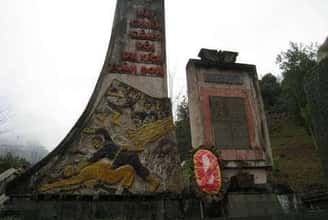
Monument to Trieu Phuc Lich
Trieu Phuc Lich monument at Tra slope, Toan Son commune, Da Bac district, Hoa Binh province. The monument was built in 1979, painted by artist Nang Mai. The monument is more than 3 meters high, located on the hillside to the right of the road to Da Bac town, and was recognized by the Ministry of Culture and Sports as a national historical relic in 1996. Perhaps the people of Toan Son commune do not know the captain Trieu Phuc Lich, who was always courageous and cunning in commanding the guerrilla team that fought to block many raids by the French invaders into his homeland. Especially the event of September 10, 1947 will forever be passed down to generations. That was when they received news that the French enemy at Che hamlet post (formerly Tu Ly commune) mobilized a platoon of over 20 legionnaires and soldiers to sweep the area of Toan Son commune. The commune's guerrilla team led by Trieu Phuc Lich, consisting of 30 people, quickly deployed an ambush plan to attack the enemy. The members' rudimentary weapons were crossbows, bows and arrows laced with poison, stone traps, bamboo poles, bamboo poles, rifles, and grenades stolen from the enemy. Near noon, the enemies arrived en masse. Waiting for them to fall into the ambush, Trieu Phuc Lich ordered an attack. The sound of gunshots, the sound of grenades exploding, a series of poisoned arrows flying at the enemy; Stone traps fell from halfway up the mountain onto the enemy's formation, causing them to panic and run away. In this battle, Toan Son commune's guerrilla team destroyed 14 enemies, captured 4 alive and captured 7 guns... History books write: Being attacked unexpectedly, advancing unsuccessfully, retreating was blocked, the enemy tried to flee along the trail through Sau stream to retreat to Tu Ly. Cleverly knowing the enemy's intentions, Trieu Phuc Lich sent guerrillas to pursue with the determination to completely destroy the enemy platoon. The captain himself chased after the enemy commander with his bare hands, then knocked the legionnaire down and quickly stole the submachine gun. Immediately after that, he discovered that the direction of the enemy's retreat was our base area. To ensure the secret of the base area and the safety of the guerrilla team's forces, Trieu Phuc Lich quickly distracted the enemy by running back to the rice fields. The enemy discovered him and immediately chased him and shot him, seriously injuring him. Even so, he still tried his best to pull out a dagger and stab the soldier standing nearby. Crazy about Trieu Phuc Lich's brave actions, the enemy soldiers discharged a magazine of bullets at him, the outstanding son of the Dao people of Toan Son commune heroically sacrificed his life. Trieu Phuc Lich's actions of robbing the enemy's guns with his bare hands, fighting tenaciously, and sacrificing heroically have ignited the patriotism and hatred of the enemy and encouraged the fighting spirit and victory over the French invaders of the Dao people in particular. and People of all ethnic groups in the province in general. Martyr Trieu Phuc Lich was posthumously awarded the first-class Resistance War Medal against the French. On June 11, 1999, Trieu Phuc Lich was posthumously awarded the title of Hero of the People's Armed Forces by the State. To commemorate the great contributions of him and the guerrilla team of Toan Son commune, and at the same time contribute to traditional education for future generations, the Provincial People's Committee directed the construction of the Victory Monument of Toan Son guerrilla team and it was inaugurated. September 2, 1991, on the 46th anniversary of National Day. The memorial was built on the exact spot where hero Trieu Phuc Lich fell in the past. His grave is located at the highest position on the Memorial grounds. Today, on holidays and New Year, officials, party members and people of Toan Son commune respectfully offer incense and flowers to commemorate the outstanding children and have more determination to join forces and unite to build a better homeland. renew. Source: Hoa Binh Electronic Newspaper
Phu Tho
6856 view
Rating : National monument
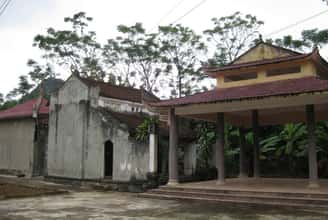
Trung Bao temple and shrine
Trung Bao Temple and Temple, formerly known as Beo Temple (named after the village because behind the village there is a mountain range called Tiger Mountain). The relic is located in Trung Bao village, Thanh Cao commune, Luong Son district, Hoa Binh province. The temple consists of two architectural items: Trung Bao Temple and Trung Bao Temple. Trung Bao temple and shrine were recognized as national historical-cultural relics in 1997. - Trung Bao Temple: Worshiping three gods is the Three Great Kings Tan Vien Son Thanh; National Mother Hoang Ba and Tutelary God of Trung Bao village. Located on a spacious area of land next to the edge of the village, is a spacious and majestic temple. On both sides of the temple are the village's bamboo piles that provide shade, in front of the temple are rice fields, and behind is the Dragon stream flowing through. The temple has a rectangular structure, the temple face faces Northeast, consists of three compartments, the roof is covered with Huong Canh tiles, and the two gables are built with bricks. In front of the temple, there is a great pagoda embossed with three Chinese characters: Thuong Hieu Than (supreme god). - Trung Bao Temple: Worshiping the Three Great Kings Tan Vien Son Thanh; National Mother Hoang Ba and Village Tutelary God. The temple was built on a high ground in the northwest of the village, about 300m from the temple. The landscape here is quite beautiful. In the eyes of feng shui experts, the Temple is located on the land of Turtle's shell (the Metal Turtle God appears). Behind the temple are the Hufu and Longling mountains. The remaining three sides have a winding stream with tall tall trees providing shade. The ancient temple was made of wood and thatched, with three compartments and a domed roof (tortoise shell shape). Over time, the tropical monsoon climate with lots of rain and sunshine, combined with historical changes, the temple with wooden architecture and thatched roof did not last long. During the reign of King Khai Dinh the 2nd (1917), the commune's people contributed efforts and funds to rebuild the temple, with a rectangular-shaped architecture, in front of which there was a great letter with 4 embossed Chinese characters. : Bao Son Duc Tu (Treasure Mountain that molds goodness). Currently, Trung Bao Temple still retains three original decrees conferred by the dynasties of the Feudal State of Vietnam on the gods worshiped at the temple. - Trung Bao temple and shrine festival is held annually once a year on the 11th and 12th day of the 11th lunar month every year. During the festival, folk games take place such as cockfighting, shuttlecock throwing, swinging... Trung Bao temple and shrine festival is closely associated with cultural identity, showing scenes of fun and celebration of villagers after a good harvest. Through the festival, we will understand the traditional rituals of the people at the border of the "Viet - Muong" cultural area in Hoa Binh. At the same time, we also understand the desires, aspirations and identities of the people here through the rituals and ceremonies of the festival. Source: Hoa Binh province electronic information portal
Phu Tho
6716 view
Rating : National monument
 AI Travelviet