
 vn
vn en
en ja
ja ko
ko zh
zh















List of relic sites (40)
Vi Xuyen Front
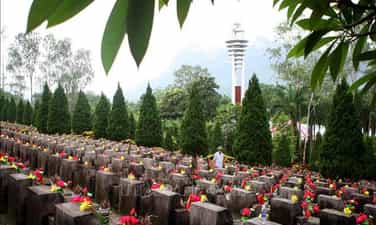
Vi Xuyen Front - An immortal epic at the forefront of the Fatherland After the war to protect the northern border in 1979, the Vi Xuyen area continued to be a hot spot with hundreds of fierce battles lasting nearly a decade. From 1984 to 1989, the Vietnamese army and people stubbornly held on to strategic high points such as 468, 685, 772, 1100, 1509, Doi Dai, Co Ich... determined to maintain every inch of the sacred land of the Fatherland. The mountains in Vi Xuyen have suffered millions of artillery shells, many high points were flattened, and the terrain deformed after intense battles. That fierceness caused this place to be called by veterans with the haunting name: "Lime Kiln of the Century". More than 4,000 officers and soldiers have heroically sacrificed their lives, thousands of others were injured or forever lying in the heart of the rocky mountain, whose remains have not yet been found. The blood of the soldiers has mixed with the motherland, writing an immortal epic about patriotism and the will to protect border sovereignty. High score 468 – Symbol of the will to keep the land In the system of relics of the Vi Xuyen Front, High Point 468 is one of the most sacred places. This was once a strategic location, where many fierce battles took place between our troops and the enemy. Today, on top of 468, the Temple of Martyrs of the Vi Xuyen Front and the Memorial House of Gratitude to the Martyrs have been built, becoming a place for comrades, relatives and tourists to offer incense to commemorate those who have fallen. Standing on high point 468, looking out over the rolling mountains, it is hard for anyone to imagine that this place was once the fiercest battlefield of the war to protect the northern border. Each incense stick lit is not only a tribute to those who have sacrificed but also reminds today's generations of the value of peace that is exchanged for blood and bones. Vi Xuyen National Martyrs Cemetery - The resting place of immortal soldiers About 18 km from Ha Giang city, Vi Xuyen National Martyrs Cemetery is the resting place of 1,863 martyrs and a mass grave, including more than 1,600 martyrs who died in the war to protect the Northern border. The cemetery was built in 1990, leaning against the Tay Con Linh range, facing the historic Lo river. Thousands of white tombstones are lined up in neat rows like comrades still standing side by side guarding the border. Every year, on July 12 - the death anniversary of Division 356, the War Invalids and Martyrs Day on July 27, the Vietnam People's Army's Founding Day on December 22 and other major holidays of the country, tens of thousands of veterans, relatives of martyrs and tourists from all over the country return here to offer incense and commemorate those who are forever in their twenties. Source: Tourist Information Center
Tuyen Quang
372 view
Rating : National monument
Monument to Youth Volunteers - Happiness Road
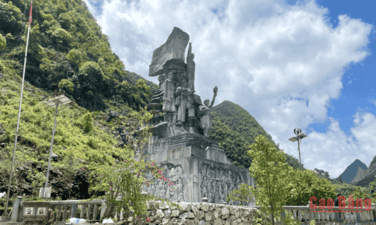
Monument to Youth Volunteers - An eternal symbol on the Path to Happiness The Youth Volunteer Monument is located on the Happiness Road, in the Dong Van Stone Plateau area, Tuyen Quang province (formerly in Ha Giang province). This is a memorial to the young volunteers and people of all ethnic groups who devoted their youth, sweat and blood to open the legendary route through the northernmost rocky mountains of the Fatherland. The Road of Happiness was started on September 10, 1959 and completed in 1965, with a length of about 185 km, connecting Ha Giang city with Quan Ba, Yen Minh, Dong Van and Meo Vac. To complete the project, nearly 1,000 local workers and more than 1,000 young volunteers from 16 ethnic groups in 8 provinces worked continuously for more than 5 years in extremely arduous conditions. With only rudimentary tools such as hoes, shovels, crowbars and sledgehammers, they excavated and transported more than 3 million cubic meters of soil and rock, creating the first route connecting the rocky plateau with the lowlands. Particularly when crossing Ma Pi Leng pass, the force paving the way had to hang on a steep cliff for 11 months to drill rocks and open every meter of the road. During the construction process, 14 young volunteers heroically sacrificed their lives, leaving an indelible mark in the history of building the country. In that pioneering epic, there was an important contribution from more than 200 young volunteers in Cao Bang province. They participated in the construction of many important roads such as Pac Sum, Trang Kim, Pho Bang, Lung Cam, Xa Phin and many other roads on the rocky plateau. One of Cao Bang's outstanding children who sacrificed on the construction site was martyr Trieu Van Thoong, contributing to enhancing the tradition of fighting and dedication of the homeland's youth. To remember the contributions of those who paved the way, in 2017, the Youth Volunteer Monument Cluster was built right next to the Happiness Road. The work is made of natural stone, 16 m high including the statue's pedestal. The main cluster of statues includes five images of young volunteers with a proud and strong posture, demonstrating their resilient will and spirit of solidarity to overcome all difficulties. Behind are three bas-reliefs recreating the journey from the first days to the rocky area, the process of breaking the mountain to open the way to the moment the historic route was completed. Today, the Youth Volunteer Monument is not only a stop on the journey to explore the Dong Van Karst Plateau UNESCO Global Geopark but also a "red address" to educate generations about revolutionary traditions. Amidst the majestic scenery of the mountains and forests, the monument reminds each visitor of the noble sacrifices of the young volunteers who turned the seemingly impossible into reality. This is a symbol of patriotism, the will to overcome difficulties and the desire to contribute, contributing to creating the Road to Happiness - the pride of the northernmost region of Vietnam. According to Tuyen Quang electronic newspaper (compilation)
Tuyen Quang
80 view
Rating : National monument
Don Cao historical site
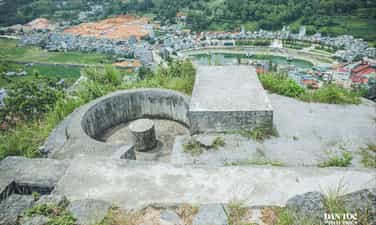
Cao Dong Van Fort is located on a high mountain in the middle of a valley in Dong Van town, in the Dong Van Karst Plateau UNESCO Global Geopark area. Not only is it a historical relic, Don Cao is also an ideal viewing spot to admire the entire Dong Van town and the majestic scenery of the rocky plateau. Cao Fort, also known as Chang Poung Fort, was built by the French colonialists around 1925 on a mountain peak about 1,200 m above sea level. The structure is built mainly of stone with a system of solid walls, blockhouses, battlements and stone steps leading to the top. It was once an important military position during the French colonial period. Over time, many items have degraded and were partially restored in 2013 to preserve the value of the monument. From Don Cao, visitors can enjoy a panoramic view of Dong Van town with tile-roofed houses nestled among rocky mountains, fields of Nghien village, Tu San mountain, Si Phai pass and rolling cat-eared rocky mountains - a characteristic of the northernmost region of Vietnam. In the early morning or late afternoon, the scenery of mountain clouds blends together to create a natural picture that is both majestic and poetic. Today, Don Cao is a stop not to be missed on the journey to discover Dong Van. Besides its historical value, this place also gives visitors the opportunity to feel the beauty of the old town, nature and the peaceful life of highland people, contributing to enriching the experience when coming to Dong Van Karst Plateau. According to Tuyen Quang Newspaper
Tuyen Quang
795 view
Rating : Provincial level relics

Ma Pi Leng
Ma Pi Leng (Ha Giang) is famous as one of the "four great passes" in the northern mountains of our country, along with O Quy Ho Pass (connecting Lao Cai and Lai Chau), Pha Din Pass (connecting Lao Cai and Lai Chau). Son La and Dien Bien) and Khau Pha pass (Yen Bai). Ma Pi Leng Pass, also known as Ma Pi Leng, Ma Pi Leng (meaning "horse's nose bridge") is known as the king of passes in the Northwest mountains, a dangerous pass about 20km long, in Pa Vi and Pai Lung communes, Meo Vac district and Ta Lung commune, Dong Van district. Ma Pi Leng peak is located at an altitude of 1,200m in the Dong Van Karst Plateau on the road named Hanh Phuc connecting Ha Giang city with Dong Van and Meo Vac districts. From the top of Ma Pi Leng, visitors can enjoy a panoramic view of the Dong Van Stone Plateau. Majestic mountain scenery with steep cliffs on one side and the deep abyss of the Nho Que River with emerald green water on the other. Tourists can come to Ma Pi Leng from January to March because this is the time of flower seasons such as plum, peach, mustard, April attracts the Khau Vai love market, September attracts the Khau Vai love market. The ripe rice season on Hoang Su Phi or November and December is the season of buckwheat flowers. SOURCE: VIETNAM NATIONAL TOURISM BUREAU
Tuyen Quang
5979 view
Rating : National monument

DRAGON'S CAVE
With the captivating beauty of stalactites created by nature in many different shapes: Each stalactite is as big as a kohlrabi root or a cabbage, one after another, forming a circle that radiates down like a crystal chandelier of a house. luxury villas; or create a pillar supporting the sky with many meticulous patterns; Sometimes there are images of Buddha "Avalokiteśvara Bodhisattva" and "Buddha Tathagata" sitting and chanting sutras. Occasionally, stone arms appeared like long, swimming tentacles of jellyfish, which my friend who was with me accidentally tapped on, emitting melodious sounds like the sound of the talu of the Van Kieu ethnic people. Therefore, some people have likened Dragon Cave to a miniature image of "Thien Cung Cave" of Ha Long Bay on the Stone Plateau; with two caves with a total area of about 300m2 but has kept many tourists from wanting to return. Because of such captivating beauty, Dragon Cave has been ranked as a national monument by the Ministry of Culture, Sports and Tourism. SOURCE Dan Viet Electronic Newspaper
Tuyen Quang
5858 view
Rating : National monument

Khau Vai love market
Khau Vai Love Market is a historical and cultural relic signed by Mr. Dam Van Bong (Chairman of Ha Giang Provincial People's Committee) on April 25, 2011. Khau Vai love market, also known as Phong Luu love market, has a history of more than 90 years, taking place only once a year in Khau Vai village (Khau Vai commune, Meo Vac district, Ha Giang). It is a market where couples of Mong, Tay, Nung, Giay... who love each other but are not meant to be married meet once a year in Khau Vai. Khau Vai love market starts on the night of the 26th and ends on the evening of the 27th of the third lunar month. Later, Khau Vai love market was also a dating place for couples, attracting many domestic and foreign tourists. SOURCE: Vietnam Event Media
Tuyen Quang
5827 view
Rating : National monument
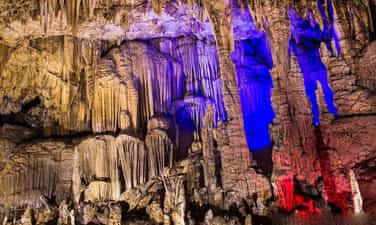
Hang Tien
Hang Tien is located in the heart of a mountain range of soil mixed with limestone, covered with forests. The cave was formed by the geological tectonic process (Karst), limestone was washed away by rainwater passing through a system of cracks. The cave is connected to the outside by a single door, inside the cave is dome-shaped, stalactites appear densely throughout the walls and ceiling of the cave, many stalactite columns stretch from the ceiling to the cave floor. Inside the cave, the emulsion process is still going on because water from the ground seeps through the ceiling and walls of the small cave, extending from the cave entrance to the inside of the cave entrance, nearly 200m long. The stalactites have many different shapes, sizes, and colors such as lions, birds, fish, elephants, dragon heads, lanterns, the shapes of roses, lotus, chrysanthemums, especially the shapes of A young girl is sewing and mending clothes... These stalactites must have gone through thousands of years of creation and formation. Hang Tien is preserved in its original state, without any human impact or abuse. Hang Tien is about 500m from the Community Tourism Cultural Village of Chi village, about 3 - 5km from the Community Tourism Cultural Villages of Then village and Chang village, Xuan Giang commune. The location of Tien Cave is quite convenient for visitors to experience, the road to the cave is not far and is easy to navigate, including the paths inside the cave. Therefore, Tien Cave has the potential to exploit and develop tourism in the future for tourists to visit and experience during their stay in Xuan Giang commune in particular and Quang Binh district in general. SOURCE: Discover Ha Giang
Tuyen Quang
5876 view
Rating : National monument

Sea Lily Fossil Area
The Ministry of Culture, Sports and Tourism issued official dispatch No. 3087,3088,3089/QD-BVHTTDL dated September 23 on the classification of a national monument for scenic spots for the Hue Bien Fossil area in Ha Giang province. As a border highland province, the terrain is difficult to travel and the climate is relatively harsh, but Ha Giang is blessed with many beautiful landscapes. The Sea Lily Fossil area - a scenic spot in the province has officially become a National Monument. The Sea Lily Fossil Area is a location where larger sea lily fossils have been discovered than elsewhere, and are also more densely distributed. The scientific name of the sea lily is Endoxocrinus parrae. The reason this flower is named Sea Lily is because its shape resembles a flower clinging to the bottom of the ocean. They are the oldest group of echinoderms still alive today. Scientists have found about 5,000 fossil specimens and more than 600 species currently live in this scenic area. SOURCE: MEO VAC DISTRICT ELECTRONIC INFORMATION PAGE
Tuyen Quang
5596 view
Rating : National monument

Ky Dai Square March 26
Ky Dai March 26 Square, is the old location of the former "Stadium" of Ha Giang City. In 1959, Ky Dai was built to meet the needs of cultural, arts, and sports activities of ethnic people in Ha Giang province. In the early spring of 1961, Uncle Ho visited Ha Giang province. On the beautiful morning of March 27, an important historical event took place in Ky Dai, that is, all officers, soldiers, armed forces and Ethnic people in the province met Uncle Ho. Ky Dai became a historical relic, here, the monument of Uncle Ho and Ha Giang ethnic people was built and inaugurated in 2005, to forever remember the historical event of Uncle Ho and Ha Giang. Ky Dai has been restored, the old Stadium has been upgraded into a Square of Ha Giang province and Ky Dai has become a traditional educational place for generations of children of ethnic groups in the province. SOURCE: HA GIANG CITY ELECTRONIC INFORMATION PAGE
Tuyen Quang
5857 view
Rating : National monument

Quan Ba Twin Mountains
Quan Ba Twin Mountains seem to be a very familiar destination for travel lovers. This place always has a strange attraction for tourists. The image of Quan Ba twin mountains has a very unique characteristic. This twin mountain is like a special highlight among the mountains and forests. The two mountains are located in the southwest area of the Dong Van Stone Plateau. The twin mountains are a symbol of the richness of the land they reside on. Quan Ba Twin Mountain is also known by other names: Twin Mountain or Co Tien Mountain. They were formed between 1.6 million and 2 million years ago. The mountain has a round shape, as full as the chest of a sleeping fairy. It seems that anyone who comes to Ha Giang will come and check-in with this natural masterpiece. Quan Ba Twin Mountains attract tourists not only because of the uniqueness of the two mountains. An equally impressive highlight is the rich and beautiful natural scenery that surrounds this place. The Creator has been very kind when giving this place a wonderful landscape. Visitors will be able to see the long stretches of rice fields. Mixed in there are green undulating mountain ranges. And at each different time, Quan Ba mountains and forests bring their own unique colors. This unique thing is the unique highlight that has attracted so many tourists. No matter how many times you come here, you always have different feelings. It can be said that Quan Ba twin mountains are like a symbol of Ha Giang. And this place was created hundreds of millions of years ago. This is a product created based on the creation of nature. Along with that, the faulting of the earth's crust has contributed to the creation of limestone mountains. Quan Ba Twin Mountains have been recognized as a national relic and scenic spot of our country. This typical image is like a highlight of Ha Giang land. It would be a pity if you come to Ha Giang and miss this attractive destination. Only once you have to come here and see it directly can you feel this wonderful beauty. Quan Ba Ha Giang Heaven Gate - Twin Mountains is considered the "gateway" that opens the way to conquer the Dong Van stone plateau area. You can review and research carefully to create a complete schedule. That will help you have a complete journey of discovery. SOURCE: Vietnam Booking
Tuyen Quang
6089 view
Rating : National monument

Hoang Su Phi terraced fields
As a highland mountainous district in the west, Hoang Su Phi has long been famous for the most beautiful terraced fields of Ha Giang, stretching across the mountain slopes, which are considered a testament to extraordinary determination. and the ability of the ethnic communities here to renovate and conquer nature. Since being recognized as a national heritage site in 2011 and 2016, Hoang Su Phi terraced fields have become increasingly famous, becoming one of the typical tourism products of Ha Giang thanks to its historical values. history, culture and artistic landscape. “The difference of Hoang Su Phi terraced rice landscape is that it has many levels, winding and running from the streamside to the top of the mountain. Mixed in there are primeval forests, ancient tea fields, houses and rivers and streams, creating a harmonious and colorful picture of nature. The entire Hoang Su Phi district currently has over 3,720 hectares of terraced fields spread evenly across 24 communes and towns, of which 675 hectares have been ranked as a National Monument of Scenic Rice Terraces by the Ministry of Culture, Sports and Tourism. ladders in 11 communes including: Nam Ty, Thong Nguyen, Ho Thau, Ban Luoc, San Sa Ho, Ban Phung, Thang Tin, Nam Khoa, Po Lo, Ban Nhung, Ta Su Choong. SOURCE: VIETNAM NATIONAL TOURISM BUREAU
Tuyen Quang
5761 view
Rating : National monument
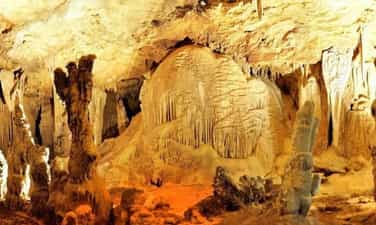
Na Luong Cave
The scenic Na Luong cave, located in Mau Long commune, Yen Minh district and Sung Trai commune, Dong Van district (Ha Giang) has officially become a National Monument. The above information has been confirmed by Deputy Director of the Department of Culture, Sports and Tourism of Ha Giang province, Trieu Thi Tinh. Na Luong cave scenic spot is located about more than 25 km from the center of Yen Minh town. This cave was discovered by scientists in 2010 and has been considered the most beautiful cave compared to other caves that have ever been discovered in Ha Giang province with majestic natural landscapes and poetic nuances. , shimmering and magical. The cave entrance is over 30 meters wide and is covered with rare types of wood such as: grinds, nails, slices... In particular, caves in limestone mountains are one of the most popular types of geological heritage of the Park. Global geology of Dong Van Karst Plateau. Over thousands of years of tectonics, the cave has created many stalactite columns with interesting shapes and sparkling colors like diamonds; The cave is very wide and deep, divided into many successive compartments, attracting a large number of tourists. According to Mr. Hoang Van Vinh, Secretary of Yen Minh District Party Committee, Ha Giang province: Immediately after being recognized as a National Monument, Yen Minh district deployed functional units to protect Na Luong cave in order to preserve the cave. original pristine beauty. The district also promoted propaganda and campaigned for ethnic minorities and tourists not to exploit stalactites in the cave; Do not hunt animals and birds to protect the ecological environment. At the same time, invest, upgrade and build the scenic Na Luong cave to become an attractive tourist destination for tourists coming to Dong Van Karst Plateau Global Geopark./. SOURCE: VIETNAM NATIONAL TOURISM BUREAU
Tuyen Quang
5884 view
Rating : National monument
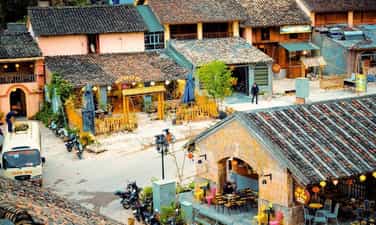
Dong Van ancient town
According to sources of the People's Committee of Ha Giang province, Dong Van ancient town (belonging to Dong Van town, Dong Van district, Ha Giang) formerly belonged to Dong Quan canton, Nguyen Binh district, Tuong Yen district, Ha Tuyen province. Afterwards, it merged into Bao Lac province, managed by a Tay mandarin named Nong in Bao Lac. When the French colonialists occupied, Dong Van was separated from Bao Lac. In 1887, the Dong Van area was occupied by the French colonialists and to facilitate colonial rule, they divided Dong Van into small continents, each headed by a ruling family. The land of Dong Van at that time was governed by the Nguyen family, Mr. Nguyen Chan Quay. Previously, the old town was just a wild, sparsely populated valley. By the end of the 19th century and the beginning of the 20th century, when the French occupied Ha Giang, with the intention of turning this area into a busy trading center, Dong Van old town was built and formed, the first person to plan It was decided and built by Mr. Luong Trung Tu - chief of Dong Van town at that time. After that, many ancient houses were built in two rows surrounding the market and extending to the foot of the mountain. In addition, in the ancient town there is also a market where people of all ethnic groups trade. On market days, Mong, Pu Peo, and Lo Lo young women dressed in ethnic costumes from far away villages come to the market to shop, meet, and exchange essential goods... Through many ups and downs of history, Dong Van old town still preserves about 40 ancient houses, most of which have 2-story walls and yin-yang tile roofs over 100 years old, especially houses over 200 years old. five to nearly 300 years old, along with a number of other unique ancient architectural works... With unique historical, cultural and architectural values, Dong Van ancient town has been recognized by the Ministry of Culture, Sports and Tourism as a National Architectural and Artistic Monument under Decision No. 4195/QD- BVHHTDL on November 16, 2009. SOURCE: Central Agency of the Communist Party of Vietnam
Tuyen Quang
5604 view
Rating : National monument
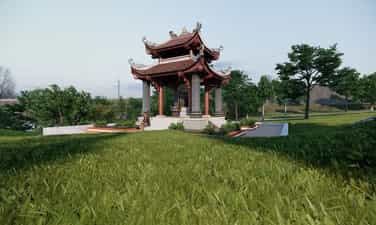
STONE CELEBRATING THE PLACE OF ESTABLISHMENT OF THE WOMEN'S ADVOCACY COMMITTEE OF HA GIANG PROVINCE
STONE CELEBRATING THE PLACE OF ESTABLISHMENT OF THE WOMEN'S ADVOCACY COMMITTEE OF HA GIANG PROVINCE - Location: Bo Loong village, Hung An commune, Bac Quang district, Ha Giang province. - Directions: Commemorative stele where the Women's Mobilization Committee of Ha Giang province was founded, 70km south of Ha Giang city center, from Ha Giang city follow National Highway No. 2 towards Ha Giang - Tuyen Quang, to Market No. 9, Hung An commune, turn left along the road to Bo Loong village for more than 2km to reach the Beer location. In March 1943, Viet Minh cadres from the north of Tuyen Quang province went to Bo Loong village, Hung An commune, Bac Quang district, Ha Giang province to propagate the revolutionary line of the Viet Minh front and build a base. local revolution. Here, the Women's Advocacy Committee was established with 5 members. After its establishment, under the direction of Viet Minh cadres, the women propagated and mobilized women in Hung An commune and neighboring localities to join the Women's Union for National Salvation and participate in the revolutionary movement. Actively contributing to the revolutionary struggle to expel the enemy, gain power, and liberate the homeland and the country. The establishment of the Women's Mobilization Committee in Bo Loong village, Hung An commune - is the first grassroots organization of the Association, marking the development of the women's activist movement, which is also the premise for the year 1945: Ha Giang Province Women's Association for National Salvation was established (later Ha Giang Province Women's Union). The construction of a commemorative stele where the Women's Mobilization Committee of Ha Giang province was established in Bo Loong village, Hung An commune is to remember the place where the first grassroots organization of the women's activist movement was established, and has educational purposes. Traditional education about the traditions of patriotism, fighting against invaders to protect the country for young generations to follow, thereby constantly learning and cultivating to be worthy of previous generations, contributing to protecting and protecting the country. Build a country that is increasingly rich in beauty and culture bright. SOURCE: ELECTRONIC INFORMATION PAGE OF BAC QUANG DISTRICT, HA GIANG PROVINCE
Tuyen Quang
4998 view
Rating : Provincial level relics

Lady Temple
Chua Ba Temple does not have stone stele and related documents and papers recording the year of the temple's original construction as well as the process of formation and development. However, through the process of learning through the stories of local elderly people and some related documents collected, it can be determined as follows: Chua Ba Temple has existed in Vinh Tuy town for a long time, at that time the surrounding temple area was still desolate and deserted. The temple is built of simple, simple bamboo and leaves. The main altar holds a statue of the Lady, also known as Saint Mother Lieu Hanh[8]. Currently at the temple there are three stone stele: One stele is covered by banyan tree roots, making it impossible to read and stamp the words; A stele's letters are too faded to be read; There is only one stele left that records the year of merit entering the temple, which is 1947. Through transcription and translation, it can be seen that the content of the stele records the names of those who contributed to donating to build the temple, thereby confirming The temple was built before 1947. During the research process of Ha Giang Provincial Museum to serve the work of building relic records, it has collected from National Archives Center I and National Archives Center III a number of relevant documents that can be collected. determine the time to build the temple in Vinh Tuy town, there are a number of French dispatches in 1931 written about donations from the people to build a temple in Vinh Tuy town, Bac Quang district, province Ha Giang. Thereby, it can be determined that the time of rebuilding the temple was around 1931. Through research and collected documents, it can be seen that Chua Ba Temple had the introduction of Mother Goddess worship from the lowlands, through merchants in the process of doing business on the river, they brought their feet with them. incense to worship at Chua Ba temple. At present, the year of the temple's origin is unknown. However, based on the period when lowland residents came to Ha Giang to trade and start a business, it can be said that Chua Ba Temple was established in the early twentieth century, 1931 was just the year of donations from the people to build it. back to the temple, not the year the temple was originally built. Over the course of history, the Temple has been restored many times, the most restored and repaired times were in 1982 and 2006, thanks to the merits of local people and tourists from all over, forming the current state. Since being recognized as a provincial-level historical and cultural relic, Chua Ba Temple has been directed and directed by all levels and sectors and directly managed, planned and protected by the People's Committee of Vinh Tuy town. and promote value. Vinh Tuy Town People's Committee has issued a Decision to establish the Temple Management Board and develop internal rules and operating regulations. The functional branches have surveyed, determined the boundaries and zoned into 2 relic protection areas with a total area of 710m2 (area I is 295m2, area II is 415m2) to ensure that the relic area is not encroached. occupy, invade and influence. Lady Temple has been restored, repaired and embellished many times since its construction until now, in which 1982 and 2006 were completely restored with funds from local people and visitors. Currently, the facilities are still in good use and are regularly repaired to meet the needs of people's religious and spiritual activities. 6. Value of ranked monuments and ranking time The cultural and historical relic "THE TEMPLE OF GOD" is ranked as a provincial cultural and historical relic according to Decision No. 244/QD-UBND dated January 29, 2011 of the People's Committee of Ha Giang province "Decision on ranking Provincial-level relics, historical and cultural relics SOURCE: ELECTRONIC INFORMATION PAGE OF BAC QUANG DISTRICT, HA GIANG PROVINCE
Tuyen Quang
5925 view
Rating : Provincial level relics

TEMPLE OF SAINT TRAN HUNG DAO
Tran Hung Dao Temple was built in Tan Tien village, Tan Quang commune, Bac Quang district, Ha Giang province. The location of the temple is shown on the map of plot number 10, plot 52 of Bac Quang district, specifically as follows: + The East side borders the residential road of Tan Tien village, with a length of 31m. + The West borders Mr. Vuong Xuan Thu's land, 34m long. + The South borders Mr. Vuong Xuan Thu's land, 32m long. + The North borders Mr. Dien Van Luc's house, 43.5m long. - Directions: From Ha Giang city, follow Highway 2 towards Ha Giang - Hanoi to Km 47, turn left along the road to Tan Tien village headquarters about 500m to Tran Hung Dao Temple. 1.3. Historical origins of formation and development: Tran Hung Dao Temple currently does not have a stone stele or other documents recording the year of construction of the temple. There are only 02 conferral documents talking about the merits of Tran Hung Dao, without recording the year of construction and historical origin of the temple. temple. Therefore, it is impossible to determine with absolute accuracy the origin of formation and development process. However, through the process of research and through the stories of local elders, Tran Hung Dao Temple was previously located in Vinh Quang village, Tan Quang commune. In 1947-1948, due to the war and the implementation of "scorched earth resistance", the Temple was forced to be destroyed, then the worship objects were moved to Nam Tuoc village, Dong Tam commune (about 3000m from the current location). At that time, whenever the rainy season occurred in Nam Tuoc village, floods often made it difficult for people to go to Temple ceremonies. Therefore, around 1948-1949, Mr. Vang Seo Cang and Do Van Doc stood up to transfer the incense bowls and tablets of Tran Hung Dao and bring them to Cam Son Temple (Temple at the foot of Cam Mountain) - the current location. From then on, people called it Tran Hung Dao Temple. Since settling here, the Temple has been restored many times, the largest restoration and repair in 2004 and 2008 thanks to the merit of local people and tourists from all over, forming the current status. now. The historical relic area "TRAN HUNG DAO TEMPLE" is ranked as a provincial historical relic according to Decision No. 243/QD-UBND, dated January 29, 2011 of the People's Committee of Ha Giang province "Decision on ranking relics". provincial level”. SOURCE: ELECTRONIC INFORMATION PAGE OF BAC QUANG DISTRICT, HA GIANG PROVINCE
Tuyen Quang
5804 view
Rating : Provincial level relics

God Emperor Temple
Than Hoang Temple in Coc Pai town has an area of nearly 4,000 square meters, built in the style of an ancient stilt house, with 3 compartments, 2 left with 2 stairs up and down; The total floor area is over 250m2, including the following items: The shrine is designed in the same style as the One Pillar Pagoda (Hanoi), poured with flat concrete, 3 gabled walls, red-tiled tiled roof, high quality. porcelain material; The Temple yard was built in 2010, cemented, 13m long, 2.5m wide, from the yard to the Temple there are 12 steps; On the upper floor, there is a statue of Quan Them, on the lower floor, there is an incense bowl to worship the local people...; Leaning against the mountain, facing south, there is a pair of beautiful stone dragons. The temple was built at a value of over 3.73 billion VND according to socialized capital, with Gia Long Co., Ltd. - the proactive unit that restored the monument - contributing 2.9 billion. This is the place to worship Mr. Hoang Van Thung, a son of the Xin Man people who publicly donated land, organized villagers to do business, and guarded the border many centuries ago... Every year, the people Organize a ceremony to commemorate Mr. Hoang Van Thung, considered the village God Emperor, on the first Dragon day of the Dragon month (3rd lunar month) with solemn folk rituals. On November 30, 2011, the Provincial People's Committee issued Decision No. 2644/QD -UBND recognizing Than Hoang Temple as a Provincial Historical-Cultural Relic. Source Ha Giang province electronic information portal.
Tuyen Quang
6384 view
Rating : Provincial level relics

Nam Dau Pagoda
Along with Binh Lam Pagoda and Sung Khanh Pagoda, Nam Dau Pagoda is gradually becoming a destination that is hard to miss for tourists and Buddhists from near and far. This is also a pagoda bearing the mark of national archaeological relics. family. Nam Dau Pagoda is located on Nam Dau hill, next to Lo river, in Nam Thanh village, Ngoc Linh commune, Vi Xuyen district. Having existed for about 600 years, it was confirmed to be present during the Tran dynasty, around the second half of the 13th and early 14th centuries. Through excavations, archaeologists have discovered many relics at Nam Dau Pagoda, some of which are only found in Thang Long Imperial Citadel, or in large and important royal buildings, including relics discovered for the first time in Vietnam and in the Northern Mountainous Border region such as: Double-sided sword heads embossed with dragon shapes of quite large size, decorated statues of dragons, carp, lovebirds, etc. spectacular. Along with the relics, the decorative architecture of the pagoda further affirms its significance and importance in having a great influence on the development of Buddhism in the border mountainous region of Ha Giang. Venerable Thich Duc Chung, Abbot of Nam Dau Pagoda, said: Nau Dau Pagoda is a pagoda that fully converges the elements of feng shui and aura. The pagoda's presence here has eliminated many consequences for the people. , avoid superstition, everyone can go to the temple to worship Buddha and chant sutras. Listening to monks and monks preach the Buddha's teachings, thereby knowing how to unite, love, support each other, aim for goodness, and develop the economy together... Completed renovation and renovation in 2007. The beauty of the pagoda is imbued with the culture of the Tran Dynasty in particular and Vietnamese Buddhism in general, created from the blend of historical, spiritual and cultural values. unique cultural and artistic value. Today, Nam Dau Pagoda plays an important role in local life while contributing to the goal of developing spiritual tourism culture in the province and district. In 2009, Nam Dau Pagoda was recognized by the Ministry of Culture, Sports and Tourism as a National Monument. Associate Professor, PhD. Duong Van Sau, Former Head of the Faculty of Tourism, Hanoi University of Culture, shared: Vietnamese feudal dynasties always emphasized preserving the territory, and knew how to use spiritual and religious tools. religion and belief to protect the territory of the Fatherland. Blend with local religion to develop together. It can be said that this has been and will become one of the bright spiritual and cultural destinations of Vi Xuyen tourism. And this is the right direction of Ha Giang province in general and Vi Xuyen district in particular in terms of tourism development in the coming time... Located in the ancient pagoda system of Vi Xuyen district, Ha Giang province, with unique values, Nam Dau Pagoda not only creates a unique relic area, suggesting to generations many things about the history of a region. border land but also attracts a large number of tourists from all over to make pilgrimages and visit scenic spots, becoming a famous spiritual tourism destination of Ha Giang. Source Ha Giang province electronic information portal
Tuyen Quang
6541 view
Rating : National monument
Outstanding monuments
See all
Relics of French Fort and Lung Ho citadel wall
The French Fort relic and Lung Ho citadel wall are located in Lang Qua village, Lung Ho commune, Yen Minh district, Ha Giang province. The fortress and the city wall are two separate areas and are located about 2km apart, at an altitude of 742m above sea level. The French Fort and Lung Ho wall relics are 106km north of Ha Giang city. According to French documents, in 1907 Duong Thuong land belonged to Dong Minh canton, Yen Minh commune, Ha Giang province. During the inspection trip to the Dai Mien, Tieu Mien, Yen Minh, Yen Dinh, Du Gia, and Duong Thuong regions of Lieutenant Colonel Boifacy, commander of the 3rd military force, in report No. 1165, September 1913, this land " needs to be monitored and that is why there must be Duong Thuong post..." After this inspection trip, the work of planning to build a new post was gradually carried out. The old Duong Thuong post, now Lung Ho post, was built and completed in the years 1935 - 1940. The work of building the post was extremely difficult, they forced people in the surrounding area to work as laborers and servants. Carrying stones and water for construction, anyone who did not comply was beaten or shot to death. Citadel wall: The citadel wall is nearly 2km away from the fort and is arranged based on natural conditions along the mountain slopes on both sides of the unique road connecting Lung Ho and Yen Minh with the purpose of controlling goods, people and horses in this area, according to the report. The unit will contact the station about 2km away. The main material for building the wall is mountain stone, taken from the construction site and surrounding areas in many different sizes. The mortar used to build is mainly sand mixed with lime, without cement. . Lung Ho Fort: The fort was built on high, fairly flat land facing East - West. The length of the surrounding wall is nearly 200m and is equipped with firing positions. The firing positions all have observation holes on the outside. The main material for building the wall is mountain stone, taken from the construction site and surrounding areas in many different sizes. The mortar used to build is mainly sand mixed with lime, without cement. . The design of the station includes a horizontal block and a vertical row of houses on the west side; The area of vertical houses and watchtowers in the East; Between the East and West areas is a large area of land. In general, many construction items were dilapidated and damaged, and almost the entire roof of the vertical and horizontal rows of houses were dismantled. Militarily, Lung Ho Fort and wall are large-scale works with an important position blocking the road from Lung Ho to Duong Thuong, and at the same time preventing revolutionary propaganda activities in our Duong Thuong region during the period. this time. The work is evidence of a historical period of French occupation and activities in the remote, mountainous area of Ha Giang province. Under the control and enslavement of the French colonialists in the Duong Thuong area, people's lives fell into poverty. Implementing the leadership resolutions of the Northern Region Party Committee and the Cao - Bac - Lang Interprovincial Party Committee. “At the end of 1944, comrade Viet Hung carried out the task of opening up the communication route from Cao Bang - Bac Can - Ha Giang to Yunnan (China) to welcome officers and transport weapons from abroad to the country. Comrade Viet Hung came to Lung Ho, Duong Thuong built a base, using Duong Thuong as a base, wherever Viet Minh cadres went, they received support from their compatriots. On March 9, 1945, the Japanese fascists overthrew France. In Duong Thuong (Yen Minh), Colonel Dao Van At panicked and fled the station. Seizing that opportunity, Viet Minh officers in Duong Thuong held an emergency meeting, occupied Duong Thuong station, destroyed the warehouse, took corn and rice to distribute to the people and set up a guard station outside the base area, which was carried out very urgently. On March 16, 1945, we captured Duong Thuong station, owned and completely controlled the Duong Thuong area, from here Viet Minh cadres spread to the base to lead the movement. Along with Sung Chu Da relic site, Duong Thuong revolutionary base, Mau Long cave is recognized as a national scenic spot, Du Gia national park and Gau Tao, Long Tong, Moon Bridge, and Cap Sac Festivals. , Thuong Tho... Notably, the Tay People's Fish Festival is held in Mau Due commune. Along with the direction of the district and province in the coming time, the Lung Ho Fort and wall relics will continue to be attractive destinations for tourists when coming to Yen Minh. Source: Ha Giang Provincial Party Committee Propaganda Department
Tuyen Quang
10387 view
Rating : National monument

Ha Giang Ky Dai Relics
Ky Dai relic is located on March 26 Square in Nguyen Trai ward, Ha Giang city. Ky Dai is a place to commemorate the event of Uncle Ho visiting and talking with more than 16,800 ethnic minorities in Ha Giang province on March 27, 1961. On this occasion, Uncle Ho advised the people of all ethnic groups in Ha Giang province the following 8 main contents: First of all, all ethnic groups must unite closely, love and help each other like brothers. Second: People must strive to increase production, and practice thrift to make everyone warm, clothed, and fed. Third: To produce well, there must be enough water, lots of fertilizer and improved agricultural tools. Fourth: It is necessary to develop raising buffaloes, cows, pigs, chickens... which are a great source of profit and a source of fertilizer for upland fields. Fifth: Exploiting forest products, protecting forests and planting forest trees, growing fruit trees and medicinal trees. Sixth: People must pay attention to hygiene. To maintain health, they must eat and drink cleanly, wear clean clothes, and live cleanly. Health is good for productive labor. Seventh: People must try to eliminate illiteracy, must know how to read and write, then their business can progress. Eighth: The lives of the Cao Cao people are more difficult than those of people in other places. People at all levels and officials from the area to the district need to try their best to help the Cao Cao people overcome difficulties and build new life. Uncle Ho's advice penetrated deeply into the hearts of the people of Ha Giang ethnic groups in the cause of building and developing Ha Giang province in recent times. Ky Dai was recognized by the Ministry of Culture and Information (now the Ministry of Culture, Sports and Tourism) as a national monument in 1993. On March 30, 2001, the People's Committee of Ha Giang province started construction of the Square and cluster. The monument in front of Ky Dai's gate is named March 26 Square. The square includes the entire former stadium. In the middle of the square is a group of monuments called "Uncle Ho and his compatriots of all ethnic groups in Ha Giang". The statue model was created by sculptor Nguyen Phu Cuong and constructed by the Central Fine Arts Company. The project is over 11 meters high, includes 200 stone blocks, and weighs 600 tons. The image of Uncle Ho standing in the middle of a group of 7 characters, standing lovingly near him are two children of the Mong and Nung ethnic groups. Standing a little lower is a young girl of the Kinh and Dao ethnic groups. Behind are the images of a border guard soldier and a Tay officer, with radiant eyes as if wanting to record every teaching of Uncle Ho. The composition of the group of statues blends together, linked by a clear, vivid emotional thread. The formation of that rhythm is an intentional creative and symbolic treatment of the supporting block, giving viewers a feeling of the majestic space of Ha Giang's mountains and forests with layers of clouds flying and harmonizing with each other. with layers and layers of terraced fields.... With the advantage of the monument being placed in the square, the project has a monumental space with multi-directional, multi-dimensional perception. This is a cultural project - a gathering place for a large number of people to admire the majestic beauty of the project and conduct community activities. Ky Dai and March 26 Square have become places to visit for domestic and foreign tourists. It is a place for community cultural activities of people of all ethnic groups in Ha Giang. Source: Department of Culture, Sports and Tourism of Ha Giang Province
Tuyen Quang
10289 view
Rating : National monument

Kim Binh relic site
The Second National Congress Relic of the Party (Kim Binh Relic Area), includes 52 points, distributed in 4 communes: Kien Dai, Kim Binh, Vinh Quang, Linh Phu, Chiem Hoa district , Tuyen Quang province. The relic site of the Second National Congress of the Party is a place that marks many important historical events of the nation, such as: The National Congress unifying the Viet Minh Front and the Lien Viet Front into the Inter-Vietnamese Front. Vietnam, People's Alliance Conference of the three countries Vietnam - Cambodia - Laos, Nguyen Ai Quoc School (predecessor of the Ho Chi Minh National Academy of Politics) opens course III, Congress of Emulating Heroes, Soldiers and Cadres the first national model. 1. Relic site of the Party Central Committee and Government's working location, Kien Dai commune. Kien Dai commune is surrounded by a system of high hills and mountains (accounting for 3/4 of the area), the terrain is extremely dangerous, mobile, "convenient to advance, convenient to retreat", is the border area between Tuyen Quang and Bac Kan provinces. . Transportation is mainly by trails and railways (dating back to the French colonial period). Kien Dai base area is covered with a rich and diverse layer of vegetation, convenient for exploitation and construction of camps, houses, warehouses, trenches, and fortifications. Many high mountains surround villages and hamlets, forming a solid wall. There are many caves and caves in the mountain, very convenient for taking shelter when there is an alarm. The people here are mostly Tay and Dao ethnic people, with a spirit of patriotism and early revolutionary enlightenment. With a location that ensures safety, secrecy, and convenient transportation and communication, Kien Dai was the residence and working place of leaders and many central agencies during the period from 1948 - 1952. 2. Relic area of the Second National Congress of the Party, Kim Binh commune. At the end of 1950, after carefully studying the terrain of Kim Binh commune, the Party Central Committee decided to choose the Na Loang hill area, in Bo Cung village, as the place to hold the Party's Second National Congress. Na Loang Hill is located in the center of Bo Cung village, surrounded by many high mountain ranges, such as Pu Choong, Pu Mi, Pu Meo, Trai Face, Kham Khuat, forming a solid and convenient wall. to place observatories and air defense battlefields. The hill is bowl-shaped, the top is quite wide and flat, convenient for building houses and traveling. At the foot of the hill there is Co Linh stream flowing through, which is a source of water for the delegates' daily activities. From Na Loang hill, there are many convenient paths to areas in the Safety Zone. 3. Guard station to protect central agencies, Chinh street, Vinh Quang commune The guard station is a three-room dirt house built with wooden pillars, a roof thatched with palm leaves and double-woven bamboo walls, with one door and two windows. The house is about 3m long, about 2m wide, inside there is a set of tables and chairs to serve the security guard. Currently, only the site remains. 4. Location Na Ma, Pac Hop village, Linh Phu commune The small shack about 20m from the stilt house of Mr. Ha Van Hop's family, where President Ho Chi Minh and comrade Truong Chinh rest, is about 7m long and about 3m wide. The shack is made of bamboo, the roof is thatched with palm leaves, and the walls are double-woven bamboo. The stilt house of Mr. Ha Van Hop's family, where Comrade Pham Van Dong stayed overnight, is a stilt house with 3 rooms and 2 wings, made of wooden pillars, roofed with palm leaves, surrounded by double woven bamboo walls. , there are 2 stairs up and down. Currently, only the site remains. Artifacts of the Second National Congress of the Party relic site are kept at Tuyen Quang Provincial Museum (20 artifacts) such as: tables, chairs in the hall, storage boxes for construction, rice boxes serving the Congress, lunch boxes, and document boxes for delegates. At the Kien Dai Relic Area, there are artifacts: the desk and chair sets of comrade Truong Chinh and comrade Pham Van Dong... Ho Chi Minh National Academy of Politics still retains a number of artifacts such as: desks and chairs. , President Ho Chi Minh's working chair during the Congress... The Second National Congress of the Party took place from February 11 to 19, 1951, which was also the occasion for people of all ethnic groups in Kim Binh commune to organize the Long Tong festival. Therefore, the monument has a close connection with the festival. The relic site of the Second National Congress of the Party has great significance in the work of educating patriotic traditions and revolutionary heroism. With typical special values, the historical relic site of the Party's 2nd National Congress (Chiem Hoa district, Tuyen Quang province) was ranked by the Prime Minister as a Special National Monument. farewell on December 22, 2016). Source: Tuyen Quang province electronic information portal
Tuyen Quang
9928 view
Rating : Special national monument

Cang Bac Me National Historical Relic Area
Bac Me Cang - a historical relic during the resistance war against the French, is located on the slopes of Dragon Mountain in Don Dien village, Yen Cuong commune, Bac Me district, Ha Giang province. Bac Me Cang was built by the French before 1938 during their occupation of Ha Giang. The French chose to build here because of its important strategic location, easy control over a large area, and convenient for French military activities during their occupation here. Bac Me Cang is built on the rugged, soaring rocky slopes. Behind is Dragon Mountain as a shield to protect this post, in front is the Gam River, making it easy to observe and cover the situation. Bac Me stretch was originally built by the French to control the arterial road connecting 3 northern mountainous provinces: Ha Giang, Tuyen Quang, and Cao Bang. When it was first built, it was used as a military camp to gather French soldiers and henchmen during the occupation of this area. The reason this place is called Cang Bac Me is because in French, Cang means "fort", and in the local language, Bac Me is "Pac Mia", which means hut door. Refers to the post where the troops were stationed as well as where the French colonial observation post was located. Bac Me stretch was built including a system of posts, information houses, and guard posts to serve their ruling purposes. From 1939 to 1942, Cang Bac Me was turned into a prisoner of war camp by the French to detain communist soldiers they captured. There are many of our patriotic revolutionary comrades detained here such as: comrades Xuan Thuy, Hoang Hui Nam, Hoang Bac Dung, Le Gian, Nguyen Hong, Dang Viet Chau... Taking advantage of the key terrain of the post built in the sacred forests and dangerous waters of this area. They arrested political prisoners and patriotic communist soldiers and imprisoned them here. Every day, those soldiers had to endure torture and labor in harsh and miserable conditions under their strict control in order to extinguish the patriotism and revolutionary will of their children. They are called Viet Cong. But all those hardships could not overcome the stubborn will of our people. The patriots turned pain into action, turning prisons into political schools. They established Party cells in prison, actively distributed leaflets and contacted people and soldiers outside. Faced with strong fighting activities of prisoners and people in the area, they were forced to change the place of detention with their communist comrades to other places. By 1992, Bac Me Cang was recognized as a national revolutionary historical relic. Over time this place has been greatly damaged. In 2003, the Department of Culture, Sports and Tourism of Ha Giang province coordinated with agencies in the province, along with Bac Me District, to restore a number of items of the relic such as: watchtower, prison, up and down road... Source: Ha Giang Department of Culture, Sports and Tourism
Tuyen Quang
9568 view
Rating : National monument

Tan Trao Banyan Tree
Tan Trao banyan tree relic in Tan Lap village, Tan Trao commune, Son Duong district, Tuyen Quang province. Tan Trao banyan tree is a historical symbol of Tan Lap village, where important events took place during the resistance war against the French of the Vietnamese people. This banyan tree is not only the protector of the people here but also a living witness to the heroic days of Tan Trao's army and people. Under the Tan Trao banyan tree, on the afternoon of August 16, 1945, General Vo Nguyen Giap read the Military Order No. witnessed by all Viet Bac ethnic people and 60 national delegates. From then until now, Tan Trao banyan tree has become a revolutionary symbol of the Capital of Tuyen Quang Liberation Zone. The Tan Trao banyan tree has two towering branches that people call the banyan tree and the banyan tree. Both trees are located 10mm apart and have very lush branches and leaves. Through many historical events, the banyan tree gradually ages and weakens. In 1993, due to the impact of a storm, the "banyan tree" fell, leaving only a small branch. The "banana tree" cannot avoid the law of "birth and death", gradually showing bad signs, the leaves turn yellow, and some tops die. By 2008, the Tan Trao banyan tree had only one left branch facing the Northeast of the "banana tree" that was still alive but was not growing well, the main root of the tree was almost dead. Faced with that urgent situation, the local government has coordinated with organizations and businesses to come up with plans to care and revive the Tan Trao banyan tree. With much effort, after 2 years the Tan Trao banyan tree has gradually recovered, more young shoots have appeared, signaling that life will flourish strongly. And to this day, the "banyan tree" has developed into 2 root clusters consisting of 38 large and small roots, with a wide canopy that radiates cool green shade. The small branch of the "banyan tree" has also recovered and grown into a lush new cluster of trees. Tan Trao banyan tree relic is located in the Tan Trao special national relic area of Tuyen Quang province. Source: Tuyen Quang Tourism
Tuyen Quang
9524 view
Rating : Special national monument

Khe Lau Victory Relics
Khe Lau is the intersection of Gam River and Lo River in Thang Quan commune, Yen Son district, Tuyen Quang province. This place also has many other names such as Luong junction, Cua Song or Hon Lau. With the rugged terrain, both banks of the river have dense reed hills and being near the foot of the mountain created favorable conditions for our troops to ambush and attack the enemy. From November 3, 1947, French troops began to withdraw from Champa to Tuyen Quang town by both waterway and road. The soldiers of Regiment 112 cut through the forest and crossed back to Yen Nguyen to coordinate with local militia and guerrillas to set up an ambush from the foot of Ga Pass to Ca bridge. Artillery was urgently dispatched from Yen Binh to ambush enemy ships at Hon Lau. At 2:00 p.m. on November 10, 1947, the enemy's train consisting of 2 L C T and 1 canoe carrying 200 European and African soldiers from Chiem Hoa headed to Hon Lau. Our artillery continuously opened fire. Both enemy L C Ts were hit and caught fire. The enemy's canoe fled but was also hit. French soldiers ran ashore and were immediately shot and destroyed by militia and guerrillas. The battle of Khe Lau took place for more than 1 hour, our troops destroyed more than 200 enemy soldiers, sank 2 warships, and 1 canoe. The Khe Lau victory is considered one of the 10 major battles in the Viet Bac Autumn-Winter campaign in 1947. The late Lieutenant General Pham Hong Cu, former Deputy Director of the General Political Department of the Vietnam People's Army, former Political Commissar of the Binh Ca Battalion once affirmed that during the Viet Bac Fall-Winter campaign in 1947, Tuyen Quang contributed to Victory on the Lo River front in 2 battles. The first battle was the Battle of Binh Ca and the last battle was the Battle of Khe Lau. Uncle Ho said, "The enemy is strong in two pincers. If we break them, the umbrella they hold over Viet Bac will collapse into a torn umbrella." The army and people of Tuyen Quang contributed to breaking the French waterway army, contributing greatly to the Viet Bac Fall-Winter victory in 1947. Destroying the strategic intention of fighting quickly, winning quickly, forcing them to switch to fighting for a long time. to deal with us, contributing to bringing our nation's resistance to a new era. With this victory, our armed forces have grown more and more, and the Viet Bac base has become a symbol of trust and victory. Unable to carry out their plot, the French colonialists were forced to withdraw from Viet Bac. In the process of fleeing, they were blocked and attacked by our troops, consuming much of their energy. In mid-December 1947, Tuyen Quang was clear of invaders. During the Viet Bac Fall-Winter campaign of 1947, the army and people of Tuyen Quang fought 48 battles, including 30 independent battles, 18 battles in coordination with the main army, destroying 1,300 enemies, shooting and missing 10. canoes, warships, destroyed an airplane, confiscated many weapons, military equipment, and military supplies. The army and people of Tuyen Quang have successfully completed the task of draining enemy forces, contributing to protecting the safety and secrecy of Uncle Ho's residence and the headquarters of the resistance. On December 23, 1947, in Tuyen Quang town, a ceremony to celebrate the victory of Viet Bac Fall-Winter 1947 took place and was honored to be replaced by Comrade Vo Nguyen Giap - General Commander of the People's Army and Vietnam Militia and Self-Defense Force. The Government commends the merits of the soldiers and people of Viet Bac. Source: People's Newspaper
Tuyen Quang
8330 view
Rating : National monument

Cat King's Palace
King Meo's Mansion, also known as Vuong's Mansion, is located in Sa Phin valley (Xa Phin), Lung Phin commune, Dong Van district, Ha Giang province, about 125km from the city center and about 125km from the city center. The famous Dong Van stone plateau is only 15km away. This ancient house is associated with the life and career of two Mong people, the Meo King Vuong Chinh Duc and Vuong Chi Sinh (or Vuong Chi Thanh). Mr. Vuong Chinh Duc (1886 - 1962) was the head of the feudal land government in the mountainous areas of the Mong people, so he was also known by the powerful name of King Meo. His son, who followed the revolutionary path, thanks to his contributions to the country, was elected as a National Assembly deputy for the first two terms. Construction began in 1898 and was officially completed in 1907, costing a huge sum of 150,000 Indochina white silver coins, equivalent to 150 billion VND today. The mansion was designed and built by Chinese Yunnan workers in combination with Mong ethnic people, creating a project larger than 1200m2 on an area of about 3000m2. Thanks to its long history and indisputable cultural value, King Cat Palace was ranked a national monument by the Ministry of Culture, Sports and Tourism in 1993, after nearly a century of existence. In addition, this mansion also took up to 5 years to start construction, all were built with human power and did not use any mechanical means. King Cat's mansion is located at the foot of a valley surrounded above by a high land. With this type of terrain, the entire structure is protected by mountain arcs called turtle shell positions, providing very good defense support during times of fierce war. After more than a hundred years of existence, everything in the mansion is still as intact as the first day. The architecture inside the mansion is extremely unique, the crystallization of three different cultures including the Mong, French and Chinese. The project includes 4 horizontal houses, 6 vertical houses divided into 3 areas: front palace (for guards and slaves), middle palace and rear palace (place to live and work) with 64 small rooms divided into 2 floors. . To meet the criteria of solidity, the builders used green stone to help the mansion stand firm against enemies and time. The roofs, walls and pillars are made of wood to add majesty and flexibility to the rooms. Another material used is terracotta for building tile roofs to make shaping easier but no less sturdy. To this day, the Cat King Palace is one of the few buildings that meets all the requirements for a place to live, work and become a defense base whenever a war occurs. Despite the combination of three cultures in architecture, many people commented that the Vuong family mansion is extremely harmonious, flexible and rhythmic as if forming a unified block without being restrictive or forced. In addition, although it is a project built on a land area of up to 3,000 square meters, the mansion is not as large or massive as many people imagine because it is composed of small subdivisions, with a simple, rusticity of folk architectural culture. The design with the principle of low inside and high outside makes the overall Villa even closer to the surrounding landscape. In general, most of the furniture and items associated with King Cat when he was alive have been kept and well preserved until today. Only a few chairs and wooden furniture were made of stone pine, which was later replaced by our government with ironwood and crushed wood to prevent it from gradually disappearing over time. The wooden structures have a rich local cultural identity by carving native flower patterns such as peaches, poppies... The pillars are crafted to resemble the fruit of the opium poppy, a plant that King Cat does business to make money to build a mansion. Some Western-influenced items in this project include a stone goat milk bathtub, glass shutters next to the fireplace, and the entrance is made of marble connected by a frame. Iron flowers are bold in French architecture. Source: Ha Giang Tourism Newspaper
Tuyen Quang
6964 view
Rating : National monument

Lung Cu Flagpole
As the national flagpole, symbolizing the northernmost landmark of the Fatherland, Lung Cu flagpole is located at Lung Cu peak, also known as Dragon mountain peak (Long Son) in Dong Van district, Ha Giang province. This location is located at an altitude of about 1,470m above sea level. Lung Cu flagpole has a long history, having undergone many restorations and embellishments, the new octagonal flagpole with a height of over 30m was inaugurated on September 25, 2010. First built during the reign of Ly Thuong Kiet, the flagpole was initially made only of sa Moc tree. The column was rebuilt during the French colonial period in 1887. In the following years, such as 1992, 2000 and especially 2002, the flagpole continued to be restored and rebuilt many times with the size and scale increasing over time. In 2002, the flagpole was erected with a height of about 20m, the base and pedestal of the column are hexagonal shaped and at the base of the column are 6 reliefs depicting the surface of Dong Son bronze drums. According to the current design, the flagpole is built according to the Hanoi flagpole model but has a smaller size, height of 33.15m (10m more than the old flagpole) of which the base is 20.25m high, the outer diameter of the pole body is 20.25m high. 3.8m wide. The base and pedestal of the flagpole have 8 blue stone reliefs simulating the face pattern of the Dong Son bronze drum and motifs illustrating the stages through each period of the country's history, as well as its people. This location is also ranked as a national historical and scenic site, a symbol of affirming national sovereignty. Every year, Lung Cu flagpole welcomes a large number of tourists to explore. Source: Trang An Heritage
Tuyen Quang
6958 view
Rating : National monument

Da Ban historical site
Lang Ngoi - Da Ban historical relic site is a historical place known for the love of solidarity and sharing between Vietnam and Laos. The Lao revolutionary relic is located in Lang Ngoi - Da Ban village, My Bang commune, Yen Son district, Tuyen Quang province. The relics are distributed in two areas: Lang Ngoi area and Da Ban area. The Lang Ngoi area includes relics: Neo Lao Itxala Congress Hall; Comrade Kaysone Phomvihan's residence and work place; Prince Souphanuvong's residence and work; where the Lao army unit lives and works. The entire relic site is located on Go Tre hill and To hill in Lang Ngoi village, My Bang commune, Yen Son district, Tuyen Quang province. The area that has been zoned for protection is: 1,500m2. Here, on August 13, 1950, the National Congress of the Lao Resistance Front took place. More than 100 delegates attended the Congress on behalf of the people of Lao tribes. The Congress elected the Lao Resistance Government led by Prince Souphanu-vong as Prime Minister; Comrade Kaysone Phomvihan, became Minister of Defense (later General Secretary of the Lao People's Revolutionary Party) and elected the Central Executive Committee of the Free Lao Front (Neo Lao Issala) to push Strengthen the resistance against the French colonialists, gain independence and unification for Laos, and build a prosperous and happy life for the people. Through historical changes, the vestiges have been gradually eroded. In order to preserve the historical values, Tuyen Quang Department of Culture, Sports and Tourism has implemented a project to restore and embellish the relic area. Lao revolutionary national history. The project has restored the houses and offices of comrade Kaysone Phomvihane and Prince Souphanuvong; Hall house; restore and embellish the tunnel and trench system; renovate Da Ban cave entrance; renovate the overall beer house; Build a solid bridge across the stream leading to the relic site; Build a house for the Monument Management Board... To further promote the special cultural and historical values of the Lao Revolution national relic site, the Party Committee, government and people of all ethnic groups in Tuyen Quang province have well performed the task of managing and preserving preserve, conserve, embellish and effectively promote the historical values of the relic site; making the Lao revolutionary national historical relic site in Tuyen Quang truly become a symbol of special solidarity and friendship between the two Parties, States and people of Vietnam and Laos. At the same time, do a good job of educating revolutionary traditions, especially for the young generation of the two countries to continue to nurture, nurture and make the relationship between Vietnam and Laos forever close and vibrant. Source: Department of Foreign Information
Tuyen Quang
6936 view
Rating : National monument
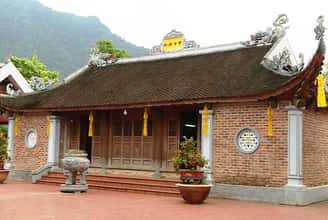
Nam Dau Pagoda
Along with Binh Lam Pagoda and Sung Khanh Pagoda, Nam Dau Pagoda is gradually becoming a destination that is hard to miss for tourists and Buddhists from near and far. This is also a pagoda bearing the mark of national archaeological relics. family. Nam Dau Pagoda is located on Nam Dau hill, next to Lo river, in Nam Thanh village, Ngoc Linh commune, Vi Xuyen district. Having existed for about 600 years, it was confirmed to be present during the Tran dynasty, around the second half of the 13th and early 14th centuries. Through excavations, archaeologists have discovered many relics at Nam Dau Pagoda, some of which are only found in Thang Long Imperial Citadel, or in large and important royal buildings, including relics discovered for the first time in Vietnam and in the Northern Mountainous Border region such as: Double-sided sword heads embossed with dragon shapes of quite large size, decorated statues of dragons, carp, lovebirds, etc. spectacular. Along with the relics, the decorative architecture of the pagoda further affirms its significance and importance in having a great influence on the development of Buddhism in the border mountainous region of Ha Giang. Venerable Thich Duc Chung, Abbot of Nam Dau Pagoda, said: Nau Dau Pagoda is a pagoda that fully converges the elements of feng shui and aura. The pagoda's presence here has eliminated many consequences for the people. , avoid superstition, everyone can go to the temple to worship Buddha and chant sutras. Listening to monks and monks preach the Buddha's teachings, thereby knowing how to unite, love, support each other, aim for goodness, and develop the economy together... Completed renovation and renovation in 2007. The beauty of the pagoda is imbued with the culture of the Tran Dynasty in particular and Vietnamese Buddhism in general, created from the blend of historical, spiritual and cultural values. unique cultural and artistic value. Today, Nam Dau Pagoda plays an important role in local life while contributing to the goal of developing spiritual tourism culture in the province and district. In 2009, Nam Dau Pagoda was recognized by the Ministry of Culture, Sports and Tourism as a National Monument. Associate Professor, PhD. Duong Van Sau, Former Head of the Faculty of Tourism, Hanoi University of Culture, shared: Vietnamese feudal dynasties always emphasized preserving the territory, and knew how to use spiritual and religious tools. religion and belief to protect the territory of the Fatherland. Blend with local religion to develop together. It can be said that this has been and will become one of the bright spiritual and cultural destinations of Vi Xuyen tourism. And this is the right direction of Ha Giang province in general and Vi Xuyen district in particular in terms of tourism development in the coming time... Located in the ancient pagoda system of Vi Xuyen district, Ha Giang province, with unique values, Nam Dau Pagoda not only creates a unique relic area, suggesting to generations many things about the history of a region. border land but also attracts a large number of tourists from all over to make pilgrimages and visit scenic spots, becoming a famous spiritual tourism destination of Ha Giang. Source Ha Giang province electronic information portal
Tuyen Quang
6541 view
Rating : National monument
 AI Travelviet