
 vn
vn en
en ja
ja ko
ko zh
zh

















List of relic sites (128)

Hoang Hoa Tham historical relic site
Hoang Hoa Tham historical relic site is located in Phon Xuong town, Yen The district, Bac Giang province. This place is associated with the resounding victory of national hero Hoang Hoa Tham - the brown-shirted leader - who together with the people of Yen The raised an uprising flag against the French colonialists nearly 30 years (1884 - 1913). This is the largest and longest peasant uprising in the history of our Vietnamese nation against foreign invaders before the Party led it. The historical and cultural relic site of the Yen The peasant uprising has created a complex of historical relics of great value. With 23 relic sites, most of them are forts, communal houses, temples, pagodas and shrines spread across 4 districts (Yen The, Tan Yen, Viet Yen and Yen Dung). The Yen The uprising relic site is convincing evidence of the brave spirit and sacrifice of the De Tham insurgent army to regain independence and freedom. To recognize and honor those special values and meanings, on May 10, 2012, the Prime Minister signed Decision No. 548/QD-TTg classifying the relic as a special national monument. Yen The district has 9 points including: Phon Xuong fort, Ho Chuoi fort, Leo pagoda, Dinh Thep communal house, Thong pagoda, Hom fort, Thien Thai cave, Cau Khoai temple and The Temple. Among them, the center of the uprising was the Hoang Hoa Tham historical relic site in Phon Xuong town, Yen The district, Bac Giang province. 1. Oath Temple In front of us is the Oath Temple. The temple was built in the late 19th century using thatch, bamboo, and leaves. In 1897, when the second peace between the French colonialists and the Yen The insurgent army took place here, De Tham repaired the temple with ironwood architecture as we see today. This architecture is still fortunately still intact. After being renovated, De Tham often used this place to hold festivals to improve the spiritual life of the people. In particular, he often used this place to recruit insurgents and recruit talented people. Before each battle, he often had the insurgents gather to drink bloody wine and swear oaths here. In May 2012, the Prime Minister signed a decision to recognize 23 relics of the Yen The uprising as special national historical relics and The Temple as one of 23 special national historical relics. there. 2. Hoang Hoa Tham Monument Located right behind the The Temple is the monument of national hero Hoang Hoa Tham. The statue was initially made of concrete, then changed to bronze in 2013, created by author Anh Vu - a member of the Bac Giang Province Literature and Arts Association in 1984. The statue is 5.07m high, surface area 31m2, average thickness 2.0cm; The statue's pedestal is 2.1x2.1m in size, 0.32m high, surface area 7m2, average thickness 2.5cm. The statue weighs over 7 tons of solid bronze, with a value of over 4 billion VND, and most of the money for making the statue came from socialization. 3. Yen The Uprising Exhibition House The next item in the relic site that any visitor cannot help but visit is the Yen The Uprising Exhibition House. The exhibition house was built in 1984 and initially had a 1-storey architecture. It was later built and remodeled and has the 2-storey architecture it has today. The first floor displays an ethnographic corner of Yen The district. The second floor displays images and artifacts of the Yen The uprising, the most typical, largest and longest spontaneous peasant uprising of our nation in the late 19th and early 20th centuries ago. when the Communist Party of Vietnam was born. 4. Phon Xuong Fort Phon Xuong Fort, also known as Don Go, Don Cu, was built in 1894, guarding the only road leading to the insurgent base. This is the main headquarters of the Yen The insurgent army, the capital of the uprising, the starting place to expand the movement to localities. De Tham built Phon Xuong Fort as both a place to live and live for De Tham's family as well as for the insurgents, and at the same time it was also a meeting and discussion place between De Tham and contemporary heroes to discuss matters. fought the enemy to save the country (like Phan Boi Chau, Phan Chu Trinh, Le Van Huan, Nguyen Dinh Kien, Ky Dong...). In particular, this is where the second peace settlement between the Yen The insurgent army and the French enemy took place. After the uprising ended, Yen The people built the temple of Ba Ba - Hoang Hoa Tham's third wife in Phon Xuong station to commemorate her great contributions in the uprising. 5. Yen The Festival Yen The Festival is held on March 15, 16, 17 every year. This is one of the biggest festivals of Bac Giang province. The festival is an opportunity for people to express their respect and remember the merits of Hoang Hoa Tham, a talented general, the supreme leader of the Yen The peasant movement and the insurgent army who fought against the French colonialists. In 2013, Yen The festival was recognized by the State as a national intangible cultural heritage. SOURCE: Bac Giang Tourism Information & Promotion Center
Bac Ninh
3951 view
Rating : Special national monument

Dinh Huong mausoleum
Dinh Huong Mausoleum was built in 1727 (18th century) in the mausoleum to store the body of Duke La Quy Hau. He was born in 1688 locally. In 1730, during the reign of Le Duy Phuong, he was appointed as a military servant, a military guard, and then a eunuch. During the reign of Le Y Tong, he was sent twice as envoy to the North, in 1735 and 1739. In 1740, during the reign of Le Hien Tong, he led troops to suppress rebellions in the areas of Kinh Bac, Son Nam, and Hai Duong. He died on the 9th day of the 6th month in the year of the Snake (1749), at the age of 61. In 1754, the king appointed him the title of Phuc Than Loyal Great King. In particular, the mausoleum was built by the Duke himself in his hometown when he was still alive. Dinh Huong Mausoleum is located on a circular hill, about one hectare wide, surrounded by laterite walls (recently renovated). The architectural layout of the mausoleum consists of three main parts: the burial part in the middle, the worship part on the left, and the stele part on the right. The stone mausoleum is about 100 square meters built of square laterite. In front of the tomb are two mandarins leading horses standing facing each other. The pair of statues of mandarins leading horses are considered masterpieces of stone carving art. The military officer wearing a sword and leading a horse on the right side has a big face and wide jaw. The military officer carrying a sword and leading a horse on the left side has a long beard and small face. The entire statue's shape is elaborately carved to exude an extraordinary, dignified appearance. Coming to Dinh Huong Mausoleum, visitors will admire the worship area, which is also built square like the burial area, with walls made of laterite, steps built in front, a stone collapse on top, an altar throne, and on both sides there are statues of maids. The casket and the couple lie prostrate. Below the altar is an incense burner, a stone table, and a pair of goats sitting with their heads facing each other across the Shinto path. In the distance, a pair of elephants knelt down and prostrated themselves. On the right side of the grave is a stele house with 4 arched rolling doors, inside is a stone stele recording the merits of the person being worshiped. The inscription says that the stele was created in 1729. Overall, the materials used to create the artistic architectural work of Dinh Huong mausoleum are mainly green stone, finely chiseled and trimmed with fire cloud motifs, high-embossed spiral clusters, and interlocking geometric patterns. hooked together and posted oppositely. What is most unique about this architectural work is the art of carving round statues in a realistic style with a naturalistic tendency. Statues of people and animals at the mausoleum are made of green stone, carved very vividly. The statue is large in size, fat, sturdy, and meticulously trimmed. It can be said that this is a massive architectural work, elaborately carved in stone with skillful craftsmanship. The mausoleum complex is a typical first-class stone art sculpture in Bac Giang province. The antiques in the mausoleum are preserved relatively intact Tourists visiting Dinh Huong Mausoleum will be fascinated by the stone sculpture art of ancient artisans. The highlight and unique feature of Dinh Huong mausoleum are the massive statues, much larger than those in other mausoleums, delicately carved. According to statistics, in Bac Giang, 46 ancient stone structures have been discovered and recognized, mainly stone mausoleums. The stone mausoleum system is proof of the art of tomb sculpture that has developed to its peak and holds an important position in the architecture and ancient stone sculpture of Vietnamese mausoleums. These are truly the quintessence of ancient sculpture, with sophistication expressed in every line on the statues. Artifacts and stone statues also contribute to increasing the historical value and cultural and artistic value of ancient mausoleums. Dinh Huong Mausoleum is a place to honor the nation's architectural tradition of stone sculpture, clearly shown in the art of sculpting statues of people or sacred beasts and worshiping objects, as well as rich architectural decorations and life-style patterns. The cave is truly typical of ancient Vietnamese stone sculpture art. With values of cultural history and typical architectural art, Dinh Huong mausoleum has been attracting tourists to visit. SOURCE OF BAC GIANG TOURISM
Bac Ninh
3477 view
Rating : National monument

Phu Lao Communal House
Phu Lao Communal House in Phu Lao village, Dao My commune, Lang Giang district, Bac Giang province. Despite many years of war, devastation from sun and rain, and deterioration due to many renovations, Phu Lao communal house still retains the basic features of an ancient Vietnamese communal house, especially the about art and architecture. Phu Lao Communal House was built in 1688, during the reign of King Le Chinh Hoa the 15th. Phu Lao Communal House was built on a campus of more than 1,500 square meters at the beginning of the village, looking to the Southeast to worship Duc Cao Son - Quy Minh who are the kings. Famous generals of the Hung King period were instrumental in suppressing the enemy and defending the country. These are famous generals whose temples were built in many places in the Northeast region to honor those who contributed to the village and the country. They were ordained as superior gods by many dynasties and were classified as Gods of Goodness, eliminating evil, eliminating evil and protecting good people. At the same time, the communal house also worships General Cong Dao and Lady Quy Thi, local people who passed the exam to become mandarins, and donated money to build a communal house to merit the village. Phu Lao communal house is located on a high, open, beautiful strip of land at the beginning of the village, the back of the communal house is built outward, the communal house's face faces the village, hidden under the cool green banyan shade, reflecting on the clear water wharf. In front of the communal house's door, there is a large, semi-oval pond and the communal house's yard is large and flat. The newly built altar house consists of three small rooms. In the back yard of the altar there is a four-sided stele, built in the 15th year of Chinh Hoa (1694), composed by Dr. Hoang, talking about his contribution to building the communal house. Ms. Dao Thi Hien. The communal house has four high, wide roofs, the roof is covered with bai-shaped tiles. The great hall consists of seven compartments, 23m long, 12m wide, with 8 trusses, 6 rows of columns, 48 columns. The trusses are structured in a way that overlaps the beams and gongs, combined with stripes at the four corners. The four middle columns have four panels running nearly the entire room, creating four large decorative panels. The four sides of the pavilion still have traces of paneling and are surrounded by a table door; All rooms have floors. Except for columns, rafters and diaphragms, other wooden architectural structures such as wooden poles, corbels, planks, stripes, pillars... are carved with many shapes reflecting aspects of village life. With its unique architectural and wood carving art values, since 1982 Phu Lao communal house has been recognized by the State as a nationally ranked historical relic, after being restored twice to prevent deterioration. , most recently in 2011, up to now, the state, party committees, authorities, social organizations, especially Buddhists everywhere have contributed to building relics that are getting better and better, in order to preserve the relics. the unique cultural values of our ancestors for our descendants for generations to come. SOURCE World Heritage e-magazine
Bac Ninh
2982 view
Rating : National monument

Listening to battles - a mark of the Le dynasty
Nghe Battle relic is located on a hillock, about 1.2 km southeast of Kep town center (Lang Giang district). Distance from city center. Bac Giang is about 20 km to the Northeast. With a total area of 1,143.2 m2, Nghe Battle is a historical and cultural relic of the people and locality of Kep Village, Can Dinh commune, Can Dinh canton, Bao Loc district, Lang Giang district, Kinh Bac region. Now belongs to Kep 11 and Kep 12 villages, Huong Son commune, Lang Giang district. Currently, Nghe Trien has an architectural plan in the style of Dinh with 03 pre-worship spaces connecting 02 back palace spaces. Mr. Nguyen Quang Tho, 84 years old, in Kep 11 village, Huong Son commune - Head of the Subcommittee for the Management of Nghe Trien historical and cultural relics, said that according to ancient legend, Nghe Truong worships the two generals Trung. When the Can Tram battle was fierce, many insurgents and generals died in this area. People set up a altar to worship the souls of the insurgents and generals, from which it was called "The Battle". Currently, the remaining relics and artifacts are preserved in relics such as: the holy palanquin of the Le Dynasty (18th century); Phu Lang ceramic incense bowl (19th century); 02 ancient statues of the Nguyen Dynasty (20th century). The altar thrones, statues, incense bowls, bronze bells, flower vases and other worship objects prove that Nghe Battle was built in the 18th century. Located in the relic complex of Can Tram citadel (Kep town, Lang Giang district) associated with our people's resistance war against the Ming army in the early 15th century. Nghe Battle is an ancient cultural and religious historical work. , a long time ago (18th century) with important historical and cultural significance for the people and localities in the region. During the resistance war against the French colonialists in the period 1946-1947, the French enemy bombarded the area of Kep village, Nghe Truong was also destroyed and damaged, local people many times contributed money, contributed to repairing and renovating. The project has been degraded after many centuries of use. People and local authorities at all levels have repeatedly contributed effort and money to invest in renovation and repair. The main milestones were in 1991 and 2006, investing in repairing a number of items and rebuilding 02 halls of the harem court. In 2019, building 03 new, beautiful and spacious halls of the pre-worship court. In 2009, Nghe Battle was ranked and recognized as a provincial-level historical and cultural relic by the People's Committee of Bac Giang province (Decision No. 1587/QD-UBND dated September 17, 2009). Contributing to enhancing the meaning and value of history and traditional culture of the people in the region and serving tourists who come to study and visit increasingly developed tourism. SOURCE Bac Giang Tourism Information & Promotion Center
Bac Ninh
3408 view
Rating : Provincial level relics

ATK2 Hoang Van area
Hoang Van Safety Area is located in Hiep Hoa district, Bac Giang province, 35km west of Bac Giang city. This is one of the loyal revolutionary bases, where many Party leaders worked before the August 1945 revolution, and where the Central Party Central Committee's Tonkin revolutionary military conference took place in April. /1945 chaired by General Secretary Truong Chinh to prepare for the revolutionary armed uprising to seize power in August 1945. Here you will be introduced to an overview of the Party's revolutionary base in the pre-uprising period, and visit some historical revolutionary relics of ATK: the place where the Party's revolutionary political training class was opened in the pre-uprising period. , where the revolutionary military conference of the Party Central Committee took place, visited Van Xuyen communal house in the "Red hamlet", a place associated with many revolutionary events in the locality, visited Y Son temple and mountain in Hoa Son commune, sightseeing and listen to an introduction to the history, architecture, precious relics of the temple, burn incense for luck, fortune, and wealth at the Temple. SOURCE: BAC GIANG DEPARTMENT OF CULTURE, SPORTS AND TOURISM CENTER FOR INFORMATION - TOURISM PROMOTION
Bac Ninh
3213 view
Rating : Special national monument

Document of Tho Ha village
The Tho Ha village document was built in the 17th century (according to the preserved stele, it was built in the 5th year of Vinh Thinh, 1680) to worship Confucius, Tu Phoi, 72 sages..., this place is considered is the cradle of Tho Ha education. This is also a place that attracts a large number of tourists, especially during the exam season, when scholars come here to burn incense and worship with sincere hearts. In particular, Tho Ha village has no fields, only residential land with an area of 20 hectares and a population of nearly 3,800 people. With such natural and social conditions, right from the village's founding, the people here chose a suitable profession to exploit many advantages. The chosen profession is pottery. It is the pottery profession that has created a bustling and famous Tho Ha. The village has been the most important ceramic center of the Northern Delta for several hundred years, next to Phu Lang and Bat Trang. Ancient Tho Ha pottery did not use glaze, that magical flexible clay was fired until the glaze spontaneously melted, clinging to the surface of the pottery in a shiny brown color, smooth as velvet, cool. The village only makes household ceramics, jars, small clay pots, and rice bowls that were famous at one time. The surface of the ceramic is dark purple, hard, and makes a sound like hitting cold steel. The remaining pieces of ancient pottery on the walls are still intact, and that's why the ceramic soul seems to linger forever. Along with pottery, rice paper making, noodle making, rice paper making, wine making, confectionery making, and services have also developed in Tho Ha, the village is often called a "multi-craft village". These occupations have created a new look for the village, through which we can see the boundless diligence and creativity of the people here. As a rich traditional craft village for hundreds of years, this place also has the interference of many unique cultural features of regions throughout the country. Among them, the most special are festivals with many traditional cultural activities such as: singing traditional opera, singing Quan ho, playing Chinese chess, cockfighting, table tennis... Ancient beauty with ancient architectural areas, ancient villages, unique culture along with traditional crafts imbued with the soul of the countryside, Tho Ha has been a familiar and attractive address for domestic and foreign tourists to visit. mandarin SOURCE: BAC GIANG PROVINCE ELECTRONIC INFORMATION PORTAL
Bac Ninh
2950 view
Rating : National monument

Dinh Lo Hanh
Dinh Lo Hanh Lo Hanh communal house is the common communal house of 5 villages: Cham, Chung, Khoat, Chua and Hanh, so it is also called Ca communal house. The communal house was built in the 11th year of Sung Khang (1576), worshiping Cao Son Dai Vuong and Phuong Dung Tien Chua - two gods who had meritorious services to the country and people during the time of King Hung. Lo Hanh Communal House has unique cultural value with sophisticated and unique carvings of dragons, phoenixes, deer, flowers, and scenes of human activities. Currently, the communal house still preserves many precious relics such as: two lacquer paintings of "The Eight Immortals" in the middle space in front of the harem door, a pair of 17th-century lacquered and gilded wooden chairs, a statue of Phuong Dung Tien Chua and the Cao Cao tablet. Son Dai Vuong..., especially the carving of a fairy strumming a bottom instrument - a testament to the birth and early development of Ca Tru in Vietnam. Initially, Lo Hanh communal house only had a large communal house shaped like the word "first". Through many renovations in 1694, 1850 and 1910, the communal house was built with a harem and two rows of left and right vu. The floor of the great communal house is 23.5m long, 12.3m wide, the height from the roof beam down is 6.6m, from the roof edge down is 2.1m; includes 5 compartments, 2 wings with 8 rafters, 4 main rows of columns and 2 rows of porch columns supporting under traps. The trusses have different structures, the middle rafters are all made in the style of "stacking beams and gongs", the side rafters are made in the "one who spreads gongs" style. On December 24, 1982, Lo Hanh communal house was ranked as a historical relic by the Ministry of Culture (now the Ministry of Culture, Sports and Tourism). SOURCE: DISCOVER VIETNAM TOURISM IN BAC GIANG PROVINCE
Bac Ninh
3326 view
Rating : National monument

BECOME A THEATER OF THEATER
The citadel of the Mac dynasty was built with soil from the late 16th century, running from South to North from Bao Dai mountain, passing Mount Ai (Dong Phu), along the north side of the mountain, running into Trai Mit area (Tien Nha) and then feeding into Luc Nam river, across the bank. On the East side, run into the land of Vuon village, Ho Nuoc village, into the Han Lam temple area (Nghia Phuong), then stop at the foot of Mang mountain in the Huyen Dinh - Yen Tu range. The Mac Dynasty Citadel runs across the Luc Nam River valley for about 18km, and is a relic of ancient military talent. During the Le Trung Hung period, many ancient architectural works such as communal houses and pagodas were left in Bac Giang, such as Tho Ha communal house, Huong Cau communal house, Dong Lam communal house, San communal house, Than communal house, Dan Hoi communal house, Ha My communal house, and Ha My communal house. Bao Son, Gai communal house, Trung Dong communal house..., Te pagoda, Trung An, Non village, Kham Lang, Trang pagoda (Dong Phu), Vuon village (Cuong Son), Hui village (Dan Hoi)..., Hiep ancient stone mausoleum system Hoa, Viet Yen, Tan Yen. During the Tay Son period in Luc Nam, there was also the Ria communal house (Dong Phu) with the date of creation: Hoang Trieu Bao Hung's second year of creation (i.e. Bao Hung's reign, year 2 - 1802). Modern times clearly marked relics in the relic system related to the Yen The peasant uprising. During the anti-French and anti-American period, Bac Giang had the Mai Suu Military Training Center, the location where American planes were shot down in Duong Huu and Nghia Phuong communes. SOURCE: BAC GIANG DEPARTMENT OF CULTURE, SPORTS AND TOURISM CENTER FOR INFORMATION - TOURISM PROMOTION
Bac Ninh
3073 view
Rating : National monument

Forbidden Forest Communal House
Forbidden Rung Cam Communal House in Phe village, Van Son commune is a place to worship the hero of the 11th century Song Dynasty - the concubine Than Canh Phuc who married Princess Thien Thanh, son of King Ly Thanh Tong, and is a place for cultural and religious activities of the people. Tay ethnic group in Van Son region. Forbidden Forest Communal House is located on a land with a beautiful terrain, in the middle of a field, with ancient trees providing shade, in front of the Communal House is the Champa Nam stream that leads the water flowing around it; The current forbidden forest communal house has a 3-compartment vestibule, 1-compartment harem looking to the East. In the temple, there are still 4 stone legs and a yin-yang stone of great value in scientific research and discovery. understand the history of local monuments. Every year, people hold a festival on the 11th day of the third lunar month with sacrifices and incense offerings to commemorate the merits of the Village God who has contributed to the people and the country. With historical and cultural values, on December 7, 2021, the People's Committee of Bac Giang province issued Decision No. 2499/QD - People's Committee ranking Forbidden Forest Communal House as a provincial-level historical and cultural relic in 2021. At the ceremony, authorized by the Chairman of the Provincial People's Committee, leaders of the Bac Giang Provincial Museum and the District Department of Culture and Sports awarded the Provincial-level relic ranking certificate of the Forbidden Forest Communal House to the Party Committee, authorities and people of Van commune. Paint. SOURCE: SON DONG DISTRICT ELECTRONIC INFORMATION PORTAL
Bac Ninh
3142 view
Rating : Provincial level relics
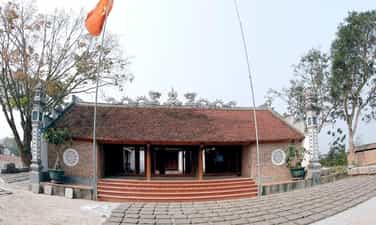
Relics of communal house and Lan Tranh pagoda
Lan Tranh communal house and pagoda formerly belonged to Lan Tranh commune, Tuy Loc Son district, Yen The district, Bac Giang province. Nowadays, Lan Tranh communal house and pagoda belong to 3 villages (Lan Tranh 1, Lan Tranh 2, Lan Tranh 3), Lien Chung commune, Tan Yen district, Bac Giang province. Before the August Revolution of 1945, Lan Tranh village was also Lan Tranh commune of Tuy Loc Son district, Yen The district, Bac Giang province including 3 villages: Middle village, Lower village, Upper village. After the August Revolution of 1945, the general level was eliminated. In 1957, Tan Yen district was established, this place belongs to Hoa Binh commune. In 1973, the name was changed to Lien Chung commune. Based on the current status of the relic, documentary sources of artifacts and worship objects in the relic show that Lan Tranh communal house was built during the reign of Le Trung Hung (around the 18th century). During the resistance war against the French, in 1946, people donated some bronze and wooden worship objects to the revolution, so the communal house was no longer intact as before. Up to now, the people of Lan Tranh village have restored the communal house using old materials and artifacts. Communal houses and pagodas are arranged in the style of "Before the gods, then after the Buddha" (the communal house first, the pagoda later). The relic has the ancient beauty of the architectural works of Le Trung Hung's reign and has historical and cultural value. During the years of resistance against the French colonialists, Lan Tranh communal house and pagoda were also a place to develop self-defense forces, protect revolutionary cadres, and store food to serve the resistance. During the resistance war against the Americans, communal houses and pagodas were where Ke prison camp was evacuated. Based on the current status of the relic, on documentary sources and artifacts such as horizontal panels, couplets, worshiping texts, orations, worship objects... contained in the relic and the respectful worship of the people of Lan Tranh village for You know, Lan Tranh communal house worships Cao Son and Quy Minh gods. The communal house is located on a turtle-shaped mound at the edge of the village, in a quiet space, overlooking the south and east. In front of the communal house is a large field and on the left is the winding Thuong River. Surrounded on 3 sides are densely populated residential areas, creating a landscape that is both quiet but warm with a village and countryside feel. Going through the village road, we turned into the large land and entered the communal house yard. The communal house's yard is spacious and square. To the right of the communal house is a large soccer field, formerly the communal pond. Lan Tranh Communal House has a layout in the shape of the letter Nhi, including: the front hall and the back palace. Go through the courtyard to enter the altar hall. This building has a straight roof, with a picture of two dragons flanking a moon on top. The two gables are built in the style of a stepped three-mountain throne. In front of the front gable are two bronze pillars with two parallel sentences written on them. The front altar has 5 compartments, 2 shelves, and paneled doors. The size of each compartment is 2.5m wide, the two ends are 0.5m wide. The height from the ground to the roof of the house is 4.25m. This building has 5 compartments, 6 floors and 5 rows of pillars. The main column is 3.55m high, the military column is 2.7m high, and the porch column is 2.15m high. The architectural structure of the altar building follows the traditional style of lines and gong stands. The harem building has a 2-vaulted space, in the middle there are two gables guarding the wall and 3 rows of pillars made of 6 pillars. Each compartment has a width of 2.4m, the height from the ground to the roof of the harem is 3.50m. The distance between two main columns is 1.5m. The sculptural art of Lan Tranh communal house is concentrated in architectural structures. That is the system of column bases, architectural structures, walls, cocks, ends, traps... On the ends of each column are engraved beautiful curling symbols, expressing the wishes of the Vietnamese people. Nam wants to pray for good weather and a prosperous life. In particular, the communal house has a system of large, strong and sturdy pillars, and the joints and paths are all fitted together, creating a strong, elegant, and poised appearance. That confirms the creative talent of ancient artisans, to have a large, beautiful and majestic architectural work for us today. SOURCE: ELECTRONIC INFORMATION PORTAL OF CANH THUY COMMUNE - YEN DUNG DISTRICT - BAC GIANG PROVINCE
Bac Ninh
3119 view
Rating : National monument

Khuon Than Tourist Area
Khuon Than Forest has an area of about 800 hectares, including 300 hectares of natural forest and 500 hectares of planted forests, regenerated forests and grasslands. Khuon Than Lake is 240 hectares wide, surrounded by lush pine, cajuput, and acacia mangium forests all year round. The lake bed has 5 small islands, which are upturned hills rising in the middle of the blue water. The islands are all planted with pine trees that are 15 - 20 years old. Khuan Than is also famous for its fruit farms and orchards as far as the eye can see, Tu Ma temple worshiping famous generals of the Tran Dynasty, which has been classified as a relic by the State, and many traditional cultural beauties of ethnic minorities such as : San Chi, Cao Lan, Nung, Tay… Coming to Khuon Than, visitors will have the opportunity to explore the "green lung of Luc Ngan region" with 5 pine islands that are green all year round, and at the same time cruise on the lake, admiring the scenery of clouds and water. In particular, during the rainy season, visitors can observe water flowing from the top of Khuon Than dam rushing down into the valley along the lake. Visitors to Khuon Than can not only roam the lake by boat but also visit lush green orchard farms as far as the eye can see. This is also the place to reside, nurture and preserve the unique cultural values of ethnic minorities such as the San Chi, Cao Lan, Tay, Nung people... Coming here, visitors will have the opportunity to enjoy the incense. The sweet taste of specialties: honey, gecko wine, chestnuts, lychees, persimmons, custard apples... of ethnic minorities such as Kinh, Cao Lan, Tay, San Chi, Nung. Especially worth mentioning is the fish dish. Anyone who has ever enjoyed grilled goby fish on a charcoal stove of the ethnic people here will never forget it. If those who like wild "fairyland" scenery can visit the floating islands, which are bowl-shaped hills rising in the middle of the lake. The quiet, peaceful, lyrical space is very suitable for intimate stories on the green grass... under the rows of pine trees swaying in the cool breeze. When you feel tired, you can immediately see the hammocks swinging under the trees in the longan garden. You can lie in a hammock and enjoy the rich sweet flavor of ripe lychee bunches. Not only that, coming here, visitors can also visit Tu Ma temple worshiping famous generals of the Tran Dynasty, which has been ranked as a Monument by the State. In particular, if you spend the night here on leisurely agricultural occasions, you will have the opportunity to attend traditional cultural activities with the singing of soong hao, si, luon... that captivate the hearts of the people of the countryside. Ethnic minorities live around the lake area. The most exciting thing is that you don't have to go all the way to Da Lat to hear the whispering sound of pine trees, but you can also discover the wonder of wild nature with trails crossing mountain slopes and winding, clear streams. , meandering. Khuan Than currently has a wild beauty very close to nature, creating a great attraction for all tourists. Although there are no luxury hotels, restaurants, motels with full amenities... visitors will have a comfortable and gentle feeling. On Spring and Summer days, visitors coming here can be relieved of their thoughts and worries. Take a leisurely stroll around the lake, immerse yourself in the vast space of the blue lake surface, silhouetted by clouds and sky, and watch the sunset with a herd of children chasing back herds of buffalo, so charming and romantic. In the fall and winter, visitors can hang out with fishing rods, relax floating on the lake, cozy up next to the fire, enjoy the items they harvest from the wild, and watch people's faces. Quiet water, feel the refreshing wind blowing... Khuon Than Lake is also a very suitable place to build resort centers and entertainment areas with new types, such as boating. , climbing mountains, walking around the lake and visiting ethnic villages... After an exciting and tiring trip, visitors can relax and float on wooden boats gliding on the rolling water. Enjoy the waves, mingle with nature, listen to birds sing, watch the blooming wild flowers, and listen to smooth, loving folk songs. And then, visitors will feel excited and ecstatic, as if lost in the nothingness and fantasy of the vast landscape... SOURCE: BAC GIANG PROVINCE ELECTRONIC INFORMATION PORTAL
Bac Ninh
2979 view
Rating : National monument

Tay Yen Tu eco-spiritual tourist area
Coming to Bac Giang, one of the tourist destinations not to be missed is the Tay Yen Tu ecological spiritual tourist area. This is the final destination in the spiritual tour following the walking path of Buddha Emperor Tran Nhan Tong and his disciples through pagodas and towers along the western slope of the Yen Tu mountain range. Tay Yen Tu Spiritual - Ecological Tourism Area is located in Tay Yen Tu town, Son Dong district, Bac Giang province, about 140km northeast of Hanoi. From Hanoi, you travel along the Hanoi - Bac Giang highway. When you reach the Bac Giang City intersection, turn right onto Provincial Road 293 - West Yen Tu Road (also known as the spiritual road), follow the signs. Directions about 70km to the Tourist Area. When talking about Tay Yen Tu, we must talk about the Truc Lam Zen sect. Truc Lam Zen sect is a Zen sect with pure Vietnamese philosophy, founded by Buddha Emperor Tran Nhan Tong in the 13th century. Truc Lam Zen sect is the soul of Yen Tu sacred mountain system, it has become the pride of every Vietnamese person. Pilgrimage to West Yen Tu, visitors can admire famous religious relics and feel the peaceful and poetic beauty of Bac Giang land. Yen Tu Mountain is located on the Dong Trieu arc, hugging the northeastern region of Vietnam, the east side mainly belongs to Quang Ninh province, the west side belongs to Son Dong, Luc Ngan, Luc Nam and Yen Dung districts of Bac Giang province. Currently, the West Yen Tu area still retains many historical and cultural relics and works related to religion, associated with the process of building and defending the country of our people, especially during the Ly and Tran dynasties. With a system of pagodas and towers, historical-cultural relics and the magnificence of endless mountains and forests, rich vegetation and many animal species, Yen Tu has created a potential. Together with East Yen Tu of Quang Ninh, West Yen Tu of Bac Giang is coordinated and connected into a unified Yen Tu landscape complex, creating conditions for tourism development and promoting the cultural heritage of our ancestors. leave. Tay Yen Tu tourist area was started construction in 2014 and put into operation phase I in 2019. The favored tourist area is located next to Tay Yen Tu nature reserve with thousands of hectares of primeval forest and many animal species. wild animals. This is an advantage in bringing tourists nationwide different experiences during their visit and pilgrimage to the land of Buddha. The overall planning of the tourist area is divided into 02 functional zones: ecological - spiritual sightseeing zone and ecological - entertainment resort zone. The ecological - spiritual sightseeing area includes main items such as: central square, five elements garden, infinity hill - a system of 10 statues recreating the Buddha's life journey, cable car route, Ha pagoda and Thuong Pagoda. In addition, in this subdivision there are also a number of other service works such as parking lots, air conditioning lakes, streamside restaurants... SOURCE BAC GIANG DEPARTMENT OF CULTURE, SPORTS AND TOURISM CENTER FOR INFORMATION - TOURISM PROMOTION
Bac Ninh
3502 view
Rating : National monument

Thien Thai Cave - Temple of Ky Dong Nguyen Van Cam
Thien Thai Cave - Temple of Ky Dong Nguyen Van Cam Thien Thai Cave is about 35km northwest of Bac Giang city. Before 1945, it belonged to Dong Ky commune, Huong Vy district, Yen The district, now belongs to Hong Ky commune, Yen The district, Bac Giang province. This is a large plantation area in Dong Ky and Hong Ky communes today. Seven magical plantations are arranged like the 7 bright stars of the Big Dipper constellation, including seven zones (or seven camps), including: first camp, second camp, third camp, fourth camp, fifth camp, sixth camp and Dong area. Thien Thai. Thien Thai is the place where the gods live or the fairy realm. Ky Dong created this name to distract the colonialists, making them mistakenly think he came here just to enjoy leisurely travel with mystical and strange illusions, but in fact Thien Thai was the center and the camps gathered. around the region, and at the same time had a close connection with the Yen The insurgent army. These seven camps are arranged along both sides of the road from Dong Ky to Dong Vuong. From here to Phon Xuong - De Tham's headquarters is about 4 km. Thien Thai Cave was originally just a small thatched cottage area built by Ky Dong. Later, the people turned it into a temple to worship Ky Dong (after his death). The temple faces south, located in Trai Nhat, with an inter-commune road in front, next to it is provincial road 398 and the railway connecting Kep intersection (Lang Giang district) with Thai Nguyen province. Behind the temple is the Soi River flowing southwest toward Bo Ha. The temple has a layout in the style of the letter J, including a 5-compartment front hall and a 2-compartment harem. The load-bearing frame structure is made of wood, the roof frame's architectural design is simple, with traditional lines, the gong stand's pillars are smoothed and sharpened, not carved with elaborate patterns, in front of the back of the hall are embossed with the three words Thien Thai cave, the background The temple is tiled with traditional square tiles and has a tiled roof. The temple door is built in an arched shape with 3 doors, the middle door is higher and larger than the two sides, the door is made of wood, table style. The temple is decorated with statues and many other worship objects. Every year, on February 24 (lunar calendar), people in the area and officials of Hong Ky commune joyfully celebrate, offer incense and organize cultural activities to commemorate his merits. With the above historical significance, Thien Thai cave is one of 23 relics belonging to the historical relic system of Yen The uprising sites signed by the Prime Minister with Decision No. 548/QD-TTg dated May 10. /2012 ranked as a Special National Monument. SOURCE ELECTRONIC INFORMATION PORTAL DEPARTMENT OF CULTURE - SPORTS - TOURISM OF BAC GIANG PROVINCE
Bac Ninh
3817 view
Rating : Special national monument

PHUC TANG Pagoda
Phuc Tang Pagoda also has the self-name Sung Quang Tu, located in Phuc Tang village, Tang Tien commune, Viet Yen district, Bac Giang province. The pagoda is located on a plot of land nearly 5,000 square meters, facing south and west, a beautiful direction with many good meanings according to Buddhist teachings. This is an ancient pagoda built by local people with a majestic scale that represents the standards of pagoda architectural art according to the Mahayana sect in Northern Vietnam. The pagoda is a place for traditional cultural activities and beliefs of Tang Tien from past to present. Phuc Tang Pagoda relic is an ancient religious building built a long time ago. Legend has it that the pagoda was built during the Ly Dynasty, in the year of Canh Ngo (1630). Lord Thanh Vuong Trinh Trang led the effort to restore the beautiful and spacious ancient pagoda on a large scale. During the Le and Nguyen dynasties, the pagoda was restored and embellished many times. According to the stone stele still kept at the pagoda, it is known that Phuc Tang Pagoda was built during the reign of King Le Than Tong, in the 3rd year of Duc Long (1631). There is Sung Quang Pagoda, a famous fairy tale place, in front there is a large mountain range with beautiful shapes, and behind Huyen Vu there are winding green mountains. The left dragon fruit guides the water stream like a strip of silver flowers surrounding it. Right next to the white tiger, the green mountain range looks like a jade pen stand, in the middle opens up a bright, sacred Buddha land, where the people of the country often come to pray for a long time, very sacred fulfillment...". With a total area of nearly 5,000 square meters, the temple's architecture includes: temple yard, front hall and upper palace. The temple gate is built of bricks. The unique feature of Phuc Tang Pagoda's architecture is that it is designed in a stack of matches style, a rare ancient architectural style. The front hall of Phuc Tang pagoda was built with 5 compartments and 2 wings, a two-story structure in the style of stacking matches, in front is a barred door. The load-bearing system is made of ironwood with 8 rows of pillars, the architectural structure is in the style of stacking matches, gong pillars, front and back, and seven. The components are made of strong and strong quadrangular wood, smooth planed, sharpened, with edge and thread interstices. On the top and armpits of the temples, there are embossed patterns of chrysanthemum leaves, twisted patterns and clouds. The rafters are linked together by a system of upper, middle and lower beams and a system of diaphragms and rafters. In the front hall, there was a stele placed on top of the stone dragon. The stele has the era name: Three years of the Imperial Dynasty of Duc Long. The upper hall of Phuc Tang pagoda was built right behind the front hall, creating a mallet-shaped architectural plan (J). Inside the upper hall, worship objects and a system of Buddha statues are placed. The layout is spread out on platforms (pedestals) built of bricks covered with mortar, whitewashed and a system of pedestals made of wood that are very elaborately crafted... The carving art of Phuc Tang Pagoda is shown quite clearly and delicately in three decorative carvings on the rafters in the upper palace. The first painting was created because in the middle there is a carved image of a fairy riding a hidden dragon, appearing in the clouds mixed with stylized patterns of birds, flowers and leaves. The second carving decorates the right side of the upper palace, created very beautifully and delicately with animal shapes such as bird motifs and stylized lotus shapes... these are very vivid decorative themes, expressing the Sophisticated, everyday life. The carving on the left is also beautifully and perfectly carved with decorative themes: tigers, birds, bats, fish and stylized flowers... fish shapes are created in the style of the theme "Ly Ngu Vong Nguyet", Tiger posing for prey, bird incubating eggs, bat sleeping... All three of these carvings are truly unique, delicate and highly aesthetic works of art. Over time, due to the impact of natural conditions and the ups and downs of history, Phuc Tang Pagoda has also lost and destroyed many items, no longer intact as before. However, the pagoda still retains many precious documents and artifacts of typical cultural, historical and architectural value such as: 01 stone stele created in the reign of King Le Than Tong, reigning as Duc Long 3 (1631), 01 stele created in the 3rd year of Vinh Huu (1737), 03 delicate wood carvings and a system of statues and worship objects... With typical and unique values in terms of artistic architecture, in 2003, Phuc Tang Pagoda was ranked by the Provincial People's Committee as an Architectural - Artistic relic. In 2011, the pagoda was ranked as a national monument by the Ministry of Culture, Sports and Tourism. SOURCE: ELECTRONIC INFORMATION PORTAL OF VIET YEN TOWN, BAC GIANG PROVINCE
Bac Ninh
3015 view
Rating : National monument

Ly Cot relic cluster
The cluster of communal house, pagoda and village relics in Ly Cot, Phuc Son commune, Tan Yen district is the place for cultural and religious activities of the people of 4 villages of Luong, Tram, Ly Cot and Dai Son. Among them, Ly Cot communal house is located on a high hill, facing the Vang plain, where the god Cao Son, King Quy Minh and Saint Tam Giang are worshiped; Nghe An worshiped Nang Gia Dai Than (female general of Hai Ba Trung Dynasty), the Le - Nguyen dynasties ordained her as "great mandarin" so her compound name was Nang Gia Dai Than. According to some documents, Ly Cot communal house was built during the reign of Le Trung Hung (17th - 18th centuries). Previously, the communal house was very grand, including 5 front worship rooms, 3 back palace rooms, two banh vu buildings, curved blades, curved roofs, the entire structure was made of ironwood, but due to time it was dilapidated, after many restorations. The people have firmly restored it to its current form with 3 rooms, 2 wings and 1 harem, architectural structure in the shape of a nail (J), the upper door has two lower panels, here are still kept tablets, altars, post banh and some ancient relics of the Le-Nguyen period. In particular, people in the area still circulate the legend that: Nang Gia's real name is Duong Thi Gia, from Chuong village (Nha Nam). During the time when Hai Ba Trung fought against the Han army (AD 40), Nang Gia gathered forces of patriots in the region to stand up against the enemy and preserve their homeland. Then from here her army marched to Me Linh to join the ranks of the Hai Ba Trung insurgent army. She was appointed a female general and accomplished many glorious victories. There was a time when Mrs. Gia sent her troops to the Dot mountain area (Yen Ly commune) to wait for a favorable opportunity to attack the enemy. The insurgents had to taste honey from thorns and eat cold foods like rice balls and bamboo-tube rice, and the people did not go to the fields. to wait for orders to fight the enemy. Dot Mountain is located at the northwest tip of Tan Yen district, with an altitude of 121.8 m, the highest point in the district and also the boundary between the two provinces of Bac Giang and Thai Nguyen. In a fierce battle, because of her weak force, she was defeated. Even though she was injured, she still single-handedly broke through the enemy's siege to return home, to Dot Mountain next to Ha well (Ly Cot village, (present-day Phuc Son commune), I committed suicide, this area still has her grave. To commemorate Nang Gia's merits, people in the area established a village to worship and take the 8th day of the 4th lunar month (her death anniversary) as the village custom. On this day, the people of the above 4 villages have the custom of "banning fire". and "field ban" whereby no one goes to the fields, no one lights a fire, but only eats cold dishes, rice balls, and sacrificial cakes cooked the day before. There is a folk saying: Tram, Luong, Ly Cot, Pham, Giang April, the eighth anniversary of the fairy's death It is known that Chuong village communal house (Nha Nam, Tan Yen) also worships Lady Gia Dai Than. Therefore, since ancient times, Ly Cot and Nha Nam have made a pact to accept each other as brothers, to help each other in times of trouble and hardship, and from generation to generation they follow the ancient rules. People in the area often say "Ly Cot Communal House, Nha Nam Column" to affirm the attachment and solidarity between the two villages. Ly Cot communal house's festival is on the 14th of the first lunar month and the 8th of the fourth lunar month. On this day, solemn processions and ceremonies will be held, especially offerings, the procession must include black chicken, black sticky rice, and black parasols. On this day, people in the area have the custom of "banning fire" and "banning bronze". Starting from the 7th, preparations for the anniversary of Nang Gia's death must be completed. By the 8th, no one is allowed to go to the fields to work, no family is allowed to cook, and every family holds an incense burning ceremony to commemorate. Along with that, there are folk games such as wrestling, tug of war, cockfighting, Chinese chess, blindfolded pot beating, quan ho singing... attracting a large number of people in the area to attend. With those cultural values and meanings, in 2004, the cluster of Ly Cot communal houses, pagodas, and villages relics and Nang Gia tomb were ranked as provincial-level historical and cultural relics. In 2005, the communal house received financial support from the State to invest in repairing and embellishing it to make it more spacious and good. Related to the belief of worshiping the great goddess Nang Gia, there is also Chuong village communal house in Nha Nam town. Another legend says that Ms. Duong Thi Gia was from Chuong village, Nha Nam but heroically sacrificed herself on Dot mountain, so both places built communal houses and worshiped her. SOURCE: ELECTRONIC INFORMATION PORTAL DEPARTMENT OF CULTURE - SPORTS - TOURISM OF BAC GIANG PROVINCE
Bac Ninh
3187 view
Rating : Provincial level relics

TEMPLE OF DOCTOR THAN NHAN TRUNG
Yen Ninh is an ancient village also known in Nom as Nenh in the past, belonging to Dat Ninh canton, Yen Dung district, Lang Giang district, Kinh Bac region; Later, Dat Ninh province was transferred to Viet Yen district, Bac Ha district. Today, Yen Ninh belongs to Nenh town, Viet Yen district. In the history of Vietnamese academics, Yen Ninh ancient village is known throughout the country as "Doctor's village". With the inherent tradition of studiousness, academic excellence, and the determination to practice ancient history in Yen Ninh village, Yen Ninh village has helped the village establish a famous academic achievement throughout the country. That was around the 15th - 17th centuries, when the whole Bac Giang province had 5 Te Tuu and Tu Tu Giam officials in Quoc Tu Giam, Yen Ninh village alone had 4 people (Than Nhan Trung, Nguyen Le Kinh, Do Van Quynh, Hoang Cong Phu). Among them, the person opening the department was Dr. Than Nhan Trung who passed the Tam Giap Dong Doctorate from the Ky Suu exam in 1469. Next was Dr. Nguyen Le Kinh who passed the Tam Giap Dong Doctorate from the At Mui department in 1475. Dr. Ngo Canh Van passed the 2nd Doctoral degree from the Tan Suu department in 1481. Dr. Than Nhan Vu (son of Than Nhan Trung) passed the 3rd Doctorate of the Tan Suu department in 1481. 1481. Dr. Than Canh Van (Than Nhan Trung's nephew) passed the 1st Doctoral Rank (Detective) of the Dinh Mui department in 1487. Dr. Than Nhan Tin (Than Nhan Trung's son) passed the 3rd Bronze Rank. Doctor came from the Canh Tuat department in 1490. Dr. Do Van Quynh passed the 3rd position of Dong border Doctor came from the Canh Thin department in 1520. Dr. Doan Dai Hieu passed the 3rd position of Dong border The doctor came from the Tan Suu department in 1541. Dr. Nguyen Nghia Lap passed the 2nd Bronze Doctorate in 1553. Dr. Hoang Cong Phu passed the 3rd Bronze Doctorate in the Ky Mui department in 1619. The Doctor's Temple is located in Yen Ninh village, where in the past it was a lush green rice field all year round, located between two large rivers, Nguyet Duc (ie Cau River) and Nhat Duc (ie Thuong River), next to There, the western mountains form an arc forming "Ham Rong spraying clouds" (i.e. spraying pearls) towards Yen Ninh. That's why Yen Ninh village is considered a "water gathering" location, so the ancients cleverly compared it to an inkstone. That is also the reason to explain the prosperity and glory spanning nearly two centuries in the academic career of Yen Ninh village from past to present. Currently, the temple of Dr. Than Nhan Trung is built on a beautiful, airy feng shui land, facing south, surrounded by a dense residential area, behind is Yen Ninh communal house and in front is a distance 500m is the highway that runs through. The entire temple campus is about 19,183.5 square meters wide. Overall, the temple has a large scale and is arranged in a balanced and harmonious layout including the following construction items: Temple, Ta Vu, Huu Vu, Stele House, Nghi Mon Noi, Nghi foreign subjects. Seen from a distance, the outer gate is built according to the ancient city wall architecture, consisting of 2 floors with 3 symmetrical arched rolling doors and 2 side doors on both sides. The first floor is linked together by symbolic pillars, the 4 pillars in the middle are decorated with four phoenixes, the bottom is decorated with patterns, the body of the pillar is carved with Chinese characters praising the beautiful scenery of the temple. . Four pillars on both sides of the top are decorated with two calves in adoring position. The 2nd floor in the middle of the ceremonial gate is a castle modeled after the same architectural style as Khue Van Cac in the Temple of Literature - Quoc Tu Giam. The attic is designed in a overlapping style, with 2 floors, 8 curved roofs, and four round windows on the four sides of the attic walls, symbolizing the sun. Through Nghi Mon, you will reach the neatly built lake, surrounding the lake is firmly embanked with stone railings in the shape of a cone connected by mezzanine pillars. Next is the internal ritual category. The inner gate is made up of 3 compartments structured in a overlapping style, with 2 floors. The roof is tiled, the ridge and ridge are made of bricks, and the outside is covered with mortar. The separation between the upper and lower roof floors is the neck of wooden bars. In the middle hangs a sign with the Chinese character "The General's Merit". The gable walls on the left and right sides of the gate are built in the same way as the gable wall of the throne's arm, the wall is built of bricks covered with lime-washed mortar, the front and back gables are open. The door is made in the upper but lower style. The kings are united in the form of husband and wife fighting over the gong stand. The components are all made of ironwood. On both sides of the gate, there are two statues in a standing position made of stone. Next is the stele house category, which includes 2 stele houses placed on the left and right sides of the temple, symmetrically. The stele house is made up of a compartment with 4 strong wooden columns supporting a roof frame, creating stability and elegance. In the middle is a stone stele recording the merits of Dr. Than Nhan Trung. Coming to the yard, in the middle of the yard, create a screen with the meaning of a symbol of feng shui, a shield to ensure the peace of the temple. The screen is made of green stone, decorated in the shape of a letter. The top of the screen is decorated with geometric patterns, surrounded by soft cloud patterns and in the center of the screen is a sitting tiger image. The harem consists of 1 room and 2 wings. The harem is separated from the Thieu Huong court by a system of upper and lower doors, on the door system decorated with themes of the four precious and four sacred animals. The stars are linked together in the form of husband and wife, fighting cocks, and holding gong stands. All the pillars, ends, lines, traps... are decorated with filigree, carved, and embossed panels combined with virtuosity and sophistication. Decorative themes are very diverse such as: four sacred animals, four precious animals, four generations... beautiful carved lines, big, round shapes. Inside the Harem is where the statue of Dr. Than Nhan Trung is placed, along with the tablets of Dr. Than Nhan Trung's Father and Mother. In recent years, to encourage the spirit of studiousness, the Than family as well as other academic families in Yen Ninh residential group have launched a movement to contribute to building a study promotion fund, annually awarding prizes to students. Children have many high achievements in studying and practicing at the temple; Some schools in the town also came to offer incense and commemorate excellent students at the temple; A number of tourists from inside and outside the province have also initially visited to learn about the temple and Dr. Than Nhan Trung. Along with other relics in the area such as Doctor's Temple and Nghe Nenh, Doctor Than Nhan Trung Temple has become a place to educate cultural traditions about the spirit of studiousness for students in extracurricular activities. The course helps children understand and appreciate the cultural heritage values that their ancestors left behind. With great values, associated with typical celebrities of the nation, on June 9, 2022, Dr. Than Nhan Trung Temple was decided by the Chairman of Bac Giang Provincial People's Committee to rank as a provincial historical relic. (Decision No. 1150/QD-UBND). SOURCE: ELECTRONIC INFORMATION PORTAL DEPARTMENT OF CULTURE - SPORTS - TOURISM OF BAC GIANG PROVINCE
Bac Ninh
3542 view
Rating : Provincial level relics

GREEN BAI FAMILY
From Bac Giang city, follow the new National Highway 1A (Bac Giang-Hanoi) to Dinh Tram Industrial Park about 11km, turn left 4km along the inter-village gravel road to reach the communal house relic, Bai Xanh pagoda. Belongs to Bai Sanh village, Van Trung commune, Viet Yen district, Bac Giang province. The road to the monument is very convenient for you to visit, learn and research by many means of road transport. Bai Sanh Communal House is located under the western slope of Bai Mountain (one of the mountain ranges in the Nham Bien range or Neo Mountain with 99 peaks). The communal house faces south (west) with its back against the mountain. On the left and right sides, at the corner of the knife behind, are two small lakes and ponds that the people in the village call dragon eyes. Bai Sanh Communal House was built during the Le Dynasty, consisting of 3 compartments and 2 wings, made by two workers. Over the years, through natural disasters and enemies, the communal house still stands firmly on the old ground. The architectural work had to be restored and repaired many times during the Nguyen Dynasty and later periods. However, many precious documents and artifacts are still preserved. During the anti-American period, Bai Sanh communal house was also one of the places where weapons were stored by the military agency (Ministry of National Defense). The relics inside are not as many as other pagodas, but they are enough to contribute to enriching the content of this relic: It is a system of stone stele, parallel sentences, great characters, stories, ordination and many other worship items... This is a typical cultural belief project left by local people from ancient times. This is the place to worship the village's Tutelary God, Saint Cao Son Dai Vuong. Duc Cao Son is from Lang Xuong Cave, Thanh Chau district, Gia Hung district, Son Tay religion. He is the son of Nguyen Hanh and Dau Thi Loan. He was born because his parents were told in a dream that the god was reincarnated. So when he grew up, he was very intelligent in martial arts and knowledgeable about heavenly books. When the country had foreign invaders, King Due Vuong issued an edict to go everywhere to find talented and virtuous people to help the country. He immediately returned to the court to apply for the position and was immediately employed. He was appointed by Tan Vien Son Thanh as a senior general. With the wholehearted help of the local people, he finished his work in a short time. When the Thuc invaders arrived, he was beaten to a pulp by his generals (afterwards he had to make peace with the Hung dynasty). After the Thuc invasion was completed, he returned to the village where he had built a fortress to repay the people's kindness. When finished, he was ordered to return to court. Then the king sent him back to enjoy his fortune in Thanh Hoa and there the court ordained him as the Supreme God of Blessing and Strength for the places that had previously gone to fight the enemy and had received help from the people, so they had to establish a place of worship forever. His Holiness Cao Son Dai Vuong. Unique features of the communal house: The basic value of the monument is its artistic architecture: It was built early, has a unique structure, and skillful carving art. The architectural work of Bai Sanh communal house includes two construction items: the main communal house and the harem. The roof of the communal house on the roof no longer has a strip of lemon flowers and dragons flanking the moon. Four communal houses create a soft, flexible appearance for this ancient architectural work. The great communal house is structured with 3 compartments and 2 wings. The architectural structure is in the style of a husband and a cock fighting a cock. The three middle pillars, on both sides of the belly of the first verse, have residual ends supporting them in harmony, shaped like a dragon's head with a bristling beard, and the tail protruding to the top of the column behind, harmoniously attached to the lower branches. Bai Sanh Communal House is a relic, an ancient architectural work, the architectural art is deeply traditional, typical of a unique type of architectural art. This place is not only a place to serve the religious needs of the people but also a place for people to organize annual festivals. From those basic values, it can be determined that Bai Sanh Communal House is a complex of ancient and precious architectural and artistic relics that need to be preserved and promoted by State law and historical management. regularly used for self-creation and preservation by the local government and people. In 1995, Bai Xanh communal house was recognized by the Ministry of Culture and Information as a national relic (Decision No. 2233 dated June 26, 1995). SOURCE: ELECTRONIC INFORMATION PORTAL OF VIET YEN TOWN, BAC GIANG PROVINCE
Bac Ninh
2895 view
Rating : National monument

DINH MA NINH
Mat Ninh communal house worships the village's tutelary god, Tong Thanh Tan Vien's cousin, Son Thanh Tan Vien, who defeated Thuc Phan of Tan Thanh Tan Vien's army. Mat Ninh village today includes 3 villages: Dong Long village, Ke village and Dinh Ca village, Quang Minh commune, Viet Yen district, Bac Giang province. Unlike many other villages, Mat Ninh village has 2 public houses, a small public house called Moc house and a large public house called Ca house or Mat Ninh public house. Mat Ninh communal house is located on the edge of the village, in the small hamlet of Dinh Ca in Dong Long village. The road to this cultural relic is very convenient for tourists to explore, you can go by train, car, motorbike, bicycle... because it is about 100 km from National Highway 1A and the Hanoi - Lang Son railway. 1.5 km. Mat Ninh village today includes 3 villages: Dong Long village, Ke village and Dinh Ca village, Quang Mon commune, Nhac district, Bac Giang province. Unlike many other villages, Mat Ninh village has 2 communal houses, a small communal house called Moc communal house, a large communal house called Ca communal house, also known as Mat Ninh communal house. Mat Ninh communal house is located on the edge of the village, in the small hamlet of Dinh Ca in Dong Long village. Mat Ninh communal house is a cultural belief project. Typical of villagers with massive architectural scale, beautiful, delicate and meticulous carving art. The communal house was built during the Le Dynasty, nearly 4 centuries ago. The ancient stone stele currently in the back palace "Hanh Hue saves the blessings of compassion". Built and engraved in the seventh year of Vinh Tho (1664). From its inception until now, through the long history of the homeland and the country. Through time, natural disasters and wars, Mat Ninh communal house still stands firmly on the old land. The relic includes many construction items, altar objects, stone steles, and ordination stories. But now only the royal court and the harem remain. This is an ancient building with architectural features from the Le Dynasty with the traditional style of husband and wife; Take down the guy's armpit. Our folk art has a long history and strong roots among the people. Up to now, at Mat Ninh communal house, we see it being restored and developing strongly. Carrying that folk aesthetic - artisans build and carve and decorate Mat Ninh communal house. Shown on its main blocks and carved lines. With familiar topics (flowers, clouds, water...). Of course at this stage Mat Ninh communal house. Like many other contemporary works, it is still impossible not to engrave the images of four sacred animals. The four nobles - a powerful symbol of the feudal ruling class. The architecture and carvings of the communal house have a unique Le Dynasty artistic style. Artistic carvings on communal house structures and worship objects. It is an element that creates the basic value of Mat Ninh communal house relic. After several centuries, Mat Ninh communal house. Still allowing art researchers today to know the meaning of our ancestors from ancient times on each grain and grain of wood. Through this, we can see even more the wonderful artistic creative labor of the previous generation. Has created a religious-artistic work. The value persists to this day. The communal house gate was built later, but was beautifully plastered. Consists of 2 bronze pillars facing each other, creating 4 paths from the front to the front yard of the communal house. Enable passersby to see the temple. The great communal house consists of 3 rooms, 2 wings, a tiled roof, and 4 soft and flexible curved blades. Looking far away, visitors imagine. This is like a boat upside down, imprinted on the water surface of the pond in front. The roof of the communal house no longer has a lemon flower strip but instead has a straight edge. In the middle there is a maple wing decoration, with 4 Chinese characters "Mat Ninh Minh Le". From halfway up the roof strip diagonally down to the communal house. There are still decorative pliers and lemon flowers. The knife's head has 2 layers: the upper layer is curved like a phoenix head; The lower floor curves evenly and has a glass rising towards the pliers halfway up the roof, rushing down. SOURCE: WPD.COM
Bac Ninh
3041 view
Rating : National monument
Outstanding monuments
See all
Vinh Nghiem Pagoda
Vinh Nghiem Pagoda, also known as Duc La Pagoda, is an ancient pagoda in Duc La village, Tri Yen commune, Yen Dung district, Bac Giang province. Vinh Nghiem Pagoda is an ancient pagoda, where the only original set of woodblocks of the Truc Lam Buddhist sect is kept. The 3,000 woodblocks of Vinh Nghiem Pagoda have been awarded by UNESCO as a world memory documentary heritage. The pagoda is recognized as a Buddhist center, a place to train monks for the whole country, and the birthplace of the Three Patriarchs of Truc Lam Zen sect of Vietnamese Buddhism. In 2015, the pagoda was recognized by the State of Vietnam as a special national monument. Vinh Nghiem Pagoda is located at the confluence of Luc Nam and Thuong rivers (called Phuong Nhan junction). The pagoda overlooks the confluence of rivers, towards Luc Dau Giang - Kiep Bac, Cam Ly region, the gateway to Yen Tu mountain. Surrounding the pagoda are mountains, including Co Tien Mountain. Across the river is Tran Hung Dao's royal palace, Kiep Bac Temple. Legend has it that Vinh Nghiem Pagoda was built in the Ly Dynasty (11th century). At the end of the 13th century, (1010-1028), Buddha Emperor Tran Nhan Tong expanded and built this place into a major Buddhist center of the Tran Dynasty, renaming the pagoda Vinh Nghiem, associated with the birth and development of Truc Lam Yen Tu Zen sect. As one of the ancestral places of the Zen sect, Vinh Nghiem Pagoda was built with a grand architectural scale, many items, standard and exemplary of traditional pagoda architecture. This is an ancient temple with the richest architecture of Buddhist-Vietnamese identity that no other temple in the region has, worthy of being called a "great ancient site". In the pagoda, there are also Buddha statues, statues of the Patriarchs of the Truc Lam lineage, statues of later monks, statues of Dharma protectors, statues of Arhats... In the pagoda there is also a muzzle nearly half a meter long, painted glossy black, with a sound hole. There are two lines of Sanskrit inscriptions. In the past, Vinh Nghiem Pagoda was a place to train Buddhist monks, so it was a storage place for ancient scriptures that were up to 10 rooms wide. These are collections of sutras dating back 700 years, a treasure trove of extremely valuable ancient books, such as: The novice monk, the monk, the novice monk, the 348 precepts, the Yen Tu diary from the 15th century (the process of forming the Truc Lam sect), Hoa Nghiem Sutra, Amitabha Sutra, Mahayana Chi Quan, Precepts and Ni Sutras... Today there are many wooden shelves printed with historical sutras still at the pagoda. The ancients called this engraving, proving that Vinh Nghiem Pagoda once dominated 72 forests. Currently, the Moc Thu warehouse still preserves 34 books with nearly 3,000 engraved copies, each copy has two sides, each side has 2 upside-down engraved pages (negatives) with about 2,000 Nom and Chinese characters. Those engravings are still handed down in our country with each sharp and delicate handwriting. Today, those values still remain intact, without any loss of value. The pagoda's area is about 1 hectare, surrounded by dense bamboo. Currently, the pagoda is being renovated and creating favorable conditions for tourists to travel and worship. Visitors can follow the route such as: three-entrance gate, go about 100m deeper to worship the road, also known as Ho Pagoda. On both sides of the pagoda's road, pine clumps about 1 meter long were built to form pine forests. On the temple grounds there is a large stone stele with 6 sides built in the 7th year of Hoang Dinh (1606). Right in front of the ancient stele is the tomb tower garden of 5 monks: Phu Lang Trung Phap (named Sa Mon), Thong Due Ung Duyen, Thanh Quy, Tinh Phuong Sa Mon, Thanh Hanh and a number of other towers. Vinh Nghiem Pagoda Festival is held on the 14th day of the second lunar month. Source: Bac Giang Province Electronic Information Portal
Bac Ninh
10163 view
Rating : Special national monument

Phuc Long Communal House
Phuc Long communal house is located in Tang Tien commune, Viet Yen district, Bac Giang province. Phuc Long communal house is the center of traditional religious and cultural activities of the people of Phuc Long village, past and present. The village communal house is a place of worship for the entire people, and is also the center for organizing the village's festivals during Tet holidays, which represent the long history and cultural traditions of Phuc Long village. Based on the legend engraved on the stone stele of King Tu Duc, and according to the legends of the local people, Phuc Long communal house worships the gods of sound and inspiration, helping to fight the enemy to save the country and protect the country. defend the homeland. In addition, Phuc Long people also worship Nhue District Cong Le Tuong Cong, the Le Dynasty mandarin who helped people rebuild Phuc Long pagoda and communal house. That is the communal house and pagoda that remains today. Remembering his gratitude, the villagers carved a stele recording his merits and worshiped the mandarin as his successor. Every year, they worshiped him on the 10th day of the 7th month, called the death anniversary of the old man. The eulogy of the general's official was read on the death anniversary. They share a common belief in worshiping Heaven, Earth and Water - elements closely related to the lives of people working in wet rice agriculture. The value of Phuc Long communal house is not only in its ancient founding date, over 300 years ago, but mainly in its large scale, unique architectural style and talented carving and decoration art. , delicate. The most attractive thing about Phuc Long communal house is the decoration and engravings on the architectural parts: such as on the ends, levers, scrolls, hammock doors in front of the palace, on the gates, The column bibs (also known as column tapers), are all engraved with decorative images with many different designs. Unlike many other communal houses, the entire wooden frame of Phuc Long communal house is bare, unpainted and gilded, showing off all the sophistication and ingenuity of the workers who built the communal house. What is recognizable is the architectural structure and especially the carvings, showing the two unions of carpenters involved in building the communal house. Therefore, the architectural style, especially the carving, shows two different styles, delicate carving, trimming, elaborate and soft lines. But all of them blend together in unity, richness and diversity, reflecting the most common features of architectural art and engravings of the Le Dynasty in the late 17th century, imbued with folk art: Innocence, generous. Popular decorative shapes are the carvings, carvings of the "four sacred animals", "four precious" images with variations of dragon, Nghe, phoenix, tiger face, dragon-shaped, physical-chemical... extremely rich. Phuc Long communal house was officially recognized by the Ministry of Culture and Information as a national historical and artistic relic in 1993. Source: Electronic Information Portal of Viet Yen Town, Bac Giang Province
Bac Ninh
10071 view
Rating : National monument

Ham Long Pagoda
Ham Long Pagoda (or Long Ham) in Thai Bao area, Nam Son ward, Bac Ninh city, was built during the Ly dynasty (about the 12th century). According to folk eyes, the pagoda is located in the jaw of a dragon, meaning under the jaw of a large dragon 9 segments long, which is the entire Lam Son range. This is a large Buddhist center, and is said to be the place of practice for monk Duong Khong Lo. Located on a land area of more than 9,000 square meters, the pagoda has a beautiful landscape, in harmony with nature, is known as an ancient temple with a long history, the architectural works are designed and decorated according to Traditional style, exquisitely carved, artistic. Today, Ham Long Pagoda is the center of spiritual activities of local people and people from all over the region, a place to worship Buddha Dharma, a place to guide living beings to good things, to stay away from evil, to live with compassion, joy and forgiveness. The current pagoda has a large scale including works: Tam Quan gate, Tam Bao, Patriarch's house, Mother's house, Guest house, Monk's house and auxiliary works. The Three Treasures Pagoda is made of ironwood, shaped like a Dinh, including the 7-compartment Tien Duong, the structure of the roof "stacked with beams and gongs", the armpits of which "those sitting on the bed are fascinated" and 3 rooms of the Upper Palace, the structure of the roof. stack of gongs and gongs", because underarms "the one sitting". The pagoda worships the 7 Patriarchs, the Mother Goddess, and Mr. Do Trong Vy, he is famous for being an intelligent and studious man and later became an honest mandarin, teacher, and culturer, especially he was the one who had the merit of founding the Vietnamese Literature. Bac Ninh Temple. After he got old, he returned to Ham Long Pagoda to practice. After his death, he was worshiped here. Currently, Ham Long Pagoda still maintains the ritual of sending souls to the souls who died at evil and sinful hours. To avoid disasters and yokes, families of ghosts often send ghosts to Ham Long Pagoda to receive shelter and salvation, so that ghosts can soon be reborn and escape to the realm of bliss. The architectural works within the Pagoda's grounds are carved with sophisticated, artistic decorations with a spacious and perfect appearance. The pagoda has a festival on the 14th day of the second lunar month, in addition, during the year there are other days such as: Buddha's Birthday, Vu Lan festival, Full Moon week, First lunar month, traditional festivals, Lunar New Year. The pagoda also welcomed many domestic and foreign delegations, high-ranking leaders of the Party and State to visit Buddha. The pagoda was ranked as a cultural and historical relic by the Ministry of Culture and Information on January 18, 1988. Source: Bac Ninh province electronic information portal
Bac Ninh
9737 view
Rating : National monument

Van Coc Communal House, Van Trung Commune
Van Coc communal house is also known as Bai Ca communal house, people in the area often call it Bai communal house. Bai Ca communal house used to worship the saint Cao Son Dai Vuong together with Bai Xanh communal house. For some reason, this communal house was divided into two (upper communal house of Xanh village, lower communal house of Bai village. Both communal houses are located at the foot of the western mountain of Bai Mountain, one of the mountain ranges in the Nham Bien Son range or the 99-top anchor mountain. The village is spread out along the mountain slope like a flying Coc, looking down at the sunken field which is a lake Lang Bac in the past. Looking from above, Van Coc village looked like a Big Coc, the body was Bai Mountain, the head was Don Mountain, and the two long wings spread out on both sides were Van Coc village. The communal house was located under the eyes of the coc . Van Coc communal house is located in Van Trung commune, Viet Yen district, Bac Giang province. This is the place to worship the village's Tutelary God, Saint Cao Son Dai Vuong. Duc Cao Son is from Lang Xuong Cave, Thanh Chau district, Gia Hung district, Son Tay religion. He is the son of Nguyen Hanh and Dau Thi Loan. He was born because his parents were told in a dream that the god was reincarnated. So when he grew up, he was very intelligent in martial arts and knowledgeable about heavenly books. When the country had foreign invaders, King Due Vuong issued an edict to go everywhere to find talented and virtuous people to help the country. He immediately returned to the court to apply for the position and was immediately employed. He was appointed by Tan Vien Son Thanh as a senior general. With the wholehearted help of the local people - gods and people, he soon completed the work. When the Thuc army arrived, he was beaten to a pulp by his generals (afterwards he had to make peace with the Hung dynasty). After the war against the Thuc invaders, he returned to the army where he had built a stronghold to repay the people's kindness. When finished, he was ordered to return to court. Then the king sent him back to enjoy his fortune in Thanh Hoa and there the court ordained him as the Supreme God of Blessing and Strength for the places that had previously gone to fight the enemy and had received help from the people, so they had to establish a place of worship forever. His Holiness Cao Son Dai Vuong. According to Dinh's family tree, Trang Van Coc previously had an ancient temple in the communal house area, then moved it to the middle of the village. The current communal house was built in the year Mau Ty - Le Canh Hung dynasty (1788) and was built by Duong Tuong Cong - Tu Quoc Co. The communal house currently has 5 rooms, 2 rooms, 1 bamboo tube, 2 rooms, 3 harem rooms with high and wide wooden floors. In front of the communal house there are 2 square steles. The remaining relics are 8 sturdy and majestic hammock doors, 4 pairs of parallel sentences, 10 horizontal panels, 2 dragon and tiger altars, 2 water fountains, 2 purifying shelves, 2 ordination boxes, 1 color book. divine insignia, 1 jade genealogy book, 1 stone incense stick, 1 box containing a set of culvert bowls, 2 fan bones, 2 parasol bones, 2 large altar horses, 1 set of halberds with more than 20 halberds, a set of precious bowls, a Culinary temple, 1 dragon communal house, 1 ancient incense burner, 2 altar thrones, 2 tablets. All are painted with gorgeous gold lacquer. One drum, one gong and some stone lamps, candlesticks... Along with the brilliant victory on the Nhu Nguyet river front line, the historical site of Mount Don was the place where extremely fierce battles of our army and people during the Ly dynasty took place against the Song invaders. This was also the place to welcome Win a victory and chase the national enemy out of the country. Because after the swift and courageous strategic battle of our army and people against the army group commanded by General Quach Quy here, the enemy's invasion plot was crushed and Quach Quy resigned to bitter defeat. At night, the order was given to withdraw the remaining troops back to the country, trampling on each other (as the Song Dynasty's own history had to admit). Van Coc Communal House was ranked a national historical, architectural and artistic relic by the Ministry of Culture, Sports and Tourism on January 21, 1989). Source: Electronic Information Portal of Viet Yen Town, Bac Giang Province
Bac Ninh
9414 view
Rating : National monument

Do Temple and Tombs of Ly Dynasty Kings
The tombs and temples of the Ly Dynasty Kings are historical evidence of the ancient Co Phap village and today's Dinh Bang; It is a relic land, a temple to worship the Ly dynasty kings and is also the burial place of the Ly dynasty's ancestors and royal family. Ly Dynasty (1009 - 1225), from when Thai To (Ly Cong Uan) ascended the throne, moved the capital from Hoa Lu to Thang Long (1010), experienced 8 kings, passed the throne for 216 years, was the period when the state conferred independence, autonomy, and strength, the people can live in peace and prosperity. The relic site is a unique architectural work, with stone carving, wood carving, worship statue carving, and construction techniques all reaching a sophisticated level and many intangible cultural heritage values being preserved. : worship beliefs, festivals, customs, practices.... The tomb area of the Ly Dynasty kings is also a particularly important archaeological site serving scientific research. The relic has many other names, such as Do Temple, Co Phap Dien/Ly Bat De Temple and Tombs of Ly Dynasty Kings (Tho Tomb Thien Duc or Son Mau Forbidden Land); Includes 2 main areas: Do Temple and Tombs of Ly Dynasty Kings (Forbidden Land). 1. Do Temple: total area of 31,250m2, divided into inner city and suburban areas. Suburb: 26,910m2 wide, including semicircular lake, water pavilion, writer's house on the right, martial arts house on the left. Inner city: 4,340m2 wide, divided into interior and exterior areas. The interior includes: the harem, the carriage house, the altar house, the stele house and the house for 8 altar palanquins, the house for 8 worship horses on both sides. The exterior includes: Phuong communal house, King's temple, celebrant's house, guest house, exhibition house, hall, five dragon gates, temple yard, elephant statues, stone crocodiles... 2. Tombs of Ly Dynasty Kings (Forbidden Land) The tomb area is the final resting place of the Ly dynasty kings, about 800m northeast of Do temple, located in Sen Pond area, in the fields of Dinh Bang ward, Tu Son town, Bac Ninh province. Today, the tombs of the Ly Dynasty kings include the following buildings: - Tomb of King Ly Thai To - Long Chao Tomb - Tomb of Ca (King Ly Thai Tong) - Tomb Two (also known as Tomb Con) worships King Ly Thanh Tong - Tomb of the Elephant (King Ly Nhan Tong) - Tomb of Duong Gio (King Ly Than Tong) - Tomb of Duong Thuan (King Ly Anh Tong) - Tomb of King Ly Cao Tong - Tomb of King Ly Hue Tong - Mausoleum of Mrs. Nguyen Phi Y Lan - Phat Tich Tomb (Pham Thi's mausoleum) There are not many artifacts left at the Do Temple relics and the Ly Dynasty kings' mausoleum area, such as 8 tablets with the names of the Ly kings painted in red and gilded, carved in the Le dynasty, bronze tops, and cranes. bronze and some bowls and dishes dating back to the Le dynasty. In particular, there is a stone stele, dated 1604, compiled by Dr. Phung Khac Khoan, recording the merits of the Ly kings. In addition, cultural activities of folk beliefs and worship of Ly dynasty kings are still maintained and become traditions at Do temple. Every year, three main festivals take place in Dinh Bang: - Temple festival on January 7. - The communal house is held on February 15, taking place on 2 main days (from February 14 to 15). - Temple festival on March 15, held at Do temple. With special value, the historical site of the Ly Dynasty kings' tombs and temples was ranked a special national monument on December 31, 2014 by the Prime Minister. Source: Department of Cultural Heritage
Bac Ninh
9396 view
Rating : Special national monument

Ngoc Lam Temple
"The Ben Ngoc Daughter" is the name of a female general of the Trung Sisters, who made great contributions to helping the Trung Sisters repel the Han Dynasty invaders, and is today honored as a national historical celebrity. In Bac Giang city, there is a street named after Ba. She is Princess Thanh Thien. Ngoc Lam Temple is a relic located next to Ben Ngoc (literally called Ngoc Chu) - a place to worship and commemorate Princess Thanh Thien. Ben Ngoc is also known as Ngoc Lam, located in Ngoc Lam village, Tan My commune, Yen Dung district. "The Ben Ngoc Daughter" is the name of a female general of the Trung Sisters, who made great contributions to helping the Trung Sisters repel the Han Dynasty invaders, and is today honored as a national historical celebrity. In Bac Giang city, there is a street named after Ba. She is Princess Thanh Thien. Ngoc Lam Temple is a relic located next to Ben Ngoc (literally called Ngoc Chu) - a place to worship and commemorate Princess Thanh Thien. Ben Ngoc is also known as Ngoc Lam, located in Ngoc Lam village, Tan My commune, Yen Dung district. Princess Thanh Thien was the daughter of a family of Lac generals during the time of King Thuc - Because she did not cooperate with the Han dynasty, she hid at the temple. As a child, Thanh Thien was famous for his intelligence and talent. Growing up in the country's misery and humiliation under the domination of the Han Dynasty, this girl has since then nurtured a great ambition to take revenge for the country and society. Then she gathered her forces, stored food, trained soldiers and horses, and set up a base to wait for the opportunity to rebel. To strengthen her forces, she allied with patriots throughout Hai Duong (her hometown). Once when visiting her uncle in Ky Hop (Lang Giang), she stopped at Ngoc Lam site and was welcomed and wholeheartedly supported by the people. She discussed with him a plan to expel the enemy and set up camps in Ky Hop and Ngoc Lam. The base was established, and many clashes with the Han invaders occurred, the enemy forces were defeated many times. Once Ky Hop base was surrounded, Ngoc Lam base was blockaded. At that time, Hai Ba Trung's insurgent army stood up, heroes from everywhere came and Thanh Thien also followed that banner of insurgency. Under the banner of "Repaying the country's debt, avenging the family" of the Hai Ba, Princess Thanh Thien courageously stood side by side with the insurgents to expel the Han invaders and regain independence for the country. Crazy with defeat, the Han Dynasty sent the experienced male general, Ma Vien, to send troops to our country to suppress the uprising. Due to their defeat, Hai Ba Trung threw herself into the Hat Giang river and committed suicide to keep her virginity. As for Princess Thanh Thien, she fought until her last breath, following the Hai Ba to martyrdom at Ben Ngoc, refusing to fall into the hands of the Han invaders. Admiring Ms. Thanh Thien's example of filial piety, after her death, people built a temple to worship right next to Ben Ngoc - where she committed suicide. In the past, the monument was large and majestic, but now it is no longer intact. Currently, the ruins still have the Upper Temple and the Lower Temple. Thuong Temple is located on a high promontory adjacent to Chin Khuc River, opposite Bai Han area. The temple consists of two buildings: 3-compartment altar, simple architecture, inside there is an altar. The 3-room harem is located at the back. The altar has a altar, a throne, tablets and many other worship items. This is the sanctuary where the altar of Princess Thanh Thien is worshiped. The temple yard is tiled with square tiles, and in front there is an open-air altar. The landscape of Thuong Temple has an ancient sycamore tree reflecting on the Ben Ngoc river, creating a beautiful scene. Ha Temple is more ancient, built during the Le dynasty, and destroyed during the resistance war against the French. Now, the people have rebuilt the temple spaciously, including 5 high and wide front worship rooms and 3 back palace rooms. The landscape of Ha Temple is also very beautiful. In front there is a vast lake, located on the banks of the winding Chin Khuc River, creating harmony between the interior and exterior landscape. Ngoc Lam Temple was recognized by the Ministry of Culture and Information as Decision No. 138/QD dated December 31, 1992 as a Historical Relic and granted a monument ranking certificate at the same time. Since being ranked, Ngoc Lam temple relics have received more attention from local people to protect and restore./. SOURCE: ELECTRONIC INFORMATION PORTAL DEPARTMENT OF CULTURE - SPORTS - TOURISM OF BAC GIANG PROVINCE
Bac Ninh
8330 view
Rating : National monument

Chau Lo Temple
Trau Lo communal house is located in Mai Dinh commune, Hiep Hoa district, about 43km west of Bac Giang city center. The communal house worships King Ong and King Ba - two human deities who have made great contributions to their homeland during the reign of King Trieu Viet Vuong. Besides, Trau Lo Communal House also worships Saint Tam Giang - who had many merits in helping Trieu Quang Phuc fight the Luong invaders (VI century), bringing peace to the country. Based on the remaining Sino-Nom sources at Trau Lo communal house, it is said: In the year of Dinh Hoi, the reign of Duc Nguyen of the Le Dynasty (1677), the villagers held a "carpentry" ceremony to build a communal house. In the year of the Dog, during the reign of King Vinh Thinh (1706), Mrs. Ngo Thi The, a native of Trau Lo village, nicknamed Tu Khanh, brought 200 prehistoric mandarins to the commune to buy forest wood to build a communal house. Later, the communal house was also repaired. many times through the Le Trung Hung dynasty (18th century), Nguyen dynasty (19th century) and later periods. The communal house was built right in the center of the village, on a high, open, spacious area of land. This is an ancient architectural complex with a massive scale, including: the 5-compartment Pre-Sacrificing Court, the 5-compartment Great Hall with 5-compartment spaces and the Harem. In front of the communal house is a large square tiled floor. Over time, the Former Temple was damaged, leaving only the Great Court and the Harem. The Great Court - the main architecture of the whole project - has a massive scale with long, wide rooms, each with 6 rows of tall and muscular columns, supporting a wide roof frame with curved blades, soft curved roofs, The roof and strip banks are decorated with pincers, bucktails, phoenixes, and phoenixes dancing very vividly. The most valuable architectural part is the ironwood frame of the rafters, in the style of four pillars stacked on beams, the architectural decorative sculptures are concentrated at the top of the trap, and the diaphragm has many vivid themes and many objects. Cloud dragon patterns have rich variations and stylizations, imbued with the folk art style of the late 17th century. At Trau Lo communal house, each temple exhibits its own style and technical mark, proving that many workers participated in building the communal house, making the entire communal house a unified architectural structure. , but each has its own engravings that express its own artistic talent. Trau Lo Communal House and Trau Lo Temple are the center of cultural and religious activities of local people. Every year, the communal house has two main events taking place with the temple on the 4th day of the first lunar month and the 15th day of the ninth month of the lunar calendar. These are two great days, also known as the Great Blessing Ceremony. On the day of the festival, the people of Trau Lo village organize many solemn ceremonies such as procession of palanquins, tablets, altars to honor the merits of the Tutelary Gods and folk games imbued with regional identities such as marking milestones, pull rope, tug of war... On December 12, 1994, the Ministry of Culture, Sports and Tourism ranked Trau Lo communal house and temple as a national architectural and artistic relic and historical-cultural relic. Source: Bac Giang province electronic information portal
Bac Ninh
6928 view
Rating : National monument

Bac Ninh Temple of Literature
Bac Ninh Temple of Literature is one of six temples in Vietnam, with historical and cultural value, reflecting the academic tradition of the Kinh Bac countryside through the periods of building and defending the country under feudal dynasties. Bac Ninh Temple of Literature is the pride of the homeland's academic tradition and is an attractive tourist destination for tourists inside and outside the province. Bac Ninh Temple of Literature was built on Phuc Son mountain, in area 10, Dai Phuc ward, Bac Ninh city. The Temple of Literature was built before the Nguyen Dynasty (at the latest in the Le Dynasty), to worship and worship "Confucius" - who was honored as "Holy Master" or "Van The Master Bieu" and Tu Pham - the monks. The sages of Confucianism are Nhan Hoi, Tang Sam, Tu Tu, and Mencius (who are jointly worshiped with Confucius). The overall project of the Temple of Literature in Bac Ninh currently includes: Nghi Mon Gate, the Pre-Test Court with 5 compartments and 2 compartments, on the 2 sides of the Hau Duong are 2 Bi Dinh buildings with 5 compartments and 2 compartments, on the 2 sides of the Pre-Test Court are 2 Ta Vu - Huu vu, in the main yard between Nghi Mon gate and the front altar, set up a screen stele. Every year, on the full moon day of the first lunar month, an incense offering ceremony is held at the Temple of Literature with the participation of the provincial leaders to commemorate our ancestors and pray for peace and prosperity for the country and Bac Ninh province. , the education career is increasingly progressing. This place also often welcomes delegations of national and international excellent students from Bac Ninh province to offer incense and report their achievements after each exam. The relic gate is built with three gates, pillars with lanterns, two pillars in the middle of the communal house are covered with phoenixes to form a winch, two pillars on the sides are placed to flank the temple. Around the lantern, the main panels emboss the Four Spirits and Four Quarters bong channel. The stone stele (screen stele) erected in the middle of the Temple of Literature yard "Bac Ninh province restored the Temple of Literature Bi Ky" (Stele records the restoration of the Temple of Literature in Bac Ninh); It is nearly 10m2 in size and is considered a treasure of the Temple of Literature. The stele praises the role and significance of the Temple of Literature, as well as honors talented people. The center of the relic is the Tien Te building consisting of 5 compartments and 2 compartments, built on a brick foundation 55 cm higher than the yard. In front of the door is a table with three middle compartments, and two side compartments with doors shaped like the word Tho. The two walls are built of bricks in the style of a square-shaped square, connecting wind wings, lantern pillars, and a spread-out communal house. The roof is built with thread, the two ends are covered with dragons, in the middle are a pair of dragons flanking the moon. The back hall is next after the front hall and is connected by a bridge to form the word Cong. The 5-room Hau Duong House is carved with the Four Quarters. The back hall is a place to worship Zhou Cong, Confucius, and Tu Phoi. Connecting the two gables of the Hau Duong house, on the right is a stele house, on the left is the Tao Huong house, each building has 4 rooms, built on a brick foundation lower than the Hau Duong house. Architecture follows the style of pulling pincers and spreading rackets. The two houses, Ta Vu and Huu Vu, were built along both sides of the front yard of the front yard, each row had 4 rooms, two compartments, simple architecture in the style of a rectangular vase, brick walls, tiled roof, and open paneled doors in the middle space. The outstanding feature among all the remaining values of Bac Ninh Temple of Literature are the 15 stone steles. Among them, 12 "Kim Bang Luu Phuong" steles were built in 1889, honoring nearly 700 great scholars from Kinh Bac hometown who brightened the tradition of studious academics and contributed to the cause of construction and protection. country, developing Vietnamese culture. Source: Bac Ninh province electronic information portal
Bac Ninh
6799 view
Rating : National monument
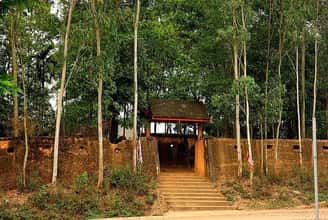
Phon Xuong Fort
Phon Xuong Fort is located in the center of Cau Go town. Here De Tham and the uprising command stayed the longest, directing the strategic and tactical direction of the Yen The insurgent army. Phon Xuong Fort is 30 km west of Bac Giang province; From Bac Giang city, follow National Highway 1A (old) through Thuong River bridge, turn right along Provincial Road 398, Bac Giang-Cau Go route. Phon Xuong Fort, also known as Don Go, Don Cu, is located on the south side of a nearly 20m high hill, nearly 800m south of Go stream. Now this hill is called Phon Xuong hill or Ba Ba hill in Cau Go town. This is a large-scale base with a different structure from Ho Chuoi post and other posts. The fort has an almost rectangular architectural plan running along the North-South direction, with an area of about more than an acre of Northern Vietnam including two citadels. The outer citadel starts from the eastern hillside and runs around the foothill to the northern hilltop, forming an arc that protects the inner citadel, 140m long, 0.80m thick and 4m high. The inner city walls are located on top of a roughly rectangular hill. The inner wall on the east side is 71m long, the north side is 85m long. The wall is made of rammed earth, 2m thick at the base, 3m high and 1m wide on the surface. Inside the wall, there are 3 different levels that can be shot standing or kneeling. There are battlements all around the wall. The outer wall slopes gently like a roof. Phon Xuong Fort has 3 gates: The main gate faces East and two side gates are in the South and North. The two side gates open to the surrounding forests. In particular, the northern gate connects to the forest of the remaining half of the hill. The two 1.50m wide side gates are no longer intact, the main gate is 15m from the north wall, 2m wide with 4 steps up and down. Inside the main gate, there is a guard station located on the northern side of the wall in a square shape of 2m on each side. Inside the main door there are two layers of protective earth walls and many battlements. The gates all have two doors, the outside gate and the inside gate, and are all made of ironwood. The outermost position of the station is the guard posts, followed by the auxiliary posts, the trench system and then the surrounding citadel. The distance between the two rings is 20m at its widest and 10m at its narrowest. Within the citadel is a large space including a system of houses, guest houses, warehouses... all are thatched houses with mud walls mixed with straw. Except for the square house that receives guests, it is built of bricks. From the north to the south of the citadel, respectively, are the houses of Hoang Hoa Tham and Ba Ba, the house has 5 rooms running west and east. The second house is square with four sides left empty and is used as a meeting place for Hoang Hoa Tham with generals and to receive guests. The next house consists of two rows located close to the West and East sides of the citadel, and is the residence of the insurgent army. Next, there are 8 kitchens and stables located close to the southern edge of the citadel running east-west, followed by a light pole and flag pole. The architecture of Phon Xuong Fort is a special architectural style. Not only does it meet the requirements of being a stronghold, it also flexibly handles combat mobility and meets the requirements of being a command post, a place for insurgent transactions. Over time, the rampart system and residential buildings in the citadel built with rammed earth are also easily eroded. Now the residential buildings in the citadel no longer exist, and the citadel walls are no longer intact as before. Particularly, the eastern part of the wall still retains many old architectural features. There are quite clear bullet holes in the citadel wall. In the citadel, a Ba Ba temple is currently built. Every year, on March 16 of the solar calendar, Yen The festival takes place on this relic complex. Around the late 80s of the twentieth century, Mr. Hoang Hoa Tham's daughter, Mrs. Hoang Thi The, came here and when she died, she was buried here, on the tombstone there was only the simple words: "Mrs. Hoang Thi The, born in 1901, died December 9, 1988". It can be said that Phon Xuong was the capital of the uprising, the starting place to expand the movement to localities. Here the insurgents fought bravely against a large-scale attack by the French colonialists led by Colonel Vat-tay on January 29, 1909. With those historical and cultural values, Phon Xuong Fort is one of 23 relics ranked as Special National Monuments in Decision No. 548/QD-TTg dated May 10, 2012 of the Prime Minister. . SOURCE: BAC GIANG PROVINCE ELECTRONIC INFORMATION PORTAL
Bac Ninh
6537 view
Rating : Special national monument
Ho Chuoi Fort
Build a brave and courageous fighting spirit, not afraid of sacrifice, determined to fight to the end to protect your homeland and country. This is the core, most important factor that determines the victory in the Battle of Banana Pit of the Insurgent Army. In particular, in the context of the early years of the Yen The uprising, the Insurgent Army with rudimentary weapons and equipment had to confront the French Expeditionary Force - a professional army equipped with weapons, equipment and supplies. modern means of warfare, so building political and spiritual factors and determination to fight for the Insurgent Army is of decisive significance. Realizing that, De Tham and the leaders of the Insurgent Army educated and fostered a spirit of patriotism and hatred for the enemy in the Insurgents. Accordingly, on the basis of a just war, De Tham taught about the suffering of people losing their country; clearly shows that the cause of suffering is due to the brutality of the invading French empire. Through practice, he showed everyone clearly the hypocritical and hypocritical face of the enemy army; that it was the French army who shot and killed civilians and burned down houses and fields. If you want to save the country and the family, you must rise up to fight the French and his Insurgents swear to kill the enemy to protect the people. That's why the Yen The uprising in general, and the Ho Chuoi battle in particular, the insurgents demonstrated a spirit of courage and strong determination that the enemy did not expect. That was when the enemy fiercely bombarded the station, but the insurgents did not flinch, waiting for the enemy to get very close before opening fire to destroy them, causing the enemy to panic and flee. Even in the third attack (December 22, 1890), the enemy urged European and African troops to use bayonets to attack our fortifications, but the insurgents remained calm, took control of the battle, and rose up to destroy the enemy. leaving them helpless, suffering heavy losses, forcing them to retreat. Not only did De Tham regularly foster patriotism and determination, but when dangerous situations occurred, De Tham also proactively and calmly encouraged the insurgents to fight. Typically, in the battle on January 9, 1891, when Ho Chuoi post was burned by enemy fire, De Tham used the loudspeaker to encourage: "Soldiers in the loyal army, in the indomitable army, in the The army will win. I am very pleased with you! Try to resist. Reinforcements are coming. You are invincible"1. That spiritual medicine promptly encouraged and encouraged the insurgents in the station to calmly, enthusiastically, and resolutely defend, while the forces in the forts, despite the hours-long shelling, still maintained their positions. fight; When the opportunity came (when the enemy infantry was approaching), we all rushed out of the fortifications and fought fiercely, destroying most of the enemy's forces and maintaining the battlefield. Later, researchers all believed that, at Ho Chuoi, the French army faced an opponent with surprisingly high fighting determination.2. Create a dangerous, continuous, solid posture, ensuring smooth defense and attack. Through many battles with the French army, the Insurgents have mastered the rules of operation, combat tactics, and the enemy's strengths and weaknesses. That is, fear of close combat, especially difficulty in maneuvering in difficult terrain; rely on artillery fire and when there are casualties, morale easily declines, etc. Firmly grasping that fatal weakness, the Insurgents Supreme Command advocates creating a solid defensive posture in the Yen The mountainous area. Accordingly, in a low-lying area of the Huu Thuong forest filled with wild bananas, the Insurgents built Ho Chuoi station as a semi-floating, semi-submerged fortification (to limit the enemy's firepower and artillery) as their headquarters. To support the main post, the Insurgents also set up two defensive fortresses (North and South) about 100m away from Ho Chuoi, creating a flexible position to protect and support each other. In addition, De Tham also sent people to set up a system of defense posts around Ho Chuoi, such as: Hom post, Skull Cave, Nua village, Vang village,... a logistics base in Vong Dong with a system of fighting villages (Duong Sat, The Loc, Luoc Ha, Cao Thuong) with many dangerous obstacles. Thanks to a solid posture, the Insurgents were able to detect and attack the enemy from near and far, consuming and destroying many enemy forces before they reached their main target. In particular, at Ho Chuoi, with its unique and dangerous position, the forest became an obstacle to the enemy's firepower and limited vision; If you get close to the base of the fort, you will be shot back from dangerous battlements, etc. The uniqueness of this posture is also shown by the system of submerged trenches (without banks) connecting points together and connecting to Go stream in the rear, creating a flexible maneuver position, while being able to attack the enemy. From the front, you can attack the flanks and rear of their formation. This explains why the enemy gathered large, elite troops, with many modern weapons, attacked from many directions, for many days, but all four attacks were unsuccessful. SOURCE: National Defense Magazine
Bac Ninh
6518 view
Rating : Special national monument
 AI Travelviet