
 vn
vn en
en ja
ja ko
ko zh
zh


















List of relic sites (128)

Dinh Chien
Standing out in the center of Chien village is the communal house. The communal house is located on high ground overlooking the southwest. In front of the communal house is an inter-village road, and on three sides around the communal house are densely populated residential areas. The communal house worships the gods Cao Son - King Quy Minh and King Dong Dinh, these are gods who have had many merits in fighting foreign invaders and protecting the Fatherland, recognized and conferred by Vietnamese feudal dynasties. According to documents of the Duong family in Chien village: in the Later Le Dynasty, the Duong family in Chien village had Mr. Duong Quoc Chinh as a court mandarin who was instrumental in building and repairing the communal house. Two stone steles erected in the year of Vinh Khanh (1729) are still preserved here, with content to remember the merits of the post-gods who contributed to the village and the village's regulations in the past. The ceremony took place at the communal house. Thus, it can be confirmed that Chien Communal House was constructed in the Later Le Dynasty and was greatly repaired and embellished in the Nguyen Dynasty and later periods. Over the years and wars, the communal house was destroyed by the French colonialists. In 1999, officials and people of Chien village spent money and effort to join hands to rebuild the communal house. Chien Communal House is designed in the shape of the letter Dinh, including a three-compartment vestibule with two wings connected to a three-compartment back palace. The communal house still preserves many precious documents and artifacts such as altar thrones, tablets, incense burners, precious bowls, stone stele, horizontal plates, and parallel sentences. Chien Communal House has just been ranked by the Bac Giang Department of Culture, Sports and Tourism as a provincial-level cultural and historical relic. The Chien village festival takes place on three days, the 8th, 9th and 10th of the 8th lunar month every year for villagers to remember the tutelary gods who have contributed to their homeland and country, praying for good weather and peace, peace and prosperity for the country and people. . The Chien village festival has unique customs that few places have, such as the custom of gathering buffaloes to sacrifice to the gods, and the custom of bringing feasts to the communal house. Ancient village rules stipulated that on village festival days, there must be a buffalo-boiling ceremony to sacrifice to the tutelary god. Right from the early morning of the opening day of the festival, representatives of the village's Festival Organizing Committee gathered in large numbers to hold the buffalo beating ceremony. Buffaloes are selected to be bought, killed, boiled, then slaughtered to serve as offerings to the tutelary gods, then divided equally among households to serve as feasts on festival days. The buffalo used for the ceremony must be a big, strong, and fat buffalo. The people here believe that this is respectful to the tutelary god, adds solemnity, sacredness, and brings luck to the villagers throughout the whole life. year. The opening day of the festival is also the day the village holds a procession to bring the feast to the communal house. The feast is prepared by three villages: Chien, Si, Gia, including sticky rice, chicken, pig's head, fruits... The feast procession team gathers at one location, then carries it to the communal house to celebrate the holy ceremony. Leading the procession of each village is a typical family elected and honored by the village. Village rules here stipulate: the family chosen to receive the feast must be a married family, 75 years of age or older, live in harmony, and comply well with the policies and laws of the Party and State. , the village's wish. It is an honor for the family and has great educational significance for people of all walks of life to constantly cultivate complete family happiness. Buffalo gathering and feast procession are two unique customs here that have existed since ancient times and have been passed down to this day. The Chien village festival is held around the communal house area for 3 days with many traditional folk games such as blindfolded pot smashing, chess playing, cockfighting, duck catching... attracting a large number of people to participate. In recent years, the Festival Organizing Committee of Chien village has also organized a Quan Ho singing program on the boat, cultural and artistic exchanges on the evening of the closing day to add more vitality to the festival. SOURCE: BAC GIANG DEPARTMENT OF CULTURE, SPORTS AND TOURISM CENTER FOR INFORMATION - TOURISM PROMOTION
Bac Ninh
3059 view
Rating : National monument

PHU DINH
Lu Phu communal house, formerly belonging to A Lu village, Xuan Dam district, Phuong Nhon district, Bac Giang province, now belongs to Xuan Phu commune, Yen Dung district, Bac Giang province. According to legend, Lu Phu communal house was built a long time ago in Nhat style on a land called Bai Don, the exact date is engraved on the stele still preserved at the communal house in the reign of Le Trung Hung, May 10 years of Canh Ngo - 1680, the communal house was greatly restored by the people with a majestic and ancient appearance with a public-shaped architectural plan, including 7 pre-worship rooms, 3 on-the-tube rooms, 3 harem rooms, two On the side there are two rows of left and right vu, in front of the communal house there are banyan trees and ancient scissors... On October 21, 1953, the communal house was destroyed by French bombs, the villagers used all the materials to build 12 rooms. primary school classroom, a 3-room clinic and a 5-room Commune People's Committee headquarters... so it can be seen that in the past, the scale of Lu Phu communal house was very large. In 1991, local people greatly restored the spacious communal house to its current state. The communal house is currently located on a large high land in Dinh Phu hamlet, in front of the communal house is a communal pond, on the left is the ancient Quang Long pagoda, surrounded by inter-village roads and residential areas. The communal house has a nail-shaped architectural plan, folk carving art is boldly printed in the main house and harem, the communal house still retains almost intact the traditional architecture of an ancient communal house of the Le Dynasty. Trung Hung, the carved panels of the hammock door are a rich and vivid display of sophisticated carving art, with embossed patterns on the themes of four sacred animals, four precious animals... Typical artifacts in At Lu Phu communal house, we can mention the stone stele engraved in October 1680, the three ordinations of the Nguyen dynasty, the altar, the tablet of the Nguyen dynasty (19th century)... Lu Phu Communal House worships General Vu Thanh and Ha Cong Khanh with the title of Han district with a special note to advance the fatherland of the general and his wife, Mrs. Hoang Quy Thi, as the village's tutelary god. The tutelary gods at Lu Phu communal house are talented and eminent generals who have made many contributions in the resistance war to protect national independence and suppress the northeastern region of the country. In addition to its cultural value, Lu Phu Communal House is also the place where many important historical events of the army and local people took place. At Lu Phu communal house, in 1944, comrade Hoang Quoc Thinh, who had retired from Tu Vu, led the people to organize a rally here. In April 1945, local people gathered at the communal house to worship the revolutionary flag, carry torches, and parade around the Lu Phu Thi Uy area to show off their forces. In June 1945, the Ly chiefs were forced to go to the communal house to pay taxes, money from selling salt, and selling matches to the Liberation Committee. On July 20, 1945, Lu Phu Communal House was the place where the Lu Phu village self-defense team (also known as Sao Vuong self-defense team) was established, the predecessor of the later Lu Phu commune guerrilla team. At the end of 1945, comrade Vu Hong Quang, a special envoy of the Provincial Party Committee, returned to Lu Phu communal house to command and arrest the Nationalist Party reactionary Chanh Thong, a Bac Ninh man who escaped here and named Ky Thao. On December 19, 1946, the Lu Phu militia gathered at the communal house and marched up to Bac Giang to fight the French... In particular, according to the content of the resume of Lu Phu communal house relic approved by the Provincial Scientific Council in 2003, it is recorded about an important historical event of the people of Xuan Phu commune that was in early 1946, the people in The region gathered at Lu Phu communal house to elect the first National Assembly and the first commune People's Council. “The victory of the General Election for the 1st National Assembly has demonstrated the will, determination and wise leadership of the Party and President Ho Chi Minh in building the people's government, and at the same time reflects the trust the depth of the Party to the revolutionary masses". During the resistance war against the French and the Americans, Lu Phu Communal House was a regular meeting place to discuss combat command plans, a gathering place for military training, and also a place to admit new Party members. organizes popular academic classes and is the location for the commune's primary school... Lu Phu Communal House is the place where many important historical events of the people in the region take place and is also a place for cultural and religious activities. threshold, where traditional festivals are held every year. The traditional festival is held on the 8th and 9th of the first lunar month (lunar calendar) every year. With the above values, Lu Phu communal house has been ranked by the People's Committee of Bac Giang province as a Historical - Cultural relic according to Decision No. 86/QD-CT, January 30, 2004. SOURCE: BAC GIANG DEPARTMENT OF CULTURE, SPORTS AND TOURISM CENTER FOR INFORMATION - TOURISM PROMOTION
Bac Ninh
3089 view
Rating : National monument

Cau Khoai Temple
When talking about Yen The, people talk about the image of Hoang Hoa Tham - the cloth-shirted hero who led the longest Yen The peasant uprising among the uprisings against French colonial rule, lasting a long time. nearly 30 years (1884-1913), was a typical uprising for our nation's patriotic movement before the Party led it. The image of brown-shirted hero Hoang Hoa Tham and traces of the uprising are always imprinted on architectural works including communal houses, temples, pagodas, and strongholds. Among them is Cau Khoai Temple, a special national relic site in Tam Hiep commune, Yen The district. Cau Khoai temple relic is located about 30km from Bac Giang city, about 2km northwest of Cau Go town center. Cau Khoai Temple Relics, also known as Co Temple, is a way to commemorate the merits of two girls worshiped in the temple: Dam Thi Dung Hoa born in 1507 and Dam Thi Que Hoa born in 1510, the children of a mandarin. Great Dam Than Huy during the Le-Mac dynasty. He had many great contributions to the people and the country, and was recorded in history books in fighting against the Mac Dynasty. When Dam Than Huy died, his two sons, Dam Dung Hoa and Dam Que Hoa, continued to lead the army against the enemy for 3 more days. When they reached Dien village, Tam Tien commune, knowing they could no longer fight, the two girls committed suicide into the Soi river to preserve their reputation. To commemorate the merits of the two women, local people built a temple to worship them. Later, local people built another pagoda behind the temple called Hoai Am pagoda to pray for gratitude and preserve the fragrance of the two daughters of the Dam family who sacrificed in this land. Cau Khoai Temple is one of many bases of the insurgent army, a place that marks many historical events associated with the Yen The uprising led by Hoang Hoa Tham. The relic complex is still located on land managed by the Yen The insurgent army, surrounding the temple area is a system of fortresses. Here, the Yen The insurgent army and the French colonialists were often in a fierce standoff, the insurgent army destroyed many enemy forces. The entire Tam Hiep region is the area of strong activity of the Yen The insurgent army commanded by Hoang Hoa Tham and his generals such as Ca Trong, Ca Dinh, Ca Huynh... Many battles in this land has been recorded in history books such as the battles of Don Hon, Trai Tre, Don Hom, Fort Hang So... The land and people here provided food, food and human resources for the base of Hom, contributing significantly to the war. repelling the large-scale attack of the French colonialists on Yen The on May 23, 1892. Cau Khoai Temple was built in 1524 and has been restored and renovated through many stages. The current relic complex includes construction items: Temple gate, campus, main temple area and Hoai Am pagoda. All are located in a large, beautiful land overlooking Highway 17, on the other side is the Hom station base of the Yen The insurgent army. The temple currently has a nail-shaped architecture, including a front altar and a harem. In the harem, there are statues of the two ladies and their attendants. Behind the temple is Hoai Am Pagoda built by local people with the meaning of praying for the grace of salvation for the souls of the two daughters of the Dam family. To commemorate the gratitude of the two daughters of the Dam family, on January 23 every year, the Party Committee, People's Committee of Tam Hiep commune and local people jubilantly organize a festival to commemorate and review historical traditions. glorious history, great contributions of Dam Than Huy and his two daughters; Honoring heroic examples and sacrifices in the nation's resistance war against foreign invaders. The festival is organized in 2 parts including the Incense Offering Ceremony and the Festival part which is organized with many cultural activities, sports, folk games imbued with national cultural identity such as blindfolded goat catching, pot smashing. , tug of war, mass cultural performances, shuttlecock throwing, cockfighting, Chinese chess, football... show the martial spirit and desire for freedom of the local people. Cau Khoai Temple relics not only have historical significance and value, the Temple is also a place for religious activities of the people, and is an attraction for a large number of tourists from all over the province to visit and study. rescue. With the historical significance and value of the monument, on May 10, 2012, the Prime Minister signed Decision No. 548/QD-TTg on the classification of special national relics for the "Historic Monuments" Yen The uprising site"; of which Cau Khoai Temple, Tam Hiep commune, is one of 23 special national relic sites./. SOURCE: BAC GIANG DEPARTMENT OF CULTURE, SPORTS AND TOURISM CENTER FOR INFORMATION - TOURISM PROMOTION
Bac Ninh
3227 view
Rating : National monument

Tien Luc Relics Cluster
Coming to Bac Giang, visitors will be able to visit, learn about the historical and artistic values of ancient pagodas, explore and experience the amazing natural landscapes that nature bestows on Bac Giang and the Cluster. Tien Luc relic is one of the ideal stops for tourists from near and far. Located about 20km northeast of Bac Giang city in Tien Luc commune, Lang Giang district, Bac Giang province. The Tien Luc relic cluster includes a complex of relics located in the airy, poetic space of a midland region full of life. Tien Luc relic cluster includes: thousand-year-old Da Huong tree, Vien Son communal house, Phuc Quang Pagoda, Thuan Hoa communal house... Tien Luc relic cluster has been recognized by the State as a national historical relic and has become a national historical relic. become an attractive destination for domestic and foreign tourists. The first destination is the thousand year old Da Huong Tree. According to scientists, this tree was conferred by King Le Canh Hung as "National Lord Da Dai Vuong" family (including wild rose tree, Vien Son communal house, Phuc Quang pagoda, Thuan Hoa communal house...). According to estimates, the tree's stump is as big as eight people, and according to researchers, the largest point of the trunk is 11m, the smallest is 8.3m, the tree is about 36m high, with a diameter of over 2.5m. The average bark layer is 15cm thick. The spreading canopy of wild rose trees covers the roof of Tien Luc communal house, creating a unique landscape for a countryside rich in cultural relics. Wildflowers usually bloom in late spring and early summer, are pale yellow, have tiny petals and have a scent like hyacinths Trees are not only the beauty of the environmental landscape, the natural landscape, but also the cultural beauty, a very rustic, intimate, and sacred symbol in the Vietnamese cultural space. According to the people here, each broken tree branch represents an event signaling a major change in the country, such as: In 1945, the large wild hyacinth branch in the northeast broke when the August Revolution succeeded; In 1954, the broken western branch was the year of Dien Bien Phu victory; In 1964, the southern branch was broken in association with the Gulf of Tonkin event and the war expanded to the North; In 1975, the western branch broke, associated with the liberation of the South and reunification of the country; In 2006, a scene at the southern peak broke, that year our country joined the World Trade Organization (WTO). The next destination is Phuc Quang Pagoda or people still call it Phuc Quang Tu - an ancient pagoda nearly 300 years old, located right next to Thuan Hoa communal house and the People's Committee headquarters of Tien Luc commune, Lang Giang district, on the side of provincial road DT295 is considered a sacred place of worship, with unique architecture and associated with the most mysterious stories. The stele here says that the pagoda was founded in the spring of the third year of Long Duc (March 20, 1734) under the reign of King Le Thuan Tong, next to an older pagoda by monk Chieu Chiem calling on the people to join forces. build. Nearly 300 years old, the pagoda still retains the large bell from the first day and about 90 precious Buddhist statues. However, the wood and stone sculptures are almost gone. During the war years, although the surrounding communes were bombed until they were damaged, Phuc Quang pagoda and Tien Luc commune were still protected. safe. Local people are therefore more convinced that it is the ancient temple that guards this land, helping them settle down. According to ancient legend, there was a king wearing plain clothes and accidentally passed by Phuc Quang pagoda. Because of his previous enmity with Buddhism, this king left behind a curse: any monks cannot stay in this temple. The people thought it was just a blurted statement from the king, so they didn't pay attention. Until later, a Zen master was assigned to take care of the temple, but as soon as he reached the Three Jewels, he was bitten by a snake and was too afraid to leave the temple. The next monks who came to the temple only stayed for a while and then had to leave. Only then did the people remember the strange king and began to spread the story of the divine snake fulfilling the curse to hinder the monks. Most recently, monk Hue Cuu became the abbot in 2010. However, less than 3 years have passed. Later, the monk called a car in the middle of the night, packed his luggage and left without saying goodbye. Only in the morning did the people in the village find out. After that, no one heard anything about monk Hue Cuu anymore. Next, a few other monks visited the pagoda and also wanted to stay, but after lighting incense and praying and looking at the incense stick with the words Confucian inscription, they all quietly left, never to return... Phuc Quang Pagoda recently Most of the buildings have been restored, generally still bearing the appearance of the architectural art of the Nguyen Dynasty. The pagoda is located on a low mound, facing south, overlooking a large brick yard with perennial longan trees, and beyond is an ancient garden. On the right front of the street is a row of 3-compartment, 2-seat Giai Vu houses, on the left is the back of the newly renovated village communal house. The pagoda was built with the layout in the shape of "internal Cong foreign national". The front hall is 7 wide with doors and tables, and on both sides of the incense burner are a pair of quite large statues of the Dharma Protectors. The upper hall is full of Northern Tong statues, the light is mainly from two side doors connecting to two corridors where the Arhat and Vajra Buddha statues are placed. All statues have been newly painted. At the end of the two corridors connecting the back hall, made in the style of two match floors, there is a steep staircase to get to the bell tower. Finally, located in the Tien Luc relic cluster is Thuan Hoa Communal House: Thuan Hoa Communal House is also known to people in the area as Cay Bang Communal House. The communal house is located on a large and flat area of land, next to the communal house is an ancient almond tree that shines all year round, in front of the communal house is road 295 from Voi to Tien Luc, the communal house is about more than 100m from the pine hill. Thuan Hoa communal house was built around the 18th century, worshiping two village tutelary gods, Cao Son and Quy Minh. The communal house has a nail-shaped architecture with 5 main halls and 3 back palaces. SOURCE: BAC GIANG DEPARTMENT OF CULTURE, SPORTS AND TOURISM CENTER FOR INFORMATION - TOURISM PROMOTION
Bac Ninh
3244 view
Rating : National monument
Danh mountain relic area
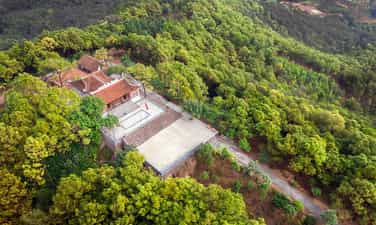
The story of Mount Danh (Lien Chung and Viet Lap communes, Tan Yen district, Bac Giang province) with the product of King-Southern ginseng passed down among the people for many generations inspired me to find this relic. From Bac Giang City, there are many roads to reach Mount Danh, but I chose to follow Highway 17 and then turn onto the Viet Lap-Lien Chung commune road. It's winter so both sides of the road are green with corn, sweet potatoes and many other vegetables. Going about 5km from the turn, the Danh Mountain Cultural and Historical Relic Area appeared before my eyes. Mount Danh is located not far from the romantic Thuong River, has the highest peak about 117 m above sea level and is the second largest mountain range of Tan Yen district after Dot Mountain (Phuc Son commune). This place has a beautiful natural landscape with a pine forest about 50 years old. Many people who come to Mount Danh have the same comment as being in the pine forest of Da Lat City (Lam Dong). Mr. Hoang Tien Dung in Muong Than commune, Than Yen district (Lai Chau province) said: "I have known about Mount Dang through the Internet for a long time, but now I have the opportunity to visit. Indeed, the scenery here is very beautiful, the air is fresh, and sitting and listening to the pine trees is very romantic. If I have the opportunity, I will invite relatives and friends to come here to play." The road up to Mount Den is built with brick steps with a total of 345 gentle steps. Right at the foot of the mountain is the Elephant Noi well, about 2m deep, with a surrounding bank. Local people say the well water is always clear and never dries up. Located on Danh mountain is Danh temple, a cultural and religious project of the local people. The Temple complex consists of 3 temples: Trinh Temple (at the foot of the mountain), Thuong Temple (on the top of the mountain) and Ha Temple (midway up the mountain). Den Temple worships the gods Cao Son and Quy Minh. When they were alive, they were talented generals, but later became sacred deities, becoming saints and talismans, helping people eliminate disasters and disasters, and were worshiped by people for many generations. No one knows exactly when the Temple was built, but based on documents and relics such as stone pillars, ancient incense bowls, sacrificial offerings, and altars still kept in the temple..., this project Built during the Le Dynasty in the 18th century. Through many ups and downs of history, especially during the resistance war against the French, the temple was much destroyed and no longer intact as before. However, the people here have restored and renovated many times, the temple has become more spacious and beautiful but still retains many ancient and unique features. In particular, the current Denh temple was rebuilt by the local party committee, authorities and people in 2017 on a larger scale but still lies on the foundation of the ancient temple in a gong-shaped architectural style, including The 3-compartment hall is connected to the 2-compartment harem court by a strip of waterpipe. During the resistance war against the French colonialists who invaded our country, Danh temple and Danh mountain were the advance stations for our soldiers to ambush and protect the free zone. Also here, on April 13, 1950, two guerrilla soldiers, Nguyen Ba Giai and Nguyen Dinh Khai, heroically sacrificed their lives while on guard duty to guard the front lines. Coming to the Danh Mountain Relic Area, visitors will not only be able to admire the vast and majestic landscape but also hear stories passed down in folklore about the Southern King-Samseng products of the people here. In the past, the Dinh mountain area had the famous Bao Loc Son festival throughout the region. In the early 19th century, Bao Loc Son was a canton in Yen The district, Lang Giang prefecture, including 4 communes: Bao Loc Son, Trung Son, Tuong Son and Kim Trang. The annual Bao Loc Son Festival is held on January 16 and 17, centered at the Um Ngo communal house relic complex, Viet Lap commune. This festival is the festival of four communal houses, also known as four families, typical of the families: Than, Giap Nguyen and Dong... in 4 villages: Kim Trang, Khoat, Nguyen and Um Ngo. These 4 villages have 4 communal houses, worshiping 4 Thanh Hoang. After the villages of Nguyen, Kim Trang, Khoat hold festivals, the palanquin procession goes to Um Ngo communal house to hold the festival on January 16 and 17, and from there, the palanquin procession goes to Nghe Ca on top of Dinh mountain for the opening ceremony of the year. . Four village festivals come together to form the Bao Loc Son festival. The festival includes games such as tree swinging, cockfighting, wrestling, kite flying... Wishes for good weather and wind, and prosperity for the people. Bao Loc Son festival was first restored in 1996. In 2019, Viet Lap Commune People's Committee continued to organize the restoration of Bao Loc Son festival. SOURCE BAC GIANG DEPARTMENT OF CULTURE, SPORTS AND TOURISM CENTER FOR INFORMATION - TOURISM PROMOTION
Bac Ninh
3363 view
Rating : National monument
MY DIEN Pagoda
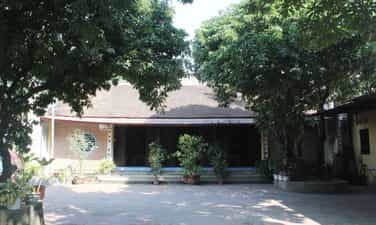
In My Dien neighborhood, Nenh town, Viet Yen district, an ancient pagoda called Thanh Minh pagoda is still preserved. Perhaps this is a unique ancient pagoda rarely seen in Bac Giang. The pagoda was built during the Ly Dynasty and has been repaired many times. The artifacts at the pagoda are proof that the ancient temple was built a long time ago. It is a green stone staircase created in the shape of a dragon in the style of the Ly Dynasty (11th - 12th centuries) placed in front of the pagoda door. The dragon has a head with a flaming crest, a nose and a mane that are very vividly structured with natural lines. The crest takes the entire upper lip and blends with the fangs in the shape of a flying cloud. The mane radiates from the nape of the neck towards the back. The dragon's beard is as soft as a wave moving forward. The dragon's nose is stacked curves creating the impression of a water source, the mouth is bared to reveal two rows of teeth holding pearls. The dragon's whiskers and crest point forward, creating an image resembling a Bodhi leaf. In a soft, natural posture like flying, the dragon has 11 segments, the segments are evenly spaced and winding, the dragon has 4 legs and 3 small claws. Many researchers believe that this is a dragon created on the doorstep of ancient My Dien Pagoda. Accordingly, there will be 2 stone dragons on the steps of the temple door, but unfortunately only one remains. Also according to cultural researchers, the dragon of the Ly Dynasty has a close relationship with Buddhism, it is associated with Buddhist images such as Buddha, lotus, lotus leaf... which is confirmed during the Ly Dynasty. , My Dien land was the place of development and prosperity of Dai Viet Buddhism. My Dien Pagoda is located behind the communal house according to the architectural structure of "before the Gods, then after the Buddha", the communal house in front of the pagoda after creating a complex of ancient continuous relics. After many renovations, the pagoda still retains construction items such as: Three entrance gates, 5-compartment Patriarch's house, 3-compartment guest house and Tam Bao temple. The temple grounds are filled with shady green trees. In the middle of the pagoda yard, there is still a stone stele of the Le Dynasty, the 8th year of Vinh Thinh (1713), recording the merits of creating the stone stele and casting the temple bell. Through the temple grounds to the Tam Bao building, this building has 5 front halls connecting 3 upper halls, creating a nail-style architectural plan. The architectural structure of the inner roofs is in the form of stacks of cones, gong stands, seated lines, and architectural structures carved with floral and leaf shapes that have artistic value. The upper palace is fully decorated with a system of Buddha statues. Statues in the style of the Le and Nguyen dynasties have historical and artistic value. In addition to the above valuable artifacts, My Dien Pagoda also preserves many documents and artifacts that are valuable for researching typical cultural and artistic history such as incense bowls, stone stele, horizontal system, parallel sentences... This is There are scientific grounds to confirm that under the Ly Dynasty, My Dien Pagoda was a Buddhist center with a large scale, quite complete and dignified architecture. My Dien Pagoda is the center of cultural and religious activities, where traditional festivals of the people have been held from past to present. The village's festival takes place on the 1st day of the second lunar month with many rituals and folk games imbued with national cultural identity to thank God and Buddha for a prosperous and happy life. With unique historical and cultural value, My Dien Pagoda was ranked as a provincial cultural and historical relic in 2004. Although it is a bustling industrial development place, My Dien today still preserves many cultural heritages of the nation. Religious and belief works such as My Dien Communal House, Nghe An, Ngo Dat Dung District's mausoleum, Nguyen Doc Thuc's mausoleum, King Ba temple... have a lot of potential to develop the local tourism economy. In particular, Thanh Minh Pagoda in the heart of the neighborhood has been an attractive address for tourists to worship Buddha. SOURCE: BAC GIANG DEPARTMENT OF CULTURE, SPORTS AND TOURISM CENTER FOR INFORMATION - TOURISM PROMOTION
Bac Ninh
3205 view
Rating : National monument

Dinh Ha
In the system of 23 special national relic sites related to the Yen The uprising in the districts of Viet Yen, Yen Dung, Tan Yen and Yen The, Dinh Ha, Tan Trung commune has a very special role. This is where Luong Van Tam held the flag offering ceremony to officially launch the military uprising against the French colonialists. Dinh Ha formerly belonged to The Loc commune, Tong Yen Le, Yen The district, now belongs to Dinh Ha village, Tan Trung commune, Tan Yen district. Behind the communal house is Chua Ha. The layout is in the style of "Previous Gods, Later Buddhas". This relic is located on the slope of a low hill, surrounded by lush green ironwood forest. According to legend, the communal house and Ha pagoda were built during the Le - Nguyen dynasties of the 17th century. This is an important historical witness in the Yen The Uprising. Normally, after the January 15 and 16 Festival every year, the space around Dinh Ha becomes quiet. The solemn village communal house is immersed in the green of a hundred-year-old ironwood forest, but in recent years this relic has been vibrant with activities going back to its source. Many schools in Tan Yen use this place as a place to admit union members and team members. In 2021, Tan Yen invests in building the Temple of Luong Van Tam and Yen The insurgent soldiers, the above activities will increase significantly. According to legend, Ha Communal House and Pagoda were built during the Le - Nguyen dynasties of the 17th century. Dinh Ha, whose literal name is Tho Linh communal house, worships the tutelary god Saint Cao Son - Quy Minh. The architecture of the communal house in the past consisted of a vestibule with 3 compartments and 2 left. In the spacious courtyard of the communal house, there are left vu and right vu, each row of 5 compartments facing each other, followed by a large communal house with 5 compartments and 2 compartments and a harem with 3 compartments. The architecture of the trusses follows the cone, strip, seven, and husband-and-son styles. The decoration is delicately carved, following the themes of flowers, leaves, and dancing fairies. But this beautiful communal house no longer exists, because it was destroyed by the French colonialists in 1885. The Yen The Uprising, developed into the Yen The Uprising Movement and lasted nearly 30 years (1884 - 1913). From the event of Raising the Flag and launching the Yen The Uprising, the communal house and Ha Pagoda became a historical relic that opened the Yen The peasant uprising movement, marking a red mark in the history of fighting foreign invaders. of the Vietnamese people in the 19th - 20th centuries. With the great values of Ha Pagoda communal house, on March 10, 1994, Ha Pagoda communal house relic was recognized as a cultural and historical relic by the Ministry of Culture and Sports. May 10, 2012 Ha Pagoda communal house relic is one of 23 points in the system: Yen The Uprising relic sites of Bac Giang province honored to be ranked by the State as a special National Monument and Among these 23 relics, Ha Pagoda Communal House is the key point. Over time, many items of Ha communal house have been degraded. In order to meet the needs of cultural, religious and belief activities of local people, in 2023 Tan Yen will implement the Ha communal house renovation and embellishment project with the contents of renovating the main communal house, harem and embellishing technical infrastructure with a total investment of nearly 8 billion VND from the state budget and other legally mobilized sources. The project was completed on the occasion of the 140th anniversary of the Yen The Uprising (1884- 2024). The middle of the great pavilion has parallel sentences: Life is from ancient times to death; Luu Thu Dan Tam shines brightly (A long time ago, I asked who wouldn't die? Let my heart shine brightly). More than 100 years ago, the people of Ha village borrowed the parallel sentences of their ancestors to talk about their cloth-shirted hero and now it seems even brighter. Dinh Ha will forever be remembered along with the name of cloth hero Luong Van Tam - the first leader of the Yen The Uprising. SOURCE: BAC GIANG DEPARTMENT OF CULTURE, SPORTS AND TOURISM CENTER FOR INFORMATION - TOURISM PROMOTION
Bac Ninh
3155 view
Rating : National monument
Tu Giap Pagoda
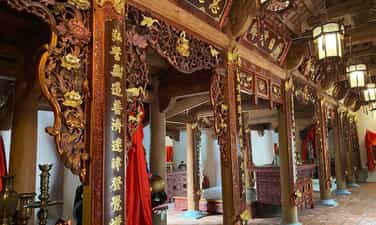
Tan Yen district (also known as the ancient lower Yen The region) is a land with a rich historical and cultural tradition and a spiritual land with outstanding people. Those traditions are still preserved today in customs, in ancient communal houses and pagodas where the names of outstanding children of the historic rainbow homeland are associated with them, such as: Duong's grave site. Thi Gia, a good female general under the Trung Sisters; The communal house worships 18 dukes of the Duong family at Van Cau who helped the Mac dynasty expel the invaders; The cluster of communal house relics and Ha Pagoda worships Luong Van Van Ham, the first leader of the Yen The peasant uprising; Trung Temple worships Hoang Hoa Tham, the second leader in the Yen The peasant uprising; In particular, we must mention Tu Giap Pagoda, where many units were stationed and met during the resistance war against the French and Americans. Tu Giap Pagoda is located in Nha Nam town, a location considered as the northern gateway of Tan Yen district connecting three districts together: Tan Yen, Yen The district (Bac Giang province), Phu Binh district, Thai Nguyen province. Before 1945, this place belonged to Nha Nam canton, Yen The district, now belongs to Nha Nam town, Tan Yen district. Tu Giap Pagoda was built during the Le Dynasty in the style of grand domestic and foreign architecture, including 7 front halls, 5 middle halls, 3 triple treasures, 1 ancestral house, guest house, and nun's house. The system of statues in the pagoda is rich and complete, decorated purely in Vietnamese. The pagoda also has a bell weighing several hundred pounds. However, in 1885, to take revenge on the Yen The insurgents, the French colonialists frantically destroyed villages and pagodas to use wood to build their base. In 1886, the people of the four borders, including Nguon, Upper, Lower, and Bell, rebuilt the pagoda with the name Tu Giap because the four people joined hands to rebuild the pagoda. The new pagoda includes a front hall, a common house, a Buddha hall, an ancestral house, a monks' and nuns' house, a three-entrance gate with a bell tower, and spacious and orderly walls. In 1947, Tu Giap Pagoda was once again destroyed by the French colonialists when they swept through Nha Nam and attacked Yen The. At Tu Giap Pagoda, there was a clash between us and the enemy. The pagoda was severely damaged, leaving only the 7-compartment front hall, with bullet marks still on the pillars. Along with the flow of history, Tu Giap Pagoda and Nguon village of Nha Nam commune have experienced and "witnessed" many important historical events. This place converges essential traffic routes, can move towards the plains of Bac Giang, Bac Ninh and retreat to the mountainous areas of Thai Nguyen and Bac Kan. Therefore, Tu Giap Pagoda was chosen as one of the locations as an important revolutionary base of the Bac Giang Party Committee during the resistance war against the French colonialists. This is also the stationing and working place of the National Salvation Newspaper (March 1945), Bac Giang Postal Company (late 1945), Provincial Post Office and Ha Bac Police Company (now Bac Giang Provincial Police). In particular, Tu Giap Pagoda was the living and working place of the Area 12 Police from the end of 1946 to around April 1948. During the resistance war against the French, although it was attacked many times by the French colonialists, Tu Giap Pagoda was still a safe place for district, provincial and central agencies to choose as a place to open refresher courses, train and discuss plans. implementing the resolution to divide fields for people to increase production... During the resistance war against the US to save the country, Tu Giap Pagoda witnessed many farewell ceremonies for children who were going to join the army to fight on the southern front to contribute to the war. liberating the South and unifying the country. Through the ups and downs of history, Tu Giap Pagoda today is no longer the same, but only the front hall, middle pagoda building, and Tam Bao pagoda are made in the old style. In the pagoda, there are many Buddha statues made of lacquered wood and gilded with gold. Tu Giap Pagoda is not only a place for spiritual beliefs of the people in the area but also a place marked by revolutionary history. In particular, it is where the 6 things Uncle Ho taught the People's Public Security force were discovered. Here, comrade Hoang Mai - Director of Zone VII Police was honored to receive the letter from President Ho Chi Minh dated March 11, 1948, in which he especially kindly advised our police, Mr. peace of the people, serving for the people, knowing how to rely on the people to do everything will be done. In it, Uncle Ho emphasized the six qualities of a "revolutionary police officer", so this place is considered the origin of the Six Things Uncle Ho taught the People's Public Security. TOURISM SOURCE OF BAC GIANG PROVINCE
Bac Ninh
3601 view
Rating : National monument

ICE CREAM Pagoda
Kem Pagoda, also known as Sung Nham Pagoda, located in Kem residential group, Nham Bien town, Yen Dung district (Bac Giang), is not only a center of religious and cultural activities, it was also a base for religious beliefs. revolutionary troops and guerrillas in many periods, including the Yen The insurgent army. Kem Pagoda - a special national historical relic has been carefully preserved, attracting a large number of visitors from all over to visit and worship at the pagoda. The campus of Kem Pagoda is spacious, with many ancient trees providing shade, creating a peaceful and sacred scene. From Truc Lam Phuong Hoang Zen Monastery, we drove the car on a newly renovated road about 1km long, heading straight to Kem Pagoda. On the side of the road are rows of lush green Bodhi trees. Comrade Le Thi Minh Hien, Deputy Director of the Center for Culture - Information and Sports of Yen Dung district said: "The renewed route facilitates the connection of spiritual tours between Vinh Nghiem Pagoda - Zen Monastery. Truc Lam Phuong Hoang - Kem Pagoda. This also opens up an opportunity to introduce and promote the cultural and historical value of Kem Pagoda - a place that has witnessed many ups and downs in the nation's history." In the Kem Pagoda campus, there are many old trees, green all year round. The land enjoys the blessings of nature, in winter there are high mountains blocking the Northeast wind, in summer the cool wind blows from the South, making the pagoda scene even more peaceful and sacred. According to recorded records, Kem Pagoda was built about 400 years ago, during the reign of King Le Anh Tong. The founder who built the pagoda was Ms. Hoang Thi Tue, following the Truc Lam Zen sect founded by Dieu Ngu Giac Hoang Tran Nhan Tong. The entire architectural work of Kem Pagoda was built in a plot of land with a total area of nearly 2,000 m2. The entire pagoda includes: Three-entrance gate, tower garden, front hall, upper palace and ancestral house. It is known that the place where Kem Pagoda is located has a very special terrain, the left, right and back sides all lean against the Nham Bien mountain range, the face overlooks a flat field and a unique road leading to the pagoda. Therefore, this place is not only the center of cultural and religious activities, but also was chosen as the base of insurgents and revolutionary guerrillas during many periods of national liberation wars. In 1884, Nguyen Cao from Cach Bi village (Que Vo district, Bac Ninh province) and his insurgent army returned to Kem Pagoda to build a base to fight against the French colonialists. Visitors listen to an introduction to the unique cultural and historical features of Kem Pagoda. In particular, around 1906 - 1908, Hoang Hoa Tham and the Yen The insurgent army returned to camp right behind the temple garden. De Tham built ramparts, walls, houses, and military training, creating this place as a base to fight against the French. Currently, this place still retains traces of ramparts, mandarin house floors, mandarin wells, guard posts, flagpoles, ice buckets containing water for horses to drink and also a place to sharpen swords to fight the enemy... Behind the pagoda there is also a training ground for the De Tham insurgent army in the past. The land is about a few acres large and is located on a flat terrain, next to which a stream flows. It can be said that this location is very convenient for insurgents to practice. When there is an enemy, it is easy to quickly retreat up the mountain and escape to the romantic Thuong River right at the foot of Nham Bien mountain... Since the August Revolution in 1945, Nham Bien town became a guerrilla resistance area; Kem Pagoda became the local political and military center. Peace was restored, the pagoda was a meeting place, propagating the Party's policies and laws, and the State's laws. Thanks to its cultural, religious and revolutionary historical values, in 2012, Kem Pagoda was recognized by the Prime Minister as one of 23 special national historical sites associated with the Revolution. Yen The uprising. TOURISM SOURCE OF BAC GIANG PROVINCE
Bac Ninh
3303 view
Rating : Special national monument
Doan family mausoleum
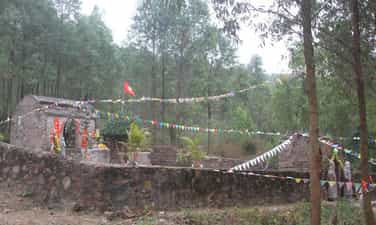
Doan family mausoleum in Van Trung commune is located about 12 km south of Bac Giang city center, from Bac Giang city follow the new National Highway 1A through Dinh Tram industrial park about 10 km, turn left along the road to Van Trung - About 2 km further from Truc Tay, turn left to Bai Xanh village, cross 45 m of hill road to reach Doan family mausoleum. Doan family mausoleum in Van Trung commune The Doan family's mausoleum is located on Hinh Nhan mountain, Bai Xanh mountain of Nham Bien range. Late Le Dynasty (18th century) Doan family mausoleum in Noi An village, Van Coc commune, Hoang Mai canton. From 1965 to present, the Doan family mausoleum is located in Van Trung commune, Viet Yen district, Bac Giang province. The mausoleum was built during the reign of King Le Trung Hung in the 18th century, during the reign of King Le Hien Tong, under the reign of Canh Hung (1740 - 1786). This is the resting place of Doan Cong Bao, also known as Doan Dang Dan, a mandarin during the Le Trung Hung period, who had many merits in serving the king and the country. The mausoleum area looks towards the southwest, in front is Hinh Nhan mountain, in the distance is the winding Cau River, on both left and right sides are the mountains of the majestic Nham Bien range. The mausoleum area was built in the ancient architectural style, along a rectangular vertical axis, the construction items are gradually higher from the inside out according to the slope of the mountainside, including surrounding walls, mausoleum gates, Open-air worship area, stone statues, human and animal statues, Tieu Dao Am. Statues of people and magical beasts at the Mausoleum gate Tieu Dao Am Currently, the project items are still complete, bearing ancient architectural and artistic features. The mausoleum gate is built in a domed architectural style, Tieu Dao Am has two roof floors, both built with ancient bricks from the Le Dynasty (18th century), all of which exude an ancient brown look to the mausoleum. The system of statues of Martial Artists, Servants and Hyenas is arranged in a symmetrical axis from the outside to the inside, creating a majestic and ancient look. Due to the erosion of time and war, the tiled floor of the mausoleum garden no longer exists, part of the corner of the mausoleum gate was damaged by French artillery shells and is cracked. The surrounding wall area currently has only about 10m of ancient laterite wall left, the rest is a rough stone wall. Some broken and cracked stone statues have been restored and mended. On the other hand, the Doan family mausoleum was built on Bai Xanh mountain, far from residential areas, so the care and promotion of the relic's value is limited. The tomb area still has many invasive weeds. The mausoleum was built in the open without a closed gate, and the walls surrounding the mausoleum were low, making it difficult to protect the artifacts and worship items inside the mausoleum. In fact, in 1980, thieves removed part of the laterite wall from the mausoleum, destroyed a number of statues, and took away Doan Dang Dan's portrait. In recent years, with the attention of the family, especially the direction of the local government, the Doan family mausoleum area has been carefully looked after, and the bushes and trees have been cleared cleanly. The broken statues have been mended, and the surrounding wall is built with rough stone. The Doan family is also planning to resurface the traditional brick floor of the inner temple area in the mausoleum grounds, and restore the portrait statue of Doan Dang Dan in Tieu Dao Am to return the landscape to its original value. stone. In order to protect the spiritual cultural work of Doan Family Mausoleum in Van Trung commune, on December 31, 2015, the Chairman of Bac Giang Provincial People's Committee issued Decision No. 2370, classifying Doan Family Mausoleum as a historical-cultural relic. This is a favorable condition for the monument to be protected and promote the cultural heritage values left by our ancestors for today and the future. SOURCE ELECTRONIC INFORMATION PORTAL VIET YEN TOWN, BAC GIANG PROVINCE
Bac Ninh
3415 view
Rating : National monument
Thuong Temple
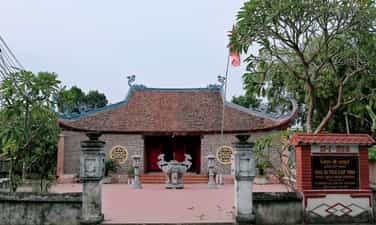
Thuong Temple, also known as Thach Linh Than Tuong Temple. According to historical sources and Sino-Nom documents such as: Legend of Thuong Lat commune, Tien Lat canton, Viet Yen district, Bac Giang province; book Folk Tales of Quan Ho region - Ba Chua Kho; Bac Ninh's book of geographical balance; Bac Giang Geography book. Dictionary; Bac Ninh Province Local Journal through Han Nom documents: Thuong Temple has a long history of construction and was renovated and embellished during the Nguyen Dynasty (XIX-XX centuries) and later periods. The history of the formation of Thuong Temple is associated with the folk legend of Thach Linh Than Tuong. This is a God with special talent and strength, who performed many amazing feats to help King Hung Tao Vuong defeat the Man invaders. After winning the battle, Thach Tuong rode an elephant back to his birthplace in Tien Lat site, climbed Phuong Hoang mountain, the highest peak, then flew straight into the sky and disappeared. To commemorate his merits, the King ordered the local people and mandarins to return to the place of worship (ie the top of Phuong Hoang mountain) to perform the ceremony and then set up a temple to worship him at the top of Phuong Hoang mountain. Initially, the temple was built with a dome-style compartment, the building materials were all stone taken from Phuong Hoang Mountain, and inside the temple was an incense bowl. Over time, with its sacredness and mystery, the temple gradually became famous throughout the region. On the other hand, Thuong temple along with other relics in Bo Da mountain gate such as: Ao Mieu, Bo Da pagoda, Trung temple, Doc Cuoc temple, Ba Chua Kho temple... have formed a continuous complex of relics. , boldly reflects a historical period of struggle to protect national independence. Thuong Temple is located on Phuong Hoang mountain, Bo Da mountain range, Tien Son commune, Viet Yen district, now Viet Yen town. Bo Da Mountain is the common name for the entire mountain range in Tien Son commune. In the Bo Da mountain range, there are three large mountains, each with its own name. The highest is Phuong Hoang, with many rocks and dense pine trees. The second mountain is Ma Yen mountain and the third mountain is Kim Quy mountain. The mountains are undulating and the trees are lush all year round. Surrounding the Thuong Temple, there are many ancient green trees that give shade to the large mountains flanking them; There are six Tien Sa orders such as: White, Pronged, Empty, Tre, and Tra. There are also Con Coc Mountain, Chua Kham Mountain, Truc Lat Mountain, Elephant Mountain, Ban Co Tien Mountain... In front of Thuong Temple are fields and the Cau River surrounding and winding like a strip of silk. This is truly a spiritual place where mountains and waters meet in harmony. According to comments in Nguyen Huy Binh's article on the Legend of Thach Tuong Quan in relation to stone worship: “All combine into a very ideal geographical space. In that humanistic geographical environment, the legend of Thach Tuong Quan has quite clearly the characteristics and localization of the land." SOURCE: BAC GIANG DEPARTMENT OF CULTURE, SPORTS AND TOURISM CENTER FOR INFORMATION - TOURISM PROMOTION
Bac Ninh
3293 view
Rating : National monument

PHUC LAM Pagoda
Phuc Lam Pagoda is an ancient pagoda built on a strip of spiritual land located about 500 meters from the residential area. This place used to be a dense forest with many species of ancient trees and rare herbs. The pagoda was built in the Chinh Hoa era during the reign of King Le Trung Hung (1681 - 1704). Legend has it that: The person who founded the pagoda was Patriarch Thien Phat of the Lam Te lineage, a monk in Bo Da's ancestral place, Tien Son commune, Viet Yen district, Bac Giang province. After the ancestors passed away, after many hundreds of years, the pagoda still had monks sent by Bo Da to take care of Buddhist work. In 1945, following the Party's call to carry out the "Scorched Earth Resistance War", the ancient Phuc Lam Pagoda turned into ash, leaving only a strip of desolate land. In 1954, peace was restored, Buddhists and local people worked together to rebuild the pagoda and several pedestals of Buddha statues to create a place to worship and believe in the Three Jewels. For about 50 years, the pagoda had no abbot, so the pagoda was seriously degraded. Buddhists and local people have repaired it many times, but it was only a temporary method. In 2002, the Elderly Association of Phuc Lam village came to meet monk Thich Thieu Huong, who at that time was the abbot at Hung Dao pagoda, Dao Ngan 1 village, Quang Chau commune, earnestly hoping that he would return to become abbot of Phuc Lam pagoda so that the people could Here, you can be close to the Dharma and teachings of Buddha and achieve peace and liberation right in the present life. After returning to become the abbot of Phuc Lam Pagoda, he saw that the living conditions of the pagoda were poor everywhere, and the road to the pagoda was narrow, so Venerable Thich Thieu Huong, along with the Buddhists and people in the village, asked The spirit of seeking Buddha's way and calming sentient beings that Buddha taught, determined to revive the spiritual area into the Buddhist Center of Viet Yen district. From 2004 - 2016, from the meritorious funds of Buddhists, the pagoda built the Three Jewels, the ancestral house, the guest house, the bell tower, the drum tower, the pagoda fence, the monk's house, the meeting room, and the Tam gate. Mandarins, lakes, statues of Avalokiteśvara Bodhisattva, tower gardens... with a budget of up to tens of billions of dong, all with the purpose of praying for world peace and peaceful people. Phuc Lam Pagoda has truly become the Buddhist Church Center of Viet Yen district. SOURCE: ELECTRONIC INFORMATION PORTAL OF VIET YEN TOWN, BAC GIANG PROVINCE
Bac Ninh
3542 view
Rating : National monument

Temple Pond
Ao Mieu relic is located in the center of Ha Lat village, Tien Son commune, Viet Yen district (Bac Giang). This is one of the relics belonging to the special national relic site system of Bo Da Pagoda (Tien Son commune, Viet Yen district). Many people come to the Ao Mieu relic not only to pray for blessings, virtue, fortune, and fortune, but also to admire with their own eyes a unique artistic architectural work bestowed by nature and embellished through the table. hands of ancient artisans. The shrine worships Thach Linh god on a stone slab behind the great temple (in the Holy pond). Legend has it that God was born from stone According to the elders: There was a wealthy man named Nguyen Hoa and his wife Cao Thi Huyen living on a spacious plot of land. In the plot of land there was a pond, in the middle of the pond was a rock as big as a chessboard; Around the land there are many high rocky mountains, above there are pine trees, stone dragons, stone elephants, stone horses, stone turtles, and stone flags in the direction. Nguyen Hoa is over 60 years old, his wife is also over 50 years old and still doesn't have a child. He feels sad in his heart because he worships the incense burner and doesn't have anyone to worship him morning and night, so he only drinks for fun and often goes to the table. Rock in the middle of the pond to sit and play to relieve sadness. One day, as soon as I reached the stone table, I suddenly saw a flower snake more than 10 meters long, with colorful fins, crawling around on the stone table. When it saw someone, it slid into the water and disappeared. That night, there was heavy rain and strong winds, thunder rumbled, and there seemed to be people talking, laughing, and singing in the pond. Nguyen Hoa hid to watch, saw the stone slab in the pond covered with five-colored clouds, strange floating air, fairies in the sky singing, elegant music melodious... The next morning, January 10, Nguyen Hoa went out to see the clouds covering him. foggy, the sky and the earth are dark. Suddenly there was a thunderclap in the sky, a landslide, then the clouds dispersed on their own, the sky and earth were clear. The stone slab naturally shattered into three pieces, and a man appeared, with a dignified appearance, strong manners, and a large body. Sharp as the newly rising sun, face like a bright star illuminating the night, screams like thunder echoed throughout the heaven and water palace. Nguyen Hoa saw the strange-looking man, so he ran, hugged him, brought him home, raised him, and named him Thach Tuong... By the time he was 7 years old, Thach Tuong was more than 10 truong tall, enough to shake mountains and fill the sea. . At that time, the Man invader emerged, the king was worried, issued an edict inviting a meeting of officials, established a fast, and prayed to heaven and earth to help eliminate the enemy. After 21 days, suddenly dark clouds covered the mandrel, it was dark and gloomy, then wind, rain, thunder and lightning appeared. After a while, the sky cleared, the clouds stopped, the altar became clear, and we saw a white flag on the altar, the flag had the words: In heaven, God told the king Fighting the enemy was like wind and rain Find Bac Ha, Yen Viet origin Zhuan Hung Thach General won't lose! That day was the 10th day of the 8th month, the king ordered a mandarin and 12 human servants holding the Emperor's flag to go to Yen Viet land... Nguyen Hoa went out to see and saw a command flag with the name Thach Tuong entering the house to tell Thach General. Thach Tuong invited the messenger in and said: "Go back, my king, make me a stone elephant 10 meters high and give me the Emperor's flag, then the Man invaders will be at peace." The messenger paid his respects and returned to the court to report to the king... In the middle of August 13, the people set up a royal palace for the king to live in, now still called Ngu communal house... Thach Tuong replied: "The power to act in the musical palace, the title to the throne in heaven." , heaven sent me to help your majesty eliminate the barbarians, since you already have a position in heaven, why bother your majesty's robes..." Having finished speaking, Thach Tuong jumped on the elephant, holding a command flag in his hand, the military authority following behind thundered like flowing water. , the waterfall rang, straight ahead Going to Hung Hoa, Tuyen Quang, Cao Bang... one battle wiped out all the grasshoppers, and the world was once again at peace. After defeating the enemy, Thach Tuong returned to Tien Lat village and then climbed to the top of Phuong Hoang mountain (Bo Da mountain, Tien Son commune) and returned to heaven, that day was September 12. The people performed a performance, and the king sent hundreds of troops to come. At Thach Tuong Hoa's place in Tien Lat, a high rocky mountain area, to perform ceremonies, then ordered to set up a temple right at the place where he transformed for incense and smoke to worship. Ao Mieu, also known as Ha Temple, worships the Stone Gods: Thach Linh Than Tuong (Thach Tuong Quan) and Mau Da. The Ao Mieu relic area currently includes the following construction items: Temple gate, Thach Linh temple, Thach Long pond (Thanh Tri) and Mother House. The temple gate has just been restored and built simply. The yard is paved with square tiles, inside is placed an Elephant carved from green stone, shaped like the fighting elephant described in the Legend of Thach Linh. Surrounding the yard is a closed wall. In front there is a communal lake - a place where water gathers, creating an ecological landscape and a place where many folk games take place during festivals... The relic grounds are planted with many shady trees. Ha Binh Temple has a Nhat-shaped architectural structure that was newly restored and embellished in 1993. The Pre-Sacrificing Court is made up of 1 room and 2 wings. The roof architecture is in the style of a 2-storey, 8-curved roof, the ridge and the strip are built of bricks covered with mortar. The top of the roof is shaped like two dragons flanking the sun. The two ends of the pliers, the roof edge and the bend are embossed with a water wave pattern. The four heads of the sword are stylized in the shape of a dragon's head. In addition to the aesthetic element, it also creates serenity, bringing the element of yin and yang. On both sides of the gable wall, pillars are built with tetrahedral edges, and the top of the pillar is covered with four phoenixes. The lower part of the ear is shaped like a lantern, embossed with four sacred animals: Dragon, Ly, Turtle, and Phoenix. On both sides of the gable wall are statues of dancers standing guard at the door. SOURCE: ELECTRONIC INFORMATION PORTAL OF VIET YEN BAC GIANG TOWN
Bac Ninh
3426 view
Rating : National monument

PHUC NGHIEM Pagoda
Referring to the Buddhist Center of ancient Vietnam (now in Thuan Thanh district, Bac Ninh), many people often think of places such as But Thap pagoda, Dau pagoda, Kinh Duong Vuong mausoleum, Sy Nhiep temple... , relics bearing the mark of Vietnamese spiritual culture. But there is still a place of meditation whose birth is associated with the "Luy Lau Buddha land", which is the To Pagoda in Man Xa village, Ha Man commune, Thuan Thanh district. Phuc Nghiem Pagoda is popularly known as Chan Pagoda, because the pagoda is located in Chan Lang village, Yen Son commune, Luc Nam district, Bac Giang province. Chan village's name is Khe Khau village, under the Le dynasty it belonged to Lan Son commune, Tri Yen district, Phuong Nhon district, Lang Giang district, Kinh Bac region. Khe Khau village has long been divided into 3 independent village units (Chan Lang, Chan Dong and Trai Cau), so Phuc Nghiem Pagoda has become a Buddhist religious building for all 3 villages. Every year, in February, on the 19th and 20th of the lunar calendar, the people of the 3 villages organize a pagoda festival that attracts a large number of Buddhist disciples and tourists from all over to visit the festival. Through surveying the relics, it is estimated that Phuc Nghiem Pagoda was built around the 14th - 15th centuries, that is, the end of the Tran Dynasty and the beginning of the Early Le Dynasty. Over five or six hundred years of history, the architectural work has gone through many restorations and repairs, so there have been many changes compared to the original style of knowledge. The architectural works that still exist today bear the architectural style of the Nguyen Dynasty with typical construction items such as: Three Jewels Court, Ancestor House, Monk's House, Ancient Tower... Direct survey of people's relics It is possible to predict relatively accurately the layout of the ancient pagoda of the early Le period. At that time (15th century), Phuc Nghiem Pagoda had a complete architectural layout in the style of "foreign domestic work", but because the two corridors and three entrance gates were destroyed by time, the current building still follows its layout. Department of Public Letters. The three-jewel building is built in the style of a "vase-shaped vase" in front with two bronze pillars covered with fruit. The Three Jewels are divided into two adjacent buildings, the Front Hall and the Buddha Hall, arranged in a mallet-shaped layout. The front hall consists of 7 ironwood houses, with 5 rows of pillars, a striped architectural structure, and simple carvings. Connected behind the front hall is the Buddha hall, 3 large spaces with the same architectural style but not carved but carefully smoothed and sharpened. In the front hall, there are a number of carved panels, with decorative motifs on the theme of four precious things, vividly reflecting the rich products of the homeland. On the gable of the Buddha hall, the ancients wrote four Chinese characters in the style of a book, with magical butterfly strokes "Boundless Wind and Moon" to praise the charming beauty of this monument. Everlasting with the three jewels, Phuc Nghiem pagoda also preserves the ancient brick tower system. This is the eternal resting place of the monks who practiced and passed away at the temple. Today, visiting Phuc Nghiem Pagoda, people can still clearly see the traces of two ancient architectural works that were damaged during the resistance war against the French. These are two corridors (where the Arhat statue is placed) and three gates. That vestige has helped today's generation to imagine the majestic scale of this monument. For a long time, Phuc Nghiem Pagoda has become a famous Buddhist center of the Truc Lam Zen sect in the lower Luc Nam district. Currently, the system of ancient statues, architectural works, and worship objects are still carefully preserved by the locality. In the Tam Bao and the ancestral house, there are over thirty ancient wooden statues of the Le - Nguyen dynasties that are very valuable. The stone stele system is lost, but the temple still retains a Tay Son bronze bell. The bell is about 100cm high (including handle), mouth circumference is 160cm. The bell handle is molded into the shape of a pair of dragons living together, the dragon's mouth spits out pearls, looking serious but gentle, not fierce like the dragons of the later Nguyen Dynasty. On the 4 segments of the bell are embossed with 4 Chinese characters, indicating the name of the bell: "Phuc Nghiem Tu Chung" (Phuc Nghiem pagoda bell). At the end of the article, there is a stray line indicating the time of casting this bell: "Eight years of the Canh Thinh dynasty, three moons, the first day of the sand, the first day of the third month of the 8th year of the Canh Thinh era (1800). create a large bell). This article engraves the meaning of bell casting, then goes on to record some of the groups and individuals who contributed to casting this bell. The bell text was composed by the monk who was the abbot of Phuc Nghiem Pagoda at that time. Finally, there is an 18-sentence long poem, written in a 4-word verse form praising the scenery of Phuc Nghiem Zen temple and the kindness and compassion of the compassionate Buddhas to bring peace to the country and people. Phuc Nghiem Pagoda is an ancient pagoda, once a place where many Buddhist scriptures were printed in the 18th and 19th centuries. Along with Chan village communal house and Noi communal house, Phuc Nghiem pagoda relics have contributed to beautifying and enriching the people. relics in the lower Luc Nam district. Furthermore, Phuc Nghiem Pagoda also preserves many ancient relics of the Le - Nguyen dynasties, so they need the attention and research and protection of the government and professional sectors./. SOURCE: BUDDHISM TODAY
Bac Ninh
3978 view
Rating : Provincial level relics

VAN PHUC Pagoda
Van Phuc Pagoda, located in Trung Ban village, Dong Tho commune, Yen Phong district, Bac Ninh province, is a pagoda with a rich history and unique culture. This temple is not only a place of worship and spiritual practice for local people but also an important cultural and religious destination in the region. VAN PHUC Pagoda was a Vietnamese Buddhist center during the Ly Dynasty. The pagoda still retains a number of stone sculptures of the Ly Dynasty. In particular, in the Buddha hall, there is a statue of Buddha meditating on a lotus throne, 1.85m high, including a pedestal of 3m. This is a masterpiece of stone sculpture in our country. The pagoda worships the statue of Zen Master Chuyet Cong (1644). In particular, the pagoda has a 27m high stone statue of Great Buddha, weighing more than 3,000 tons, placed at a height of 108m, carved according to the prototype of the Ly Dynasty Buddha statue at the pagoda, which was unveiled on September 26, 2010. Van Phuc Pagoda was built a long time ago and has undergone many renovations. The temple's architecture is typical of Northern Vietnamese pagodas with curved tiled roofs, intricately carved wooden columns and solemnly decorated Buddha statues. The temple grounds have structures such as three gates, main hall, harem and other worship spaces, creating a solemn and pure space. Van Phuc Pagoda is a place of worship for Buddha, where local people come to pray, burn incense, and participate in Buddhist festivals such as Buddha's Birthday, Vu Lan and other religious holidays. The pagoda is not only a place of practice for monks but also a place to connect the community, helping people preserve and promote cultural values and traditional beliefs. In addition, Van Phuc Pagoda also plays an important role in moral and spiritual education for the young generation, helping to preserve the cultural beauty of the Vietnamese people. With its green landscape and peaceful space, the pagoda is a destination that attracts tourists and Buddhists from all over. Van Phuc Pagoda stands out with its ancient space, rare Buddha statues and many relics of historical value. This pagoda is a testament to the cultural and religious development of the land of Yen Phong, Bac Ninh over many generations. The existence and development of Van Phuc Pagoda makes an important contribution to preserving the cultural and spiritual heritage of Bac Ninh province in particular and Vietnam in general. Van Phuc Pagoda is not only a historical relic but also a symbol of the spirit of harmony between humans and nature, between the spiritual life and daily life of the people here. SOURCE: VIETNAMESE GLOBAL Pagoda
Bac Ninh
3942 view
Rating : Provincial level relics
NAM LUONG FAMILY
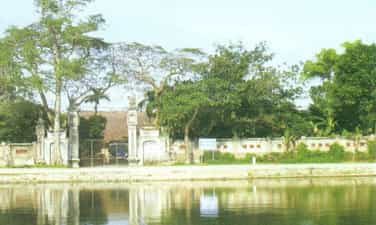
The story of the hundreds of years old communal house in Ngam Luong village, Lang Ngam commune, Gia Binh district, Bac Ninh province that we talk about below is an example to prove that. Ngam Luong village, Lang Ngam commune (formerly named Ngam Dien) is located adjacent to the Thien Thai mountain range, and is the meeting place of many transitional geo-cultural circuits. In the area, there is Duong River hugging the West and Northwest. Along with that is the ancient road route, now the Duong River dyke. That river route and ancient road form an East-West connection between the Thai Binh and Red River basins. Lang Ngam is also located on the western bank of the Luc Dau Giang area, where the high mountains and low hills in the North end; The place where the Thuong River, Cau River, and Luc Dau River converge, opening up the delta and down to the East Sea. Those river routes are important traffic arteries in transporting ancient Vietnamese residents along with the country's economic, historical and cultural elements back to Lang Ngam; And from here - thanks to these special bloodlines - it continues to spread out, integrating with the country in all fields. That has made Ngam Luong - Lang Ngam countryside - since ancient times - a place to both witness and directly contribute to the creation of many unique cultural histories of the homeland and the country. Located at the beginning of the village, looking to the Southeast, Ngam Luong village communal house is in a beautiful feng shui position. In front of the road is a lake with water, the village road curves around, and in the distance is fertile countryside. On both sides are villages and fields. Behind the communal house is a great dike and the Duong river like a strip of noise surrounding it. Perhaps the village and communal house are located by the river, but when the ancients built the communal house, they worshiped the three Water Gods as tutelary gods. The water gods are considered to be figures with a decisive role, directly influencing the thinking, daily life and production of agricultural residents who have grown wet rice since early times. Currently, their records in the locality have been lost for a long time, so it is unclear what their merits were. But in the pavilion, there are still Chinese characters recording their names: First Five Six Shows Improvising Linh Hon Than, Second Trung Thien heroically heroic and strategic Hon Than, and Third Chan Nhi Thong Rui Mat. attain godhood. Ngam Luong village communal house has quite a large scale, containing many unique values of history, cultural beliefs and architecture - art. In particular, in the field of architecture and art, this is one of the last and outstanding representatives of Northern communal house sculpture art during the three golden centuries of folk culture. Because of that, the communal house was ranked as a Historical - Cultural relic by the People's Committee of Bac Ninh province in 2009. According to the chronology still recorded on the first sentence of the communal house in Ngam Luong village, the communal house was restored. created on a beautiful day in early summer in the year of Giap Than - Le Dynasty (around 1764). The overall construction at that time included: The communal house gate and the Tam Quan were built in the style of a 8-roof match stack, on both sides there were 2 dancers, elephants and painted four sacred animals. Inside are two Dance Strips, each side has 4 compartments. Next is the Great Court and the Harem. Over time and war, some works such as Tam Quan and Dai Vu of the relic site were demolished. In 1962, the wooden floor in Dai Dinh was also removed to make tables and chairs. Later, the villagers repaired the outer garden, built walls and gates, and redid the three gates; Gather enough remaining floorboards to fit the floor on one side of the house. Currently, when villages are gathered together, houses are spacious; The communal house, which was originally large and imposing compared to the people's houses in the past, is now somewhat less massive; But the spiritual value and historical and cultural value are multiplied over time. With the Ngam Luong communal house project, the architectural beauty over the centuries still exists through the ancient architectural structure that is still maintained. The great communal house consists of 3 compartments, 2 wings and 4 curved roofs, measuring 21m long and 11m wide, truly an architectural work with all the typical beauty of Northern village communal houses. The architecture of Ngam Luong village communal house has the same style as many Northern village communal houses. The system of ironwood columns, large and small, is solid, structured in the style of stacking beams and gong racks, with 6 rows of columns horizontally and 4 vertical rows. This sturdy column system lifts up the wide, tiled roof of the communal house, protecting the sacred inner space of the communal house, with many carved works of artistic value, imbued with the souls and emotions of the workers - Folk artists build communal houses. The main columns in the front and back horizontal rows of the three main halls all have column ears. That is the worker who sawed the top of the column into a wide frame, then brought the wooden slab down to spread out on both sides of the top of the column, below was the support arm, and on top was a dowel attached to support the upper beam. Thanks to this structure, the column ears are always in a stable position. It is these pillars that the craftsmen have turned into works of art with embossed techniques and rich themes, bringing the bustling breath of life. The rear palace is in the style of a mallet, consisting of 5 architectural compartments in the style of a row, surrounded by bricks, the axis is 11.5m long, 8m wide. Inside the Harem are arranged 3 thrones worshiping the tablets of the tutelary gods. In front are incense bowls, stands, candles, floating trays, altars... all placed on brick pedestals and square tables. Some of these artifacts date back to the Nguyen Dynasty, 19th century. In particular, the ancient communal house was bestowed with many titles by Vietnamese feudal dynasties. Over time, it was lost, and up to now, 7 ordinations are still preserved in the temple. The earliest religion was established in Canh Hung 28 (1767), the latest religion was established in Dong Khanh 2 (1886). Most of them acknowledged the merits of the village tutelary god for helping, eliminating disasters, and dispelling disasters for the people, so that the people could be prosperous and happy. SOURCE: LITERATURE AND ART ASSOCIATION OF BAC NINH PROVINCE
Bac Ninh
3817 view
Rating : Provincial level relics

DAI BI Pagoda
Dai Bi Pagoda is located in hamlet 8, Ninh Giang village, Ninh Hiep commune, Gia Lam district, suburban Hanoi. The pagoda is also called Ninh Giang pagoda or Xom 8 pagoda. Dai Bi Pagoda was built very early. Based on written documents and relics left in the monument, it can be confirmed that the pagoda was built at least 400 years ago. According to the elders in the commune, the pagoda was burned on September 22, Mau Dan year, but soon after, local people joined in making merit with Mr. Ky, a native of the commune, who practiced here. Contribute to rebuilding the pagoda according to its old appearance. Perhaps the most recent was the restoration in 1939, which is still inscribed in Chinese characters on the upper palace: Emperor Bao Dai's reign was fourteen years old The fifth year of Ky Mao, five moons, twenty-six days of great prosperity and great auspiciousness. Translated as: The roof was topped off on the auspicious day of May 26, Ky Mao year, the 14th Bao Dai era (1939). Dai Bi Pagoda is not very large in scale; The entire floor plan is square, each side is 13.4m with an area of about 200m2. The ancient craftsman cleverly built a pagoda that has all the architectural components of a typical pagoda including: Front hall, incense burner, upper hall and surrounding corridors, Patriarch's house, guest house, outbuilding. On the top of the Tien Duong roof, in the middle is a relief of the sun image, on both sides there is a relief of a phoenix and a pincer head is a relief of a dragon, on the two banks of the river is a relief of Nghe. These are reliefs symbolizing the mascots in the Four Sacred Treasures. The head of the knife is stylized in the form of a carp turning into a dragon, and all the tiles are covered with funny-nosed tiles. On the 4 pillars attached to the facade are 2 parallel sentences made of cement. The Upper Palace is the center of worship decoration, has a simple structure and shares the roof with the Tien Duong, which includes 25 round statues painted in red and gold, splendidly decorated with parallel parallelograms and flags. Close to the wall of the Upper Palace, there are 4 stone relief statues of the Hau and a gable wall on the right are typical works of art of the 17th century. Through many ups and downs and changes of time, especially the fire, the relics have suffered a lot of loss. Currently, the pagoda still retains precious relics made of stone and bronze including: 5 relief stone queen statues, 6 small stone stele, 1 heavenly stone pillar (1691), some earthen statues, 1 bronze bell. 75cm high, 50cm diameter, 25cm handle, 4 sides with the words "Dai Bi Tu Chung", the era name "Canh Thinh Royal Dynasty" (1800); 3 horizontal paintings and 7 parallel sentences. Every year the people still maintain the festival at the temple on the 5th, 6th, and 7th days of the second lunar month. Dai Bi Pagoda was ranked an architectural and artistic relic by the Ministry of Culture and Information in 1997./. SOURCE: HANOI PEOPLE ONLINE MAGAZINE - SPEECH AGENCY OF HANOI LITERATURE AND ART ASSOCIATION ASSOCIATION
Bac Ninh
3971 view
Rating : Provincial level relics

XA TEMPLE
Xa Temple is located on the south bank of Cau River, near Xa junction, which is the confluence of two ancient rivers Ca Lo and Cau River (also known as Nhu Nguyet River) flowing into Luc Dau River (Hai Duong province). Xa Temple, Xa Doai village, Tam Giang commune (Yen Phong district, Bac Ninh) worships two generals Truong Hong and Truong Hat. The two were siblings and talented generals of Trieu Quang Phuc in the resistance war against the invaders of the Luong Dynasty. Nearly a thousand years ago, in the 11th century, Lieutenant Ly Thuong Kiet built the Nhu Nguyet river defense line here during the second resistance war against the Song Dynasty, leading to a famous victory over the Song invaders in October 1077. Talking about the history of the temple, Mr. Vu Cong Tuong (82 years old, from Xa Doai village, head of Xa Temple) said: Xa Temple worships Saint Tam Giang - the brothers Truong Hong and Truong Hat, who are famous generals of the temple. Trieu Quang Phuc was credited with fighting the Liang invaders in the 6th century. The sacred temple also dates from the 6th century, after their death. The legend of Saint Tam Giang says that, in the past, in Van Mau village (Kinh Bac region) there was a girl named Phung Tu Nhan. At the age of 18, Tu Nhan dreamed that the Dragon god descended from the sky and entwined herself on the Luc Dau River. After that, she was 14 months pregnant and gave birth to a bundle of 5 children: 4 boys and 1 girl. Because she was a child given by heaven, she took the Jade Emperor's surname Truong and gave it to her four sons, Truong Hong, Truong Hat, Truong Lung, Truong Lay, and her daughter, Truong Dam Nuong. Some time later, Heaven sent La Tien Ong to earth to teach literature and martial arts to Tu Nhan's five children at Trang Hoc beach near Co Trach's house. The five brothers, all skilled in literature and martial arts, grew up responding to Trieu Viet Vuong's call to become generals to fight the Luong invaders in Da Trach lagoon and win a great victory. Truong Hong and Truong Hat were appointed talented generals of Trieu Quang Phuc. When Trieu Quang Phuc ascended the throne (other names are Trieu Viet Vuong, Da Trach Vuong), Ly Phat Tu led his army to fight back but could not win, so he used the trick of marrying his son, causing Trieu Viet Vuong to fall for the trick and be defeated. When Ly Phat Tu won the throne, knowing that Truong Hong and Truong Hat were talented generals, he invited them to become mandarins. But with your loyalty, you decided not to worship two kings. Knowing that he could not be subdued, Ly Phat Tu ordered them to be arrested everywhere. They knew they couldn't escape so they committed suicide in the Cau River to maintain their loyalty to the king. Also according to legend, the Jade Emperor felt compassion and ordained Truong Hong and Truong Hat as River Gods. Since then, the people of 372 villages along the Cau River, Thuong River, Ca Lo River and the places where the two men were stationed to fight the enemy all mourned and built temples to worship them as Gods. The Ngo, Dinh, Le, and Ly dynasties were later blessed by Yin to keep their territories in peace, so they all honored the Truong cousins as Saint Tam Giang - great kings and superior gods. According to history books, Xa Temple and Saint Tam Giang are also associated with the birth of the poem "Nam Quoc Son Ha" by Ly Thuong Kiet - our country's first declaration of independence. Talking about the legend of the story of the poem Than, Mr. Vu Cong Tuong said: According to the elders of Xa Doai village, one night in October 1077, at the sacred temple on the Cau River battlefield against the Tong and Ly Thuong invaders. Kiet went to the temple to pray for yin and yang to support the resistance war against foreign invaders. After the ceremony, the sky suddenly lit up like daytime, two clouds appeared in the air, one white, one red. Above were two brave soldiers, one riding a white horse, the other riding a pink horse, riding the clouds among the four armies cheering their horses. hi. Legend has it that he was Mr. Truong Hong and Truong Hat who appeared to bless our army and people in fighting the Song invaders. Tu Vu Cong Tuong was moved and respectfully said: "You are "born as a form, death as a spirit"; That means living as a general, transforming into a god, and still carrying out the noble mission of serving the country." At the same time, in the air or in Ly Thuong Kiet's mind, the poem "Nam Quoc Son Ha" suddenly echoed: Nam Quoc Son Ha Nam Emperor's residence/ Absolutely destined to be in the book of heaven/ Like a rebellious river invading/ Nhu "The king of the South lives in the rivers and mountains of the country. The fate is clear in the book of heaven. Why do the invaders invade? They will be beaten to a pulp." This is the reason why the poem is called Divine poetry. When the poem was read by Ly Thuong Kiet, it resounded loudly in the area, causing the Song invaders to panic and run away, trampling each other to death. Together with the strategic ingenuity of our army and people, the resistance war against the Song Dynasty was completely victorious, destroying 300,000 Song troops, corpses piled up into mountains, blood flowed into rivers. After nearly 1,000 years since that divine victory, currently in Tam Giang commune there are still places such as Bai Xac, Bo Xac, and Dong Xa which are traces of the disastrous defeat of the enemy in the past. Every year, Xa Temple has two major festivals on the 5th of the first lunar month and the 9th and 10th of the fourth month of the lunar calendar. The Xa Temple Festival is the largest in the region. In addition to the solemn rituals of palanquin procession and water procession, there is also the custom of swimming competitions. Legend has it that the swimming custom of Xa Temple is associated with Ly Thuong Kiet mobilizing local militia to participate in fighting the Tong invaders on Nhu Nguyet River. Xa Temple today is located on a mound of land nearly 10 hectares wide, less than a kilometer from Xa junction - the confluence of two ancient rivers. The temple is currently being restored but its architecture still retains its ancient features that have existed for thousands of years. In front of the yard there is still an ancient stone stele engraved with the divine poem "Nam Quoc Son Ha" on both sides in Chinese and national language, outside is a four-pillar gate with a time-tinged relief. In addition to the system of precious antiques still kept as worship statues, in the harem of Xa temple there is also a Tao Quan altar with statues of "two men and one woman". In early spring, tourists and people who come to the Xa Temple ceremony to pray for the country of Thai Dan An do not forget to light incense at the Tao Quan altar with the wish to pray for the family to always be warm, hoping for happiness and peace for their family and for everyone. home. With a history of nearly 1,500 years, in 1988, Xa Temple was ranked by the Ministry of Culture as a National Historical Site. Source: Electronic newspaper of the Central Vietnam Farmers' Union
Bac Ninh
3905 view
Rating : National Monument
Outstanding monuments
See all
Vinh Nghiem Pagoda
Vinh Nghiem Pagoda, also known as Duc La Pagoda, is an ancient pagoda in Duc La village, Tri Yen commune, Yen Dung district, Bac Giang province. Vinh Nghiem Pagoda is an ancient pagoda, where the only original set of woodblocks of the Truc Lam Buddhist sect is kept. The 3,000 woodblocks of Vinh Nghiem Pagoda have been awarded by UNESCO as a world memory documentary heritage. The pagoda is recognized as a Buddhist center, a place to train monks for the whole country, and the birthplace of the Three Patriarchs of Truc Lam Zen sect of Vietnamese Buddhism. In 2015, the pagoda was recognized by the State of Vietnam as a special national monument. Vinh Nghiem Pagoda is located at the confluence of Luc Nam and Thuong rivers (called Phuong Nhan junction). The pagoda overlooks the confluence of rivers, towards Luc Dau Giang - Kiep Bac, Cam Ly region, the gateway to Yen Tu mountain. Surrounding the pagoda are mountains, including Co Tien Mountain. Across the river is Tran Hung Dao's royal palace, Kiep Bac Temple. Legend has it that Vinh Nghiem Pagoda was built in the Ly Dynasty (11th century). At the end of the 13th century, (1010-1028), Buddha Emperor Tran Nhan Tong expanded and built this place into a major Buddhist center of the Tran Dynasty, renaming the pagoda Vinh Nghiem, associated with the birth and development of Truc Lam Yen Tu Zen sect. As one of the ancestral places of the Zen sect, Vinh Nghiem Pagoda was built with a grand architectural scale, many items, standard and exemplary of traditional pagoda architecture. This is an ancient temple with the richest architecture of Buddhist-Vietnamese identity that no other temple in the region has, worthy of being called a "great ancient site". In the pagoda, there are also Buddha statues, statues of the Patriarchs of the Truc Lam lineage, statues of later monks, statues of Dharma protectors, statues of Arhats... In the pagoda there is also a muzzle nearly half a meter long, painted glossy black, with a sound hole. There are two lines of Sanskrit inscriptions. In the past, Vinh Nghiem Pagoda was a place to train Buddhist monks, so it was a storage place for ancient scriptures that were up to 10 rooms wide. These are collections of sutras dating back 700 years, a treasure trove of extremely valuable ancient books, such as: The novice monk, the monk, the novice monk, the 348 precepts, the Yen Tu diary from the 15th century (the process of forming the Truc Lam sect), Hoa Nghiem Sutra, Amitabha Sutra, Mahayana Chi Quan, Precepts and Ni Sutras... Today there are many wooden shelves printed with historical sutras still at the pagoda. The ancients called this engraving, proving that Vinh Nghiem Pagoda once dominated 72 forests. Currently, the Moc Thu warehouse still preserves 34 books with nearly 3,000 engraved copies, each copy has two sides, each side has 2 upside-down engraved pages (negatives) with about 2,000 Nom and Chinese characters. Those engravings are still handed down in our country with each sharp and delicate handwriting. Today, those values still remain intact, without any loss of value. The pagoda's area is about 1 hectare, surrounded by dense bamboo. Currently, the pagoda is being renovated and creating favorable conditions for tourists to travel and worship. Visitors can follow the route such as: three-entrance gate, go about 100m deeper to worship the road, also known as Ho Pagoda. On both sides of the pagoda's road, pine clumps about 1 meter long were built to form pine forests. On the temple grounds there is a large stone stele with 6 sides built in the 7th year of Hoang Dinh (1606). Right in front of the ancient stele is the tomb tower garden of 5 monks: Phu Lang Trung Phap (named Sa Mon), Thong Due Ung Duyen, Thanh Quy, Tinh Phuong Sa Mon, Thanh Hanh and a number of other towers. Vinh Nghiem Pagoda Festival is held on the 14th day of the second lunar month. Source: Bac Giang Province Electronic Information Portal
Bac Ninh
10147 view
Rating : Special national monument

Phuc Long Communal House
Phuc Long communal house is located in Tang Tien commune, Viet Yen district, Bac Giang province. Phuc Long communal house is the center of traditional religious and cultural activities of the people of Phuc Long village, past and present. The village communal house is a place of worship for the entire people, and is also the center for organizing the village's festivals during Tet holidays, which represent the long history and cultural traditions of Phuc Long village. Based on the legend engraved on the stone stele of King Tu Duc, and according to the legends of the local people, Phuc Long communal house worships the gods of sound and inspiration, helping to fight the enemy to save the country and protect the country. defend the homeland. In addition, Phuc Long people also worship Nhue District Cong Le Tuong Cong, the Le Dynasty mandarin who helped people rebuild Phuc Long pagoda and communal house. That is the communal house and pagoda that remains today. Remembering his gratitude, the villagers carved a stele recording his merits and worshiped the mandarin as his successor. Every year, they worshiped him on the 10th day of the 7th month, called the death anniversary of the old man. The eulogy of the general's official was read on the death anniversary. They share a common belief in worshiping Heaven, Earth and Water - elements closely related to the lives of people working in wet rice agriculture. The value of Phuc Long communal house is not only in its ancient founding date, over 300 years ago, but mainly in its large scale, unique architectural style and talented carving and decoration art. , delicate. The most attractive thing about Phuc Long communal house is the decoration and engravings on the architectural parts: such as on the ends, levers, scrolls, hammock doors in front of the palace, on the gates, The column bibs (also known as column tapers), are all engraved with decorative images with many different designs. Unlike many other communal houses, the entire wooden frame of Phuc Long communal house is bare, unpainted and gilded, showing off all the sophistication and ingenuity of the workers who built the communal house. What is recognizable is the architectural structure and especially the carvings, showing the two unions of carpenters involved in building the communal house. Therefore, the architectural style, especially the carving, shows two different styles, delicate carving, trimming, elaborate and soft lines. But all of them blend together in unity, richness and diversity, reflecting the most common features of architectural art and engravings of the Le Dynasty in the late 17th century, imbued with folk art: Innocence, generous. Popular decorative shapes are the carvings, carvings of the "four sacred animals", "four precious" images with variations of dragon, Nghe, phoenix, tiger face, dragon-shaped, physical-chemical... extremely rich. Phuc Long communal house was officially recognized by the Ministry of Culture and Information as a national historical and artistic relic in 1993. Source: Electronic Information Portal of Viet Yen Town, Bac Giang Province
Bac Ninh
10058 view
Rating : National monument

Ham Long Pagoda
Ham Long Pagoda (or Long Ham) in Thai Bao area, Nam Son ward, Bac Ninh city, was built during the Ly dynasty (about the 12th century). According to folk eyes, the pagoda is located in the jaw of a dragon, meaning under the jaw of a large dragon 9 segments long, which is the entire Lam Son range. This is a large Buddhist center, and is said to be the place of practice for monk Duong Khong Lo. Located on a land area of more than 9,000 square meters, the pagoda has a beautiful landscape, in harmony with nature, is known as an ancient temple with a long history, the architectural works are designed and decorated according to Traditional style, exquisitely carved, artistic. Today, Ham Long Pagoda is the center of spiritual activities of local people and people from all over the region, a place to worship Buddha Dharma, a place to guide living beings to good things, to stay away from evil, to live with compassion, joy and forgiveness. The current pagoda has a large scale including works: Tam Quan gate, Tam Bao, Patriarch's house, Mother's house, Guest house, Monk's house and auxiliary works. The Three Treasures Pagoda is made of ironwood, shaped like a Dinh, including the 7-compartment Tien Duong, the structure of the roof "stacked with beams and gongs", the armpits of which "those sitting on the bed are fascinated" and 3 rooms of the Upper Palace, the structure of the roof. stack of gongs and gongs", because underarms "the one sitting". The pagoda worships the 7 Patriarchs, the Mother Goddess, and Mr. Do Trong Vy, he is famous for being an intelligent and studious man and later became an honest mandarin, teacher, and culturer, especially he was the one who had the merit of founding the Vietnamese Literature. Bac Ninh Temple. After he got old, he returned to Ham Long Pagoda to practice. After his death, he was worshiped here. Currently, Ham Long Pagoda still maintains the ritual of sending souls to the souls who died at evil and sinful hours. To avoid disasters and yokes, families of ghosts often send ghosts to Ham Long Pagoda to receive shelter and salvation, so that ghosts can soon be reborn and escape to the realm of bliss. The architectural works within the Pagoda's grounds are carved with sophisticated, artistic decorations with a spacious and perfect appearance. The pagoda has a festival on the 14th day of the second lunar month, in addition, during the year there are other days such as: Buddha's Birthday, Vu Lan festival, Full Moon week, First lunar month, traditional festivals, Lunar New Year. The pagoda also welcomed many domestic and foreign delegations, high-ranking leaders of the Party and State to visit Buddha. The pagoda was ranked as a cultural and historical relic by the Ministry of Culture and Information on January 18, 1988. Source: Bac Ninh province electronic information portal
Bac Ninh
9725 view
Rating : National monument

Van Coc Communal House, Van Trung Commune
Van Coc communal house is also known as Bai Ca communal house, people in the area often call it Bai communal house. Bai Ca communal house used to worship the saint Cao Son Dai Vuong together with Bai Xanh communal house. For some reason, this communal house was divided into two (upper communal house of Xanh village, lower communal house of Bai village. Both communal houses are located at the foot of the western mountain of Bai Mountain, one of the mountain ranges in the Nham Bien Son range or the 99-top anchor mountain. The village is spread out along the mountain slope like a flying Coc, looking down at the sunken field which is a lake Lang Bac in the past. Looking from above, Van Coc village looked like a Big Coc, the body was Bai Mountain, the head was Don Mountain, and the two long wings spread out on both sides were Van Coc village. The communal house was located under the eyes of the coc . Van Coc communal house is located in Van Trung commune, Viet Yen district, Bac Giang province. This is the place to worship the village's Tutelary God, Saint Cao Son Dai Vuong. Duc Cao Son is from Lang Xuong Cave, Thanh Chau district, Gia Hung district, Son Tay religion. He is the son of Nguyen Hanh and Dau Thi Loan. He was born because his parents were told in a dream that the god was reincarnated. So when he grew up, he was very intelligent in martial arts and knowledgeable about heavenly books. When the country had foreign invaders, King Due Vuong issued an edict to go everywhere to find talented and virtuous people to help the country. He immediately returned to the court to apply for the position and was immediately employed. He was appointed by Tan Vien Son Thanh as a senior general. With the wholehearted help of the local people - gods and people, he soon completed the work. When the Thuc army arrived, he was beaten to a pulp by his generals (afterwards he had to make peace with the Hung dynasty). After the war against the Thuc invaders, he returned to the army where he had built a stronghold to repay the people's kindness. When finished, he was ordered to return to court. Then the king sent him back to enjoy his fortune in Thanh Hoa and there the court ordained him as the Supreme God of Blessing and Strength for the places that had previously gone to fight the enemy and had received help from the people, so they had to establish a place of worship forever. His Holiness Cao Son Dai Vuong. According to Dinh's family tree, Trang Van Coc previously had an ancient temple in the communal house area, then moved it to the middle of the village. The current communal house was built in the year Mau Ty - Le Canh Hung dynasty (1788) and was built by Duong Tuong Cong - Tu Quoc Co. The communal house currently has 5 rooms, 2 rooms, 1 bamboo tube, 2 rooms, 3 harem rooms with high and wide wooden floors. In front of the communal house there are 2 square steles. The remaining relics are 8 sturdy and majestic hammock doors, 4 pairs of parallel sentences, 10 horizontal panels, 2 dragon and tiger altars, 2 water fountains, 2 purifying shelves, 2 ordination boxes, 1 color book. divine insignia, 1 jade genealogy book, 1 stone incense stick, 1 box containing a set of culvert bowls, 2 fan bones, 2 parasol bones, 2 large altar horses, 1 set of halberds with more than 20 halberds, a set of precious bowls, a Culinary temple, 1 dragon communal house, 1 ancient incense burner, 2 altar thrones, 2 tablets. All are painted with gorgeous gold lacquer. One drum, one gong and some stone lamps, candlesticks... Along with the brilliant victory on the Nhu Nguyet river front line, the historical site of Mount Don was the place where extremely fierce battles of our army and people during the Ly dynasty took place against the Song invaders. This was also the place to welcome Win a victory and chase the national enemy out of the country. Because after the swift and courageous strategic battle of our army and people against the army group commanded by General Quach Quy here, the enemy's invasion plot was crushed and Quach Quy resigned to bitter defeat. At night, the order was given to withdraw the remaining troops back to the country, trampling on each other (as the Song Dynasty's own history had to admit). Van Coc Communal House was ranked a national historical, architectural and artistic relic by the Ministry of Culture, Sports and Tourism on January 21, 1989). Source: Electronic Information Portal of Viet Yen Town, Bac Giang Province
Bac Ninh
9401 view
Rating : National monument

Do Temple and Tombs of Ly Dynasty Kings
The tombs and temples of the Ly Dynasty Kings are historical evidence of the ancient Co Phap village and today's Dinh Bang; It is a relic land, a temple to worship the Ly dynasty kings and is also the burial place of the Ly dynasty's ancestors and royal family. Ly Dynasty (1009 - 1225), from when Thai To (Ly Cong Uan) ascended the throne, moved the capital from Hoa Lu to Thang Long (1010), experienced 8 kings, passed the throne for 216 years, was the period when the state conferred independence, autonomy, and strength, the people can live in peace and prosperity. The relic site is a unique architectural work, with stone carving, wood carving, worship statue carving, and construction techniques all reaching a sophisticated level and many intangible cultural heritage values being preserved. : worship beliefs, festivals, customs, practices.... The tomb area of the Ly Dynasty kings is also a particularly important archaeological site serving scientific research. The relic has many other names, such as Do Temple, Co Phap Dien/Ly Bat De Temple and Tombs of Ly Dynasty Kings (Tho Tomb Thien Duc or Son Mau Forbidden Land); Includes 2 main areas: Do Temple and Tombs of Ly Dynasty Kings (Forbidden Land). 1. Do Temple: total area of 31,250m2, divided into inner city and suburban areas. Suburb: 26,910m2 wide, including semicircular lake, water pavilion, writer's house on the right, martial arts house on the left. Inner city: 4,340m2 wide, divided into interior and exterior areas. The interior includes: the harem, the carriage house, the altar house, the stele house and the house for 8 altar palanquins, the house for 8 worship horses on both sides. The exterior includes: Phuong communal house, King's temple, celebrant's house, guest house, exhibition house, hall, five dragon gates, temple yard, elephant statues, stone crocodiles... 2. Tombs of Ly Dynasty Kings (Forbidden Land) The tomb area is the final resting place of the Ly dynasty kings, about 800m northeast of Do temple, located in Sen Pond area, in the fields of Dinh Bang ward, Tu Son town, Bac Ninh province. Today, the tombs of the Ly Dynasty kings include the following buildings: - Tomb of King Ly Thai To - Long Chao Tomb - Tomb of Ca (King Ly Thai Tong) - Tomb Two (also known as Tomb Con) worships King Ly Thanh Tong - Tomb of the Elephant (King Ly Nhan Tong) - Tomb of Duong Gio (King Ly Than Tong) - Tomb of Duong Thuan (King Ly Anh Tong) - Tomb of King Ly Cao Tong - Tomb of King Ly Hue Tong - Mausoleum of Mrs. Nguyen Phi Y Lan - Phat Tich Tomb (Pham Thi's mausoleum) There are not many artifacts left at the Do Temple relics and the Ly Dynasty kings' mausoleum area, such as 8 tablets with the names of the Ly kings painted in red and gilded, carved in the Le dynasty, bronze tops, and cranes. bronze and some bowls and dishes dating back to the Le dynasty. In particular, there is a stone stele, dated 1604, compiled by Dr. Phung Khac Khoan, recording the merits of the Ly kings. In addition, cultural activities of folk beliefs and worship of Ly dynasty kings are still maintained and become traditions at Do temple. Every year, three main festivals take place in Dinh Bang: - Temple festival on January 7. - The communal house is held on February 15, taking place on 2 main days (from February 14 to 15). - Temple festival on March 15, held at Do temple. With special value, the historical site of the Ly Dynasty kings' tombs and temples was ranked a special national monument on December 31, 2014 by the Prime Minister. Source: Department of Cultural Heritage
Bac Ninh
9385 view
Rating : Special national monument

Ngoc Lam Temple
"The Ben Ngoc Daughter" is the name of a female general of the Trung Sisters, who made great contributions to helping the Trung Sisters repel the Han Dynasty invaders, and is today honored as a national historical celebrity. In Bac Giang city, there is a street named after Ba. She is Princess Thanh Thien. Ngoc Lam Temple is a relic located next to Ben Ngoc (literally called Ngoc Chu) - a place to worship and commemorate Princess Thanh Thien. Ben Ngoc is also known as Ngoc Lam, located in Ngoc Lam village, Tan My commune, Yen Dung district. "The Ben Ngoc Daughter" is the name of a female general of the Trung Sisters, who made great contributions to helping the Trung Sisters repel the Han Dynasty invaders, and is today honored as a national historical celebrity. In Bac Giang city, there is a street named after Ba. She is Princess Thanh Thien. Ngoc Lam Temple is a relic located next to Ben Ngoc (literally called Ngoc Chu) - a place to worship and commemorate Princess Thanh Thien. Ben Ngoc is also known as Ngoc Lam, located in Ngoc Lam village, Tan My commune, Yen Dung district. Princess Thanh Thien was the daughter of a family of Lac generals during the time of King Thuc - Because she did not cooperate with the Han dynasty, she hid at the temple. As a child, Thanh Thien was famous for his intelligence and talent. Growing up in the country's misery and humiliation under the domination of the Han Dynasty, this girl has since then nurtured a great ambition to take revenge for the country and society. Then she gathered her forces, stored food, trained soldiers and horses, and set up a base to wait for the opportunity to rebel. To strengthen her forces, she allied with patriots throughout Hai Duong (her hometown). Once when visiting her uncle in Ky Hop (Lang Giang), she stopped at Ngoc Lam site and was welcomed and wholeheartedly supported by the people. She discussed with him a plan to expel the enemy and set up camps in Ky Hop and Ngoc Lam. The base was established, and many clashes with the Han invaders occurred, the enemy forces were defeated many times. Once Ky Hop base was surrounded, Ngoc Lam base was blockaded. At that time, Hai Ba Trung's insurgent army stood up, heroes from everywhere came and Thanh Thien also followed that banner of insurgency. Under the banner of "Repaying the country's debt, avenging the family" of the Hai Ba, Princess Thanh Thien courageously stood side by side with the insurgents to expel the Han invaders and regain independence for the country. Crazy with defeat, the Han Dynasty sent the experienced male general, Ma Vien, to send troops to our country to suppress the uprising. Due to their defeat, Hai Ba Trung threw herself into the Hat Giang river and committed suicide to keep her virginity. As for Princess Thanh Thien, she fought until her last breath, following the Hai Ba to martyrdom at Ben Ngoc, refusing to fall into the hands of the Han invaders. Admiring Ms. Thanh Thien's example of filial piety, after her death, people built a temple to worship right next to Ben Ngoc - where she committed suicide. In the past, the monument was large and majestic, but now it is no longer intact. Currently, the ruins still have the Upper Temple and the Lower Temple. Thuong Temple is located on a high promontory adjacent to Chin Khuc River, opposite Bai Han area. The temple consists of two buildings: 3-compartment altar, simple architecture, inside there is an altar. The 3-room harem is located at the back. The altar has a altar, a throne, tablets and many other worship items. This is the sanctuary where the altar of Princess Thanh Thien is worshiped. The temple yard is tiled with square tiles, and in front there is an open-air altar. The landscape of Thuong Temple has an ancient sycamore tree reflecting on the Ben Ngoc river, creating a beautiful scene. Ha Temple is more ancient, built during the Le dynasty, and destroyed during the resistance war against the French. Now, the people have rebuilt the temple spaciously, including 5 high and wide front worship rooms and 3 back palace rooms. The landscape of Ha Temple is also very beautiful. In front there is a vast lake, located on the banks of the winding Chin Khuc River, creating harmony between the interior and exterior landscape. Ngoc Lam Temple was recognized by the Ministry of Culture and Information as Decision No. 138/QD dated December 31, 1992 as a Historical Relic and granted a monument ranking certificate at the same time. Since being ranked, Ngoc Lam temple relics have received more attention from local people to protect and restore./. SOURCE: ELECTRONIC INFORMATION PORTAL DEPARTMENT OF CULTURE - SPORTS - TOURISM OF BAC GIANG PROVINCE
Bac Ninh
8316 view
Rating : National monument

Chau Lo Temple
Trau Lo communal house is located in Mai Dinh commune, Hiep Hoa district, about 43km west of Bac Giang city center. The communal house worships King Ong and King Ba - two human deities who have made great contributions to their homeland during the reign of King Trieu Viet Vuong. Besides, Trau Lo Communal House also worships Saint Tam Giang - who had many merits in helping Trieu Quang Phuc fight the Luong invaders (VI century), bringing peace to the country. Based on the remaining Sino-Nom sources at Trau Lo communal house, it is said: In the year of Dinh Hoi, the reign of Duc Nguyen of the Le Dynasty (1677), the villagers held a "carpentry" ceremony to build a communal house. In the year of the Dog, during the reign of King Vinh Thinh (1706), Mrs. Ngo Thi The, a native of Trau Lo village, nicknamed Tu Khanh, brought 200 prehistoric mandarins to the commune to buy forest wood to build a communal house. Later, the communal house was also repaired. many times through the Le Trung Hung dynasty (18th century), Nguyen dynasty (19th century) and later periods. The communal house was built right in the center of the village, on a high, open, spacious area of land. This is an ancient architectural complex with a massive scale, including: the 5-compartment Pre-Sacrificing Court, the 5-compartment Great Hall with 5-compartment spaces and the Harem. In front of the communal house is a large square tiled floor. Over time, the Former Temple was damaged, leaving only the Great Court and the Harem. The Great Court - the main architecture of the whole project - has a massive scale with long, wide rooms, each with 6 rows of tall and muscular columns, supporting a wide roof frame with curved blades, soft curved roofs, The roof and strip banks are decorated with pincers, bucktails, phoenixes, and phoenixes dancing very vividly. The most valuable architectural part is the ironwood frame of the rafters, in the style of four pillars stacked on beams, the architectural decorative sculptures are concentrated at the top of the trap, and the diaphragm has many vivid themes and many objects. Cloud dragon patterns have rich variations and stylizations, imbued with the folk art style of the late 17th century. At Trau Lo communal house, each temple exhibits its own style and technical mark, proving that many workers participated in building the communal house, making the entire communal house a unified architectural structure. , but each has its own engravings that express its own artistic talent. Trau Lo Communal House and Trau Lo Temple are the center of cultural and religious activities of local people. Every year, the communal house has two main events taking place with the temple on the 4th day of the first lunar month and the 15th day of the ninth month of the lunar calendar. These are two great days, also known as the Great Blessing Ceremony. On the day of the festival, the people of Trau Lo village organize many solemn ceremonies such as procession of palanquins, tablets, altars to honor the merits of the Tutelary Gods and folk games imbued with regional identities such as marking milestones, pull rope, tug of war... On December 12, 1994, the Ministry of Culture, Sports and Tourism ranked Trau Lo communal house and temple as a national architectural and artistic relic and historical-cultural relic. Source: Bac Giang province electronic information portal
Bac Ninh
6920 view
Rating : National monument

Bac Ninh Temple of Literature
Bac Ninh Temple of Literature is one of six temples in Vietnam, with historical and cultural value, reflecting the academic tradition of the Kinh Bac countryside through the periods of building and defending the country under feudal dynasties. Bac Ninh Temple of Literature is the pride of the homeland's academic tradition and is an attractive tourist destination for tourists inside and outside the province. Bac Ninh Temple of Literature was built on Phuc Son mountain, in area 10, Dai Phuc ward, Bac Ninh city. The Temple of Literature was built before the Nguyen Dynasty (at the latest in the Le Dynasty), to worship and worship "Confucius" - who was honored as "Holy Master" or "Van The Master Bieu" and Tu Pham - the monks. The sages of Confucianism are Nhan Hoi, Tang Sam, Tu Tu, and Mencius (who are jointly worshiped with Confucius). The overall project of the Temple of Literature in Bac Ninh currently includes: Nghi Mon Gate, the Pre-Test Court with 5 compartments and 2 compartments, on the 2 sides of the Hau Duong are 2 Bi Dinh buildings with 5 compartments and 2 compartments, on the 2 sides of the Pre-Test Court are 2 Ta Vu - Huu vu, in the main yard between Nghi Mon gate and the front altar, set up a screen stele. Every year, on the full moon day of the first lunar month, an incense offering ceremony is held at the Temple of Literature with the participation of the provincial leaders to commemorate our ancestors and pray for peace and prosperity for the country and Bac Ninh province. , the education career is increasingly progressing. This place also often welcomes delegations of national and international excellent students from Bac Ninh province to offer incense and report their achievements after each exam. The relic gate is built with three gates, pillars with lanterns, two pillars in the middle of the communal house are covered with phoenixes to form a winch, two pillars on the sides are placed to flank the temple. Around the lantern, the main panels emboss the Four Spirits and Four Quarters bong channel. The stone stele (screen stele) erected in the middle of the Temple of Literature yard "Bac Ninh province restored the Temple of Literature Bi Ky" (Stele records the restoration of the Temple of Literature in Bac Ninh); It is nearly 10m2 in size and is considered a treasure of the Temple of Literature. The stele praises the role and significance of the Temple of Literature, as well as honors talented people. The center of the relic is the Tien Te building consisting of 5 compartments and 2 compartments, built on a brick foundation 55 cm higher than the yard. In front of the door is a table with three middle compartments, and two side compartments with doors shaped like the word Tho. The two walls are built of bricks in the style of a square-shaped square, connecting wind wings, lantern pillars, and a spread-out communal house. The roof is built with thread, the two ends are covered with dragons, in the middle are a pair of dragons flanking the moon. The back hall is next after the front hall and is connected by a bridge to form the word Cong. The 5-room Hau Duong House is carved with the Four Quarters. The back hall is a place to worship Zhou Cong, Confucius, and Tu Phoi. Connecting the two gables of the Hau Duong house, on the right is a stele house, on the left is the Tao Huong house, each building has 4 rooms, built on a brick foundation lower than the Hau Duong house. Architecture follows the style of pulling pincers and spreading rackets. The two houses, Ta Vu and Huu Vu, were built along both sides of the front yard of the front yard, each row had 4 rooms, two compartments, simple architecture in the style of a rectangular vase, brick walls, tiled roof, and open paneled doors in the middle space. The outstanding feature among all the remaining values of Bac Ninh Temple of Literature are the 15 stone steles. Among them, 12 "Kim Bang Luu Phuong" steles were built in 1889, honoring nearly 700 great scholars from Kinh Bac hometown who brightened the tradition of studious academics and contributed to the cause of construction and protection. country, developing Vietnamese culture. Source: Bac Ninh province electronic information portal
Bac Ninh
6789 view
Rating : National monument
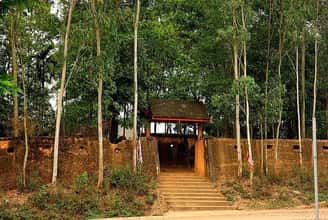
Phon Xuong Fort
Phon Xuong Fort is located in the center of Cau Go town. Here De Tham and the uprising command stayed the longest, directing the strategic and tactical direction of the Yen The insurgent army. Phon Xuong Fort is 30 km west of Bac Giang province; From Bac Giang city, follow National Highway 1A (old) through Thuong River bridge, turn right along Provincial Road 398, Bac Giang-Cau Go route. Phon Xuong Fort, also known as Don Go, Don Cu, is located on the south side of a nearly 20m high hill, nearly 800m south of Go stream. Now this hill is called Phon Xuong hill or Ba Ba hill in Cau Go town. This is a large-scale base with a different structure from Ho Chuoi post and other posts. The fort has an almost rectangular architectural plan running along the North-South direction, with an area of about more than an acre of Northern Vietnam including two citadels. The outer citadel starts from the eastern hillside and runs around the foothill to the northern hilltop, forming an arc that protects the inner citadel, 140m long, 0.80m thick and 4m high. The inner city walls are located on top of a roughly rectangular hill. The inner wall on the east side is 71m long, the north side is 85m long. The wall is made of rammed earth, 2m thick at the base, 3m high and 1m wide on the surface. Inside the wall, there are 3 different levels that can be shot standing or kneeling. There are battlements all around the wall. The outer wall slopes gently like a roof. Phon Xuong Fort has 3 gates: The main gate faces East and two side gates are in the South and North. The two side gates open to the surrounding forests. In particular, the northern gate connects to the forest of the remaining half of the hill. The two 1.50m wide side gates are no longer intact, the main gate is 15m from the north wall, 2m wide with 4 steps up and down. Inside the main gate, there is a guard station located on the northern side of the wall in a square shape of 2m on each side. Inside the main door there are two layers of protective earth walls and many battlements. The gates all have two doors, the outside gate and the inside gate, and are all made of ironwood. The outermost position of the station is the guard posts, followed by the auxiliary posts, the trench system and then the surrounding citadel. The distance between the two rings is 20m at its widest and 10m at its narrowest. Within the citadel is a large space including a system of houses, guest houses, warehouses... all are thatched houses with mud walls mixed with straw. Except for the square house that receives guests, it is built of bricks. From the north to the south of the citadel, respectively, are the houses of Hoang Hoa Tham and Ba Ba, the house has 5 rooms running west and east. The second house is square with four sides left empty and is used as a meeting place for Hoang Hoa Tham with generals and to receive guests. The next house consists of two rows located close to the West and East sides of the citadel, and is the residence of the insurgent army. Next, there are 8 kitchens and stables located close to the southern edge of the citadel running east-west, followed by a light pole and flag pole. The architecture of Phon Xuong Fort is a special architectural style. Not only does it meet the requirements of being a stronghold, it also flexibly handles combat mobility and meets the requirements of being a command post, a place for insurgent transactions. Over time, the rampart system and residential buildings in the citadel built with rammed earth are also easily eroded. Now the residential buildings in the citadel no longer exist, and the citadel walls are no longer intact as before. Particularly, the eastern part of the wall still retains many old architectural features. There are quite clear bullet holes in the citadel wall. In the citadel, a Ba Ba temple is currently built. Every year, on March 16 of the solar calendar, Yen The festival takes place on this relic complex. Around the late 80s of the twentieth century, Mr. Hoang Hoa Tham's daughter, Mrs. Hoang Thi The, came here and when she died, she was buried here, on the tombstone there was only the simple words: "Mrs. Hoang Thi The, born in 1901, died December 9, 1988". It can be said that Phon Xuong was the capital of the uprising, the starting place to expand the movement to localities. Here the insurgents fought bravely against a large-scale attack by the French colonialists led by Colonel Vat-tay on January 29, 1909. With those historical and cultural values, Phon Xuong Fort is one of 23 relics ranked as Special National Monuments in Decision No. 548/QD-TTg dated May 10, 2012 of the Prime Minister. . SOURCE: BAC GIANG PROVINCE ELECTRONIC INFORMATION PORTAL
Bac Ninh
6525 view
Rating : Special national monument
Ho Chuoi Fort
Build a brave and courageous fighting spirit, not afraid of sacrifice, determined to fight to the end to protect your homeland and country. This is the core, most important factor that determines the victory in the Battle of Banana Pit of the Insurgent Army. In particular, in the context of the early years of the Yen The uprising, the Insurgent Army with rudimentary weapons and equipment had to confront the French Expeditionary Force - a professional army equipped with weapons, equipment and supplies. modern means of warfare, so building political and spiritual factors and determination to fight for the Insurgent Army is of decisive significance. Realizing that, De Tham and the leaders of the Insurgent Army educated and fostered a spirit of patriotism and hatred for the enemy in the Insurgents. Accordingly, on the basis of a just war, De Tham taught about the suffering of people losing their country; clearly shows that the cause of suffering is due to the brutality of the invading French empire. Through practice, he showed everyone clearly the hypocritical and hypocritical face of the enemy army; that it was the French army who shot and killed civilians and burned down houses and fields. If you want to save the country and the family, you must rise up to fight the French and his Insurgents swear to kill the enemy to protect the people. That's why the Yen The uprising in general, and the Ho Chuoi battle in particular, the insurgents demonstrated a spirit of courage and strong determination that the enemy did not expect. That was when the enemy fiercely bombarded the station, but the insurgents did not flinch, waiting for the enemy to get very close before opening fire to destroy them, causing the enemy to panic and flee. Even in the third attack (December 22, 1890), the enemy urged European and African troops to use bayonets to attack our fortifications, but the insurgents remained calm, took control of the battle, and rose up to destroy the enemy. leaving them helpless, suffering heavy losses, forcing them to retreat. Not only did De Tham regularly foster patriotism and determination, but when dangerous situations occurred, De Tham also proactively and calmly encouraged the insurgents to fight. Typically, in the battle on January 9, 1891, when Ho Chuoi post was burned by enemy fire, De Tham used the loudspeaker to encourage: "Soldiers in the loyal army, in the indomitable army, in the The army will win. I am very pleased with you! Try to resist. Reinforcements are coming. You are invincible"1. That spiritual medicine promptly encouraged and encouraged the insurgents in the station to calmly, enthusiastically, and resolutely defend, while the forces in the forts, despite the hours-long shelling, still maintained their positions. fight; When the opportunity came (when the enemy infantry was approaching), we all rushed out of the fortifications and fought fiercely, destroying most of the enemy's forces and maintaining the battlefield. Later, researchers all believed that, at Ho Chuoi, the French army faced an opponent with surprisingly high fighting determination.2. Create a dangerous, continuous, solid posture, ensuring smooth defense and attack. Through many battles with the French army, the Insurgents have mastered the rules of operation, combat tactics, and the enemy's strengths and weaknesses. That is, fear of close combat, especially difficulty in maneuvering in difficult terrain; rely on artillery fire and when there are casualties, morale easily declines, etc. Firmly grasping that fatal weakness, the Insurgents Supreme Command advocates creating a solid defensive posture in the Yen The mountainous area. Accordingly, in a low-lying area of the Huu Thuong forest filled with wild bananas, the Insurgents built Ho Chuoi station as a semi-floating, semi-submerged fortification (to limit the enemy's firepower and artillery) as their headquarters. To support the main post, the Insurgents also set up two defensive fortresses (North and South) about 100m away from Ho Chuoi, creating a flexible position to protect and support each other. In addition, De Tham also sent people to set up a system of defense posts around Ho Chuoi, such as: Hom post, Skull Cave, Nua village, Vang village,... a logistics base in Vong Dong with a system of fighting villages (Duong Sat, The Loc, Luoc Ha, Cao Thuong) with many dangerous obstacles. Thanks to a solid posture, the Insurgents were able to detect and attack the enemy from near and far, consuming and destroying many enemy forces before they reached their main target. In particular, at Ho Chuoi, with its unique and dangerous position, the forest became an obstacle to the enemy's firepower and limited vision; If you get close to the base of the fort, you will be shot back from dangerous battlements, etc. The uniqueness of this posture is also shown by the system of submerged trenches (without banks) connecting points together and connecting to Go stream in the rear, creating a flexible maneuver position, while being able to attack the enemy. From the front, you can attack the flanks and rear of their formation. This explains why the enemy gathered large, elite troops, with many modern weapons, attacked from many directions, for many days, but all four attacks were unsuccessful. SOURCE: National Defense Magazine
Bac Ninh
6507 view
Rating : Special national monument
 AI Travelviet